












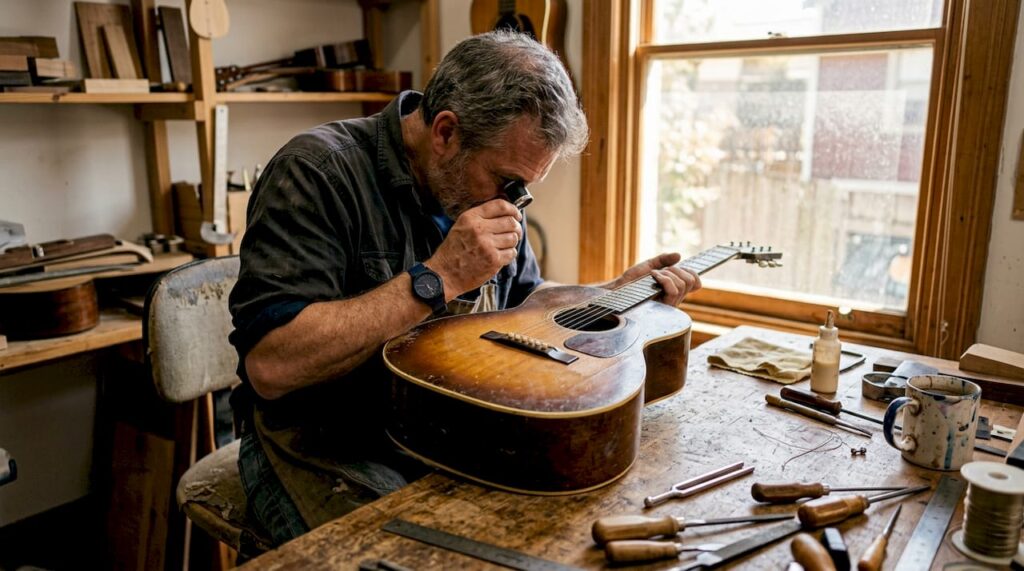

Many guitar collectors and musicians assume that only untouched, all-original vintage instruments carry real value. That belief leaves a lot of exceptional guitars overlooked. The truth is that a professionally restored guitar can deliver outstanding tone, improved playability, and genuine historical character, often at a fraction of the cost of a pristine original. In this article, we break down what restoration actually involves, how it affects sound and collector appeal, and what you need to know before buying a restored instrument.
Table of Contents
- What does it mean to restore a guitar?
- The unique sound of restored guitars
- Restoration techniques that preserve originality and value
- Collector value vs. playability: Finding your balance
- Key considerations when choosing a restored guitar
- Explore expertly restored and vintage guitars
- Frequently asked questions
Key Takeaways
| Point | Details |
|---|---|
| Superior vintage tone | Restored guitars can deliver exceptionally warm, complex sound thanks to aged woods and traditional methods. |
| Expert restoration matters | The right techniques preserve both collector value and playability for musicians and investors. |
| Balance use and investment | Choose restoration level based on your goals—maximum playability or collectible authenticity. |
| Evaluate restoration quality | Always review documentation, materials used, and who performed the restoration before buying. |
What does it mean to restore a guitar?
Guitar restoration is the process of returning a vintage instrument to a playable, structurally sound condition while preserving as much of its original character as possible. It is not the same as a simple repair, and it is definitely not the same as a full refinish. Restoration is about respecting what the guitar was, while making sure it can still be played and enjoyed today.
Professional restoration enhances playability through detailed processes like neck resets, fret leveling, crack repairs, and full setups. Each of these tasks requires skill, patience, and a deep understanding of how vintage instruments were originally built. Our restoration guide for collectors walks through these steps in detail for anyone wanting a closer look.
Here is a quick breakdown of what restoration typically includes:
- Neck reset: Correcting the neck angle to restore proper action and intonation
- Fretwork: Leveling, crowning, or replacing worn frets for smooth playability
- Crack repairs: Stabilizing structural cracks in the top, back, or sides
- Hardware cleaning: Removing oxidation from tuners, bridges, and other metal parts
- Finish touch-ups: Carefully blending small repairs without stripping the original finish
The key distinction is between light restoration, which involves minimal intervention and maximum preservation, and heavy refinishing, which strips and recoats the entire guitar. Heavy refinishing can significantly hurt collector value and alter the instrument’s tone. Our authentic preservation guide explains exactly where that line falls.
The unique sound of restored guitars
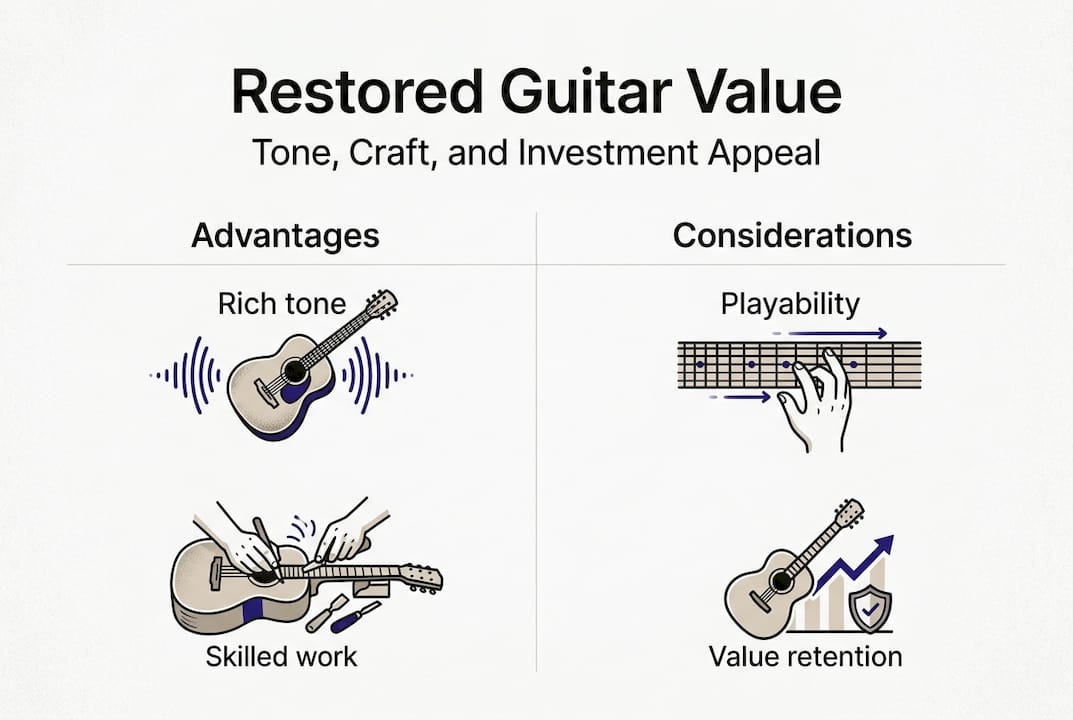
Tone is everything. And this is where restored vintage guitars genuinely shine. Aged tonewoods, particularly spruce, cedar, and mahogany that have been vibrating for decades, develop a molecular structure that produces warmth and complexity that new wood simply cannot replicate. When restoration is done conservatively, those tonal qualities remain fully intact.
Restored guitars offer superior tone from aged wood and traditional craftsmanship, providing warmer, more complex resonance than most modern instruments. Experts also note that while vintage guitars offer warmth that modern guitars trade for clarity and consistency, neither is objectively better. It depends entirely on what you are looking for. You can explore more on this topic in our piece on the advantages of vintage guitars.
“A well-restored vintage guitar does not just sound old. It sounds alive. The wood has been speaking for decades, and a careful restoration lets it keep talking.” — Vintage Guitar World
Here is how restored vintage guitars compare to other options:
| Feature | Restored vintage | New guitar | Unrepaired vintage |
|---|---|---|---|
| Tone warmth | High | Moderate | Variable |
| Resonance complexity | High | Low to moderate | High (if intact) |
| Playability | High | High | Often poor |
| Collector appeal | Moderate to high | Low | High (if original) |
| Value for musicians | Excellent | Good | Limited |
For a deeper look at what makes these instruments so compelling, our article on why we love vintage guitars covers the emotional and musical case in full.
Restoration techniques that preserve originality and value
Not all restoration work is equal. The difference between a guitar that gains value after restoration and one that loses it comes down almost entirely to the methods and materials used. Reputable luthiers follow a clear philosophy: do as little as necessary, and make sure everything you do can be undone.
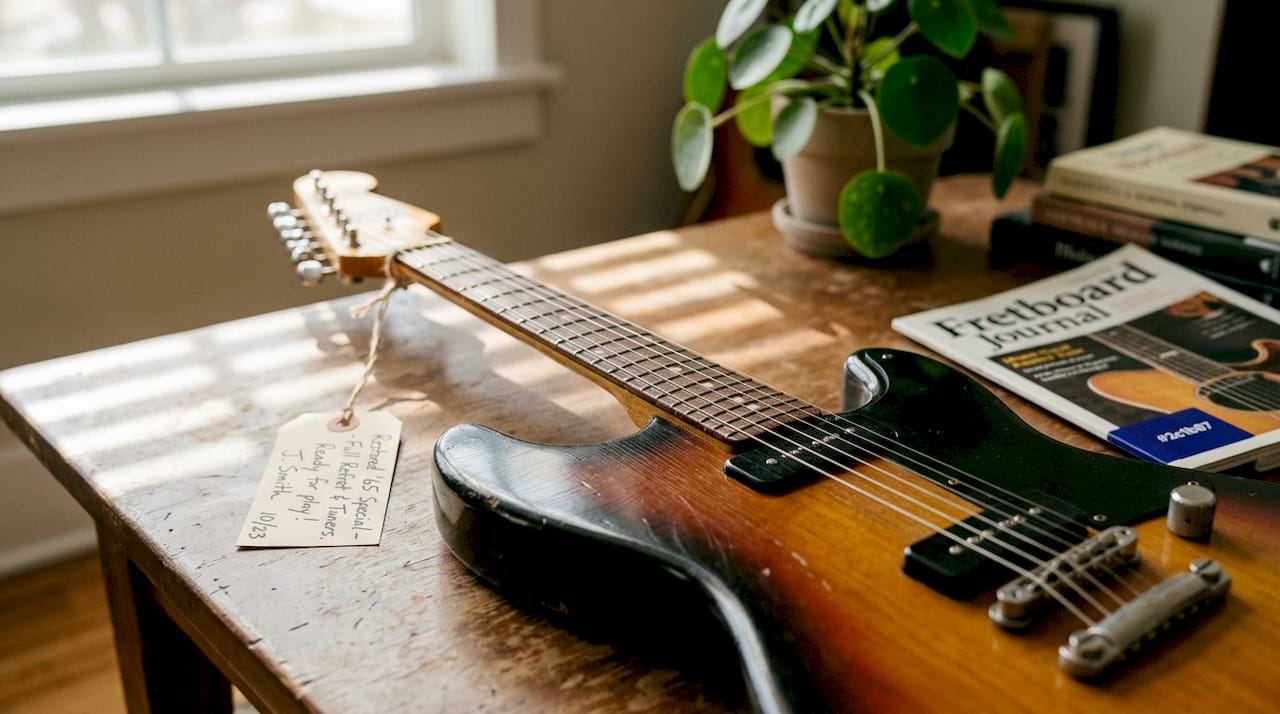
Restoration methodologies prioritize reversibility, use era-appropriate materials, and preserve original parts wherever possible. This means using hide glue instead of modern adhesives, sourcing period-correct hardware, and avoiding any finish work that cannot be reversed. Our guide on guitar restoration value and preservation goes into the economics of this in detail.
| Restoration action | Effect on value |
|---|---|
| Neck reset with hide glue | Preserves value |
| Fret leveling or crowning | Preserves value |
| Crack repair with reversible glue | Preserves value |
| Hardware cleaning and polishing | Neutral to positive |
| Partial finish touch-up | Neutral if done well |
| Full body refinish | Reduces value |
| Replacing original tuners | Reduces value |
| Replacing original bridge | Reduces value significantly |
Pro Tip: Before commissioning any restoration work, ask the luthier specifically which techniques are reversible and which are permanent. A skilled restorer will always be able to answer that question clearly. You can also review our preserve vintage guitar value guide to understand what questions to ask.
Collector value vs. playability: Finding your balance
This is the conversation every serious buyer eventually has with themselves. Do you want a guitar you can play every day, or one that holds maximum investment value? The good news is that with the right restoration approach, you do not always have to choose.
For musicians, restored guitars offer vintage feel at a lower cost than pristine originals, while still delivering the tone and character that makes vintage instruments special. On the other side, some collectors prefer unrestored patina for authenticity, much like antique furniture collectors who value original finish over a polished restoration.
Here is how collectors and players typically weigh their priorities:
Collectors tend to prioritize:
- Original finish, hardware, and parts
- Documented provenance and ownership history
- Minimal intervention and visible aging (patina)
- Long-term investment potential
Players tend to prioritize:
- Comfortable action and reliable intonation
- Structural integrity and stability
- Tonal character and resonance
- Value relative to playability
Exploring the vintage guitar advantages from both perspectives can help you figure out where you fall on this spectrum.
Pro Tip: Always ask for full written documentation of every restoration task performed on a guitar before you buy. This protects your investment, supports future resale, and gives you a clear picture of what the instrument has been through.
Key considerations when choosing a restored guitar
Knowing what to look for makes all the difference when evaluating a restored instrument. A guitar that looks beautiful on the surface may have hidden issues, while a guitar with visible wear might be structurally perfect and tonally exceptional. Here is a step-by-step approach to assessing any restored guitar before committing.
Expert restoration from reputable luthiers using reversible methods adds playability without sacrificing collector appeal. Knowing who did the work is often as important as knowing what was done. Research the luthier, check their reputation, and look for examples of their previous restorations. Our guide on famous guitar makers provides useful context on the craftsmanship traditions that inform great restoration work.
- Verify the luthier’s credentials. Ask for their background, references, and examples of comparable work.
- Request full restoration documentation. Every repair, replacement, and treatment should be recorded in writing.
- Inspect original materials. Check how much of the original wood, finish, and hardware remains intact.
- Play the guitar. Assess action, intonation, fret feel, and overall resonance in person if possible.
- Get an independent appraisal. For significant investments, a third-party valuation protects you and confirms the work’s quality.
- Ask about reversibility. Confirm which restoration steps can be undone if future work is needed.
Taking these steps turns what could be a risky purchase into a confident, informed decision.
Explore expertly restored and vintage guitars
At Vintage Guitar World, we have spent years curating instruments that meet the highest standards of craftsmanship, authenticity, and tonal quality. Every guitar in our collection has been carefully evaluated, and we provide detailed documentation so you know exactly what you are getting.

Whether you are searching for a playing instrument with genuine vintage character or a collector-grade piece with documented provenance, our team is here to help. Browse our full range of vintage guitar types to understand what is available, or read more about the love of vintage guitars to sharpen your eye before you buy. When you are ready to find your next instrument, shop vintage guitars and explore a collection built for people who take their instruments seriously.
Frequently asked questions
Does restoring a vintage guitar always decrease its value?
Not always. When restoration prioritizes reversibility and uses era-appropriate methods, it can preserve or even increase value, particularly if the guitar was previously unplayable.
How can I tell if a guitar has been restored properly?
Look for detailed written documentation of all work performed, original parts wherever possible, and confirmation that the restoration was completed by a reputable luthier with expert methods.
Why do some collectors prefer unrestored guitars?
Collectors often prefer unrestored patina because original condition and visible aging are seen as proof of authenticity and are valued similarly to untouched antiques.
Do restored guitars sound better than new guitars?
Restored guitars offer superior tone in terms of warmth and resonance because aged tonewoods develop a complexity over decades that new instruments have not yet had time to build.