












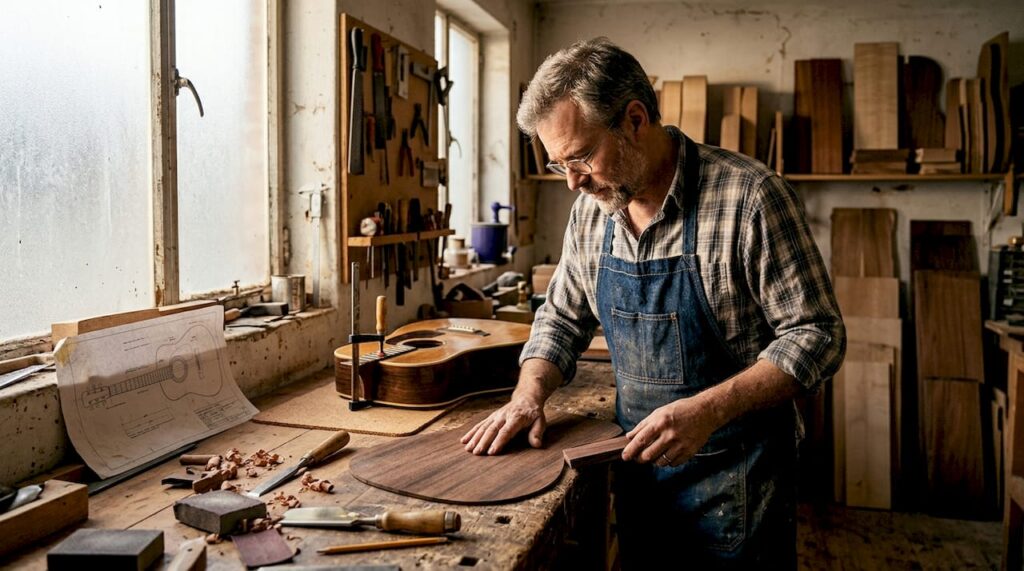

Walk into any room of serious collectors and you’ll hear one truth repeated: not all vintage guitars are created equal. The wood species used in construction is one of the most powerful forces shaping tone, playability, and long-term investment value. A 1959 Les Paul and a 1964 Stratocaster don’t just sound different because of their pickups or hardware. The wood type directly influences tonal character and long-term investment potential in ways that separate a $5,000 guitar from a $50,000 one. If you’re serious about collecting, understanding tonewoods is non-negotiable.
Table of Contents
- Why wood types matter in vintage guitars
- The most iconic tonewoods: Mahogany, maple, rosewood, and more
- How wood types shape vintage guitar tone and playability
- Wood types and vintage guitar value: Collector priorities
- How to evaluate wood type in vintage guitars you find
- Find your next vintage guitar or invest with expert help
- Frequently asked questions
Key Takeaways
| Point | Details |
|---|---|
| Wood selection is critical | The type and age of wood directly shape a vintage guitar’s tone and market value. |
| Iconic tonewoods defined eras | Mahogany, maple, and rosewood are staples of collectible, highly valued vintage guitars. |
| Aging enhances sound | A vintage guitar’s aged wood increases resonance and sustain, enhancing its musicality. |
| Collector value hinges on originality | Original, rare woods dramatically increase desirability and investment potential among collectors. |
| Expert evaluation is essential | Proper identification of wood type is key for authenticity and smart collecting decisions. |
Why wood types matter in vintage guitars
The term tonewood refers to any wood species selected specifically for its acoustic and resonant properties. Builders have always known that not every plank sounds the same, even within the same species. Grain density, moisture content, and cellular structure all determine how a guitar vibrates and projects sound.
In guitar construction, different parts of the instrument call for different woods. The top (or soundboard) does most of the acoustic work on an acoustic guitar. The back and sides shape the tonal color. The neck affects sustain and feel. The fingerboard influences attack and brightness. Each zone has its own tonal job, and the wood chosen for each one matters enormously.
The choice of wood for body, top, back, sides, and neck impacts vibration, resonance, and tonal stability over time. This is why two guitars built in the same year by the same factory can sound noticeably different if one has a denser mahogany body and the other has a lighter piece. Wood properties explained in detail show just how much variation exists even within a single species.
As wood ages, it also loses moisture. This process, sometimes called drying, causes the cellular walls to thin and vibrate more freely. The result is a guitar that opens up tonally over decades. Understanding guitar aging and wood behavior is essential for any serious collector.
Here are the key tonal qualities that wood directly influences:
- Sustain: How long a note rings after being struck
- Warmth: The richness and depth of mid and low frequencies
- Brightness: The presence of high-end clarity and articulation
- Depth: The fullness and body of the overall sound
- Resonance: How freely the wood vibrates across all frequencies
“The wood is not just a container for the electronics or strings. It is the instrument. Every species tells a different story through sound.”
With this foundation, let’s examine how these wood choices played out in the most collectible vintage guitars.
The most iconic tonewoods: Mahogany, maple, rosewood, and more
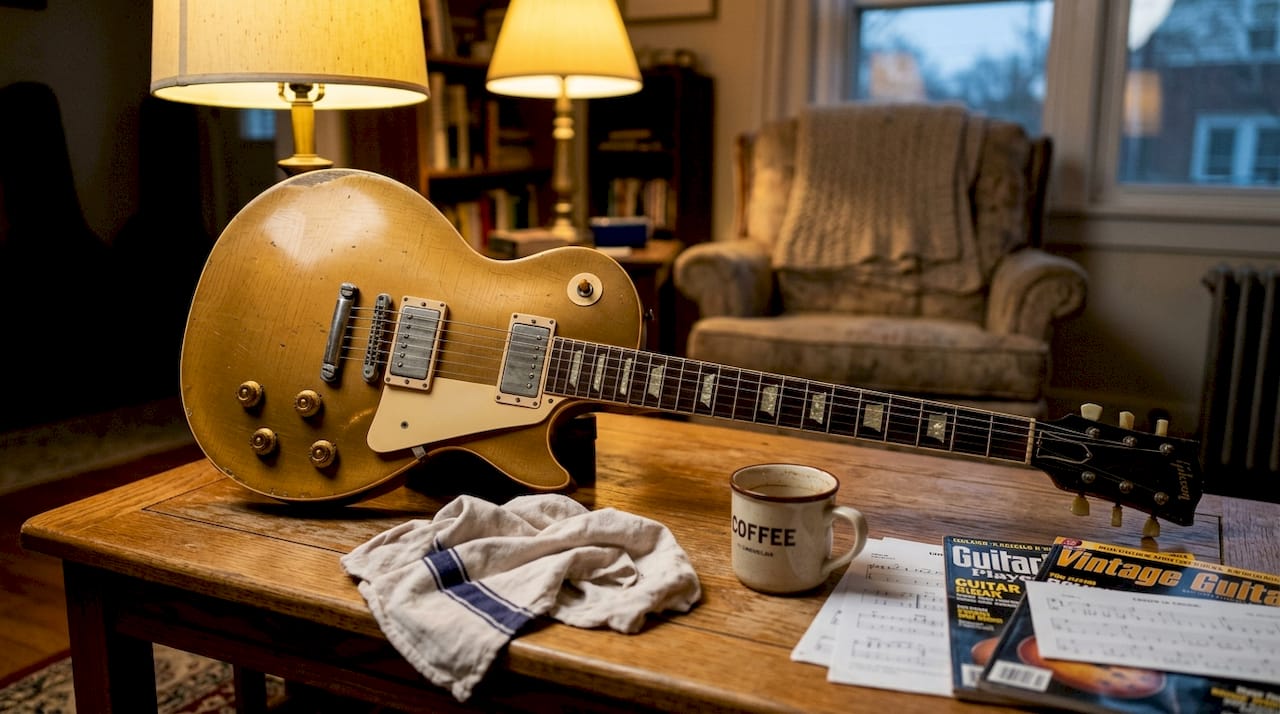
Mahogany, maple, and Brazilian rosewood were the classic staples for vintage guitars and defined entire generations of sound. Each species brought something unique to the table, and each one carries its own collector story today.
| Wood | Appearance | Tone profile | Common models | Collector value |
|---|---|---|---|---|
| Mahogany | Reddish-brown, straight grain | Warm, full, mid-forward | Gibson Les Paul, SG | High |
| Maple | Light, tight grain | Bright, punchy, articulate | Fender Stratocaster neck | High |
| Brazilian rosewood | Dark, oily, varied grain | Rich, complex, deep lows | Pre-1970 Martin, Gibson | Very high |
| Spruce | Pale, fine grain | Clear, dynamic, responsive | Acoustic tops universally | High |
| Alder | Light tan, subtle grain | Balanced, clean, versatile | Fender Stratocaster body | Moderate |
| Ash | Blonde, pronounced grain | Bright, snappy, glassy | Fender Telecaster | Moderate to high |
Brazilian rosewood deserves special attention. It was banned from international trade under CITES regulations in 1992, making any vintage guitar built with it before that date a genuinely scarce commodity. Guitars with verified Brazilian rosewood fingerboards or backs and sides now carry significant premiums at auction. This is one case where sustainability law directly created collector value.
Indian rosewood replaced Brazilian rosewood in most production after the late 1960s. It’s a fine wood, but collectors know the difference. The grain is coarser, the oils are slightly different, and the tonal complexity is generally considered a step below its Brazilian counterpart. Knowing how to tell them apart is a real skill.
Pro Tip: Always request original wood species documentation when purchasing a vintage guitar. Builder records, case candy, and period-correct receipts can confirm authenticity and protect your investment when it’s time to resell. Check vintage guitar wood types for a deeper breakdown of species by era.
Now, see how these woods shape the timeless tones and the market desirability of legendary vintage guitars.
How wood types shape vintage guitar tone and playability
Understanding why wood affects tone requires looking at four specific factors in sequence:
- Density: Denser woods like maple transfer energy quickly, producing bright, fast attack. Less dense woods like mahogany absorb more energy, creating warmth and sustain.
- Grain pattern: Tight, straight grain vibrates more consistently. Wide or irregular grain can introduce tonal unpredictability, which some players love and others avoid.
- Moisture retention: Fresh-cut wood holds moisture that dampens vibration. As guitars age and dry out, the wood becomes more acoustically active.
- Aging effects: Decades of playing, temperature cycles, and humidity changes cause cellular changes that improve how freely the wood resonates.
Think about the classic Gibson versus Fender tonal divide. Gibson’s heavy use of mahogany for bodies and necks, combined with rosewood fingerboards, produces that thick, warm, singing tone associated with Les Pauls. Fender’s use of alder or ash bodies with maple necks creates the snappy, glassy, bell-like clarity of a Stratocaster or Telecaster. These aren’t just design choices. They are wood choices.
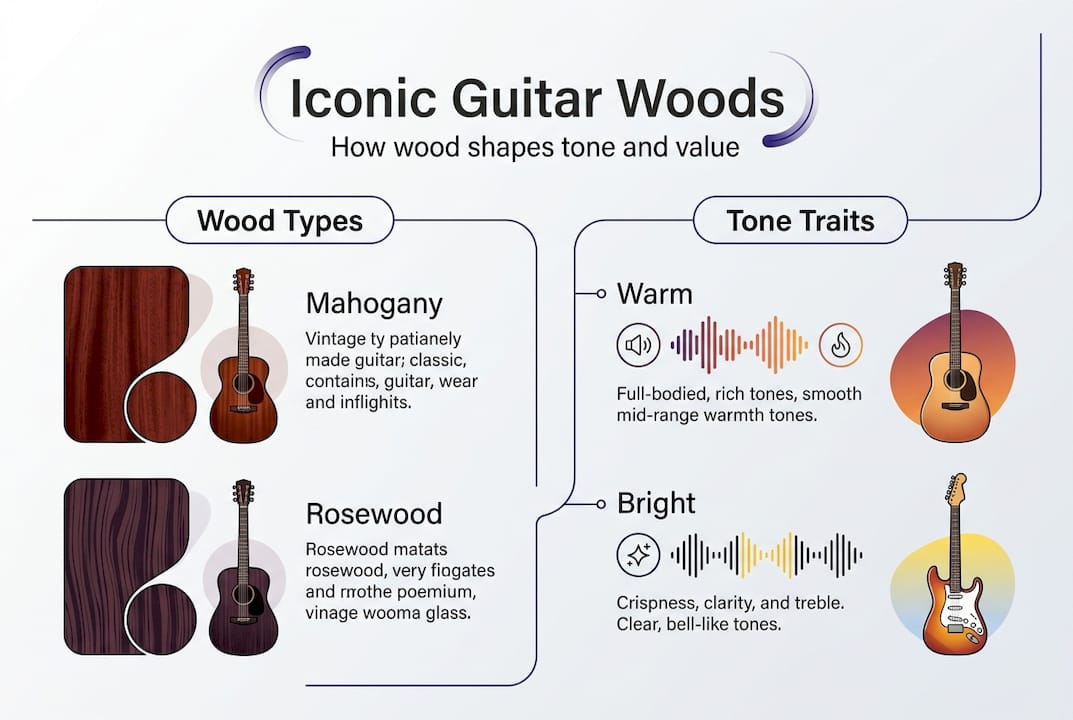
The numbers back this up. Aging wood improves vibration and sustain, leading to up to 10% better resonance in vintage instruments compared to newer equivalents. That’s not a subtle difference. Players who pick up a well-aged vintage guitar often describe it as feeling more alive under their fingers, more responsive to dynamics, and richer in harmonic complexity.
For players, the difference between woods is also tactile. Maple fingerboards feel slicker and faster. Rosewood feels slightly warmer and more grippy. These details matter to professionals and serious hobbyists who spend hours with an instrument. Explore how acoustic and electric value differs across wood types, and see how vintage vs new sound comparisons reveal the aging advantage.
Now let’s consider how collectors factor wood types into the guitars they seek out and what that means for market value.
Wood types and vintage guitar value: Collector priorities
The market speaks clearly. Vintage guitars with original Brazilian rosewood command premium prices due to scarcity and legendary sound. A pre-1970 Martin D-28 with Brazilian rosewood back and sides regularly sells for two to three times the price of an equivalent post-1970 model with Indian rosewood.
| Guitar | Wood spec | Approximate sale range |
|---|---|---|
| 1959 Gibson Les Paul Standard | Mahogany body, rosewood board | $250,000 and up |
| Pre-1969 Martin D-28 | Brazilian rosewood back/sides | $8,000 to $20,000 |
| 1954 Fender Stratocaster | Ash body, maple neck | $40,000 to $80,000 |
| Post-1970 Martin D-28 | Indian rosewood back/sides | $3,000 to $6,000 |
Collector demand spikes sharply for pre-restriction woods. But wood originality matters just as much as species. A vintage guitar that has had its fingerboard replaced, even with the same species, loses significant value. Collectors want the original material that left the factory. Any swap, repair, or replacement introduces doubt.
Here’s what serious collectors look for when evaluating wood:
- Original finish over the wood with no signs of replacement
- Consistent grain and color matching across body sections
- Period-correct wood species for the year and model
- No evidence of refrets that removed original fingerboard material
- Documentation confirming species and provenance
Pro Tip: Before purchasing any vintage guitar, use resources like identifying guitar woods to cross-reference what you’re seeing with known specs for that model and year. Learn more about what makes guitars valuable and the vintage collector advantages that come with owning original-spec instruments.
With the collector’s perspective clear, let’s put knowledge into action for your vintage guitar journey.
How to evaluate wood type in vintage guitars you find
Proper evaluation of wood type is essential to authenticate and price a vintage guitar. Here’s a practical step-by-step process:
- Start with visual inspection: Look at grain direction, pore size, and color. Brazilian rosewood has an oily sheen and irregular dark streaks. Mahogany shows a ribbon-like interlocked grain. Maple is pale and tight.
- Check the neck joint and body seams: Replaced sections often show slight color mismatches or different grain patterns under close inspection.
- Look for finish anomalies: Refinishing or wood swaps often leave telltale signs around binding edges, pickup routes, or under the pickguard.
- Review documentation: Original hang tags, case paperwork, and factory records are gold. Cross-reference with known production specs for the model year.
- Consult a luthier: When in doubt, a qualified luthier can confirm wood species through grain analysis and sometimes UV light testing.
Common mistakes collectors make include assuming all dark fingerboards are rosewood (ebony is also dark), or accepting a seller’s word without visual confirmation. Spotting guitar woods in the field takes practice, but the investment in learning pays off.
Bring these tools when evaluating a vintage guitar in person:
- 10x jeweler’s loupe or magnifier for grain inspection
- UV/blacklight flashlight to detect refinishing or repairs
- Reference photos of known original examples for comparison
- Documentation checklist covering year, model, and expected wood specs
- Smartphone for real-time research and photo documentation
Armed with practical know-how, you can now approach your vintage guitar hunt with a collector’s eye.
Find your next vintage guitar or invest with expert help
Knowing your tonewoods is only half the equation. Finding a guitar with verified original wood, proper documentation, and honest pricing is where most collectors hit a wall. That’s exactly where we come in.

At Vintage Guitar World, every instrument in our catalog is evaluated by experts who understand the difference between Brazilian and Indian rosewood, original mahogany and a replacement piece, and a factory finish versus a refin. You can explore vintage wood types across our full range of acoustic and electric instruments, follow our buying vintage guitars expert guide to make a confident purchase, or browse unique vintage guitars with verified provenance directly in our shop. Rare woods, real history, and expert backing in one place.
Frequently asked questions
Which wood types increase a vintage guitar’s value most?
Brazilian rosewood and old-growth mahogany tend to command the highest prices due to rarity and tonal legacy. Vintage guitars with Brazilian rosewood consistently achieve premium results at auction.
How do I authenticate the wood type of a vintage guitar?
Check for visual grain patterns, builder documentation, and have a trusted luthier confirm the material if possible. Proper evaluation of wood type is the foundation of any credible authentication process.
Does wood type affect both acoustic and electric vintage guitars?
Yes, although wood affects acoustic tone more directly, it also shapes the resonance and feel of electric models. Body wood impacts vibration and tonal stability in both instrument types.
Can replaced or refinished woods hurt a vintage guitar’s value?
Yes, non-original woods or refinishing typically lower value significantly for serious collectors. Wood originality is crucial to collector value and resale potential.
Why do some vintage guitars sound better as they age?
As wood ages, it loses moisture and the cellular structure changes, improving resonance and sustain. Aging wood improves vibration and resonance in vintage instruments over decades of natural drying.