












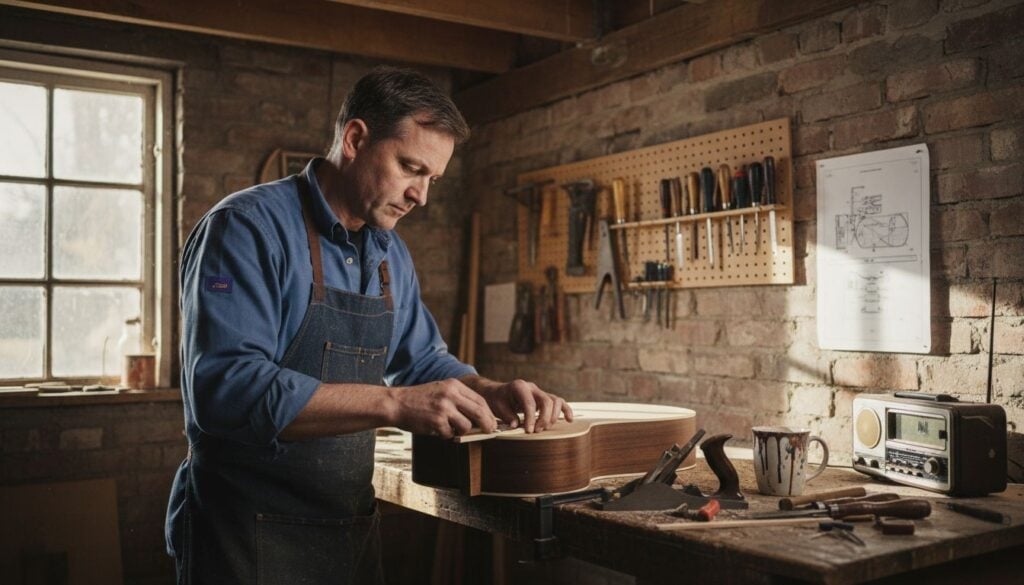

When you hold a handcrafted guitar, you’re experiencing the work of a luthier, a specialized artisan whose skills transform raw wood into musical instruments. Luthiers are stringed instrument makers who blend traditional woodworking, acoustic science, and artistic vision to create guitars that sound and play far better than factory models. Their expertise shapes everything from tonal warmth to visual beauty, making them indispensable to guitar quality and legacy. This article reveals how luthiers influence every aspect of guitar making, from historical evolution to modern craftsmanship and preservation.
Table of Contents
- What Is A Luthier And Why Are They Essential To Guitar Making?
- Historical Evolution Of Guitars And The Luthier’s Influence
- Craftsmanship Essentials: Materials, Bracing, And Sound Shaping
- The Luthier’s Role In Guitar Repair And Preservation
- Explore Exceptional Vintage Guitars Crafted And Preserved By Expert Luthiers
- Frequently Asked Questions
Key takeaways
| Point | Details |
|---|---|
| Luthiers blend art and science | They combine woodworking, acoustic physics, and design to create superior guitars. |
| Sound quality depends on their expertise | Wood selection, bracing patterns, and resonance tuning directly shape tonal character. |
| They preserve guitar heritage | Luthiers restore vintage instruments and pass down centuries of craftsmanship knowledge. |
| Handcrafted guitars outperform mass production | Custom builds offer better playability, tone complexity, and long-term value. |
| Repair expertise maintains instrument value | Professional restoration prevents damage and sustains both sound quality and market worth. |
What is a luthier and why are they essential to guitar making?
A luthier is a stringed instrument maker or repairman who specializes in creating and maintaining guitars, lutes, violins, and similar instruments. Unlike factory workers following assembly line protocols, luthiers are artisans who master multiple disciplines simultaneously. They need deep knowledge of wood properties, acoustic principles, structural engineering, and aesthetic design to produce instruments that meet professional standards.
Their typical tasks span the entire creation process. Luthiers select wood species based on tonal qualities, shape soundboards and bodies to optimize resonance, install precisely calibrated bracing systems, assemble components with millimeter accuracy, apply protective finishes, and perform final setup adjustments. Each decision affects the guitar’s voice, playability, and visual appeal. This requires years of hands-on experience and acute attention to detail that machines cannot replicate.
The balance among sound quality, playability, and design separates exceptional luthiers from competent ones. A beautiful guitar that sounds dull fails its purpose. A resonant instrument with uncomfortable action frustrates players. Luthiers constantly navigate these trade-offs, making micro-adjustments that cumulatively determine whether an instrument becomes a cherished tool or a decorative object. Understanding guitar craftsmanship quality helps buyers recognize these distinctions.
Key luthier responsibilities include:
- Selecting tonewoods based on grain patterns, density, and resonance characteristics
- Shaping soundboards to precise thickness gradients for optimal vibration
- Installing bracing systems that balance structural strength with tonal projection
- Fitting necks with accurate geometry for comfortable playability across all frets
- Applying finishes that protect wood while allowing acoustic energy transfer
- Performing setup adjustments including action height, intonation, and string spacing
Pro Tip: Choosing a guitar made by a skilled luthier often means better sound and playability, even if pricier upfront. The investment pays off through superior tone, comfortable feel, and instruments that improve with age rather than deteriorate.
Historical evolution of guitars and the luthier’s influence
The modern guitar emerged from centuries of luthier innovation and experimentation. Early influences included the kithara, gittern, lyre, lutes, and vihuela, each contributing design elements that evolved into contemporary instruments. Renaissance four-course guitars gradually transformed into five-course and eventually six-string configurations as luthiers responded to musical demands and discovered improved construction methods.
Antonio de Torres revolutionized classical guitar design in the mid-19th century, establishing proportions and structural principles still used today. His innovations in body size, fan bracing patterns, and soundboard dimensions created the tonal foundation for modern classical guitars. Torres demonstrated how systematic experimentation by skilled luthiers could fundamentally improve instrument performance, inspiring generations of makers to refine his concepts further.
Luthiers like John Edward Betts and George Hart established professional standards and passed knowledge through family workshops, creating dynasties of expertise. This generational transfer preserved techniques while allowing incremental improvements. Each master luthier trained apprentices who eventually contributed their own innovations, building a cumulative knowledge base that factory production cannot match. The history of classical guitars shows this continuous refinement process.
Key historical milestones shaped by luthiers:
- Transition from gut to modern strings requiring stronger neck construction and different bracing
- Development of fan bracing by Torres for improved bass response and tonal balance
- Introduction of X-bracing for steel-string guitars enabling louder projection
- Standardization of scale lengths and body dimensions for consistent playability
- Evolution of neck attachment methods from glued joints to bolt-on and through-neck designs
- Refinement of finish techniques from shellac to modern lacquers and oils
Many famous luthiers built reputations through distinctive voices and construction philosophies. Their instruments became benchmarks against which others were judged, establishing quality standards that persist today. Collectors prize guitars from renowned makers not just for historical significance but for tonal characteristics that remain unmatched by contemporary production methods.
Craftsmanship essentials: materials, bracing, and sound shaping
Wood selection forms the foundation of guitar tone. Spruce offers bright, articulate sound with strong projection. Cedar provides warmth and immediate response. Mahogany delivers focused midrange with controlled overtones. Rosewood contributes complex harmonics and sustain. Luthiers choose combinations based on desired tonal balance, considering how top wood interacts with back and side materials to shape the instrument’s voice.
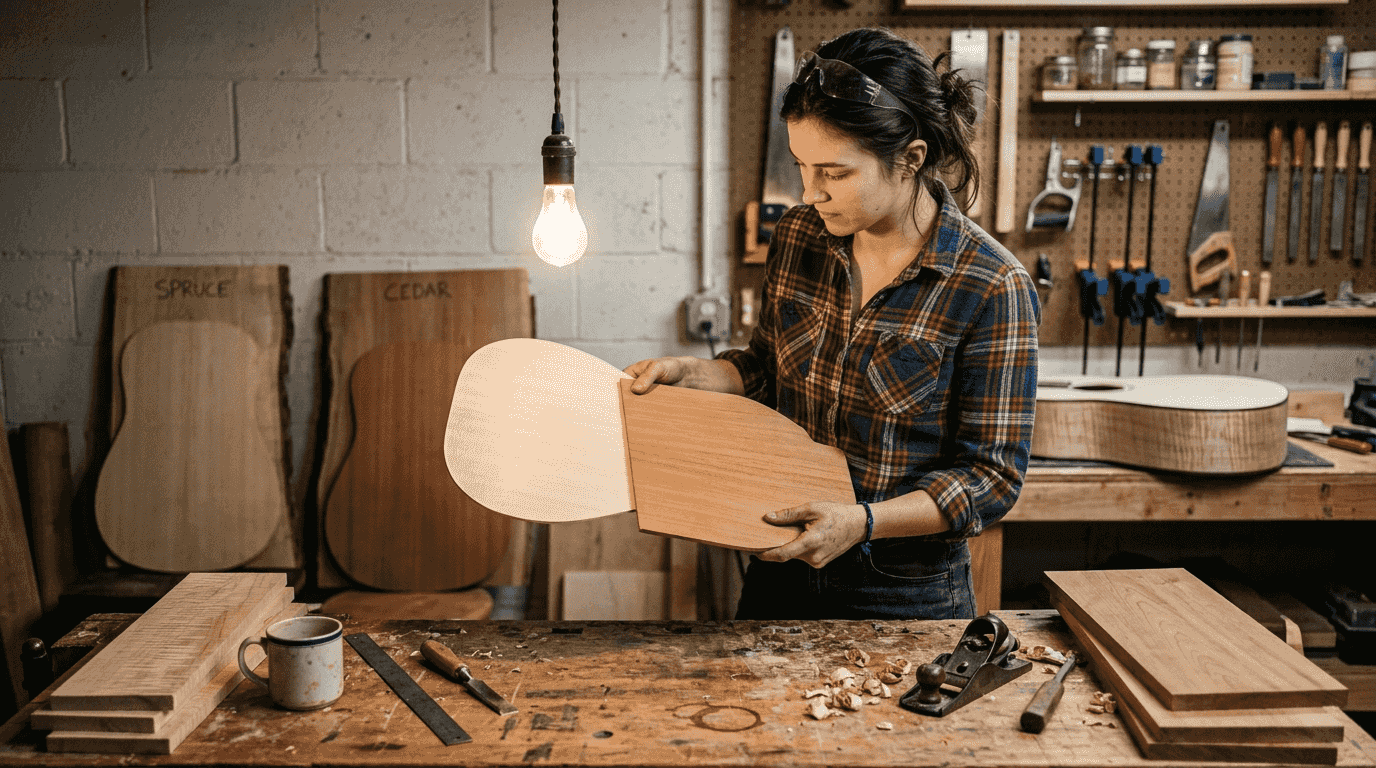
Resonance plate tuning through precise wood shaping influences acoustic properties dramatically. Luthiers tap soundboards while gradually reducing thickness, listening for specific pitch relationships that indicate optimal stiffness. This process requires experienced ears and careful hand work, as removing too much material weakens structure while leaving too much dampens resonance. The goal is finding the sweet spot where the wood vibrates freely while maintaining structural integrity.
Bracing patterns determine how soundboards respond to string vibration. X-bracing enhances sustain and tonal balance in steel-string guitars by distributing stress evenly across the top. Fan bracing, typical for classical guitars, radiates from the sound hole to support the bridge area while allowing the lower bout maximum flexibility for warm bass response. Ladder bracing uses parallel struts for simplicity but limits tonal complexity. Understanding why classical guitars differ reveals how these choices affect playing experience.
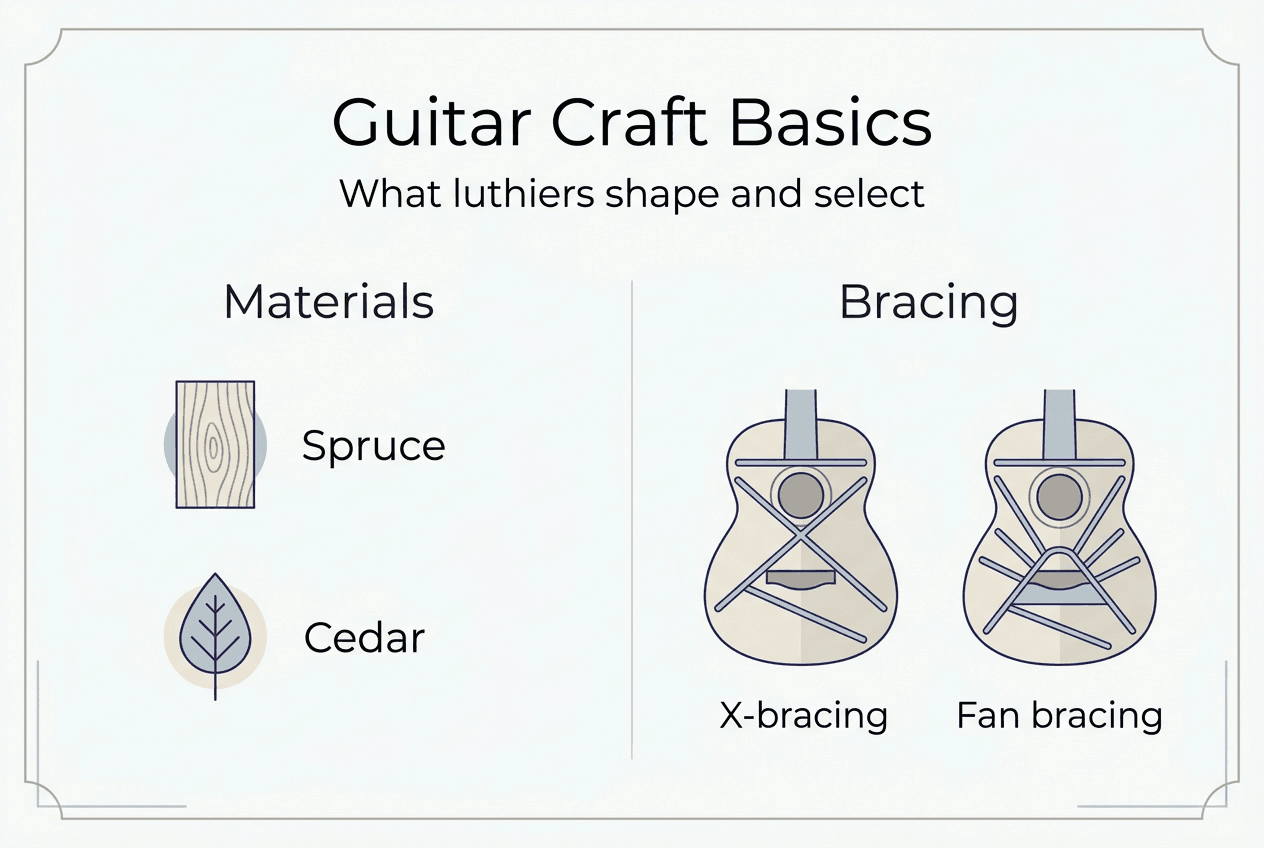
| Bracing Pattern | Tonal Characteristics | Typical Application |
|---|---|---|
| X-bracing | Balanced tone, strong sustain, clear note separation | Steel-string acoustic guitars |
| Fan bracing | Warm bass, singing trebles, complex overtones | Classical and flamenco guitars |
| Ladder bracing | Simple, direct tone with less complexity | Vintage and parlor guitars |
Brace mass versus resonance presents constant trade-offs. Heavier braces provide structural security but dampen vibration. Lighter braces maximize resonance but risk soundboard collapse under string tension. Skilled luthiers calculate precise dimensions based on wood density, string gauge, and desired tonal outcome. They often thin braces after initial installation, making incremental adjustments while testing acoustic response.
Visual elements must complement rather than compromise function:
- Binding protects edges while adding aesthetic appeal without adding excessive weight
- Inlay work enhances appearance but requires careful placement to avoid weakening structural points
- Finish thickness affects tone, with thinner applications allowing freer wood movement
- Rosette designs frame the sound hole decoratively while serving no acoustic purpose
- Wood figure and grain patterns provide visual interest naturally without requiring added materials
Pro Tip: Careful bracing modification requires expert luthier skill to avoid damage and preserve tone. Amateur adjustments often ruin guitars permanently, while experienced makers can transform mediocre instruments into exceptional ones through strategic brace shaving and repositioning.
The luthier’s role in guitar repair and preservation
Guitars require professional maintenance throughout their lifespan. Common issues include seam separation from humidity changes, soundboard cracks from impact or drying, worn frets causing buzzing and intonation problems, and loose braces creating rattles or dead spots. Many luthiers dedicate significant time to repairing instruments including fixing these problems while preserving original construction and tonal character.
Proper restoration demands expertise that prevents further damage. Inexperienced repairs often use inappropriate adhesives, apply excessive clamping pressure, or remove original material unnecessarily. Skilled luthiers understand historical construction methods and choose period-appropriate techniques when restoring vintage instruments. They recognize when modern materials offer advantages and when traditional approaches better preserve authenticity and value.
Complete restorations of vintage guitars preserve historic artistry and sound quality. A 1960s classical guitar with loose braces and finish checking can be returned to playing condition while maintaining its distinctive voice. Luthiers clean decades of grime, re-glue separated joints, replace worn frets, and refinish only when absolutely necessary. The goal is stabilizing the instrument for continued use while respecting its history and original maker’s intentions.
Routine maintenance tasks enhance playability and extend instrument life. Luthiers perform seasonal humidity adjustments, optimize string action for individual playing styles, correct intonation issues, clean and condition fingerboards, and replace worn saddles and nuts. These services keep guitars performing at their best and prevent minor issues from becoming major problems. Understanding why classical guitars retain value shows how proper maintenance protects investments.
Signs your guitar needs professional luthier attention:
- Buzzing that persists after string height adjustment indicates fret wear or neck relief problems
- Visible cracks in the soundboard, back, or sides require immediate stabilization
- Rattling sounds suggest loose braces or separated interior components
- Intonation problems where fretted notes sound increasingly sharp or flat up the neck
- Action that becomes uncomfortably high or low despite seasonal consistency
- Finish checking or flaking that exposes bare wood to moisture damage
For collectors, luthier expertise directly impacts instrument value. A poorly executed repair reduces market worth significantly, while professional restoration by recognized specialists can increase value beyond pre-damage levels. Documentation of work performed, materials used, and structural modifications becomes part of the guitar’s provenance, affecting future sale potential and insurance valuations.
Explore exceptional vintage guitars crafted and preserved by expert luthiers
Now that you understand the artistry and technical skill luthiers bring to guitar making, you can appreciate the exceptional instruments available at Vintage Guitar World. Our curated collection features guitars crafted by master luthiers whose work exemplifies the principles discussed here. Each instrument has been evaluated for craftsmanship quality, tonal excellence, and historical significance.

Discover why we love vintage guitars and explore our selection of rare, handcrafted instruments that showcase luthier expertise at its finest. Our expert buying guide helps you identify quality craftsmanship and make informed decisions. Learn about famous luthiers whose instruments we feature, connecting your appreciation of the craft with opportunities to own pieces of guitar-making history.
Frequently asked questions
What does a luthier do when building a guitar?
The primary work involves constructing new instruments from scratch, starting with selecting woods based on tonal goals and visual appeal. Luthiers shape the soundboard and back to precise thickness gradients, install bracing systems calibrated for the chosen woods, assemble the body with reinforced joints, attach the neck with accurate geometry, apply protective finishes, and perform final setup including fret leveling and action adjustment. Throughout this process, they tune the guitar’s resonance by tapping and listening, making micro-adjustments that optimize acoustic response.
How do luthiers influence a guitar’s sound quality?
Sound quality depends on wood type selection, bracing pattern design, body shape proportions, and thickness tuning across the soundboard. Spruce tops produce bright, projecting tones while cedar offers warmth and immediate response. Fan bracing creates singing trebles and warm bass, while X-bracing provides balanced sustain. Custom-built guitars by luthiers often outperform factory models in tonal complexity and responsiveness due to precise selection and tuning. Expert luthiers balance sustain, tone color, and playability through years of experience that cannot be programmed into manufacturing equipment.
Why is luthier repair important for vintage guitars?
Repair and restoration by skilled luthiers preserve both playability and investment value of vintage instruments. Professional repair prevents cracks from spreading, stops warping before it becomes irreversible, and addresses structural issues before they compromise the entire instrument. Proper restoration maintains original tone by using appropriate materials and techniques that respect the maker’s construction philosophy. For collectors, documented luthier work protects market value, as amateur repairs significantly reduce what buyers will pay. Vintage guitars represent both musical tools and historical artifacts, requiring expertise that honors both functions.
What skills separate exceptional luthiers from competent ones?
Exceptional luthiers possess refined acoustic intuition developed through building hundreds of instruments and hearing how minute changes affect tone. They understand wood behavior across humidity ranges and can predict how an instrument will age and change over decades. Master luthiers innovate within traditional frameworks, improving designs without abandoning proven principles. They also communicate effectively with musicians, translating subjective tonal descriptions into specific construction modifications. This combination of technical mastery, acoustic sensitivity, and collaborative skill creates instruments that exceed player expectations rather than merely meeting specifications.
How long does it take to become a skilled luthier?
Becoming competent requires three to five years of intensive training, either through formal programs or apprenticeships with established makers. Developing true expertise takes a decade or more of continuous practice and experimentation. Many luthiers report that their understanding deepens significantly after building their first hundred instruments, as patterns emerge that reveal how variables interact. The learning never truly stops, as wood supplies change, player preferences evolve, and new techniques emerge. This ongoing education separates career luthiers who constantly refine their craft from hobbyists who reach a plateau and stop progressing.