














Lightweight guitars are preferred because they reduce physical strain during long sessions, tend to produce a more responsive and resonant tonal character, and travel far more easily than heavier alternatives. The caveat: go too light or rely on aggressive chambering, and you risk feedback problems, headstock dive, and a tonal thinness that no pickup swap will fix.
Three things consistently come up in serious discussions about guitar weight: ergonomics, tonal responsiveness, and the collector signal that lighter vintage wood often carries. A dataset of 466 guitars mapped tonewoods to average instrument weights and tonal tendencies, confirming that wood species is the single biggest variable in how a finished instrument feels on a strap. Luthier commentary across the industry echoes this: the relationship between mass and playability is real, but it is never simple.
- Lighter instruments reduce shoulder, back, and nerve strain for players in extended sessions
- Tonal character trends toward “airy” and responsive rather than “pushy” or compressed
- Portability matters for gigging, travel, and cramped tour transport
- In vintage instruments, lower mass often signals naturally seasoned wood, a quality collectors prize
- The “sweet spot” varies by instrument family; chasing the lowest possible weight is rarely the goal
Table of Contents
- Why lightweight guitars are preferred: the core reasons
- How weight actually affects tone, sustain, and resonance
- What to look for when choosing a lightweight guitar
- Trade-offs: when a heavier guitar might be the better choice
- Care, transport, and preserving value for lightweight vintage guitars
- Key Takeaways
- The weight question deserves a more honest answer
- Vintage-guitar-world: curated lightweight guitars, expert appraisal, and hands-on testing
- Useful sources and further reading
Why lightweight guitars are preferred: the core reasons
Ergonomics and physical endurance. The most immediate benefit of a lighter guitar is reduced strain on the shoulder, upper back, and the ulnar nerve that runs along the forearm. For players who stand through long sets or practice for hours daily, this is not a minor comfort preference. It is a performance variable. A guitar that causes fatigue by the second set affects timing, attack control, and ultimately the quality of the playing.
Tonal responsiveness. Many players and builders describe lighter-bodied guitars as sounding more “alive.” The body vibrates more freely, and that translates to a quicker, more dynamic response to picking attack. This is particularly noticeable on acoustic instruments and on semi-hollow electrics, where the body’s acoustic contribution is audible even through an amp.
“I found most of the time, if you go through five or six guitars, the lightest one is probably gonna sound better. I don’t know if it’s older wood or dryer, but they seem to speak a little bit better.” — Derek Trucks, speaking to Premier Guitar
Portability and stage practicality. Reduced mass is an operational advantage for gigging musicians: easier to carry through airports, easier to load into cramped vehicles, and less physically taxing during long standing sets. For a touring player, the difference between a 7-pound guitar and a 10-pound guitar compounds across a full tour.
The collector signal. Lighter weight in a vintage instrument often reflects decades of natural wood seasoning. Older, well-seasoned wood becomes less dense over time, and collectors read this as a mark of authenticity and tonal character rather than a structural compromise. A 1960s instrument that has lost density naturally is a very different proposition from a modern guitar that was chambered to hit a weight target.
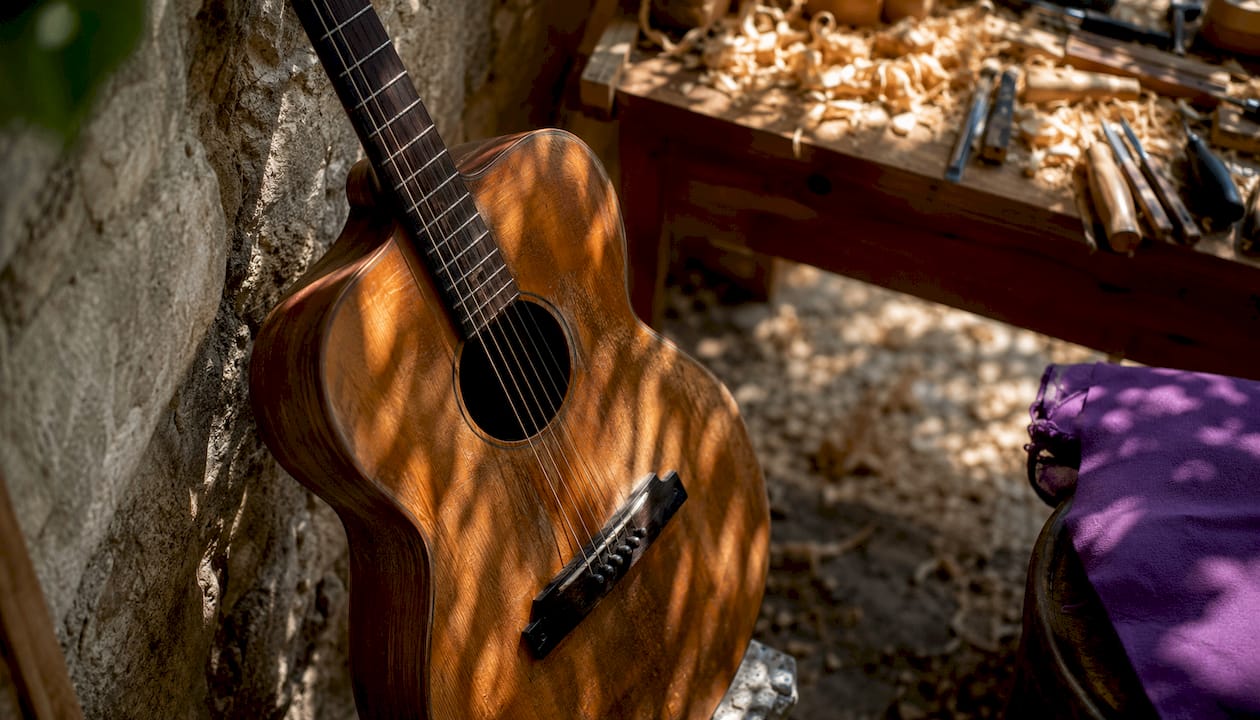
Price and desirability. For certain collector segments, lightness in a vintage piece contributes directly to desirability and, by extension, to valuation. An instrument that is light because of its wood quality and age is more sought after than one that is light because material was removed.

Pro Tip: When evaluating a vintage guitar for purchase, ask the seller for the exact weight measured on a postal or kitchen scale, not an estimate. A half-pound difference can meaningfully affect both playability and collector value.
How weight actually affects tone, sustain, and resonance
Mass influences how energy moves through a guitar body and into the air or the pickups. A lighter body vibrates more freely, which tends to produce faster attack and a more open, resonant character. A denser body absorbs and transfers energy differently, often yielding longer sustain and a more compressed, “pushed” midrange.
The simple “more mass equals more sustain” idea, though, is too reductive. Neck joint quality, bridge fit, and hardware all affect sustain more than raw body weight. A lightweight guitar with a tight neck joint and well-fitted bridge hardware can sustain as long as a heavy guitar with a sloppy assembly. Collectors who prioritize original parts and build integrity are, whether they know it or not, prioritizing the actual drivers of sustain.
Construction quality, not body weight, is what separates a guitar that sustains beautifully from one that dies on the vine. The neck joint, bridge fit, and hardware integrity matter more than the number on the scale.
The tonewood weight study of 466 instruments gives a useful reference frame for what to expect from common species:
| Tonewood | Relative Weight | Tonal Character |
|---|---|---|
| Basswood | Light | Warm, balanced, even response |
| Alder | Light–Medium | Clear midrange, articulate |
| Ash (swamp) | Light–Medium | Bright, snappy, pronounced highs |
| Mahogany | Medium–Heavy | Warm, thick, longer decay |
| Maple | Medium–Heavy | Bright, tight, compressed |
Lighter species like basswood and swamp ash tend toward faster response and clearer articulation. Mahogany and maple push toward warmth and compression. Neither profile is inherently superior; they suit different playing styles and genres.
Understanding guitar construction at the wood and bracing level helps collectors and players read weight as one variable among many, not the deciding factor.
What to look for when choosing a lightweight guitar
- Confirm the actual weight. Request a measurement taken on a reliable scale, not a spec-sheet estimate. Manufacturers often round, and vintage listings frequently guess.
- Test strap balance. Put the guitar on a strap and let go of the neck. If it dives toward the headstock, the body is too light relative to the neck mass. Poor balance causes more fatigue than moderate overall weight.
- Identify the wood species. Lighter instruments built from alder, basswood, or swamp ash are structurally sound choices. Be cautious when a guitar is light but the species listed is typically heavy; ask why.
- Check for chambering or weight-relief routing. Chambering is not automatically a problem, but excessive chambering increases feedback risk at stage volumes and can alter high-gain performance. Ask for photos of the routing if it is not visible.
- Inspect the neck joint and bridge fit. These affect sustain and stability far more than body weight. Any looseness here is a red flag regardless of how the guitar sounds unplugged.
- Verify original hardware. Replacement tuners, bridges, or tailpieces change both the weight distribution and the collector value. Ask for the original parts list and compare it to the instrument.
- Check provenance documentation. For vintage instruments, original receipts, case candy, and documented ownership history support both authenticity and valuation.
Pro Tip: For vintage instruments specifically, a guitar that is lighter than expected for its model and era deserves extra scrutiny. Natural seasoning is desirable; undisclosed structural repairs that removed mass are not. Ask directly.
Trade-offs: when a heavier guitar might be the better choice
Heavier guitars are not simply the less comfortable option. For certain players and musical contexts, the added mass is exactly what the instrument needs.
A heavy guitar conveys a sense of solidity. You feel the mass behind every note, and that gives a certain confidence as a player — a quality that lighter instruments sometimes can’t replicate, especially in dense band mixes.
Dense tonewoods like solid mahogany and heavy ash produce longer sustain and a fuller, more compressed low-end. For blues and classic rock players who want notes to bloom and decay slowly, that character is the point. A lightweight guitar in the same context can feel thin or insubstantial, even when it measures well on every other metric.
Studio recording is another context where heavier instruments often earn their place. The slower decay and midrange push of a dense body can sit in a mix differently, filling space that a lighter, airier guitar leaves open. Some producers specifically reach for heavier instruments when tracking rhythm parts that need to anchor the low end.
The tactile dimension matters too. Players who associate physical weight with quality and stability often perform better on heavier instruments, not because the guitar is objectively superior, but because confidence affects playing. Genre authenticity plays into this: a vintage-spec Les Paul build that weighs 9 pounds feels correct in a way that a chambered version of the same model does not, for players who grew up with the original.
The history of guitar construction shows that weight was never incidental: builders chose dense woods deliberately for their structural and tonal properties, and those choices defined the sound of entire genres.
Care, transport, and preserving value for lightweight vintage guitars
Lightweight vintage and handcrafted guitars need careful packing and consistent humidity control. Instruments that are light because of natural wood seasoning can be more vulnerable to shocks, and any previous repairs that reduced mass may have introduced structural weak points that are not immediately visible.
Maintenance checklist:
- Keep relative humidity between 45% and 55% using a case humidifier or room humidifier
- Check neck relief and truss rod adjustment seasonally, especially in climates with large humidity swings
- Inspect the bridge and nut for wear or lifting at every string change
- Have a certified luthier perform a full setup at least once a year for instruments in regular play
Transport and packing:
- Use a hard-shell case with suspension padding for any vintage or handcrafted instrument
- Loosen strings slightly before air travel to reduce tension on the neck during pressure changes
- For courier shipping, double-box with at least two inches of foam between the case and the outer box
- Never leave a lightweight vintage guitar in a car trunk or direct sunlight; temperature swings are more damaging than humidity alone
Valuation considerations. Appraisers evaluating lightweight vintage guitars look for authenticity of original hardware, natural seasoning signs in the wood grain, documented provenance, and the absence of undisclosed structural repairs. A professional guitar appraisal documents all of these factors and establishes a defensible market value. For collectors, this documentation is as important as the instrument itself.
Key Takeaways
Lightweight guitars are preferred because they combine ergonomic endurance, a more responsive tonal character, and practical portability, but the sweet spot depends on instrument family, construction quality, and playing context.
| Point | Details |
|---|---|
| Ergonomic benefit | Lighter instruments reduce shoulder, back, and nerve strain during long sessions and standing sets. |
| Tonal character | Lighter bodies tend toward faster attack and an “airy” resonance; this suits many styles but not all. |
| Sweet spot rule | Pursue the right weight for the instrument family, not the lowest possible number; balance matters as much as total mass. |
| Collector signal | Natural seasoning in vintage instruments produces lower density; this is a mark of authenticity, not a flaw. |
| Vintage-guitar-world | Vintage-guitar-world offers curated lightweight vintage and handcrafted guitars with expert appraisal and in-person testing to help collectors and players find the right instrument. |
The weight question deserves a more honest answer
The guitar world has spent decades treating weight as either a pure virtue or a pure liability, and both positions miss the point. Lightness is not inherently better. It is a characteristic that interacts with wood species, construction method, hardware, and playing context to produce a particular result. A naturally light vintage mahogany guitar that has seasoned for 60 years is a completely different instrument from a modern body that was routed to hit a weight target.
What collectors and serious players understand, and what casual buyers often miss, is that the reason a guitar is light matters as much as the fact that it is light. Natural seasoning, careful wood selection, and thoughtful construction produce instruments that are light and tonally rich. Aggressive chambering and lightweight filler materials produce instruments that are light and often sonically thin.
The practical takeaway: weigh the instrument, test its balance on a strap, identify the wood, and ask why it is as light as it is. Those four steps tell you more than any spec sheet.
Vintage-guitar-world: curated lightweight guitars, expert appraisal, and hands-on testing
For collectors and players who want to find a lightweight vintage or handcrafted guitar without guessing, Vintage-guitar-world offers something most online listings cannot: instruments that have already been evaluated for weight, balance, provenance, and construction integrity before they reach the shop floor.

The service goes beyond the listing. Vintage-guitar-world provides in-person testing appointments so you can feel the balance on a strap and hear the resonance before committing. Certified appraisals document provenance, original hardware, and market value, giving collectors the paper trail that protects long-term investment. Restoration and setup services are available for instruments that need adjustment after purchase.
Browse the curated vintage guitar selection or book a testing appointment to find the instrument that fits your playing style, your collection, and your standards for craftsmanship.
Useful sources and further reading
- Lightweight electric guitars: ergonomic benefits explained — Covers how reduced weight affects shoulder, back, and nerve strain for players in extended sessions; useful for understanding the ergonomic case.
- Do lighter electric guitars sound better? (Guitar World) — Includes practitioner observations and the Derek Trucks quote on lighter guitars “speaking better”; essential for the tonal character discussion.
- Ergonomic benefits of reduced instrument mass (Strandberg support) — Documents portability and stage-endurance advantages from a manufacturer’s engineering perspective.
- Lightest tonewoods and their tonal flavors (Guitar Player) — The 466-guitar dataset that maps species to weight and tonal tendencies; the most data-grounded source in this article.
- Weighing in on body density (Premier Guitar) — Technician and builder commentary debunking the mass-equals-sustain assumption; also covers chambering risks and feedback thresholds.
- Does guitar weight matter? (guitarguitar) — Editorial comparison of design families and perceived ideal weight ranges; useful context for the sweet-spot discussion.