












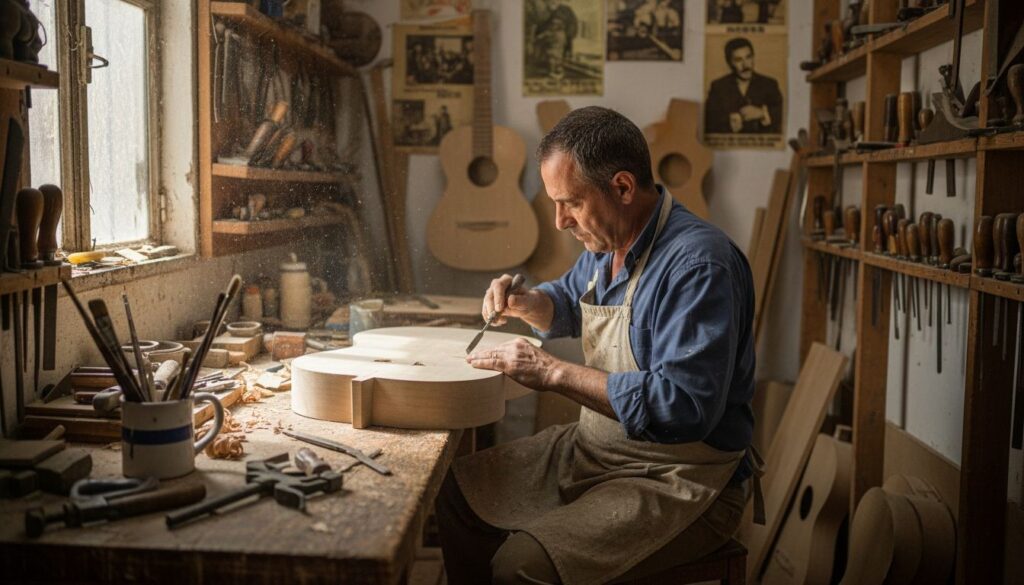

Finding a handmade flamenco guitar that truly responds to your technique is more than a personal quest—it defines your connection with Spanish tradition and your professional artistry. Every serious performer knows that factory guitars cannot match the sensitivity and brilliance delivered by expert luthier craftsmanship. This guide breaks down the real differences, dispels myths about handmade construction, and highlights how specialized techniques shape guitars for expressive playing styles. Discover what truly separates high-quality instruments from mass-produced compromises.
Table of Contents
- Defining Handmade Guitars And Common Myths
- What Sets Professional-Grade Handmade Guitars Apart
- Types Of Handmade Guitars For Flamenco
- Traditional Flamenco Vs. Concert Flamenco Guitars
- The Flamenco Negra: Modern Professional Choice
- Specialized Construction Variations
- Artisan Techniques That Shape The Sound
- Precision Through Hand-Crafting
- Building For Flamenco Technique
- Performance Benefits Over Factory-Made Models
- Evaluating Cost, Value, And Collectibility
Key Takeaways
| Point | Details |
|---|---|
| Handmade Guitars Offer Unique Quality | Handmade guitars, crafted by skilled luthiers, provide significantly better tonal responsiveness and adaptability to playing style compared to factory-made models. |
| Cost Reflects Value | The price of a handmade guitar reflects the extensive craftsmanship, quality materials, and the luthier’s expertise, making it a worthwhile investment for serious musicians. |
| Evaluate Specific Features | When considering a handmade guitar, assess its design features, acoustic characteristics, and the builder’s experience to ensure it meets your performance needs. |
| Collectibility of Handmade Instruments | Handmade guitars can appreciate in value over time, especially those crafted by established luthiers, unlike factory guitars that typically depreciate quickly. |
Defining Handmade Guitars and Common Myths
When you pick up a handmade flamenco guitar, you’re holding something fundamentally different from a factory-produced instrument. A true handmade guitar is built by a luthier—a skilled craftsperson—who shapes, assembles, and finishes the instrument by hand, making critical decisions about wood selection, bracing patterns, and tonal adjustments throughout the construction process. Unlike mass-produced models where machines handle most of the work, a handmade guitar reflects the individual builder’s philosophy, experience, and ears. Each instrument becomes a unique creation rather than one of thousands identical copies rolling off a production line.
The distinction matters more than many guitarists realize. Factory guitars follow standardized specifications to reduce costs and ensure consistency, which means compromises on materials and construction techniques. In contrast, a luthier constructing a flamenco guitar can respond to the specific wood’s characteristics, adjust the internal bracing for optimal resonance, and fine-tune the instrument based on how it sounds during assembly. This hands-on approach directly impacts the guitar’s voice, sustain, and playability—qualities that become increasingly critical as your playing demands deeper expressiveness and nuance.
Separating Fact from Fiction
Several persistent myths cloud the conversation around handmade guitars, and understanding the reality behind them helps you make informed decisions about your instrument.
Common misconceptions include:
-
“Handmade automatically means better sound” — Quality depends on the luthier’s skill and experience, not simply whether hands built it. A poorly trained builder using excellent wood can still produce an inferior instrument. What matters is the builder’s reputation, track record, and understanding of flamenco guitar acoustics.
-
“You can’t compare handmade guitars objectively” — While every handmade guitar sounds unique, you absolutely can evaluate them using consistent criteria: tonal clarity, volume projection, responsiveness to technique, and sustain quality. Testing multiple instruments side-by-side reveals these differences immediately.
-
“Handmade guitars cost significantly more for minimal gains” — The price difference reflects years of craftsmanship, premium materials, and the luthier’s direct involvement in quality control. You’re not paying extra for a label; you’re investing in an instrument designed specifically for serious flamenco performance.
-
“Factory guitars are improving so much that handmade isn’t necessary” — Modern factory techniques have improved dramatically, but they cannot replicate the adaptive, intelligent decisions a skilled luthier makes during construction. The physical limitations of automation create acoustic compromises that persist.
Understanding what truly defines a handmade guitar protects you from misleading marketing and helps you recognize the genuine advantages these instruments offer your playing.
What Sets Professional-Grade Handmade Guitars Apart
Not all handmade guitars serve professional flamenco performers equally. The difference lies in specialized luthier expertise, wood sourcing standards, and acoustic engineering tailored specifically for flamenco’s technical demands. When comparing handmade guitars for serious musicians, the construction philosophy becomes apparent immediately.
A luthier building flamenco guitars understands that your technique—the golpe, the rapid falsetas, the dynamic control required for accompaniment—places specific acoustic demands on the instrument. The bracing must support aggressive playing while maintaining the brightness and clarity essential to flamenco’s sound. The top wood needs enough responsiveness to capture the subtle articulations of your right hand, yet enough structural integrity to withstand years of intense playing.
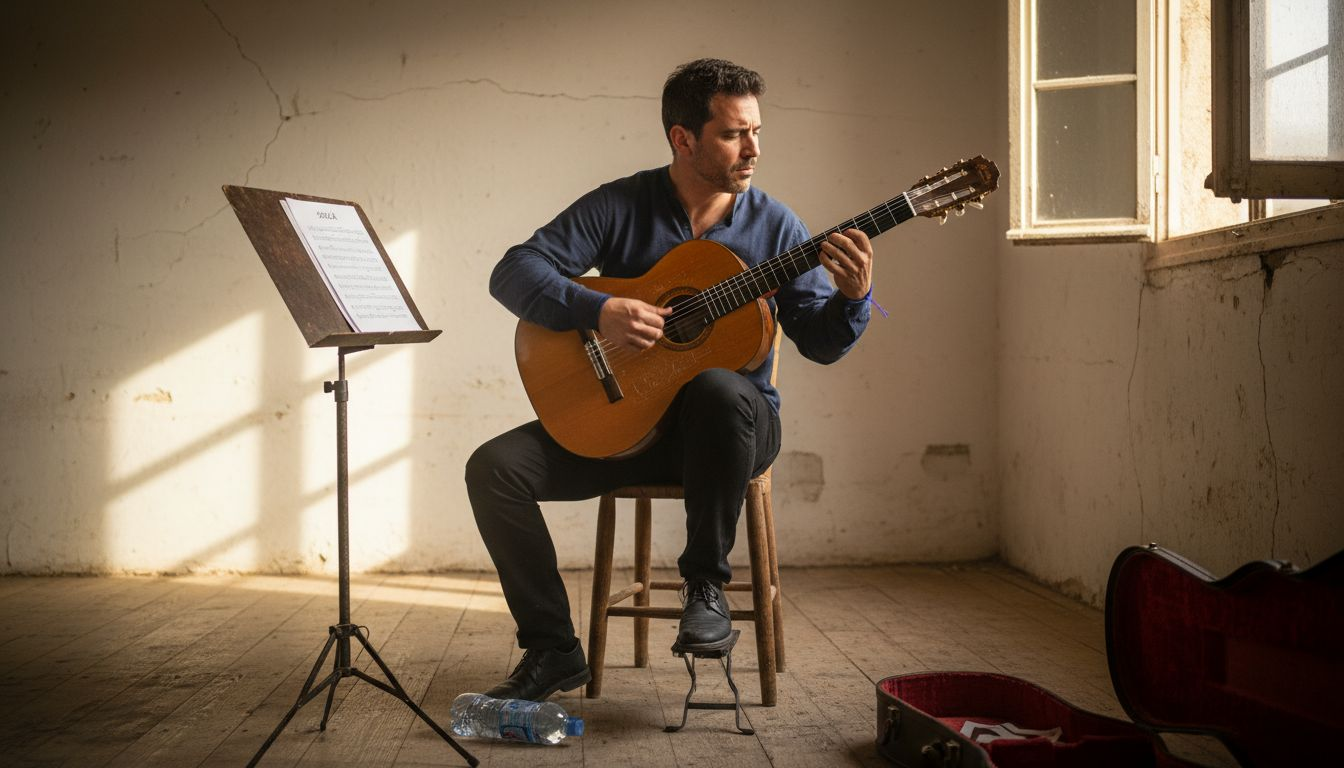
This specialized knowledge cannot be standardized or automated. It comes from years of building flamenco instruments specifically, understanding how Spanish wood behaves, and learning from countless players’ feedback about what works. That expertise directly translates into an instrument that responds more naturally to your playing style and grows more beautiful as you develop your voice on it.
Pro tip: When evaluating a handmade flamenco guitar, ask the luthier specifically about their experience building for flamenco performers and request references from professional players using their instruments—this reveals whether their expertise matches your performance needs.
Types of Handmade Guitars for Flamenco
Flamenco guitars come in distinct categories, each designed for different playing styles and acoustic demands. Understanding these types helps you select the right instrument for your specific needs as a performer. The main categories reflect Spain’s regional traditions, construction philosophies, and the evolving demands of contemporary flamenco music.
The primary distinction starts with how builders approach the instrument’s construction. Some luthiers follow traditional approaches while others embrace modern innovations, but all serious flamenco builders share one priority: creating an instrument that responds to the nuanced demands of flamenco technique. Your choice between guitar types should align with the styles you perform most frequently and the acoustic character that serves your artistic voice.
Traditional Flamenco vs. Concert Flamenco Guitars
Traditional flamenco guitars (also called “Blanca” or plain flamenco) represent the foundational design used for decades in Spanish tablaos and regional celebrations. These instruments feature lighter construction with thinner tops and minimal internal bracing, producing the characteristic bright, percussive sound that cuts through the noise of dancers and accompaniment. The lighter build makes them more responsive to right-hand technique, offering exceptional clarity for rapid rasgueado patterns and intricate picking.
Concert flamenco guitars represent an evolution designed for concert hall performance where projection and sustain matter more than raw brightness. These instruments typically feature additional bracing for greater structural support, allowing luthiers to use larger pieces of wood without sacrificing tonal quality. The result is greater volume, longer sustain, and a more rounded tonal character that fills larger venues without losing the brightness essential to flamenco’s identity.
Key differences between these types include:
-
Action height: Traditional guitars sit lower, encouraging the aggressive playing style that generates flamenco’s percussive character; concert versions sit higher for comfort during extended performances
-
Tonal balance: Traditional emphasizes brightness and attack; concert versions add warmth and projection
-
Durability: Concert guitars withstand intensive playing demands with stronger internal structures; traditional designs prioritize responsiveness over longevity
-
Cost: Traditional guitars typically cost less due to simpler construction; concert versions command higher prices because of their complexity and materials
The Flamenco Negra: Modern Professional Choice
The Flamenco Negra (or “black flamenco”) emerged from innovations by contemporary luthiers seeking to expand flamenco’s sonic possibilities. These guitars use harder, denser woods like rosewood or Indian laurel instead of the traditional cypress, creating fundamentally different acoustic characteristics. The darker wood produces increased volume and expanded tonal range, allowing modern flamenco musicians to explore compositional possibilities that traditional guitars couldn’t support.
Negra guitars appeal to professional performers because they offer versatility. You can play traditional accompaniment styles while accessing deeper, more resonant tones for contemporary compositions or fusion work. Many recording artists prefer Negra guitars because their expanded dynamic range captures well in studio settings. The increased sustain also suits musicians exploring flamenco’s crossover appeal with jazz, world music, or classical arrangements.
However, Negra guitars require different playing technique than traditional flamenco guitars. The stiffer response demands more forceful right-hand work to generate the percussive attack. Some traditionalists argue that this shifts flamenco toward a different aesthetic entirely. For professional musicians building a diverse repertoire, a Negra guitar opens doors; for purists focused exclusively on traditional styles, a traditional flamenco remains superior.
Here’s a concise comparison of flamenco guitar types and their main characteristics:
| Guitar Type | Typical Wood Used | Tonal Quality | Preferred Usage |
|---|---|---|---|
| Traditional (Blanca) | Spanish cypress, spruce | Bright, punchy, percussive | Live dance accompaniment |
| Concert Flamenco | Dense cypress, spruce | Warm, strong projection | Concert halls, solo performance |
| Flamenco Negra | Rosewood, spruce | Rich, broad, deep sustain | Studio, jazz, fusion |
Specialized Construction Variations
Beyond these main categories, serious luthiers create specialized instruments for specific purposes:
-
Rasgueado specialists: Built with reinforced bracing patterns that withstand aggressive strumming without fatigue or structural compromise
-
Falseta guitars: Optimized for rapid fingerpicking and complex melodic passages, with especially responsive tops
-
Accompaniment guitars: Designed for rhythm section roles, emphasizing volume and sustain over tonal complexity
-
Hybrid designs: Combining elements of traditional and Negra approaches to serve musicians blending multiple flamenco subgenres
When exploring the differences between flamenco and classical guitar construction, you’ll discover that flamenco’s unique demands shaped every choice a luthier makes. The lower action, thinner top, and minimalist bracing reflect centuries of refinement in Spanish workshops.
The guitar type you choose directly influences your playing style, technical development, and the sound world available to you—making this decision as important as selecting your luthier.
Pro tip: Test at least three different types—traditional, concert, and Negra if possible—before committing to purchase; your hands will immediately reveal which construction philosophy aligns with your technique and artistic vision.
Artisan Techniques That Shape the Sound
What separates a handmade flamenco guitar from factory-produced alternatives isn’t simply who builds it—it’s how the luthier approaches every decision during construction. In Andalusia’s hidden workshops, artisans employ techniques refined over centuries, treating each guitar as a living instrument rather than a standardized product. These methods directly determine whether the guitar responds to your technique with responsiveness and character or feels sluggish and compromised.
The construction process begins long before the first cuts into wood. A skilled luthier selects specific pieces of spruce for the top, understanding how each tree’s growth patterns affect tonal properties. The choice of rosewood or cypress for the back and sides comes from intimate knowledge of how these woods interact with the spruce to create the guitar’s fundamental voice. This material selection phase alone separates serious builders from those simply following templates.
Precision Through Hand-Crafting
Once materials are chosen, the luthier shapes every component by hand, making constant micro-adjustments based on how the wood feels and responds. The top plate thickness gets refined by ear and touch—literally tapping and listening to understand how the wood vibrates. A luthier might shave away a fraction of a millimeter here, add subtle thickness there, always listening to how the tonal character evolves.
This hands-on approach allows builders to respond to the specific wood’s unique characteristics. Two pieces of spruce that appear identical under visual inspection will behave completely differently acoustically. A factory CNC machine cannot detect these subtle variations or adapt the construction approach in real time. Only a luthier’s experience and trained ear can make these critical adjustments that transform raw materials into a responsive, musically expressive instrument.
The internal bracing system—the wooden supports inside the guitar—receives equally meticulous attention. These braces provide structural support while directly shaping how sound projects and sustains. A luthier adjusts brace thickness, positioning, and bracing patterns by constantly testing the instrument’s response during assembly. The goal is creating an instrument that supports the aggressive playing demands of flamenco while maintaining the brightness and clarity that define the sound.
Building for Flamenco Technique
Master flamenco builders understand that rasgueado, picado, and alzapúa techniques place specific physical demands on the instrument. These rapid-fire right-hand techniques require guitars engineered to respond predictably and dynamically to percussive attacks. A luthier shapes the neck profile to optimize how your hand interacts with the fretboard during complex fingering patterns, and adjusts the overall bracing system to handle the physical stress of traditional playing styles.
The guitar’s responsiveness to your technique emerges from hundreds of small decisions made during construction. Should the top be slightly stiffer to project better during accompaniement, or more flexible to capture the subtleties of falseta passages? How much internal bracing is enough to support aggressive playing without deadening the tone? These questions have no universal answers—a skilled luthier customizes responses based on understanding your specific playing style and the sounds you want to create.
Key technical elements that luthiers adjust include:
-
Top wood thickness: Affects responsiveness, sustain, and volume projection
-
Bracing pattern density: Influences tonal balance between brightness and warmth
-
Neck angle and action height: Determines playability and the percussive character generated by right-hand technique
-
Bridge design and positioning: Directly impacts how vibrations transfer from strings to the body
-
Rosette and binding details: While primarily aesthetic, these affect wood stability and longevity
Every element receives attention not as decoration or standard procedure, but as a functional component affecting how the finished instrument responds to your hands and expresses your musical voice.
A handmade flamenco guitar is engineered specifically for the demands of flamenco technique—something no factory standardization can replicate, no matter how advanced the machinery becomes.
Pro tip: When discussing a handmade guitar with a luthier, ask specifically about how they adjusted construction to match your playing style and the sounds you’re trying to achieve; their detailed answers reveal whether they’re genuinely customizing your instrument or simply following standard procedures.
Performance Benefits Over Factory-Made Models
The moment you pick up a handmade flamenco guitar after playing factory models, the difference becomes immediately obvious. A professionally built handmade instrument responds to your touch with a sensitivity and clarity that factory guitars simply cannot match. This isn’t marketing language—it’s a physical reality rooted in how these instruments are constructed and how they interact with your technique as a performer.
A handmade guitar delivers superior tonal responsiveness because the luthier has spent hours refining every component specifically for acoustic excellence. Factory guitars optimize for consistency and cost reduction, meaning compromises happen throughout the construction process. The factory manufacturer must accept that some instruments will sound slightly better or worse than others—that’s the tradeoff for mass production efficiency. A handmade builder, by contrast, rejects compromised instruments and continues adjusting until the guitar achieves the acoustic potential locked within its materials.
Responsiveness That Transforms Your Playing
When you execute a rapid rasgueado pattern, a handmade guitar responds with articulate clarity because its bracing system was designed specifically to handle that technique’s physical demands. Each string attack registers distinctly without the muddy bleed-through common in factory guitars where bracing patterns follow generic templates. You hear the individual notes rather than a compressed blur—a difference that becomes critical when accompanying dancers who depend on rhythmic precision.
This responsiveness extends to subtle playing dynamics as well. The dynamic range—the difference between your quietest and loudest playing—comes through more naturally on a handmade instrument. Factory guitars compress the dynamic spectrum because standardized construction cannot react to the infinite variations in how players approach the strings. A handmade guitar built to your specifications opens up expressive possibilities that feel restricted on factory alternatives.
The sustain characteristics also differ significantly. A handmade flamenco guitar maintains note clarity longer because the luthier optimized the bracing system to avoid the dampening effect common in factory instruments. When you hold a note during a falseta passage, the tone continues developing rather than dying away. This extended sustain gives you more control over phrasing and allows your musical ideas to breathe naturally.
Longevity and Investment Value
Handmade guitars improve with age in ways factory models simply don’t. The wood settles and stabilizes over years of playing, and the instrument’s voice deepens and matures. Many professional flamenco performers keep their handmade guitars for decades, finding that the instrument sounds better at year 15 than it did at year 1. Factory guitars, built with less stable wood and weaker construction methods, often sound worse over time as components loosen and the structural integrity gradually diminishes.
This durability translates directly into economic value. A well-maintained handmade flamenco guitar retains its worth and often appreciates, especially if built by a recognized master luthier. Factory guitars depreciate rapidly because new models constantly replace older inventory. Your investment in a handmade instrument isn’t an expense—it’s an asset that maintains value while improving sonically.
Consider these performance advantages:
-
Tonal character: Handmade guitars develop a distinctive voice reflecting the luthier’s philosophy; factory guitars sound interchangeable
-
Playability: Optimized neck profiles and action heights match your hand geometry; factory standards compromise comfort for cost
-
Projection: Superior bracing systems project sound with clarity across concert venues; factory guitars require heavier playing to achieve similar volume
-
Percussive definition: Attack clarity during rasgueado and golpe technique remains distinct rather than blurring together
-
Tonal stability: The instrument maintains consistent voice across the fretboard; factory models often have dead spots or tonal inconsistencies
When exploring top handmade guitars for professional musicians, you’ll immediately notice how these performance benefits manifest in real-world playing situations. The difference isn’t subtle—it fundamentally changes what you can express on the instrument.
The performance gap between handmade and factory guitars isn’t marginal—it’s substantial enough to directly impact your technical capability and artistic development as a flamenco performer.
Pro tip: Before committing to a handmade guitar, schedule playing sessions with at least three different instruments from different luthiers to directly experience how each builder’s approach affects responsiveness, sustain, and tonal character during the specific techniques you perform most frequently.
Evaluating Cost, Value, and Collectibility
A handmade flamenco guitar represents a significant financial investment, often ranging from €3,000 to €15,000 or more for instruments built by established master luthiers. Understanding what justifies this cost—and how to evaluate whether a specific guitar offers genuine value for your situation—requires moving beyond sticker shock to examine the real factors that determine long-term worth. Price alone tells you nothing about whether an instrument is genuinely valuable or simply expensive.
The cost of a handmade guitar reflects multiple realities that factory manufacturing cannot replicate. A luthier typically invests 200 to 400 hours building a single instrument, and that’s for builders working efficiently with decades of experience. The materials—aged Spanish spruce, select rosewood or cypress—represent significant expense because quality directly impacts the finished instrument’s voice. Infrastructure costs, specialized tools, years of training, and the builder’s overhead all factor into the final price. When you pay for a handmade guitar, you’re paying for skilled labor, premium materials, and a craftsperson’s professional expertise.
Understanding True Value vs. Price
Price and value are not the same thing. A cheap handmade guitar built by an inexperienced builder offers poor value despite low cost. An expensive guitar by a renowned master represents excellent value if it matches your needs and playing style. Your task is determining whether a specific instrument delivers the acoustic performance, durability, and artistic potential that justify its cost.
Consider these value indicators:
-
Luthier reputation and track record: Builders with decades of professional experience and satisfied professional players command higher prices because they deliver consistently superior instruments
-
Materials quality and aging: Guitars built with properly aged wood and premium materials cost more upfront but maintain voice quality and structural integrity across decades of playing
-
Acoustic performance: Test the guitar yourself. Does it respond to your technique? Does the tonal character inspire your playing? Does it project adequately for your performance context?
-
Playability and comfort: Evaluate neck profile, action height, and overall ergonomics. A guitar that feels uncomfortable restricts your technical development
-
Construction quality details: Examine fretwork precision, binding quality, finish consistency, and internal bracing craftsmanship
A handmade guitar priced at €8,000 from a master builder who’s been refining their craft for 30 years offers better value than a €5,000 instrument from a builder with minimal professional track record. Value depends on what you receive, not the absolute price tag.
The Collectibility Factor
Handmade guitars by recognized master luthiers function as collectible instruments, appreciating in value over time rather than depreciating like factory guitars. This distinction transforms the economic calculation entirely. You’re not simply purchasing an instrument; you’re acquiring an asset that maintains worth while your playing develops.
Collectibility depends on several factors:
-
Builder reputation and legacy: Instruments by deceased master builders or living legends appreciate significantly; guitars by rising but unproven builders may not
-
Construction year and historical significance: Older guitars from peak creative periods often command higher prices in collector markets
-
Documentation and provenance: Guitars with clear ownership history, builder certificates, and documentation of condition changes hold value better than undocumented instruments
-
Sound quality and responsiveness: Collectible guitars must perform exceptionally; a beautiful instrument that sounds mediocre holds limited value
-
Rarity and wood selection: Guitars built with exceptional materials or using rare bracing patterns appeal to collectors
When evaluating what makes guitars collectible, you’ll discover that flamenco guitars occupy a unique position. Professional-grade instruments by established builders appreciate consistently, making them sound investments for serious musicians. A €10,000 handmade flamenco guitar purchased today might easily be worth €12,000 to €15,000 in five years if the builder’s reputation strengthens and the instrument remains well-maintained.
Factory guitars, by contrast, depreciate immediately. A €3,000 factory flamenco guitar might resell for €1,500 within two years as newer models flood the market. This economic reality fundamentally changes the actual cost calculation. A handmade guitar isn’t necessarily more expensive—it may be more affordable over time when you factor in resale value.
This table summarizes key investment and ownership factors for handmade flamenco guitars:
| Factor | Handmade Guitar Advantage | Factory Guitar Drawback |
|---|---|---|
| Long-term Value | Appreciation, collectible status | Rapid depreciation after purchase |
| Material Quality | Select aged, high-grade woods | Standardized, lower-grade materials |
| Customization | Built for player’s technique | Generic specifications only |
| Maintenance & Aging | Improves sound with age | Sound quality declines over time |
Making the Investment Decision
Decide whether a handmade guitar makes financial sense by evaluating your commitment level and timeline. If you’re exploring flamenco as a casual hobby, investing €10,000 makes limited sense. If you’re a professional performer generating income from your playing, a handmade guitar represents a reasonable business investment—comparable to a professional musician in any other genre acquiring quality equipment.
Consider your intended use:
-
Professional performance: A handmade guitar justifies its cost through superior sonic quality, durability, and collectible appreciation
-
Serious amateur playing: Value depends on whether the performance benefits enhance your development sufficiently to justify the expense
-
Casual recreation: Factory guitars serve this purpose adequately; handmade instruments represent overcapitalization for casual players
A handmade flamenco guitar isn’t an expense category—it’s an investment in sound quality, durability, and long-term value that often appreciates while your artistic voice develops.
Pro tip: Before purchasing, obtain a professional valuation from a recognized guitar expert to understand the current market value of the specific instrument; this establishes a baseline for evaluating whether the asking price represents fair value and supports future resale decisions based on documented condition and builder reputation.
Discover the True Voice of Flamenco with Handmade Guitars
The article highlights the challenge flamenco artists face in finding guitars that genuinely respond to their unique playing styles and technical demands. Factory-made guitars often fall short in delivering the tonal clarity, dynamic range, and percussive definition that professional flamenco techniques require. With key concepts like rasgueado, falseta, and golpe shaping the instrument’s construction, serious musicians seek instruments offering precise craftsmanship, custom wood selection, and expert bracing to unlock their full artistic potential.
At Vintage Guitar World, we understand these important needs. Our curated collection focuses exclusively on authentic handmade flamenco guitars built by expert luthiers who respect tradition while embracing innovation. Each guitar is carefully evaluated for playability, response, and tonal excellence so you can invest confidently in an instrument that will elevate your performance and grow with your artistry.
Explore our selection today at Vintage Guitar World Shop and experience the artistry behind every handcrafted flamenco guitar.

Ready to feel the difference a professionally crafted flamenco guitar can make? Browse our exclusive range, schedule a personalized consultation, or request expert guidance now. Visit our shop to start your journey toward owning an instrument that truly empowers your flamenco expression.
Frequently Asked Questions
What is the difference between handmade and factory-made flamenco guitars?
A handmade flamenco guitar is crafted by a skilled luthier who individually shapes and finishes each instrument, ensuring quality and uniqueness. In contrast, factory-made guitars are produced using standardized methods, which may compromise materials and tonal quality.
Why are handmade guitars usually more expensive than factory models?
The higher cost of handmade guitars reflects the extensive hours of craftsmanship, premium materials, and the luthier’s expertise in building an instrument that meets the specific demands of flamenco music, which cannot be achieved in mass production.
How does the construction of a handmade flamenco guitar affect its sound?
A handmade flamenco guitar’s sound is influenced by the luthier’s choice of materials, bracing patterns, and adjustments made during construction, resulting in superior tonal clarity, responsiveness, and sustain compared to factory guitars.
What types of handmade flamenco guitars should a performer consider?
Performers should consider traditional flamenco guitars for bright, percussive sound or concert flamenco guitars for increased projection and warmth. For greater versatility, a Flamenco Negra can be an excellent choice, offering deeper tones suitable for various styles.