












TL;DR:
- Guitar finishes protect the wood, influence appearance over time, and affect tone by adding mass and stiffness. Original finishes, especially on vintage instruments, hold more collector value, while durability-focused coatings suit touring players. Finish thickness and application quality significantly impact how a guitar sounds, ages, and retains its worth.
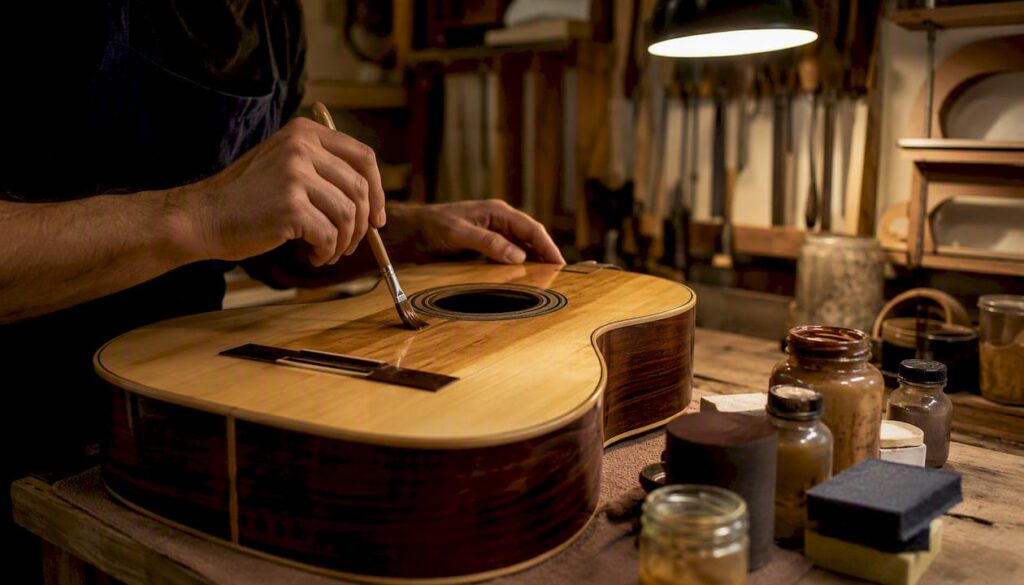
A guitar’s finish does three jobs: it protects the wood, shapes how the instrument looks over decades, and can nudge tone by adding mass and stiffness to vibrating surfaces. The coating you choose, or inherit when you buy a vintage instrument, has real consequences for sound, longevity, and resale value.
Quick recommendations by audience:
- Collectors: Preserve original thin finishes, whether nitrocellulose lacquer or French polish. Originality drives value.
- Touring professionals: Prioritize polyurethane or catalyzed urethane. Durability beats marginal tonal differences on a working stage instrument.
- Buyers of handcrafted guitars: Match the finish to your climate and intended use. A French-polished classical in a humid touring environment is a liability.
Table of Contents
- How finish thickness physically changes your guitar’s tone
- Six finish profiles every buyer should know
- How different finishes age and what that means for collectors
- Cleaning and maintenance by finish type
- How to choose the right finish: a practical checklist
- When to preserve, when to conserve, and when to refinish
- Key Takeaways
- The finish conversation most buyers skip
- Vintage-guitar-world: expert help for finish decisions
- Useful sources and further reading
How finish thickness physically changes your guitar’s tone
Finish affects tone primarily by adding mass and stiffness to the wood surface, and thickness matters more than chemistry on acoustic tops. A thicker, harder film damps the top’s natural vibration. A thinner, more flexible film interferes less, allowing the wood to move more freely and produce fuller resonance.
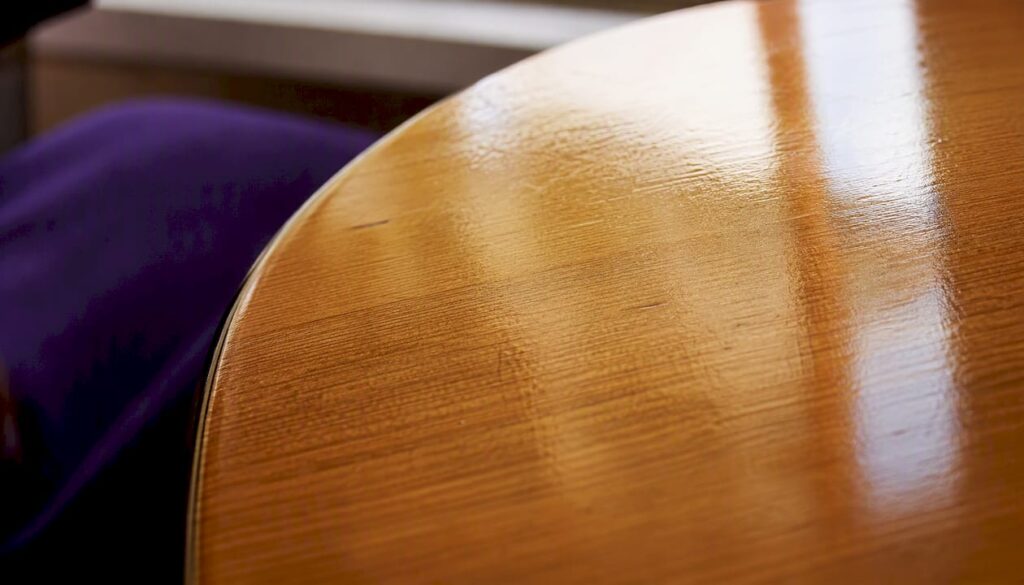
The physical variables are film thickness, stiffness (Young’s modulus of the cured coating), and damping coefficient. Thin films with low stiffness generally allow more top movement. That’s why luthiers building high-end acoustics obsess over mil-thickness and why finishing techniques in craftsmanship at the handmade level look so different from factory production schedules.
On solidbody electrics, the effect is audible but smaller. Pickups, wood density, and hardware dominate the signal chain. The finish debate matters most on lightly built acoustic tops and archtops, where the top itself is the primary sound generator.
“The impact of finish on tone must be judged within the context of the instrument. No single finish is universally superior — what matters is how the coating interacts with that specific instrument’s construction and intended use.”
— Dana Bourgeois, master luthier, via Acoustic Guitar
The guitar’s resonance behavior also depends heavily on tonewood selection, so finish and wood interact rather than act independently.
Six finish profiles every buyer should know
Understanding the benefits of finishing techniques starts with knowing what each system actually does.
Nitrocellulose lacquer
Tone: bright, open. Durability: moderate. Best for: vintage instruments, collectors, studio players.
Nitro applies in thin coats, cures slowly over years, and develops the checking, yellowing, and worn edges collectors associate with authentic vintage character. It’s a thermoplastic finish, meaning solvents can re-dissolve it, which makes spot repairs relatively straightforward. The trade-off is vulnerability to scratching, humidity swings, and certain plastics that cause “nitro burn.” Nitrocellulose tends to preserve resonance and vintage character in ways that thicker modern coatings don’t.
Polyurethane / catalyzed urethane
Tone: slightly more closed if applied thick. Durability: excellent. Best for: touring players, working instruments.
Polyurethane cures fast, resists moisture and perspiration, and holds up to nightly stage abuse. Applied thin, the tonal difference from nitrocellulose lacquer can be subtle or minimal. Applied thick, as it often is in high-volume production, it can feel plasticky and damp sustain. Thermoplastic vs. thermoset chemistry explains why catalyzed urethanes are harder to repair invisibly: once cross-linked, solvents won’t re-dissolve them.
Polyester
Tone: most restricted of the group. Durability: maximum. Best for: factory instruments where protection and gloss retention are priorities.
Polyester is the hardest common guitar finish. It’s nearly impervious to scratches and moisture, but refinishing or spot-repairing it requires significant prep work. Collectors rarely prize it; players who need a bulletproof finish sometimes do.
French polish (shellac)
Tone: exceptional. Durability: low. Best for: classical and flamenco guitars, high-end acoustics.
French polish provides an ultra-thin coating that maximizes resonance for classical instruments. The application process is entirely by hand, using a pad and alcohol-dissolved shellac built up in dozens of sessions. The result is a film so thin it barely registers on the wood’s vibration. The downside: it’s sensitive to moisture, alcohol, and heat, and requires periodic maintenance by a skilled luthier.
Oil finishes (tung, boiled linseed variants)
Tone: very open, natural feel. Durability: limited surface protection. Best for: necks, raw-feel instruments.
Oil finishes penetrate the wood rather than forming a surface film. They feel natural under the hand and don’t restrict vibration at all. What they don’t do is protect against dents, scratches, or moisture ingress at the surface level. Common on necks of high-end instruments where players want a fast, unfinished feel.
Water-based and bio-resin alternatives
Tone: comparable to nitro when applied thin. Durability: improving. Best for: workshops prioritizing lower VOC exposure.
Water-based finishes have improved significantly. Modern formulations can match nitro’s film build and flexibility while producing far fewer volatile organic compounds during application. They’re not yet universal in high-end lutherie, but the gap is closing.
How different finishes age and what that means for collectors
Different finishes age differently, and those aging patterns directly affect resale value and collector desirability.
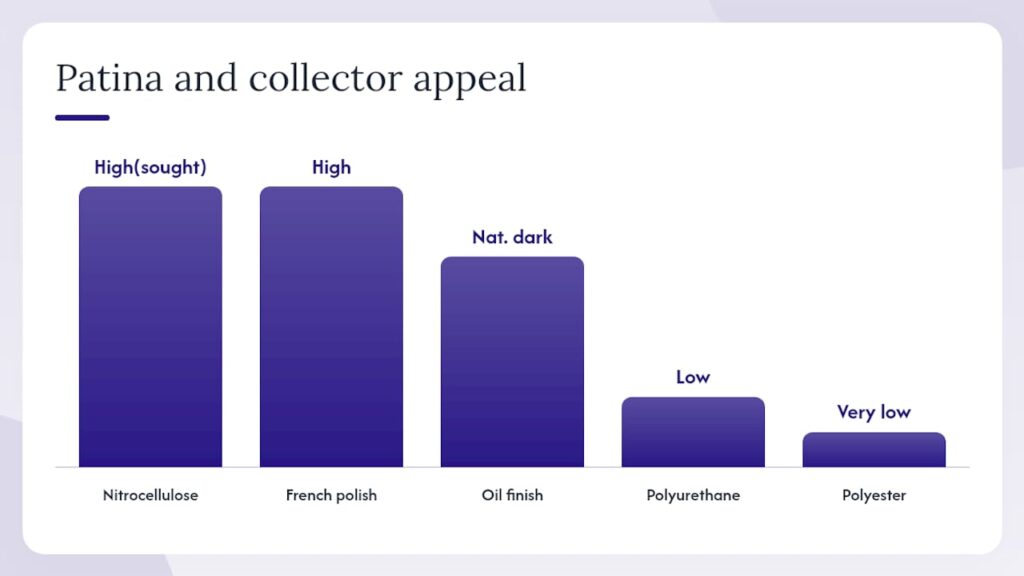
The hardness ladder runs roughly: polyester > polyurethane > nitrocellulose > shellac/oils. Harder finishes resist scratches and dents but stay looking “factory new” for decades. Softer finishes develop patina, wear patterns, and checking that many collectors actively seek.
| Finish | Checking | Yellowing | Patina/Wear | UV Resistance | Humidity Risk |
|---|---|---|---|---|---|
| Nitrocellulose | Yes, with age | Yes, amber tones | High — sought by collectors | Low | Moderate |
| Polyurethane | Rare | Minimal | Low | Good | Low |
| Polyester | Very rare | Minimal | Very low | Excellent | Very low |
| French polish | Possible | Slight | High | Low | High |
| Oil finish | N/A | Minimal | Natural darkening | Low | Moderate |
Nitro checking, those fine crazing lines that appear on vintage instruments, is caused by the finish contracting faster than the wood beneath it during temperature and humidity swings. On a genuine 1950s or 1960s instrument, that checking pattern is evidence of age and authenticity. On a modern reissue with artificially induced checking, it’s cosmetic.
For collectors, the practical implication is clear: a guitar with original nitro finish, even worn, is usually worth more than the same instrument refinished in polyurethane. Preserving original coatings and documenting any repairs is the single most protective step a collector can take for long-term value.
Cleaning and maintenance by finish type
Maintenance differs by finish, and using the wrong product can cause irreversible damage.
| Finish | Safe cleaners | Simple repairs | Call a luthier when |
|---|---|---|---|
| Nitrocellulose | Naphtha, dedicated nitro polish | Solvent-based touch-up, blend with thinner | Checking spreads, large chips, full refinish needed |
| Polyurethane | Mild soap/water, poly-safe polish | Spot buff, compound for light scratches | Deep gouges, delamination |
| Polyester | Mild soap/water, non-abrasive polish | Surface buffing only | Any chip or crack through the film |
| French polish | Dry microfiber only | Luthier-only pad application | Any moisture damage, worn areas |
| Oil finish | Linseed-based conditioner | Re-oil affected area | Structural wood damage beneath |
Common mistakes to avoid:
- Never use alcohol-based cleaners on nitrocellulose. Alcohol dissolves the finish.
- Avoid silicone-based polishes on any finish. Silicone contaminates the wood and makes future repairs nearly impossible.
- Don’t use abrasive compounds on French polish or oil finishes.
- Use microfiber cloths exclusively. Paper towels scratch.
Spot repairs on nitro are relatively forgiving: a skilled luthier can blend new lacquer into old using compatible solvents. Thermoset finishes like polyester require more aggressive prep and larger repair areas because solvents won’t bond new material to the existing cross-linked film.
How to choose the right finish: a practical checklist
Match the finish to your primary priority: tone and authenticity, durability, or low maintenance. Then work through these questions before buying or commissioning.
Questions to ask a seller or luthier:
- Is this the original finish, or has the guitar been refinished?
- If refinished, what system was used and when?
- What was the cure time before the instrument was sold or played?
- What climate was the guitar stored in, and what climate will it live in?
- Are there any documented repairs, and what materials were used?
Audience priority matrix:
- Collectors: Original finish > everything else. Documented provenance of any repairs. Prefer reversible conservation over refinishing.
- Studio players: Thin nitro or water-based for tone. Moderate durability acceptable in a controlled environment.
- Touring professionals: Polyurethane or catalyzed urethane. Durability and moisture resistance outweigh marginal tonal differences.
- Casual players: Any well-applied finish. Focus on playability and maintenance simplicity.
Cost and time expectations vary widely. A professional spot repair on nitro runs from a few hours to a full day of work. A full refinish on a vintage instrument, done correctly, can take weeks including cure time. Commissioning a specific finish on a new handcrafted guitar adds to build time and cost, particularly for French polish, which is entirely hand-applied.
When to preserve, when to conserve, and when to refinish
Preserving original finish almost always preserves collector value. The exceptions are instruments where the original finish is already non-original, severely structurally compromised, or where the guitar is intended for heavy use rather than collection.
The decision framework runs in three steps:
- Preserve and document: Original finish intact or mostly intact. Clean, stabilize, photograph every detail. No intervention beyond cleaning.
- Conserve with spot repairs: Localized damage only. Use reversible, compatible materials. Document every repair with photos and notes.
- Refinish: Only when the original finish is already gone, structurally failing, or the instrument is a working tool rather than a collectible. A non-original refinish reduces collectability unless expertly matched and fully documented.
Documentation checklist before any work:
- Full-body photographs in natural light, all angles
- Close-up shots of all existing wear, checking, and repairs
- Written record of finish type, any known repair history, and provenance
- Measurements of finish thickness if possible
A guitar valuation before and after any conservation work protects your investment and provides a paper trail that matters at resale.
Key Takeaways
Finish thickness and application quality drive tonal impact more than brand or chemistry, and original coatings almost always preserve collector value better than refinishing.
| Point | Details |
|---|---|
| Thickness drives tone | Thinner, more flexible finishes interfere less with top vibration, especially on acoustic instruments. |
| Nitro ages, poly protects | Nitrocellulose develops sought-after patina; polyurethane resists wear for touring use. |
| Application quality counts | A well-applied polyurethane can outperform poorly sprayed nitro on tone and durability. |
| Preserve originals for value | Original finish, even worn, typically holds more collector value than a refinished instrument. |
| Vintage-guitar-world | Offers expert valuation, restoration, and acquisition services to help collectors protect finish originality and instrument value. |
The finish conversation most buyers skip
The conventional wisdom says nitro sounds better than poly, full stop. That framing sells guitars but misrepresents how finishing actually works. A thick nitro coat applied in a hurry damps vibration more than a thin, carefully leveled polyurethane. The chemistry matters less than the film build and the discipline of the person applying it.
What gets overlooked even more often is the environmental dimension. Nitrocellulose application produces significant VOC exposure, and the idea that any serious collector or player should be spraying it in a home shop without proper explosion-proof ventilation and organic-vapor respiratory protection is genuinely dangerous. Water-based alternatives have improved to the point where the tonal trade-off is minimal on many instruments, and the health and safety case for them is strong.
The other thing worth saying plainly: on a high-value vintage instrument, the finish is part of the artifact. Stripping and refinishing a 1950s guitar to make it look cleaner destroys evidence of its history and usually reduces its value significantly. The patina, the checking, the worn edges are not flaws. They’re the record of the instrument’s life. A skilled conservator works with that record, not against it.
Vintage-guitar-world: expert help for finish decisions

When the finish question involves real money, whether you’re buying a vintage instrument, commissioning a handcrafted guitar, or deciding whether to conserve or restore, the stakes are too high for guesswork. Vintage-guitar-world offers professional valuation and certification services that assess finish originality, document condition, and give you a defensible record of what you own. For collectors weighing a purchase, that documentation is the difference between a confident acquisition and an expensive mistake.
The acoustic guitar restoration guide walks through the conservation workflow in detail. For buyers evaluating whether a specific instrument’s finish history affects its investment potential, the guitar valuation service provides expert assessment grounded in real market knowledge. Browse the current inventory and service offerings at Vintage-guitar-world.
Useful sources and further reading
- What’s the point of painting a guitar and does it affect its sound? | Guitar.com
- Guitar finish types and their impact — Home Studio Guys
- Ask the Expert: Does a Guitar’s Finish Really Affect the Tone? | Acoustic Guitar
- Quick and Dirty on guitar finishes | Premier Guitar
- Nitro Lacquer Versus Polyurethane Finish
- How Guitar Finishes Work: A Guide for Collectors – Vintage Guitar World