












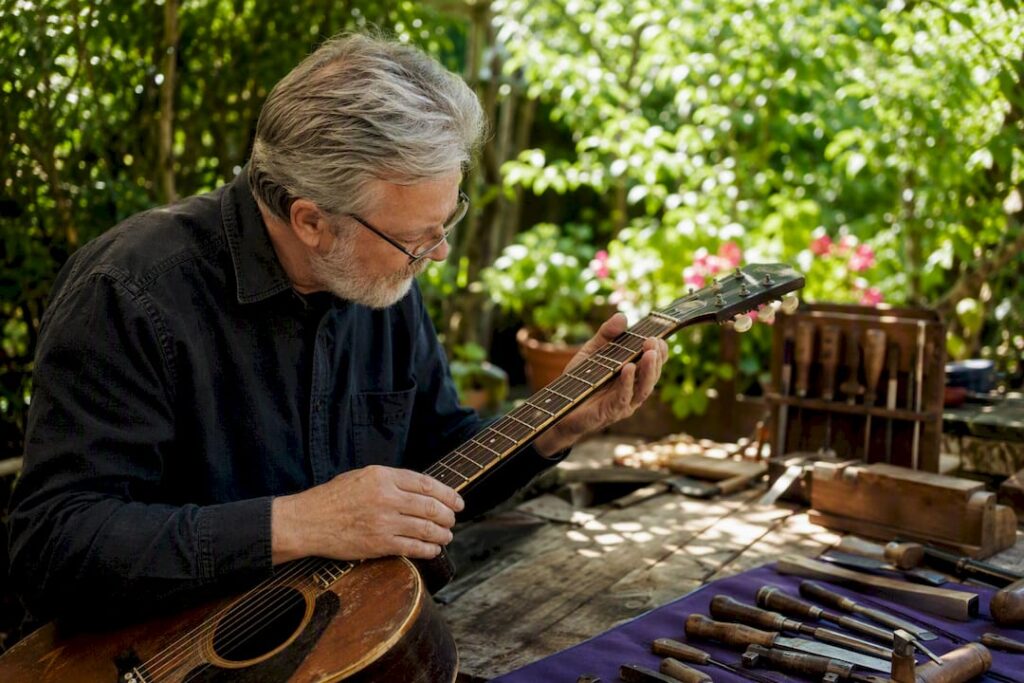

Professional evaluation protects an instrument’s value, confirms it is what the seller says it is, and turns a guess into a document an insurer or buyer will actually accept. Vintage Guitar World treats this the way George Gruhn frames it: appraising a vintage instrument is closer to forensic work than pricing a used car. Modern authentication now leans on tools like spectroscopy alongside a trained eye, because sophisticated fakes can fool a casual inspection.
A solid evaluation delivers three things:
- Confirmed origin — maker, model, and era verified against known records
- Documented condition — every non-original part, refinish, or repair on paper
- An insurance-ready appraisal — a report an underwriter or buyer’s attorney will actually accept
If you’re buying a high-value instrument, settling an estate, insuring a collection, or heading into a legal dispute, get an evaluation before you sign anything.
Key Takeaways
Expert evaluation protects instrument value, confirms authenticity through forensic and documentary evidence, and produces reports that insurers, buyers, and courts will accept.
| Point | Details |
|---|---|
| Authentication beats guesswork | Maker, model, and era verification through ledger checks and forensic inspection prevents costly misattribution. |
| Originality drives value | Original parts and untouched finish typically command more than replaced components or refinished examples. |
| Lab testing adds defensibility | Spectroscopy and microscopy resolve disputes visual inspection alone cannot settle. |
| Provenance can outweigh condition | Documented artist association or ownership history often pushes price beyond condition-based estimates. |
| Vintage Guitar World offers full documentation | Written certificates, lab-backed testing, and independent reporting support both buyers and sellers. |
Table of Contents
- What a Professional Evaluation Actually Examines
- How Experts Combine Connoisseurship With Forensic Science
- When Do You Actually Need a Professional Evaluation?
- What a Certificate or Appraisal Report Actually Contains
- How Expert Evaluation Changes Market Value and Insurance
- How to Choose a Credible Evaluator and Spot Red Flags
- A Quick Pre-Purchase Checklist You Can Use Today
- Why Vintage Guitar World Emphasizes Rigorous Evaluation
- Get Your Instrument Evaluated Before You Buy, Sell, or Insure
- Frequently Asked Questions
- Sources
What a Professional Evaluation Actually Examines
A real appraisal is not a five-minute glance under shop lights. It works through five layers: authenticity (does the maker, model, and build date match what’s claimed), originality of parts (are the pickups, frets, tuners, and bridge factory-original), provenance (ledgers, receipts, old photos, prior ownership records), condition (structural integrity, finish state, fret wear, neck angle), and modifications (refinishing, replaced electronics, repaired headstock breaks).
Each of these moves the needle on price independently. A guitar with its original PAF pickups intact can be worth several times more than an identical model with reissue pickups swapped in, even if both play beautifully. Refinishing is the same story: a guitar with untouched original lacquer, even with honest wear, usually commands more respect from serious collectors than one buffed to showroom shine. The antique guitar appraisal literature is consistent on this: originality and documented condition are the two biggest levers on value, more than cosmetic appeal alone.
A competent appraiser follows a repeatable sequence: cross-check the serial number against factory ledgers, run a visual forensic exam under raking light and UV, play-test for structural soundness and intonation, and review any paperwork the seller provides. You can verify this happened by asking whether the report covers:
- Serial number and ledger cross-reference
- Photos of hidden areas (pickup cavities, neck pocket, under the pickguard)
- A written note on every replaced or refinished part
- A play-test summary noting action, neck relief, and fret condition
How Experts Combine Connoisseurship With Forensic Science
Traditional appraisal relied on a trained eye recognizing period-correct hardware, finish texture, and construction quirks. That skill still matters, but it now works alongside lab methods that catch what eyes alone miss. Spectroscopy identifies finish and paint composition down to the chemical layer. Microscopy reveals wear patterns and tool marks consistent with a specific era of production. X-ray and 3D imaging expose internal bracing or repairs without opening the instrument, and UV light flags overspray invisible under normal light.
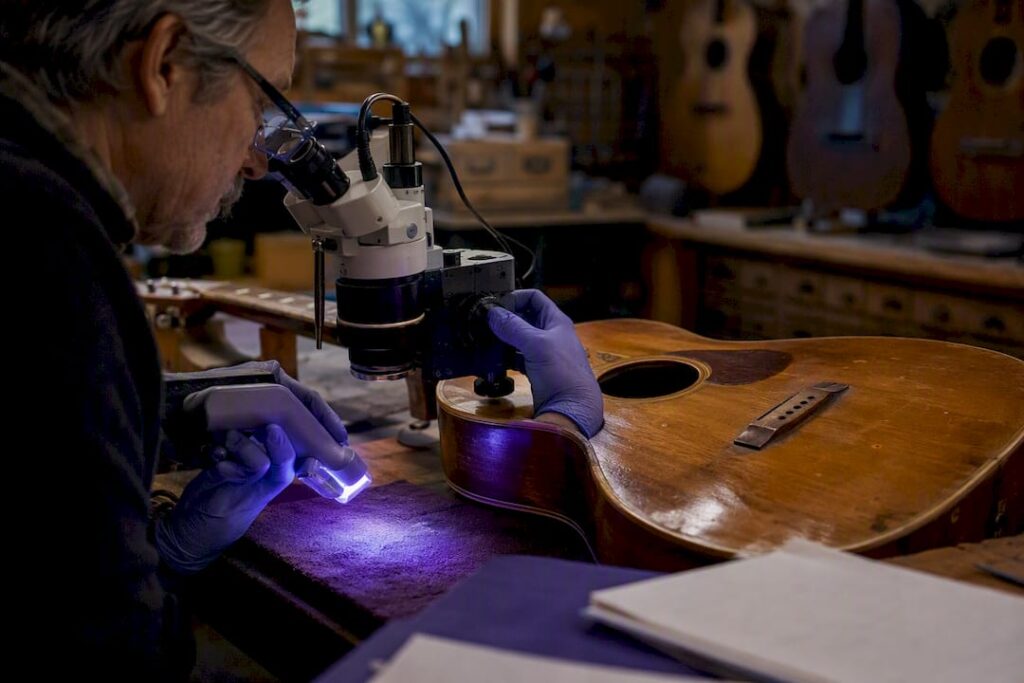
The two approaches complement each other rather than compete. Connoisseurship spots the stylistic red flags worth investigating further; lab data confirms or rules them out with material evidence. Reporting on independent authentication services notes that this combination matters most when visual inspection alone fails to catch period-correct imitators, which is increasingly common as counterfeiters get better at replicating aged finishes.
Pro Tip: If a sale or dispute could end up in front of a lawyer, ask specifically whether the lab data will be attached to the report or just summarized. Attached raw data is what makes a certificate defensible in court.
Full forensic testing takes longer and costs more than a standard visual appraisal. Expect timeframes to stretch depending on how many components need lab analysis and whether outside specialists get involved.
When Do You Actually Need a Professional Evaluation?
Not every guitar purchase needs a full forensic workup. But certain situations call for one before you do anything else:
- High-value purchases, especially private sales without dealer backing
- Consignment or auction listings, where provenance directly affects the reserve price
- Insurance valuations, particularly for scheduled personal property riders
- Estate transfers or inheritance, where family history alone doesn’t count as proof
- Legal disputes over authenticity or ownership
- Major restoration decisions, where you need to know originality before altering anything
Timing matters too. A pre-purchase evaluation protects you before money changes hands. A pre-insurance appraisal locks in a defensible value before you need to file a claim. A quick in-person visual check might be enough for a modest instrument, but anything approaching four or five figures in value deserves lab-backed documentation, not just a knowledgeable opinion.
What a Certificate or Appraisal Report Actually Contains
A proper report reads less like a sales sheet and more like a case file. Expect these sections: identification (maker, model, serial, year), a condition matrix scoring each component, provenance documentation, forensic findings if lab testing was involved, a scope and limits statement, a valuation statement, and signed attestation. Conservation and archival guidelines recommend exactly this kind of systematic condition matrix, cross-referencing each component against severity and recommended action rather than a vague paragraph.
Pay attention to the certainty language. “Confirmed” means the appraiser has direct evidence, often lab-backed. “Consistent with” means the features match the claimed era or maker but without absolute proof. “Probable” signals reasonable confidence with some unresolved gap. These distinctions affect how a buyer, insurer, or court will weigh the report.
- Check whether the appraiser discloses any financial interest in the sale
- Confirm lab data is attached, not just referenced
- Look for a clear scope and limits section, not blanket guarantees
How Expert Evaluation Changes Market Value and Insurance
Authentication findings move price in predictable directions, even without fixed formulas. Documented provenance, especially an association with a known artist or notable prior owner, can push a sale price well beyond what condition alone would justify. Non-original parts or an undisclosed refinish typically pull value down, sometimes substantially, because collectors pay for authenticity as much as playability.
Auction results consistently show that provenance premiums can outweigh condition-based valuation entirely when an instrument’s ownership history is well documented.
Insurers require documented appraisals for a practical reason: without one, a claim after theft or damage turns into a negotiation with no anchor point. Many policies call for updated appraisals on a recurring cycle, often every five years, since market values shift and instruments age. A guitar appraisal with attached documentation reduces claim friction because the insurer has a clear baseline instead of a dispute waiting to happen. Exact price swings between original-finish and refinished examples vary by model and rarity, so treat any specific number you hear as instrument-specific, not a rule.
How to Choose a Credible Evaluator and Spot Red Flags
Ask direct questions before you hire anyone. Does the appraiser buy or sell instruments themselves, or is the report genuinely independent? Can they show a sample report so you know what you’re paying for? Do they have lab access for material testing, or do they outsource it? Would this report hold up if a lawyer challenged it? What’s their track record with collectors or insurers who’ve used their work before?
Watch for these red flags:
- Vague scope with no clear statement of what was and wasn’t tested
- A guaranteed sale valuation with no supporting documentation
- Refusal to explain methodology or share how they reached a conclusion
- No written certificate, just a verbal opinion
- Any hint the appraiser has a financial stake in the instrument’s sale
Independence is the core principle here. Services that separate advisory work from buying and selling tend to produce more defensible, court-ready documentation than a shop appraising instruments it might later buy. Before committing, review a sample report, get clear fees and a timeframe in writing, and ask for references from collectors or insurance adjusters who’ve worked with that evaluator before.
A Quick Pre-Purchase Checklist You Can Use Today
Before you commit to any high-value guitar, run through this:
- Request full photos: back of headstock, neck joint, pickup cavities, potting marks
- Ask for provenance documents, even informal ones like old receipts or photos
- Request a sample report for a comparable model so you know what to expect
- Verify the seller’s reputation through prior sales or references
- Build an appraisal contingency into any purchase agreement over a few thousand dollars
Safety note: never skip the contingency clause on a high-value transaction. It costs nothing to include and gives you an exit if the expert review turns up something the listing didn’t mention.
Why Vintage Guitar World Emphasizes Rigorous Evaluation
We built our appraisal process around documentation, not opinion. Every evaluation we perform aims for a written certificate, lab-backed testing when the instrument warrants it, and full independence from the sale itself. We’ll share sample reports and reference materials on request. Expert evaluation protects both sides of a transaction and keeps an instrument’s history intact for whoever owns it next.
Get Your Instrument Evaluated Before You Buy, Sell, or Insure
Vintage Guitar World runs its valuation and certification work the same way it sells instruments: with full disclosure and nothing hidden in the fine print. That means a written certificate backed by documented provenance, lab-backed testing when the instrument calls for it, and independence, since our evaluators aren’t pushing you toward a sale.

If you’re weighing a purchase, preparing to insure a collection, or need documentation before a sale, our testing appointments walk you through condition, originality, and provenance in person. Want to know what to bring or ask before booking? Run through our guitar appraisal checklist first, then request a valuation. Browse our current vintage guitar selection to see the kind of documented instruments a proper evaluation supports.
Frequently Asked Questions
Why does expert evaluation matter for a guitar I already love playing?
Playability tells you nothing about authenticity or documented value. An evaluation confirms what you own, protects you if you ever sell or insure it, and catches undisclosed modifications you might not notice yourself.
How much does a professional guitar appraisal typically cost?
Cost depends on the instrument’s value and whether lab testing is required. A standard visual appraisal costs less than a full forensic report involving spectroscopy or microscopy, so ask for a quote before booking.
Can I get an appraisal updated later, or do I need a new one each time?
Most insurers expect updated appraisals on a recurring cycle, often every five years, since market values shift. Ask your evaluator whether a refresh appraisal is faster and cheaper than a full new report.
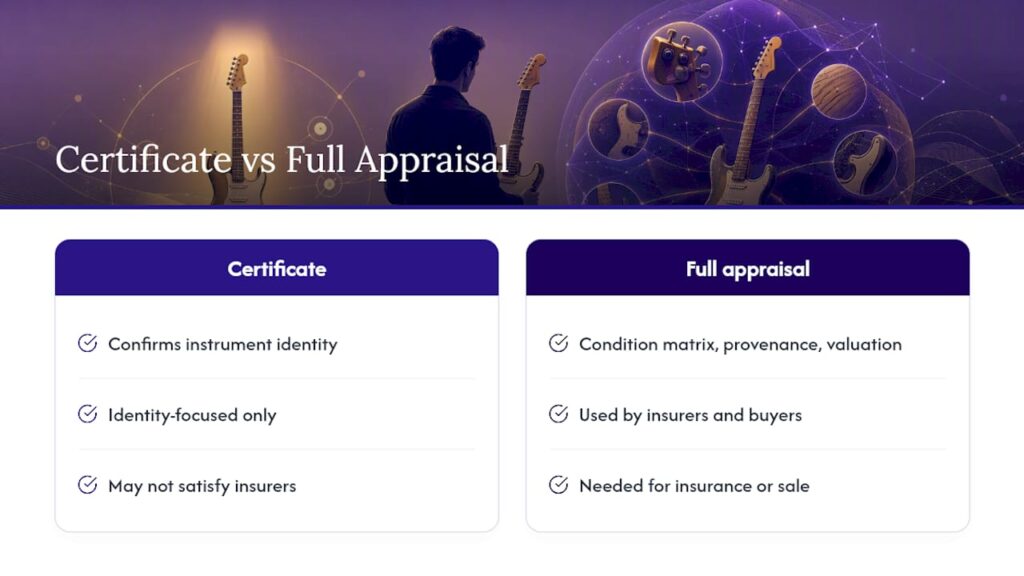
What’s the difference between a certificate of authenticity and a full appraisal?
A certificate confirms what the instrument is. A full appraisal adds a condition matrix, provenance review, and a valuation statement, which is what insurers and serious buyers actually want to see.
Sources
- Q&A With George Gruhn: A Strong Case – Vintage Guitar® magazine
- Vintage Verified Authenticates Old Guitars – Premier Guitar
- Documentation and Archival Standards for Restorations — LSIB
- The complete guide to collecting provenance guitars — Sotheby’s