












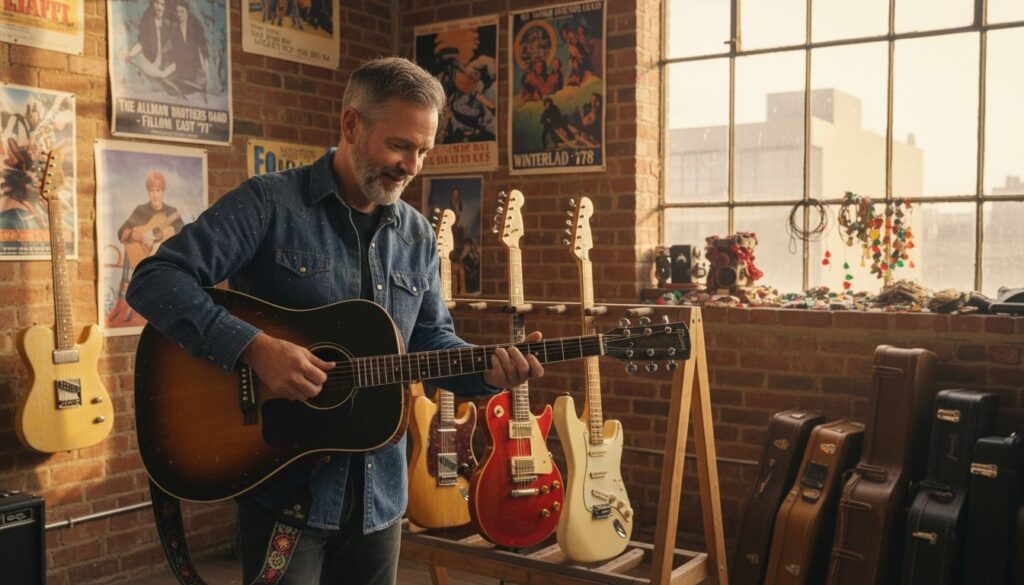

Finding a truly vintage guitar is more than a search for age—it is a quest for authenticity, sound, and cultural spirit. Collectors and professional musicians recognize that guitars crafted before the mid-1970s by brands such as Gibson, Martin, and Fender often possess unmatched character and rarity. These instruments stand out for their unique quality, historical context, and enduring musical value. Discover what elevates a guitar from old to truly collectible and why these classics remain at the heart of musical innovation.
Table of Contents
- What Makes A Guitar Vintage And Collectible
- Types Of Vintage Guitars And Key Differences
- Historical Value And Cultural Significance
- Investment Potential And Market Trends
- Common Pitfalls And How To Avoid Fakes
Key Takeaways
| Point | Details |
|---|---|
| Vintage Guitars Defined | Vintage guitars are characterized by age, rarity, historical significance, and exceptional sound quality, influencing their collectibility. |
| Investment Potential | The vintage guitar market is growing, with significant investment opportunities driven by demand, nostalgia, and limited supply. |
| Authenticity Verification | To avoid counterfeit instruments, thorough authentication is essential, including checking serial numbers and original features. |
| Cultural Significance | Vintage guitars serve as important cultural symbols and embody historical narratives, enhancing their appeal to collectors and musicians alike. |
What Makes a Guitar Vintage and Collectible
Understanding what transforms a guitar from a simple musical instrument into a coveted collectible piece requires deep appreciation of multiple nuanced factors. Vintage guitars represent more than just aged instruments – they embody historical craftsmanship, musical innovation, and cultural significance.
The primary characteristics that define a vintage guitar include:
- Age: Typically instruments manufactured before the mid-1970s
- Manufacturing Quality: Handcrafted with superior materials and techniques
- Historical Significance: Representing pivotal moments in musical instrument design
- Rarity: Limited production runs or unique manufacturing characteristics
- Sound Quality: Exceptional tonal properties that modern mass-produced guitars cannot replicate
Musical historians and collectors often focus on guitars produced between the 1920s and 1960s, particularly from legendary manufacturers like Gibson, Martin, and Fender. These instruments are prized not just for their sonic capabilities, but also for their connection to specific musical eras and cultural movements.
Vintage guitars are living artifacts that capture the essence of musical innovation and craftsmanship.
The value of a vintage guitar isn’t solely determined by its age. Factors like condition, originality, provenance, and specific manufacturing details dramatically influence its collectibility. Some guitars become valuable due to unique production variations, while others gain significance through association with legendary musicians.
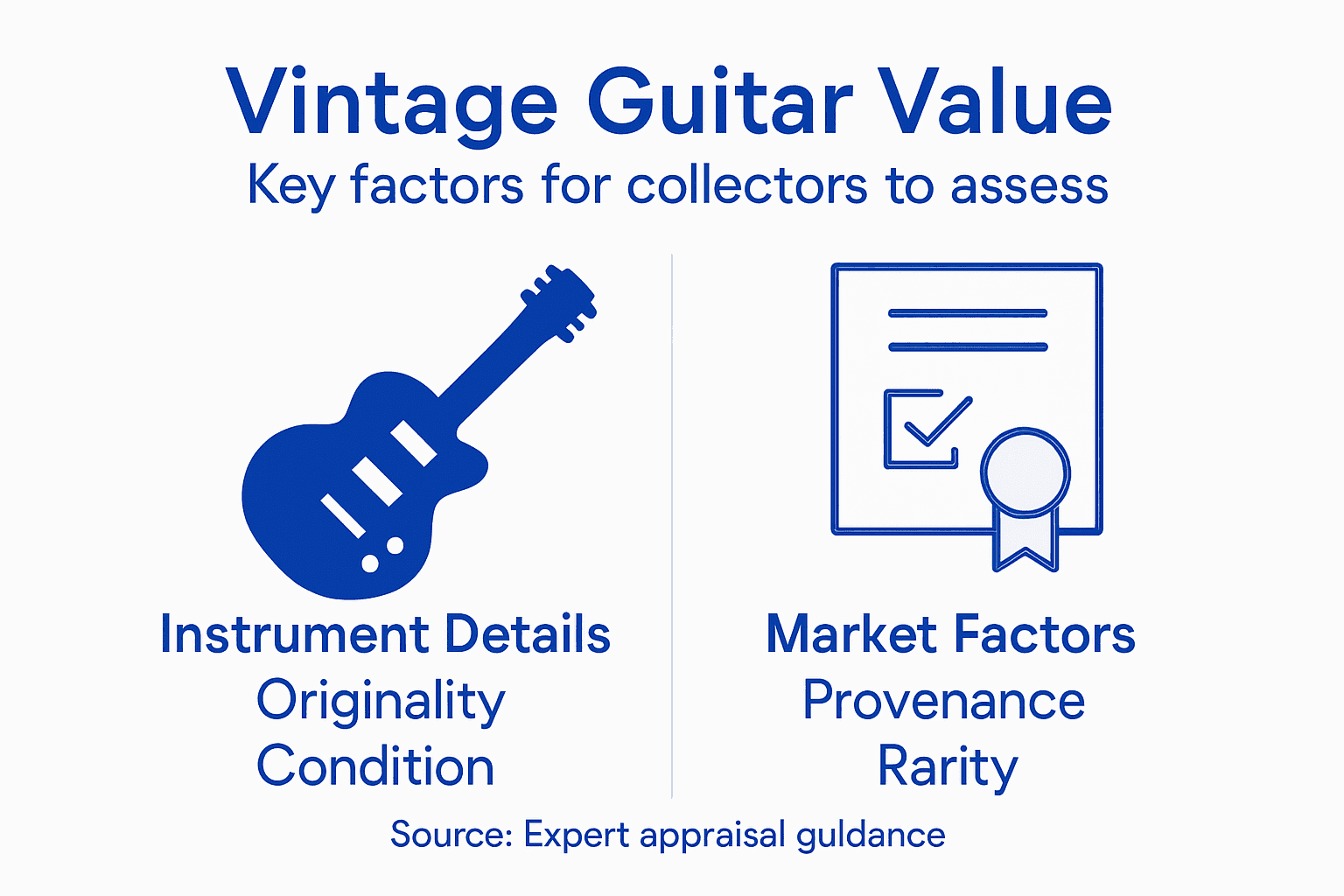
Here’s a quick summary showing how key factors influence vintage guitar collectibility:
| Factor | Impact on Value | Collector Considerations |
|---|---|---|
| Age | Older often more prized | Focus on pre-1975 instruments |
| Rarity | Scarcity drives interest | Seek unique or limited models |
| Provenance | Famous history adds value | Verify past ownership details |
| Manufacturing Details | Enhances uniqueness | Assess original hardware and finish |
| Condition | Pristine is preferred | Inspect for restoration or damage |
Pro tip: Always verify the authenticity and condition of a potential vintage guitar purchase through expert appraisal and comprehensive documentation.
Types of Vintage Guitars and Key Differences
Vintage guitars represent a fascinating spectrum of musical instruments with distinct characteristics that captivate collectors and musicians alike. Vintage guitars span multiple eras and styles, ranging from pre-war acoustic models to groundbreaking electric designs that revolutionized musical expression.
The primary categories of vintage guitars include:
-
Acoustic Vintage Guitars:
- Pre-war models from the 1920s-1930s
- Handcrafted by legendary manufacturers like Martin and Gibson
- Known for exceptional wood quality and meticulous construction
-
Electric Vintage Guitars:
- Primarily produced in the 1950s and 1960s
- Iconic brands: Fender, Gibson, Gretsch, Rickenbacker
- Prized for unique sound qualities and innovative design
Each category of vintage guitar carries unique historical significance. Acoustic models from the early 20th century represent a golden age of craftsmanship, with intricate construction techniques and premium materials. Electric guitars from the mid-century, by contrast, symbolize technological innovation and the emergence of rock and roll music.
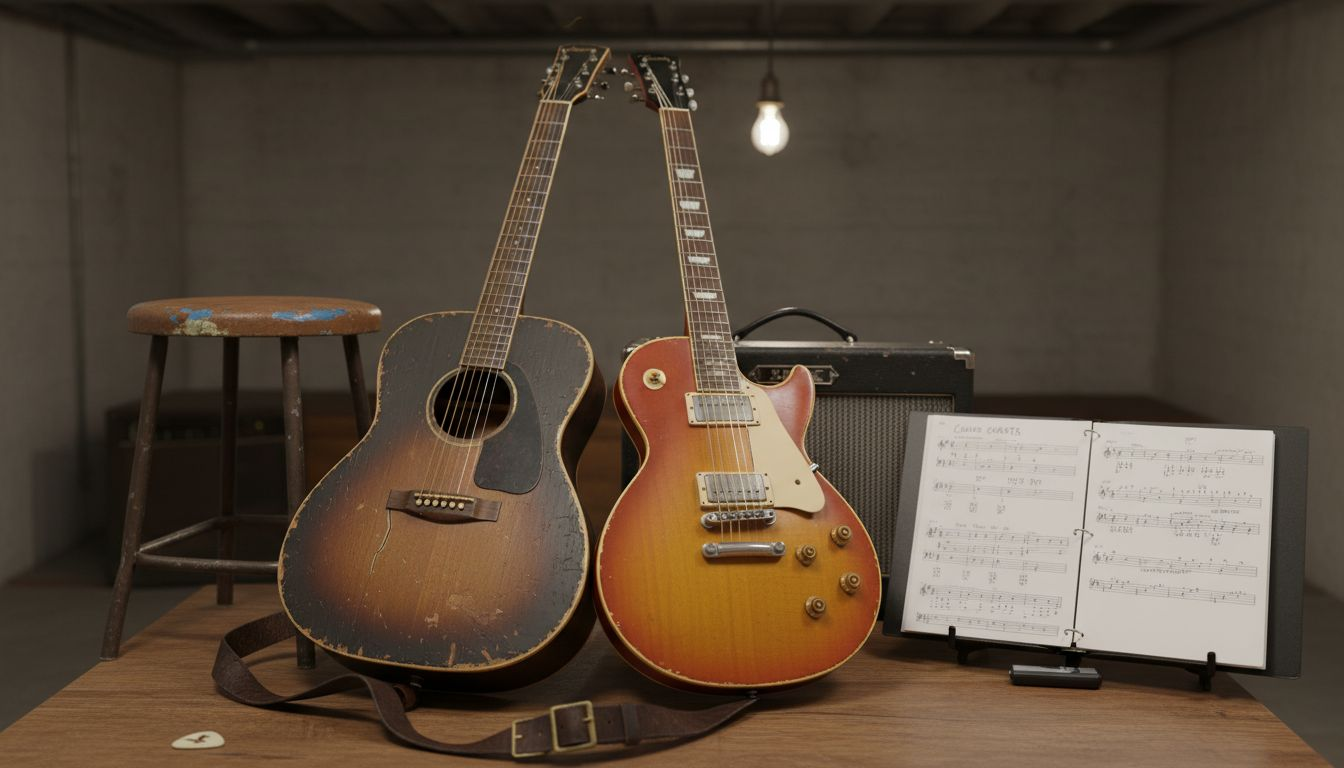
This table highlights the main differences between vintage acoustic and electric guitars:
| Attribute | Acoustic Vintage Guitar | Electric Vintage Guitar |
|---|---|---|
| Era | Early 20th century | Mid-20th century |
| Physical Features | All-wood, no electronics | Includes pickups and controls |
| Iconic Brands | Martin, Gibson | Fender, Gibson, Gretsch |
| Musical Influence | Folk, blues, classical | Rock, jazz, pop |
Vintage guitars are more than musical instruments – they are tangible connections to musical history and cultural evolution.
Differentiating vintage guitars involves examining multiple factors beyond age. Collectors scrutinize details like original hardware, wood selection, manufacturing variations, and connection to specific musical movements. Some guitars gain extraordinary value through association with legendary musicians or representing pivotal moments in musical design.
Pro tip: Develop a comprehensive understanding of guitar manufacturing eras and characteristic details before making significant vintage guitar investments.
Historical Value and Cultural Significance
The guitar has transcended its role as a mere musical instrument to become a powerful cultural symbol representing artistic expression and social transformation. Guitar’s historical journey reveals a complex narrative of musical evolution spanning multiple continents and cultural movements.
Key aspects of the guitar’s cultural significance include:
-
Musical Innovation:
- Originated from early stringed instruments like the oud
- Developed distinct identities across European cultures
- Instrumental in shaping diverse musical genres
-
Social Expression:
- Symbol of freedom and rebellion
- Represents individual and communal identity
- Accessible across social classes and musical styles
Iconic musicians have played pivotal roles in elevating the guitar’s cultural status. Legendary performers like Andrés Segovia in classical music and Jimi Hendrix in rock transformed public perception, demonstrating the instrument’s versatility and emotional range. From flamenco to jazz, rock to blues, the guitar has been a constant companion in musical storytelling.
The guitar is not just an instrument, but a vessel of cultural narrative and personal expression.
Beyond musical performance, guitars serve as artifacts that capture specific moments in social history. Collectors and musicians often view their instruments as extensions of personal identity, connecting deeply with the instrument’s rich cultural heritage and individual storytelling potential.
Pro tip: Research the specific historical context of a vintage guitar to fully appreciate its unique cultural significance and musical journey.
Investment Potential and Market Trends
The vintage guitar market represents a unique intersection of musical passion and financial opportunity, with significant investment potential emerging in recent years. Vintage guitar market growth indicates a robust trajectory, with projections showing substantial economic expansion and increasing collector interest.
Key investment characteristics include:
-
Market Dynamics:
- Estimated market value growth from USD 1.1 billion to USD 1.9 billion by 2035
- Projected Compound Annual Growth Rate (CAGR) of 5.4%
- Driven by nostalgia, professional musician demand, and investor interest
-
Investment Factors:
- Limited supply of authentic vintage instruments
- Strong provenance increases individual guitar value
- Dual-purpose assets: Musical instruments and appreciating investments
The vintage guitar market’s attractiveness stems from multiple compelling factors. Collectors and investors are drawn to instruments that represent not just musical heritage, but also potential financial appreciation. Digital authentication technologies have further enhanced market transparency, allowing more sophisticated valuation and trading strategies.
Vintage guitars are not merely musical instruments, but tangible assets with potential for significant financial appreciation.
Successful vintage guitar investment requires deep understanding of market nuances. Factors like instrument condition, historical significance, original manufacturing details, and association with legendary musicians dramatically influence potential value. Savvy collectors approach these investments with a blend of musical passion and strategic financial thinking.
Pro tip: Prioritize authentication, provenance documentation, and professional appraisal when considering vintage guitar investments.
Common Pitfalls and How to Avoid Fakes
Navigating the vintage guitar market requires vigilance and expertise to protect against counterfeit instruments. Vintage guitar authenticity demands a comprehensive approach to verification and detailed examination.
Key strategies for detecting fake vintage guitars include:
-
Authentication Techniques:
- Verify precise serial number details
- Cross-reference manufacturer production records
- Examine original manufacturing features
-
Provenance Red Flags:
- Inconsistent documentation
- Suspicious modifications
- Unexplained gaps in instrument history
Expert collectors understand that detecting counterfeits requires more than casual inspection. Advanced authentication involves microscopic examination of wood grain, hardware consistency, electrical components, and manufacturing techniques specific to particular eras and manufacturers.
Not all that glitters is gold – and not every old guitar is truly vintage.
Sophisticated counterfeiters have become increasingly skilled at creating convincing replicas. Modern collectors must develop sophisticated skills, including understanding precise manufacturing details, recognizing period-correct components, and maintaining skepticism about extraordinary claims.
Pro tip: Always commission a professional authentication from a recognized expert before making significant vintage guitar investments.
Discover the True Value of Vintage Guitars with Vintage Guitar World
The article highlights the challenge collectors face in finding authentic, high-quality vintage guitars that embody heritage, sound excellence, and investment potential. If you are seeking guitars with verified provenance, expert evaluation, and rich historical context, Vintage Guitar World offers a carefully curated selection tailored to these exact needs. We understand the importance of craftsmanship, rarity, and cultural significance, providing a trustworthy source for passionate musicians and collectors alike.
Explore our exclusive range of rare and restored acoustic, flamenco, classical, and electric vintage guitars at Vintage Guitar World Shop. Each instrument comes with detailed product descriptions and certification to ensure authenticity and value. Elevate your collection with guitars that tell a story and hold lasting worth.

Ready to own a piece of musical history? Visit Vintage Guitar World now to browse our premium selection. Experience personalized service, guitar testing appointments, and expert valuation tailored just for you. Take the first step toward acquiring your perfect vintage guitar today.
Frequently Asked Questions
What defines a vintage guitar?
Vintage guitars are typically defined by their age (manufactured before the mid-1970s), high manufacturing quality, historical significance, rarity, and exceptional sound quality that often surpasses modern mass-produced guitars.
Why are vintage guitars considered valuable?
The value of vintage guitars is influenced by factors such as their age, rarity, condition, originality, and provenance. Guitars associated with legendary musicians or specific historical moments may also hold additional value.
What types of vintage guitars are there?
Vintage guitars primarily fall into two categories: acoustic and electric. Acoustic vintage guitars are known for their craftsmanship and rich tonal qualities, while electric vintage guitars are appreciated for their innovative designs and unique sound characteristics.
How can I avoid purchasing a counterfeit vintage guitar?
To avoid purchasing a counterfeit vintage guitar, verify serial numbers, cross-reference with manufacturer production records, and carefully examine original manufacturing features. Consulting with experts for authentication is also highly recommended.