













TL;DR:
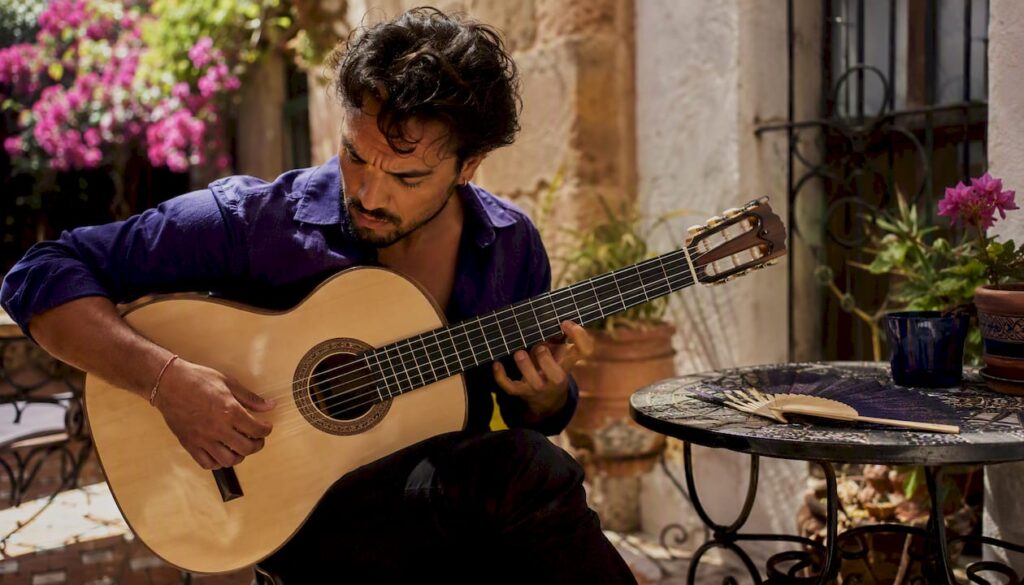
- Cypress wood shapes the traditional flamenco guitar sound with its bright, percussive attack and short sustain. Its lightweight density allows fast response and clear note separation, ideal for rhythmic playing styles. Proper identification and solid construction are essential for authentic vintage or new flamenco cypress guitars.
Cypress wood is the Mediterranean tonewood traditionally used for the backs and sides of flamenco guitars, and it defines what players call the blanca sound: lightweight, bright, and percussive with a fast, cutting attack. Mediterranean cypress (Cupressus sempervirens) runs a density of roughly 400–600 kg/m³, which puts it well below rosewood and makes it the go-to choice when a player needs projection and rhythmic snap over long, lush sustain. If you play compañía, accompany dancers, or want a guitar that responds instantly to a rasgueado, the wood choice matters more than most buyers realize before they walk into a shop.
Table of Contents
- What does cypress wood actually sound like on a guitar?
- Why did flamenco adopt cypress in the first place?
- How to identify cypress on a guitar
- How does cypress compare to rosewood, cedar, and maple?
- What to look for when buying a cypress guitar
- How to care for a cypress-bodied guitar
- Who should actually choose a cypress guitar?
- Key Takeaways
- The cypress question most buyers get wrong
- Cypress guitars at Vintage-guitar-world
- Useful sources and further reading
What does cypress wood actually sound like on a guitar?
The tonal profile is direct: bright attack, quick decay, strong mid-range projection, and comparatively little sustain. That last point is a feature, not a flaw. A flamenco player producing rapid picado runs or a dense rasgueado needs each note to speak cleanly and release fast. A guitar with heavy sustain would turn that into mud.
The physics behind it are straightforward. Lower density means the back and sides vibrate more freely and respond faster to the player’s input. Flamenco guitars built with cypress also tend to use thinner tops and lighter internal bracing, which amplifies the percussive snap even further. The result is a guitar that feels almost immediate under the fingers.
Technique-by-technique, here is how cypress responds:
- Golpe: The tap on the top resonates crisply. Cypress bodies carry that percussive click without absorbing it.
- Rasgueado: Chords bloom fast and separate clearly, which keeps complex chord sequences intelligible at speed.
- Picado: Single-note lines project well at low volume, useful for ensemble playing where a guitarist needs to cut through without amplification.
Pro Tip: String choice shapes perceived brightness significantly. A lower-tension string set on a cypress guitar softens the attack slightly and adds warmth. If a new cypress instrument feels too bright or harsh, try medium-tension strings before assuming the guitar is the problem.
Why did flamenco adopt cypress in the first place?
The short answer: economics and geography. In 19th-century Spain, cypress was locally available and far less expensive than imported Brazilian rosewood. Luthiers building instruments for working-class musicians and traveling performers used what was accessible and affordable. That practical choice accidentally defined a sound.
Antonio de Torres, the luthier whose designs shaped the modern classical and flamenco guitar in the mid-1800s, worked within these material constraints. His cypress-backed instruments became the template. Subsequent makers followed the pattern, and by the early 20th century, cypress backs and sides were simply what a flamenco guitar was.
The split between blanca (cypress) and negra (rosewood) guitars came later, as rosewood became more accessible and players began choosing by tonal preference rather than budget. Today, many professional players own both types for different musical roles. Tradition is a starting point, not a rule.
Pro Tip: When evaluating a vintage instrument described as “traditional flamenco,” ask specifically whether the back and sides are cypress or rosewood. The distinction changes the tonal expectation entirely.
How to identify cypress on a guitar
Start with color and weight. Cypress backs and sides are a creamy, pale yellow, sometimes with a slight golden tint and a relatively straight, fine grain. Pick the guitar up: a genuine solid-cypress instrument feels noticeably lighter than a rosewood-bodied guitar of similar size.
A hands-on inspection checklist:
- Weight test: Hold the guitar. Cypress bodies are light enough that the difference is immediately obvious compared to rosewood.
- Tap test: Knock gently on the back. Cypress produces a bright, slightly dry tap tone with a fast decay.
- Smell check: Older cypress instruments often carry a persistent pungent aroma that can linger for decades. On a vintage piece, this is a useful supporting cue.
- Soundhole inspection: Look through the soundhole with a flashlight. Check the end grain at the heel block and the interior surface of the back. Solid cypress shows consistent grain throughout; a laminate shows a thin veneer layer over a different substrate.
- Purfling edges: Examine where the back meets the sides. On a well-made solid instrument, the grain runs continuously around the edge without a visible glue line between layers.
Pro Tip: Ask the seller for interior photos before purchasing online. A clear shot through the soundhole showing the back bracing and end grain tells you more about wood authenticity than any exterior photo.
How does cypress compare to rosewood, cedar, and maple?
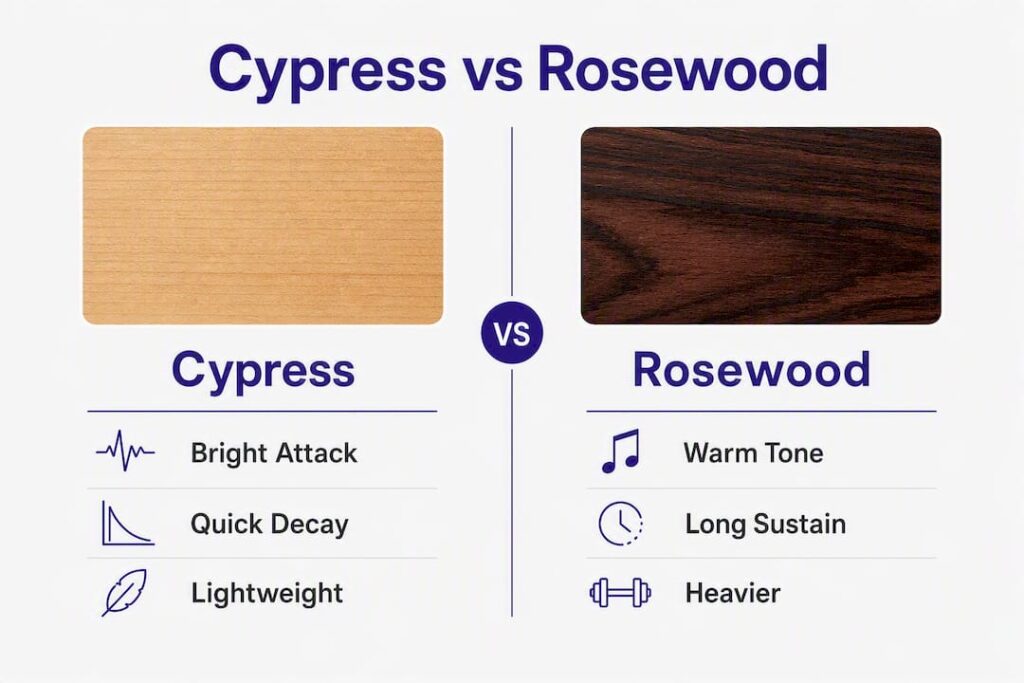
| Feature | Cypress | Rosewood | Cedar (top) | Maple |
|---|---|---|---|---|
| Density (approx.) | 400–600 kg/m³ | — | 400–600 kg/m³ | 600 kg/m³ |
| Attack | Fast, percussive | Warm, rounded | Responsive | Bright, focused |
| Sustain | Short to medium | Long | Medium | Medium |
| Typical use | Flamenco backs/sides | Classical backs/sides | Classical tops | Acoustic backs/sides |
| Visual color | Creamy yellow | Dark brown/purple | Reddish-brown | Pale cream to light brown |
A few practical consequences worth knowing:
- Cypress guitars tend to record with a forward, present sound that needs less EQ to cut through a mix.
- Rosewood instruments suit solo classical repertoire where sustain and tonal complexity carry the performance.
- Cypress’s light weight and responsiveness make it the recommended back-and-sides material for flamenco specifically because of how it interacts with thin tops and light bracing.
One honest caution: top wood, bracing pattern, and a player’s technique can shift the tonal outcome considerably. A cedar-topped guitar with light bracing can sound surprisingly percussive. Evaluate any instrument in played context, not just by back-and-sides material alone.
What to look for when buying a cypress guitar
The single most important factor is whether the back and sides are solid wood, not laminate. Everything else follows from that.
- Confirm solid construction: Ask directly. Request interior photos showing the end grain at the heel and the back bracing.
- Check wood origin: High-quality Mediterranean cypress sets are increasingly scarce and command higher prices than lower-grade alternatives. Ask whether the wood is Mediterranean (Cupressus sempervirens) or a substitute.
- Inspect the top: Look for cracks, repaired splits, or inconsistent finish that might indicate past damage.
- Assess neck angle and action: A high action that cannot be corrected by saddle adjustment often signals a structural issue.
- For vintage pieces: Request interior label photos, heel stamps, and any repair invoices. Documented provenance matters for both authenticity and resale value.
Red flags to watch for:
- Inconsistent grain on the back that suggests a veneer over a different substrate
- Heavy finish checking that extends into the wood surface
- Signs of significant structural repair without documentation
- Missing or illegible interior labels on instruments claimed to be by named makers
Pro Tip: Book a guitar testing appointment before committing to a vintage cypress instrument. Playing it at low volume in a quiet room reveals response characteristics that photos and descriptions cannot capture.
For deeper guidance on evaluating vintage flamenco instruments, the vintage flamenco guitar buying guide at Vintage-guitar-world covers provenance checks and inspection steps in detail.
How to care for a cypress-bodied guitar
Humidity control is the priority. Cypress, like all tonewoods, moves with moisture changes. The target range is 40–50% relative humidity. Below 40%, the wood can dry and crack; above 60%, it may swell and affect playability.
Care essentials:
- Store the guitar in its case with a calibrated hygrometer and a case humidifier when the ambient humidity drops below 45%.
- Avoid leaving the instrument near heating vents, air conditioning units, or in a car.
- Clean the body with a slightly damp cloth and a guitar-specific cleaner. Avoid silicone-based polishes, which can build up on the finish and affect resonance over time.
- Cypress guitars often carry a French polish or thin lacquer finish. Both are more delicate than modern polyester coatings, so handle with care and avoid contact with alcohol-based products.
For string changes, keep the guitar in tune rather than detuning fully between sessions. Rapid tension changes stress the top and neck joint.
Pro Tip: If a cypress guitar that previously felt lively starts sounding slightly choked or unresponsive, check the action before assuming the wood has changed. A small rise in saddle height from seasonal humidity shifts is often the culprit, and a setup corrects it without any structural work.
Who should actually choose a cypress guitar?
Cypress is the right choice for a specific player profile, not a universal recommendation.
- Flamenco players: The primary audience. Cypress delivers the attack, projection, and rhythmic clarity that compañía and dance accompaniment demand.
- Rhythmic accompanists: Any guitarist whose role is rhythmic rather than melodic benefits from the fast response and clean note separation.
- Students of flamenco: A solid-cypress student instrument teaches the correct tonal expectations from the start.
- Collectors: Vintage cypress guitars, particularly those from named Spanish makers, hold historical and tonal significance that rosewood instruments in the same price range often do not.
- Classical soloists: Probably better served by rosewood or maple backs and sides, which provide the sustain and tonal complexity that solo repertoire requires.
- Studio musicians needing tonal versatility: A rosewood or maple instrument may cover more ground across genres.
Pro Tip: If you are torn between cypress and rosewood, consider what repertoire you play most. Cypress rewards rhythmic playing; rosewood rewards melodic and harmonic complexity. Many serious players eventually own one of each.
Key Takeaways
Cypress wood is the defining tonewood for traditional flamenco guitars: lightweight, percussive, and built for rhythmic attack rather than sustained resonance.
| Point | Details |
|---|---|
| Core tonal identity | Cypress delivers fast attack, bright projection, and short sustain — ideal for flamenco rhythmic playing. |
| Density and weight | At roughly 400–600 kg/m³, cypress is significantly lighter than rosewood, which directly shapes its quick response. |
| Identification checks | Look for creamy-yellow color, light weight, a dry tap tone, and a persistent pungent aroma on older instruments. |
| Buying priority | Always confirm solid construction over laminate; ask for interior photos and wood origin before purchasing. |
| Vintage-guitar-world | Offers testing appointments, valuation, and certified vintage cypress guitars for buyers who want expert evaluation before committing. |
The cypress question most buyers get wrong
Most players shopping for a flamenco guitar ask “cypress or rosewood?” as if it were a quality question. It is not. It is a tonal-role question. Cypress is not a cheaper or lesser alternative to rosewood. It is a different tool for a different job, and the historical accident that made it the traditional flamenco wood turned out to be acoustically correct for that music.
What buyers underestimate is how much the build matters alongside the wood. A poorly braced cypress guitar will not deliver the percussive snap that defines the blanca sound. A well-built one, with a thin top and light internal structure, will outperform a mediocre rosewood instrument for flamenco purposes every time. The craftsmanship behind a flamenco guitar shapes the sound as much as the species on the label.
The other thing worth saying plainly: the scarcity of high-quality Mediterranean cypress sets is real and growing. If you are considering a vintage cypress instrument from a named maker, the window for finding well-preserved examples at reasonable prices is narrowing. That is not a sales argument. It is a material fact about the supply chain for this specific wood.
Cypress guitars at Vintage-guitar-world
Vintage-guitar-world specializes in curated, expert-evaluated flamenco and classical guitars, including rare vintage cypress instruments from named Spanish makers. Every listing comes with detailed interior photos, wood identification notes, and documented provenance where available.

For buyers who want to go further, Vintage-guitar-world offers in-person guitar testing appointments, professional valuation and certification services, and personalized buying consultation. If you are evaluating a vintage cypress guitar and want an independent assessment, the guitar appraisal service covers authenticity, condition, and fair market value. Browse the current inventory and book a testing appointment at the Vintage-guitar-world shop.
Useful sources and further reading
The claims in this article draw on the following references, listed for readers who want to verify specifics or go deeper:
- Mediterranean Cypress — The Wood Database: Primary source for density range (400–600 kg/m³), color description, and aromatic properties of Cupressus sempervirens.
- Flamenco Guitar — Wikipedia: Overview of construction differences between flamenco and classical guitars, including body thinness and its effect on attack.
- Flamenco vs. Classical Guitar — Diego Alonso Music: Explains the economic and historical reasons cypress became the standard flamenco back-and-sides wood.
- Guitar Woods — Guitar From Spain: Practical tonal guide listing cypress as the recommended flamenco back-and-sides material.
- Flamenco vs. Classical Guitar — Guitar From Spain: Covers tonal character, scarcity of quality cypress sets, and the pungent aroma as an identification cue.
- The Role of Wood in Flamenco Guitars — Vintage-guitar-world: In-depth tonal guide covering how wood species, including cypress, shape flamenco guitar sound and value.
Pro Tip: For provenance verification on a vintage cypress instrument, cross-reference interior label photos against known maker records. Vintage-guitar-world’s valuation service can assist with authentication for high-value pieces.