












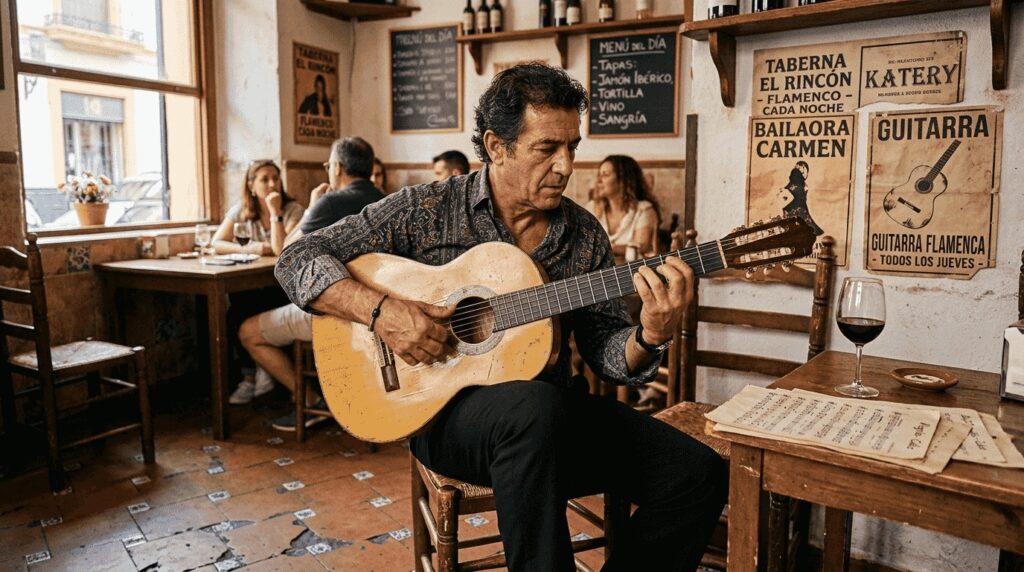

Many guitarists mistake flamenco guitars for simple classical guitars suited to flamenco music. That misconception misses the profound design differences rooted in centuries of Spanish musical tradition. Flamenco guitars use specialized woods, unique bracing patterns, and lighter construction to deliver bright, percussive tones essential to authentic flamenco performance. This guide explores the history, materials, construction techniques, and playing styles that make flamenco guitars distinctly different from their classical counterparts.
Table of Contents
- The History And Cultural Roots Of The Flamenco Guitar
- Unique Construction And Materials Shaping Flamenco Guitar Sound
- How Flamenco Guitars Differ From Classical Guitars
- Playing Techniques And Sound Characteristics Of Flamenco Guitars
- Discover Unique Flamenco And Vintage Guitars
- What Is A Flamenco Guitar? FAQ
Key takeaways
| Point | Details |
|---|---|
| Spanish cypress and plane tree create the signature bright, percussive sound that defines flamenco guitars. | |
| Flamenco guitars evolved historically to meet the acoustic demands of intimate tablaos and singing cafes. | |
| Specialized bracing patterns like ladder bracing enhance the sharp, rhythmic articulation flamenco music requires. | |
| Lower action, tap plates, and lighter construction enable rapid playing techniques like rasgueado and golpe. | |
| Understanding these structural differences helps players select instruments matched to their musical needs. |
The history and cultural roots of the flamenco guitar
The flamenco guitar is an essential part of flamenco, deeply rooted in southern Spanish culture. The instrument emerged alongside the flamenco genre itself in Andalusia during the 18th and 19th centuries. Early flamenco guitars were smaller than modern versions, designed for intimate performance settings where musicians played for small audiences in homes and local gatherings.
The instrument’s evolution accelerated in the late 1800s when José Ramírez I recognized the need for greater volume. He created the ‘Tablao guitar’ specifically to project sound in flamenco venues and singing cafes where ambient noise challenged quieter instruments. This innovation marked a turning point in flamenco guitar design.
Manuel Ramírez continued refining the Tablao guitar concept in the early 1900s, establishing design principles that shaped modern flamenco guitars. His workshops trained numerous influential luthiers who spread these construction techniques throughout Spain.
Santos Hernández, who apprenticed under Manuel Ramírez, became one of the most celebrated flamenco guitar makers of the 20th century. His instruments achieved legendary status among flamenco artists. Hernández refined bracing patterns and wood selection methods that maximized the bright, percussive qualities flamenco players demanded. His legacy continues to influence contemporary luthiers worldwide.
Key historical developments that shaped the modern flamenco guitar include:
- Introduction of the Tablao guitar by José Ramírez I for improved projection
- Manuel Ramírez’s workshop establishing standardized construction techniques
- Santos Hernández’s refinement of bracing and tonal characteristics
- Evolution from intimate home instruments to performance-grade guitars
- Spread of Spanish construction methods through master-apprentice traditions
Unique construction and materials shaping flamenco guitar sound
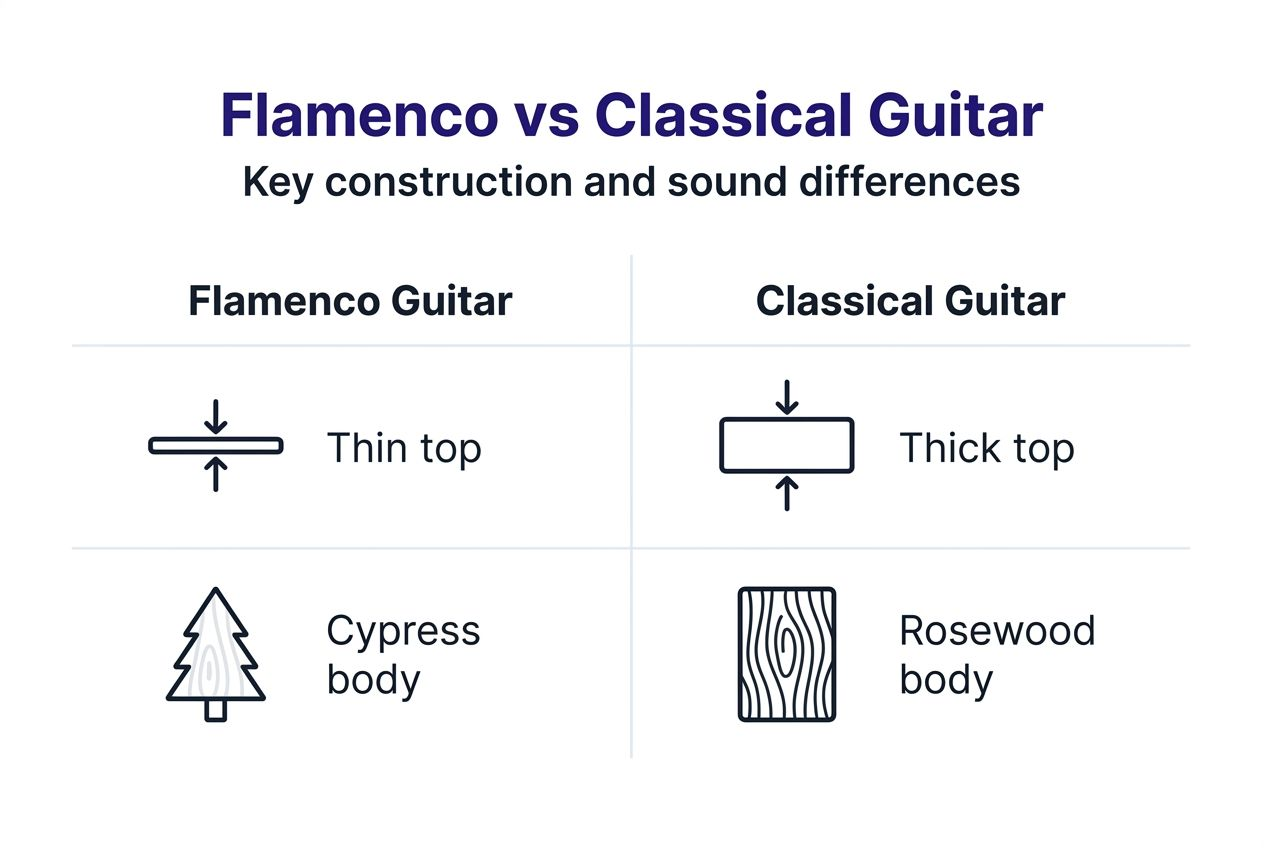
Traditional flamenco guitars are made from Spanish cypress or plane tree which support the bright, percussive sound. These woods produce sharper attack and faster decay compared to the Indian rosewood, mahogany, or maple commonly used in classical guitars. The tonal difference is immediately recognizable to trained ears.
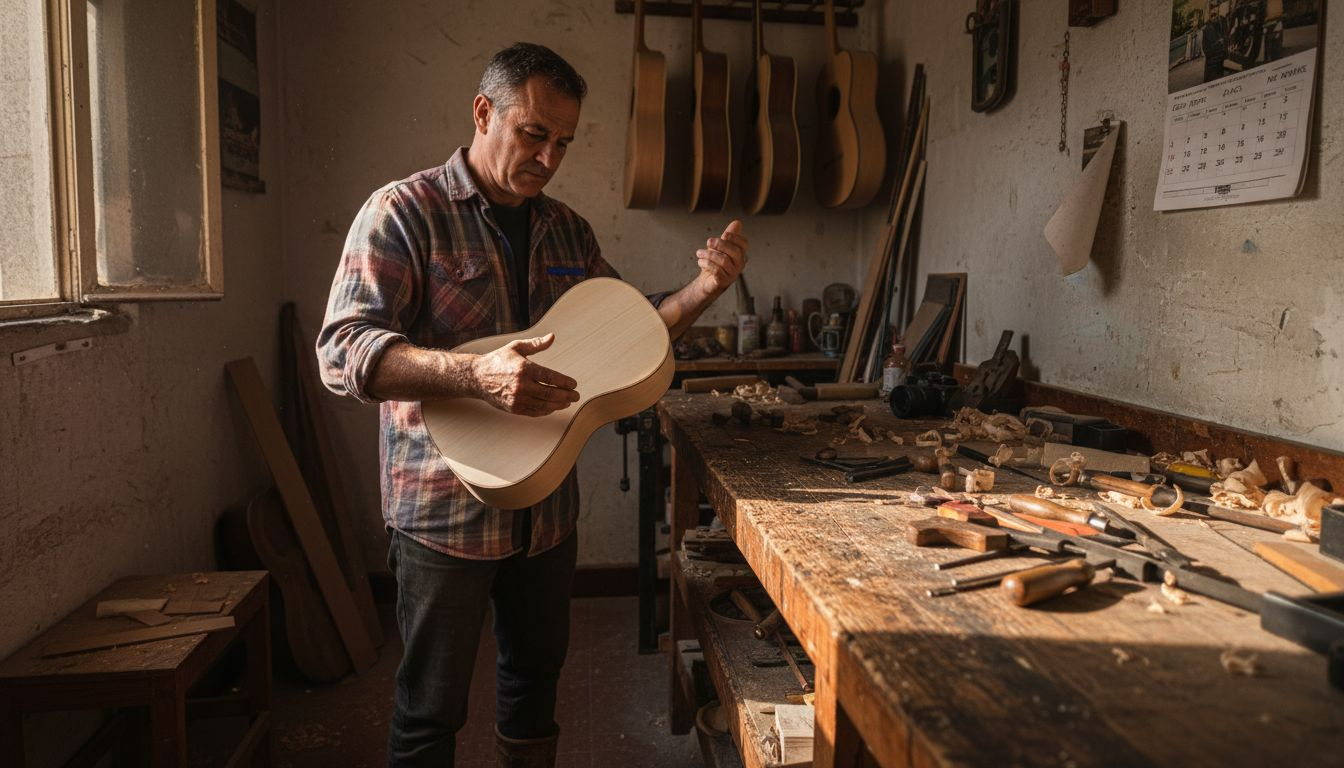
Spanish cypress delivers exceptional clarity in the treble range while maintaining controlled bass response. The wood’s density and cellular structure create rapid vibration damping that prevents sustain from blurring rapid note sequences. Plane tree offers similar characteristics with slightly warmer midrange frequencies. Both woods excel at producing the sharp, articulate tone flamenco music requires.
Classical guitars typically feature spruce or cedar tops paired with rosewood backs and sides. These combinations prioritize sustained notes, rich harmonics, and balanced frequency response across the tonal spectrum. The resulting sound supports melodic playing and complex chord voicings rather than percussive rhythmic patterns.
Guitar bracing patterns control how the soundboard vibrates, affecting tone, projection, and sustain. Flamenco guitars frequently employ ladder bracing or modified fan bracing with fewer, lighter struts than classical guitars. This lighter bracing allows the top to vibrate more freely, creating the responsive, punchy attack flamenco demands.
Bracing placement can shift tonal emphasis forward or backward depending on where struts contact the soundboard. Forward-shifted patterns enhance treble brightness and immediate attack. Backward-shifted designs add warmth and slightly longer sustain. Luthiers adjust these parameters based on the playing style and tonal preferences of individual musicians.
Scalloped braces, where wood is carved into curved profiles rather than left straight, offer different tonal characteristics. Scalloping reduces mass while maintaining structural integrity, allowing more nuanced top vibration. Straight braces provide firmer control and brighter, more direct sound with less complexity in the overtone series.
| Wood/Bracing Type | Tonal Characteristic | Best For |
|---|---|---|
| Spanish Cypress | Bright, sharp attack, controlled bass | Traditional flamenco, percussive playing |
| Plane Tree | Bright with warmer mids, good clarity | Modern flamenco, versatile performance |
| Ladder Bracing | Maximum brightness, fast response | Rasgueado, rapid strumming patterns |
| Modified Fan Bracing | Balanced brightness with some warmth | Mixed repertoire, concert performance |
| Scalloped Braces | Complex overtones, responsive dynamics | Expressive playing, tonal variety |
Explore different types of flamenco guitars to understand how variations in construction suit different playing styles. The guide for flamenco guitar differences provides deeper insight into how these design choices affect practical performance.
Pro Tip: Bracing patterns significantly impact how your guitar responds to different techniques. Lighter bracing favors percussive styles but may lack volume for melodic passages. Heavier bracing increases projection but can reduce the crisp attack essential to traditional flamenco. Test guitars with your specific playing techniques before committing to a purchase.
How flamenco guitars differ from classical guitars
Flamenco guitars are constructed lighter than classical guitars, with thinner tops that vibrate more freely. This design choice prioritizes immediate response and bright tonal characteristics over the sustained, complex harmonics classical music requires. The weight difference is noticeable when holding the instruments side by side.
Tap plates, called golpeadores, protect the guitar’s top from damage during percussive golpe techniques where players strike the soundboard rhythmically. Classical guitars rarely feature these protective plates since classical technique avoids striking the instrument. The golpeador’s presence signals the instrument’s intended use for flamenco performance.
Flamenco guitars typically have lower action, meaning strings sit closer to the fretboard. This setup enables faster playing and facilitates the rapid finger movements flamenco demands. The reduced string height also makes tapping techniques easier to execute cleanly. Classical guitars maintain higher action to allow strings greater vibration space for sustained notes.
Body dimensions differ between the two guitar types. Flamenco guitars often have slightly shallower bodies that enhance treble response and reduce bass resonance. The flamenco guitar was designed with power to be heard in tablaos and singing cafes, prioritizing projection and clarity in noisy performance environments over the refined tonal balance classical concerts require.
| Feature | Flamenco Guitar | Classical Guitar |
|---|---|---|
| Primary Woods | Spanish cypress, plane tree | Indian rosewood, mahogany, maple |
| Bracing Style | Lighter, often ladder or modified fan | Heavier fan bracing, more struts |
| Tone Character | Bright, percussive, sharp attack | Warm, sustained, complex harmonics |
| Action Height | Lower for fast playing | Higher for string clearance |
| Body Depth | Slightly shallower | Deeper for resonance |
| Tap Plate | Standard feature (golpeador) | Rarely included |
| Playing Style | Rhythmic, percussive, rapid strumming | Melodic, sustained notes, fingerstyle |
Understand the broader context of classical vs flamenco guitars to appreciate how design serves musical purpose. Each guitar type evolved to meet specific performance requirements.
Flamenco’s unique playing techniques enabled by guitar design include:
- Rasgueado: rapid outward finger strumming creating rhythmic patterns
- Golpe: percussive tapping on the guitar body or tap plate
- Picado: fast alternating finger picking for melodic runs
- Alzapúa: thumb technique combining strumming and individual note picking
- Tremolo: rapid repetition of single notes creating sustained effect
Playing techniques and sound characteristics of flamenco guitars
Flamenco guitar technique centers on rasgueado, where players fan fingers outward in rapid succession to create rolling strummed patterns. This technique produces the driving rhythmic foundation for flamenco dance and singing. The motion requires significant finger independence and strength developed through dedicated practice.
Golpe adds percussive accents by striking the guitar’s tap plate with the ring finger or other fingers during playing. These sharp taps punctuate musical phrases and reinforce rhythmic emphasis. The technique demands precise timing to integrate seamlessly with strumming and picking patterns.
Picado involves alternating index and middle fingers to play rapid melodic scales and runs. The technique produces clear, articulate notes that cut through dense musical textures. Flamenco guitars’ lower action and bright tonal response make picado passages easier to execute cleanly at high speeds.
The flamenco guitar’s bright, percussive sound complements flamenco dance and singing styles. The sharp trebles cut through the sound of footwork and handclaps typical in flamenco performances. Lively bass notes provide rhythmic foundation without overwhelming the frequency range singers occupy. The guitar’s articulation allows rapid note sequences to remain distinct rather than blurring together.
These demands require instruments capable of immediate attack and controlled sustain. The construction choices discussed earlier directly enable flamenco’s signature playing techniques. Without appropriate action height, bracing, and wood selection, executing authentic flamenco becomes significantly more difficult.
Key flamenco playing techniques and their requirements:
- Rasgueado demands responsive tops that produce consistent volume across finger rolls
- Golpe requires protective tap plates to withstand repeated percussive strikes
- Picado benefits from lower action enabling rapid finger movement across frets
- Alzapúa combines thumb techniques requiring balanced string response
- Tremolo patterns need clear note separation despite rapid repetition
Pro Tip: Guitar setup dramatically affects flamenco tone and playability. Action height, string tension, and saddle material all influence how techniques respond. Work with experienced luthiers familiar with flamenco requirements when adjusting your instrument. Small changes to nut height or saddle position can transform playability for specific techniques.
Learn more about buying flamenco guitars to ensure you select instruments properly configured for your playing style.
Discover unique flamenco and vintage guitars
Now that you understand what makes flamenco guitars unique, finding the right instrument becomes crucial. Vintage Guitar World offers carefully vetted flamenco and vintage guitars selected for authentic construction and exceptional playability. Each instrument receives expert evaluation to verify quality and historical accuracy.
Our collection includes rare pieces from legendary makers alongside contemporary luthiers working in traditional Spanish methods. We provide detailed specifications, historical context, and sound characteristics for every guitar. Discover why we love vintage guitars and how these instruments connect players to musical heritage.

Explore our flamenco guitar buying guide for detailed advice on selecting instruments matched to your skill level and musical goals. Our vintage guitar buying checklist ensures you evaluate critical quality factors before investing in rare instruments.
What is a flamenco guitar? FAQ
What woods are best for flamenco guitars?
Spanish cypress and plane tree are traditional choices for flamenco guitar backs and sides because they produce bright, percussive tones with sharp attack. These woods create the crisp, articulate sound flamenco music demands. Spruce tops paired with cypress or plane tree deliver optimal brightness and projection for traditional flamenco playing styles.
How does flamenco guitar bracing affect sound?
Bracing patterns control how the soundboard vibrates, directly affecting tone, sustain, and volume. Lighter ladder or modified fan bracing allows freer top movement, creating the responsive, punchy attack flamenco requires. Heavier bracing increases projection but can reduce the immediate response essential to percussive playing techniques. Bracing placement and scalloping further refine tonal characteristics by emphasizing different frequency ranges.
Can you use a classical guitar for flamenco music?
You can play flamenco music on a classical guitar, but the instrument’s design works against authentic flamenco sound and technique. Classical guitars have heavier construction, higher action, and different tonal balance that prioritize sustained notes over percussive attack. The lack of a tap plate makes golpe techniques impractical without damaging the instrument. Serious flamenco study benefits significantly from using purpose-built flamenco guitars.
What are the characteristic playing techniques?
Flamenco technique centers on rasgueado (rapid outward finger rolls), golpe (percussive body strikes), and picado (fast alternating finger picking). These techniques create the rhythmic drive and melodic clarity flamenco music requires. Alzapúa combines thumb strumming with individual note picking, while tremolo produces sustained effects through rapid note repetition. Each technique demands specific guitar characteristics like lower action and responsive tops.
Where did the flamenco guitar originate?
The flamenco guitar originated in southern Spain, particularly Andalusia, during the 18th and 19th centuries alongside the flamenco musical genre itself. Early instruments were smaller and suited to intimate settings. José Ramírez I developed the Tablao guitar in the late 1800s to project sound in performance venues. Manuel Ramírez and Santos Hernández further refined the design in the early 1900s, establishing construction principles that define modern flamenco guitars.