













TL;DR:
- Premium guitars achieve their quality through integrated design, craftsmanship, and choice of materials, not price. They feature precise fretwork, superior tonewoods, and construction techniques tailored to specific tonal goals, ensuring long-term musical development. Inspection of fret fit, wood quality, hardware, and setup reveals true premium status, which becomes more evident with years of play.
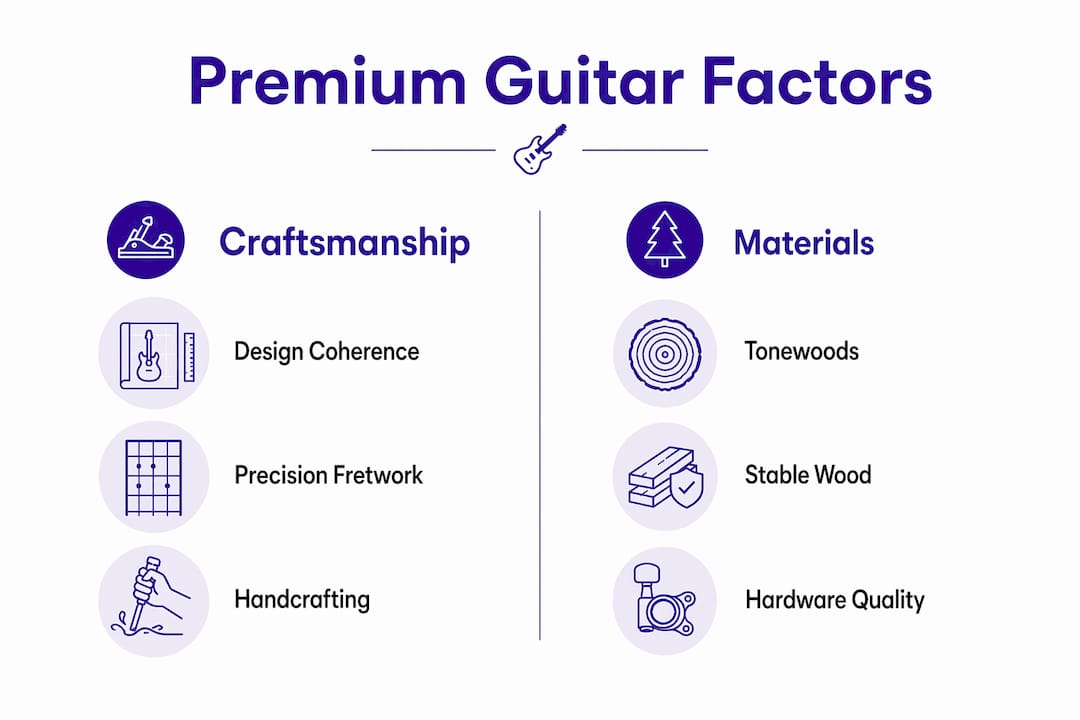
Premium guitars are defined by the coherence of their design, materials, and craftsmanship working together to produce exceptional tone, playability, and longevity. The industry term for this category is “luthier-grade” or “professional-grade” guitar, though collectors and players widely use “premium” to describe instruments that go far beyond standard production models. What defines premium guitars is not a single feature or a high price tag. It is the integration of voicing decisions, precision fretwork, superior tonewoods, and advanced setup techniques into one instrument that reveals more musical depth over years of play. Builders like Fender Custom Shop and Furch Guitars exemplify this standard through measurable technical choices and single-luthier supervision.
What defines premium guitars: design coherence and craftsmanship
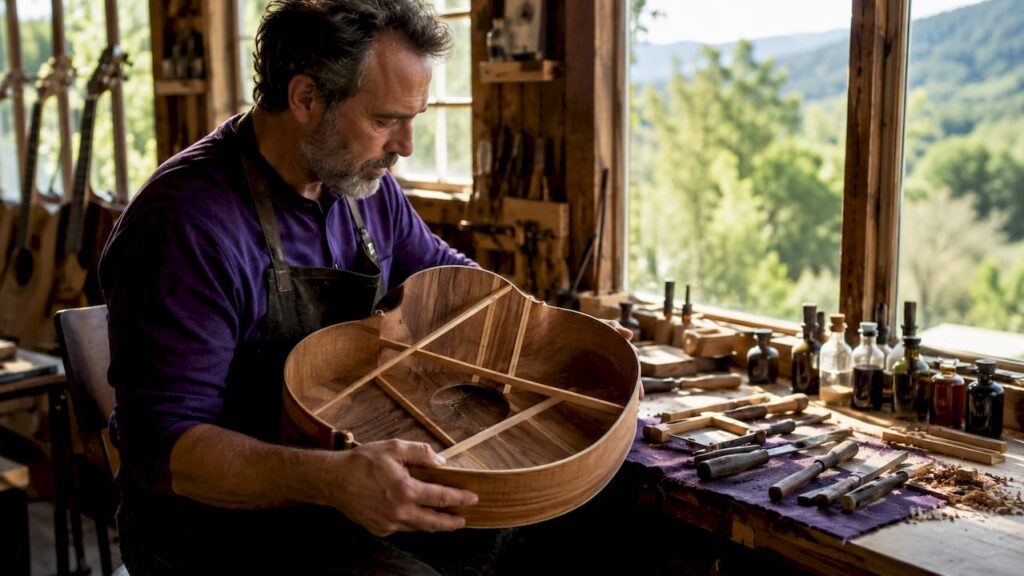
A premium guitar’s voice is the result of every meaningful design choice working as a system. Scharpach describes luxury guitars as instruments where thickness targets, bracing treatment, neck and bridge mass, body geometry, and wood treatment are integrated to develop resonance that deepens with years of play. No single element creates that result. The interaction between all of them does.
Handcrafting makes this integration possible. A skilled luthier can adjust top thickness by fractions of a millimeter based on how a specific piece of wood responds to tap tones. Assembly line production cannot replicate that level of sensitivity. The result is an instrument tuned to its own materials rather than to a factory template.
Fender Custom Shop illustrates the difference between production and premium tiers. The shop operates two distinct categories: “Team Built” instruments assembled by groups of specialists, and “Master Built” guitars supervised by a single master builder from start to finish. Master Built instruments carry a consistency and personal touch that team production cannot match. That single-luthier model is a defining attribute of high-end guitars across the industry.
Tonal goals also vary by player. A fingerstyle player needs a guitar voiced for clarity and separation across strings. A strummer needs warmth and projection. Premium builders design for a specific tonal target, then make every structural decision in service of that goal. The result is an instrument that stays coherent and stable as it ages rather than peaking early and fading.
Pro Tip: When evaluating a handcrafted guitar, tap the top lightly with a knuckle and listen. A premium instrument produces a clear, sustained ring. A dull thud suggests dense or poorly graduated wood that will limit tonal development over time.
You can read more about single-luthier craftsmanship and why it matters for tone and consistency.
How does precision fretwork affect playability?
Fretwork is where premium guitars separate from standard models in the most physically felt way. Fret slot depth typically falls between 0.040 and 0.060 inches, with tolerances within fractions of a thousandth of an inch. Tiny deviations from that range cause buzz, dead notes, and intonation problems that no amount of setup adjustment can fully correct.
Fret leveling is equally critical. Even a fret that sits 0.001 inches higher than its neighbors creates a dead spot or buzz under normal playing pressure. Premium builders use precision leveling beams and fret rockers to verify uniformity across the entire fretboard before the guitar leaves the workshop. Standard production guitars rarely receive that level of individual attention.
Nut slot depth is the third pillar of premium fretwork. String-to-first-fret clearance on treble strings runs approximately 0.005 inches, while bass strings require around 0.012 inches. These measurements are taken with feeler gauges while fretting the string at the third fret, which reveals the true clearance under playing conditions. A nut cut too high creates stiff, sharp-feeling chords in the first position. A nut cut too low causes open-string buzz.
| Fretwork element | Standard guitar | Premium guitar |
|---|---|---|
| Fret slot depth tolerance | Often unverified | 0.040–0.060 in, held to fractions of 0.001 in |
| Fret leveling | Batch leveled or skipped | Individual fret-by-fret verification |
| Nut slot depth (treble) | Approximate | ~0.005 in clearance at first fret |
| Nut slot depth (bass) | Approximate | ~0.012 in clearance at first fret |
| Setup method | Factory standard | Player-specific action and intonation |
Pro Tip: At a guitar shop, fret the low E string at the third fret and check the gap at the first fret with a thin business card. If the string sits flat on the first fret, the nut is too low. If the gap is large enough to see clearly, the nut is too high. Premium guitars hit the narrow window between those two extremes.
A collector’s guide to quality craftsmanship covers additional inspection points worth knowing before you buy.
What materials and features set premium guitars apart?
Premium tonewoods are chosen for hardness, stability, and tonal character, not just appearance. Ebony, rosewood, and mahogany are the three most cited woods in professional-grade instruments. Ebony and rosewood rank among the hardest fretboard materials available, which directly affects fret wear, sustain, and the crispness of note attack. Mahogany provides warmth and midrange richness that makes it a standard choice for necks and back-and-sides on acoustic instruments.
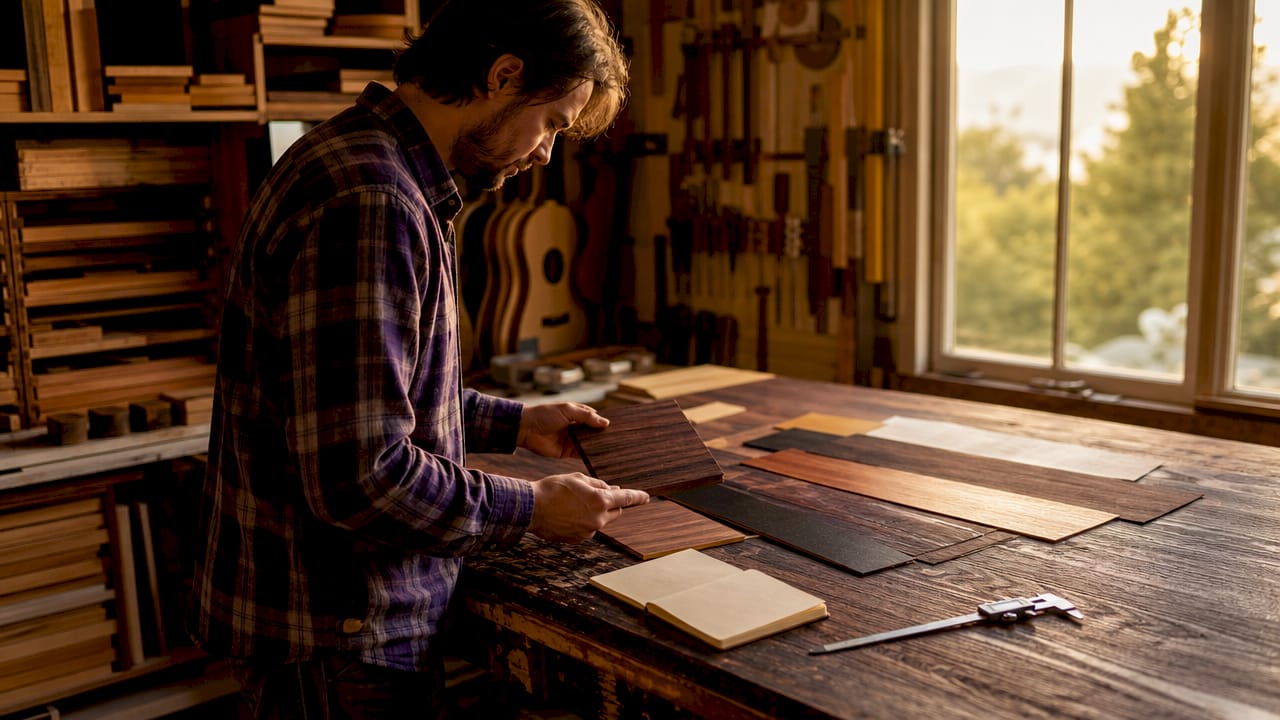
Wood stability matters as much as tone. A fretboard that expands and contracts significantly with humidity changes will pull frets loose and shift neck relief unpredictably. Premium builders select and dry their tonewoods carefully, often aging them for years before use. That patience produces structural stability that budget instruments cannot match.
Furch Guitars takes climate adaptation further with its CNR System® Active neck, which adjusts dynamically to humidity changes to maintain consistent string action. The system reduces the need for neck resets, a common and costly repair on acoustic guitars that experience seasonal climate shifts. That kind of engineering reflects the premium tier’s commitment to long-term reliability, not just initial quality.
| Tonewood | Primary use | Key tonal character |
|---|---|---|
| Ebony | Fretboard | Bright attack, high sustain, dense feel |
| Rosewood | Fretboard, back and sides | Warm, complex, rich overtones |
| Mahogany | Neck, back and sides | Warm midrange, focused tone |
| Spruce | Soundboard (top) | Clear, responsive, wide dynamic range |
Hardware quality completes the picture. Premium tuning machines hold pitch under string tension and temperature changes. Bone or high-density synthetic nuts transmit string vibration more efficiently than plastic. A well-fitted bridge saddle on an acoustic guitar affects both intonation and sustain in ways that players feel immediately.
Difference between regular and premium guitars: what to look for
The difference between regular and premium guitars is observable before you play a single note. Price alone is not a reliable indicator. A guitar priced at $2,000 from a mass production line does not automatically qualify as premium. A handcrafted instrument at the same price from a skilled luthier almost certainly does.
Luxury handmade guitars are structurally sound, visually compelling, and musically relevant for decades without peaking early. That longevity is the clearest sign of genuine premium quality. Standard guitars often sound their best when new and gradually lose tonal complexity as the wood settles into its limitations.
When evaluating any guitar claimed to be premium, check these attributes:
- Design coherence: Every structural element serves a tonal goal. Bracing, top thickness, neck mass, and body geometry should reflect deliberate choices, not default factory specs.
- Fretwork quality: Run your thumb along the fret ends. Sharp or uneven edges indicate rushed finishing. Premium frets are dressed smooth and level across the entire board.
- Wood grain and figure: Look for tight, consistent grain on the soundboard. Wide or irregular grain suggests fast-grown wood with less tonal density.
- Nut and saddle material: Plastic nuts are a standard-grade choice. Bone, fossilized ivory, or high-density synthetic materials indicate a premium setup.
- Hardware fit: Tuning machines should turn smoothly with no wobble. Loose or stiff tuners are a sign of budget hardware regardless of the guitar’s price.
- Setup precision: Play the first five frets on every string. Any buzz or dead note points to fretwork that did not receive individual attention.
- Finish quality: Premium finishes are thin enough to let the wood vibrate freely. Thick, plastic-feeling finishes dampen resonance and often indicate production shortcuts.
A common mistake collectors make is equating brand reputation with premium quality across an entire product line. Most major manufacturers produce instruments at multiple price points. A collector-grade instrument from a known brand requires the same inspection as any other guitar.
Key Takeaways
Premium guitars are defined by the coherent integration of voicing decisions, precision fretwork, superior tonewoods, and advanced setup, not by price or brand name alone.
| Point | Details |
|---|---|
| Design coherence is the foundation | Every structural choice, from bracing to neck mass, must serve a unified tonal goal. |
| Fretwork precision is measurable | Slot depth, leveling accuracy, and nut clearance determine playability and tone clarity. |
| Tonewoods affect tone and durability | Ebony, rosewood, and mahogany each contribute specific tonal and structural qualities. |
| Advanced features extend longevity | Systems like Furch’s CNR System® Active neck protect playability across climate changes. |
| Price alone does not define premium | Inspect fretwork, wood quality, hardware, and setup precision before drawing conclusions. |
What I’ve learned from years with premium instruments
The most underrated quality in a premium guitar is what happens to it five years after you buy it. Standard guitars reveal their ceiling quickly. A premium instrument keeps opening up. The tone gets richer, the response gets more nuanced, and the guitar starts to feel like it was built specifically for the way you play. That is not marketing language. It is the result of design coherence doing its job over time.
I have also seen collectors make the same mistake repeatedly: they buy premium aesthetics instead of premium craftsmanship. A beautifully figured maple top on a poorly voiced body is decoration, not quality. The guitars that hold their value and their musical relevance are the ones where every choice was made in service of the instrument’s voice, not its appearance in a photograph.
My practical advice is to play a guitar for at least 20 minutes before deciding. Premium instruments reward extended playing. They respond differently as your hands warm up and as you push into different dynamics. A guitar that feels good for the first two minutes but fatigues you by the tenth is not a premium instrument, regardless of what the label says. Trust your hands as much as your eyes.
— Vintage
Premium and vintage guitars at Vintage-guitar-world
Vintage-guitar-world curates a selection of vintage, handcrafted, and professionally restored guitars for collectors and serious players who know what they are looking for.

The collection spans classical, flamenco, acoustic, and electric instruments, each evaluated for craftsmanship, tonal quality, and structural integrity before listing. For collectors interested in investment potential alongside musical quality, the vintage guitar types guide covers features, historical context, and what drives long-term value across different categories. Every instrument on the platform comes with detailed descriptions and expert evaluation, so you can assess the attributes that matter before making a decision.
FAQ
What is the most important factor in a premium guitar?
Design coherence is the defining factor. Every structural element, from bracing to neck mass, must serve a unified tonal goal rather than existing as an isolated feature.
Does a higher price always mean a premium guitar?
No. Price reflects production costs and brand positioning, not necessarily craftsmanship quality. Inspect fretwork, wood selection, nut material, and setup precision to assess true premium status.
How does fretwork affect guitar quality?
Fret slot depth held between 0.040 and 0.060 inches, combined with precise leveling and correct nut slot clearance, determines whether a guitar plays cleanly across all positions without buzz or dead notes.
What tonewoods are used in premium guitars?
Ebony, rosewood, and mahogany are the most common premium tonewoods. Ebony and rosewood are prized for hardness and sustain; mahogany delivers warm midrange tone and structural stability.
How can I tell if a guitar is truly premium before buying?
Play every fret on every string and check for buzz or dead notes. Examine fret ends for sharpness, test tuner smoothness, and assess nut material. A premium guitar passes all of those checks without exception.