













TL;DR:
- Proper vintage instrument storage involves maintaining a stable micro-climate inside a sealed case, with humidity between 40% and 60%. Regular inspection every 4 to 6 weeks and careful preparation, such as cleaning and detuning strings, are essential to prevent structural damage. The best storage locations are dark, climate-controlled areas away from temperature and humidity fluctuations.
Proper vintage instrument storage is defined as maintaining a stable micro-climate inside a sealed hard case, with humidity held between 40% and 60% and temperature kept consistent indoors, to prevent wood movement, finish damage, and structural fatigue. This is not casual advice for weekend players. Collectors who own rare classical, flamenco, acoustic, or electric guitars risk permanent devaluation without a disciplined storage protocol. Vintage-guitar-world works with instruments where condition is everything, and the difference between a guitar worth $8,000 and one worth $4,000 often comes down to how it was stored between owners.
What are the optimal environmental conditions for storing vintage instruments?
Humidity is the single most destructive variable for wooden instruments. The target range is 40%–60% relative humidity, with 49% widely recognized as the ideal stable point. Wood expands when humidity rises and contracts when it drops. Those repeated cycles crack tops, lift bridges, and open seams on instruments that survived decades of playing without a scratch.
Temperature stability matters as much as the number itself. Avoid storing instruments near heating vents, air conditioning units, exterior walls, or windows. Each of those locations creates temperature cycling, where the air around the case swings warm and cold throughout the day. Consistent moderate temperature slows aging and dramatically reduces the risk of finish cracking and wood damage.
Light causes its own category of harm. Ultraviolet exposure fades finishes, weakens lacquer bonds, and discolors aged wood. A dark interior closet away from sunlight is not just convenient. It is the correct choice for long-term preservation.
Air quality rounds out the environmental picture. Dust, airborne chemicals, and fumes from paint or cleaning products settle into porous wood and degrade finishes over time. Keep storage areas clean and free of strong chemical odors.
| Environmental factor | Target condition | Risk if ignored |
|---|---|---|
| Relative humidity | 40%–60%, ideally 49% | Cracking, seam separation, bridge lift |
| Temperature | Stable indoor range | Finish crazing, wood warping |
| Light exposure | Dark or UV-filtered | Finish fade, lacquer breakdown |
| Air quality | Clean, low dust and fumes | Surface deterioration, finish damage |
Pro Tip: Buy a small digital hygrometer and place it inside the case. Read it every time you open the case. You will catch humidity drift before it causes damage.
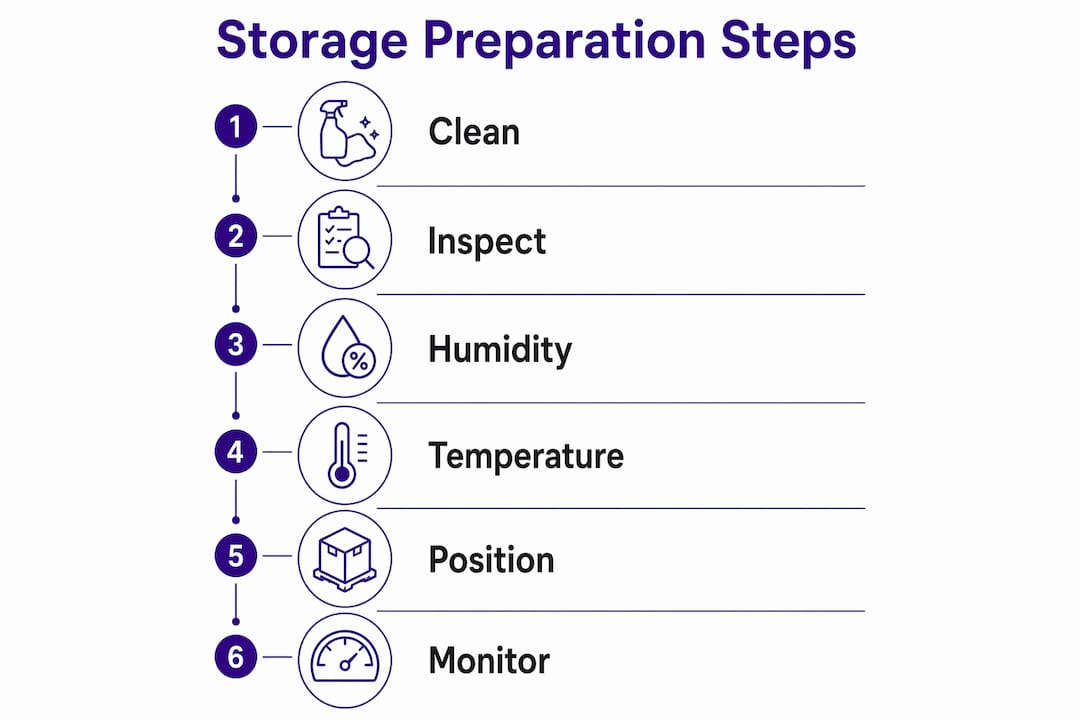
How to prepare vintage instruments before storage
Cleaning the instrument thoroughly before storage is not optional. Skin oils, sweat acids, rosin residue, and dust all continue to react with wood and finish after the case closes. Removing fingerprints and grime with proper cleaning products and lint-free cloths stops that chemical process before it starts. Never use household cleaners. Use products designed for the specific finish type on your instrument.
String tension adjustment is the step most collectors skip. Leaving strings at full pitch for months places sustained stress on the neck, bridge plate, and top. Slightly loosening string tension reduces that load without disrupting the neck’s set. Do not fully slacken the strings and do not touch the truss rod. A half-step or full-step down is enough.
Follow this preparation sequence before placing any vintage instrument into long-term storage:
- Wipe down the body, neck, and headstock with a clean, dry lint-free cloth to remove surface oils and dust.
- Clean the fretboard with an appropriate conditioner if the wood is unfinished rosewood or ebony.
- Remove rosin buildup from around the soundhole and bridge area using a soft cloth.
- Detune strings by one to two half-steps to reduce tension on the top and neck joint.
- Inspect structural stress points including the neck joint, bridge, nut, and any binding for cracks or lifting before sealing the case.
- Photograph the instrument from multiple angles, including the headstock, serial number, and any existing wear. This documents condition for insurance and future appraisal.
Pro Tip: Photograph the tuning machine positions before detuning. When you bring the instrument out of storage, you have a reference point for the original setup.
Catching a minor issue before storage, such as a lifting bridge corner or a hairline crack in the top, lets you address it while the repair is still minor. Sealing a damaged instrument in a case for six months turns a small problem into a costly one.
What are the best storage solutions for vintage instruments?
The sealed hardshell case is the gold standard for long-term storage. A quality hardshell case creates a contained environment that a humidity pack can actually control. A 60g two-way 49% humidity pack placed inside an airtight hardshell case provides roughly three months of humidity regulation before it needs replacement. Two-way packs both absorb excess moisture and release it when the air is too dry, which makes them far more reliable than simple silica gel desiccants.
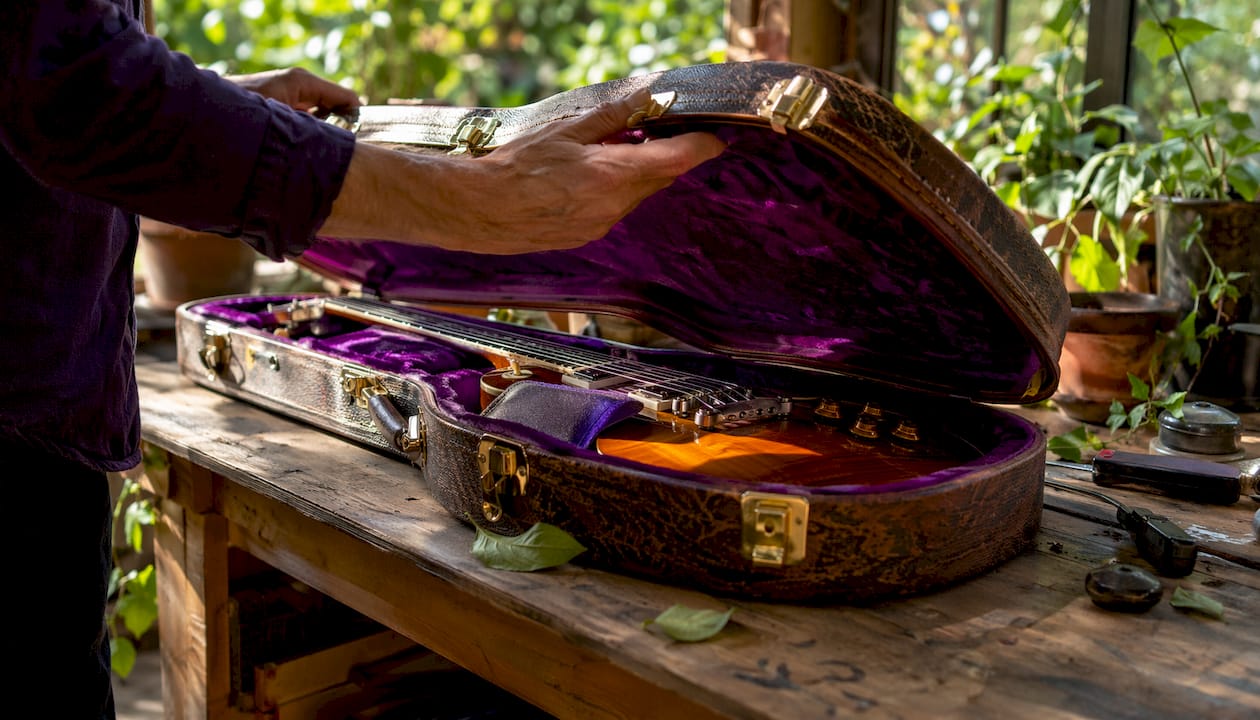
Case airtightness determines whether any of this works. Daylight visible around the closed rim of a case means the seal is broken and the micro-climate cannot hold. Gasket tape applied around the interior rim improves the seal on older cases. Test your case in a dark room before committing to long-term storage.
Choosing the right storage location
- Place cases on shelves or racks, never directly on concrete floors. Concrete conducts cold and moisture upward into the case.
- Keep cases away from exterior walls, which experience the most temperature variation with outdoor weather changes.
- Avoid garages, attics, and basements. All three environments cycle through temperature and humidity extremes that no humidity pack can compensate for.
- Interior closets on climate-controlled floors are the best home storage option. They stay dark, stable, and away from HVAC airflow.
- A dedicated climate-controlled room is the correct solution for large collections. Set the room to 49% humidity and a stable indoor temperature year-round.
Positioning instruments inside the case
Store guitars lying flat or at the angle the case was designed for. Never store a case standing on its end for extended periods if the instrument is not secured against movement inside. Neck support inside the case should be firm but not compressive. If the original case foam has compressed or degraded, replace it before long-term storage.
How to maintain vintage instruments during long-term storage
Storage is not a set-and-forget task. Silent structural changes occur without short-interval inspections, and by the time visible damage appears, the repair cost has multiplied. The recommended inspection interval is every 4–6 weeks.
Follow this monthly inspection routine:
- Open the case in a stable indoor environment, not in a garage or near an open window.
- Read the hygrometer or humidity indicator card inside the case. If humidity has drifted outside the 40%–60% range, replace the humidity pack immediately.
- Inspect the top and back for new cracks, finish checking, or any change in the surface.
- Check the bridge for any sign of lifting at the edges or corners.
- Look at the neck joint and headstock for cracks or movement.
- Replace the humidity pack if it has hardened completely or if the indicator shows it is exhausted. Monthly inspection and pack replacement extends preservation effectiveness significantly.
Signs that require immediate attention include any new crack in the wood, a bridge that rocks when pressed lightly, sticky or tacky finish areas, or keys on keyboard instruments that feel stiff or unresponsive. These are not cosmetic issues. They are structural warnings. The vintage guitar care guide from Vintage-guitar-world covers these warning signs in detail for guitar-specific cases.
Common mistakes in vintage instrument storage
Most storage failures come from a short list of predictable errors. Knowing them in advance costs nothing. Fixing the damage they cause costs a great deal.
- Using a soft or unsealed case. Gig bags and soft cases cannot maintain a micro-climate. They are transport tools, not storage solutions.
- Ignoring humidity swings. A pack placed in a leaky case does nothing. Humidity swings of even 10%–15% above or below the target range accelerate aging and cracking.
- Storing instruments on cheap stands. Certain rubber and foam materials in inexpensive guitar stands chemically react with nitrocellulose lacquer finishes, softening or permanently marking the surface. Vintage instruments should rest in hard cases unless the display environment uses museum-grade supports.
- Skipping the inspection schedule. Collectors who open cases only when they want to play the instrument often discover damage that accumulated over months. The regular maintenance rhythm is what separates preserved instruments from degraded ones.
- Storing in attics, garages, or near exterior walls. These locations expose instruments to the exact temperature and humidity extremes that destroy wood and glue joints over time.
“The boring choice is always the right choice for storage. A dark, stable, unremarkable closet with a good case and a fresh humidity pack will outperform any elaborate display setup that ignores environmental control. Vintage instruments do not need to be seen to be preserved. They need to be stable.”
Key takeaways
Proper vintage instrument storage requires a sealed hardshell case, a 49% two-way humidity pack, a stable dark location, and a monthly inspection routine to prevent irreversible structural damage.
| Point | Details |
|---|---|
| Target humidity range | Keep relative humidity between 40% and 60%, with 49% as the ideal stable point. |
| Sealed case requirement | Use a hardshell case with a verified airtight seal; daylight at the rim means the micro-climate fails. |
| Pre-storage preparation | Clean thoroughly, detune strings slightly, and photograph the instrument before sealing. |
| Humidity pack service life | Replace a 60g two-way 49% pack every three months or when the indicator shows exhaustion. |
| Inspection interval | Open and inspect every 4–6 weeks to catch silent structural changes before they become costly repairs. |
What I have learned from years of watching collectors get this wrong
The most common mistake I see is not ignorance. It is overconfidence. Collectors who have owned vintage instruments for years often assume the guitar “survived this long, so it must be fine.” That logic ignores the fact that the instrument survived because someone before them stored it correctly.
The “boring is better” philosophy is real and it works. A plain interior closet with a quality hardshell case and a fresh humidity pack is genuinely the best storage setup for most collectors. Elaborate display walls and open-air hangers look great in photographs. They are terrible for long-term preservation unless the entire room is climate-controlled to museum standards.
The other lesson I keep returning to is that the inspection schedule is where most collectors fail. Checking an instrument every 4–6 weeks feels excessive until you find a crack that opened silently over three months. That crack, caught at week five, is a minor repair. Caught at month eight, it is a structural restoration. The care and storage practices that protect value are not complicated. They just require consistency.
Invest in a quality case before you invest in a second instrument. That order of priority is the one thing I wish more collectors heard early.
— Vintage
Vintage-guitar-world: resources for collectors who take care seriously
Proper storage protects the investment you have already made. The next step is knowing what you own and what it is worth.

Vintage-guitar-world offers a curated selection of rare, restored, and certified vintage guitars, from classical and flamenco to acoustic and electric. Every instrument in the collection has been evaluated for condition and authenticity. If you are building a collection worth protecting, start with the types of vintage guitars guide to understand what makes each category collectible and how storage history affects value. For collectors ready to go deeper, the guitar appraisal guide explains exactly how condition, provenance, and storage records factor into professional valuations.
FAQ
What humidity level is best for storing vintage instruments?
The ideal humidity level for vintage instrument storage is 49% relative humidity, within a safe range of 40%–60%. A two-way humidity pack maintains this level inside a sealed hardshell case.
How often should I inspect a vintage instrument in storage?
Inspect stored instruments every 4–6 weeks. This interval catches early structural changes like bridge lift or finish cracking before they become irreversible.
Can I store a vintage guitar in a gig bag long-term?
No. Gig bags and soft cases cannot maintain a controlled micro-climate. Long-term storage requires a hardshell case with a verified airtight seal and an active humidity pack.
Should I loosen strings before putting a guitar in storage?
Yes. Detune strings by one to two half-steps to reduce sustained tension on the neck, bridge plate, and top. Do not fully slacken the strings and do not adjust the truss rod.
What locations should I avoid for vintage instrument storage?
Avoid garages, attics, basements, and any space near exterior walls, heating vents, or air conditioning units. These locations create temperature and humidity swings that accelerate wood damage and finish failure.