


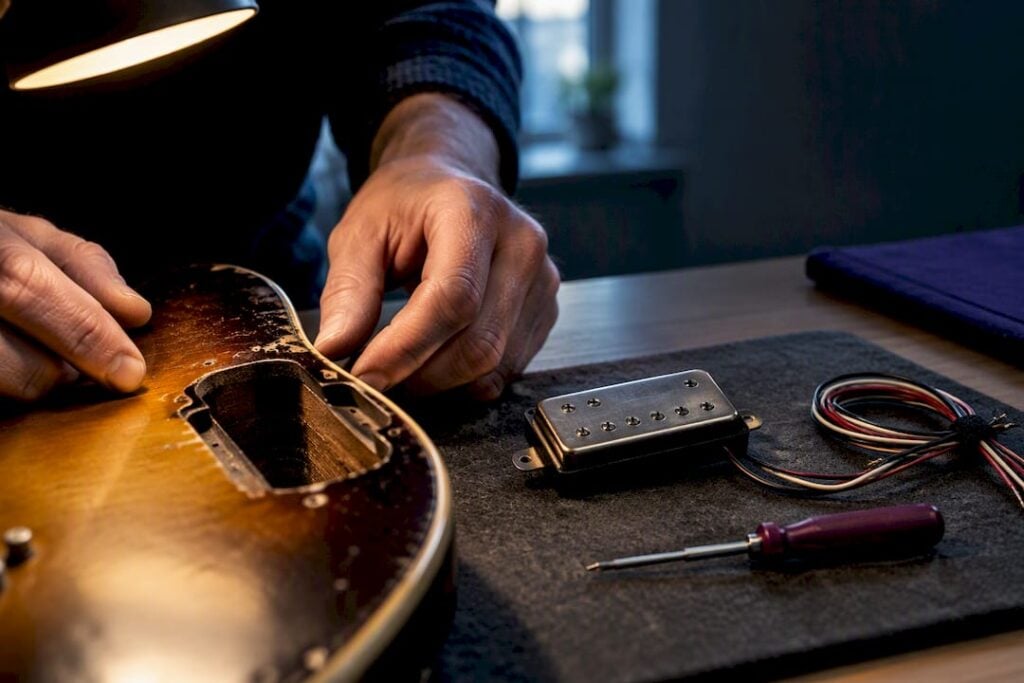

Retrofitting a new pickup or cartridge usually sharpens tone and playability on a player-grade instrument, but it rarely raises resale value and can even hurt it on a collectible piece. The outcome depends heavily on the instrument’s condition, the quality of the rest of the signal chain, and whether the install is reversible. A poorly matched or irreversible modification can undo any sonic gain the moment you try to sell.
TL;DR:
- Reversible mounting and keeping original parts in the box are the best ways to protect resale value for both guitars and turntables.
- Upgrading electronics generally offers limited gains if the instrument’s condition, setup, or system compatibility are not optimal beforehand.
- Costs and complexity increase significantly if modifications require routing, shielding, or precise alignment, making professional installation advisable.
- Type matters more than brand or price, with single coils offering brighter sound and humbuckers providing a warmer, thicker tone.
- Regular maintenance of stylus, batteries, and wiring extends the lifespan and preserves the instrument’s long-term value.
Table of Contents
- How a new pickup or cartridge affects resale and collectibility
- Decision checklist: when should you retrofit?
- How much retrofitting costs and how long it takes
- Which pickup and cartridge types actually change the sound
- DIY versus professional installation: risks and what a pro checks
- Maintenance and how upkeep protects long-term value
- How a specialist evaluates a retrofit before you sell
- A player’s upgrade is a collector’s compromise
- How Vintage Guitar World can help you decide
- Sources
- FAQ
How a new pickup or cartridge affects resale and collectibility
Collectors and players want different things, and that split explains most of the confusion around retrofits. A collector pays for originality: factory-stock electronics, unmodified routing, and a paper trail that proves it. A player pays for tone and feel, and will often welcome a well-chosen upgrade if it makes the instrument more useful on stage or in a recording booth.
The bonedo guide to swapping guitar pickups notes that a retrofit can genuinely improve the perceived sound of a player-grade guitar, but it will not turn a modest instrument into a high-end one, since the wood and build quality set a ceiling on what any pickup can deliver.
What tends to protect value:
- Reversible mounting that lets a future owner restore factory-original parts without new holes or permanent wiring changes.
- Keeping the original pickup, cartridge, and hardware in the box, ready to reinstall.
- Written documentation, invoices, and dated photos of the work, which several specialists recommend as a way to preserve resale confidence, according to the bonedo pickup guide.
Irreversible routing for a new pickup cavity, or a non-original tonearm modification on a turntable, tends to concern collectors even when the sound improves. A comparison of vintage and new guitars makes a similar point: originality often matters more than performance once an instrument crosses into collectible territory.
Decision checklist: when should you retrofit?
Before buying a new pickup or cartridge, work through a short sequence rather than jumping straight to a purchase.
- Check the instrument’s baseline. A weak top, dead strings, or poor setup will mask any gain from a new pickup, and a worn cartridge alignment will do the same for a turntable.
- Look at the rest of the system. A guitar pickup upgrade means little through a mediocre amp, just as a premium cartridge is wasted on a basic phono preamp or underpowered speakers.
- Set a budget ceiling tied to expected gain. Spending heavily on electronics rarely returns that money at resale, so treat it as a cost for your own playing or listening enjoyment.
- Try cheaper fixes first. New pots, a better bridge or saddle, or improved cables can shift tone noticeably before you touch the pickup itself, per the bonedo pickup guide.
- Confirm reversibility. If the install requires permanent routing or non-standard mounting, weigh that cost against the instrument’s collector potential.
Pro Tip: Record the instrument before and after the swap with the same signal chain so you can hear, not just guess, whether the change was worth it.
How much retrofitting costs and how long it takes
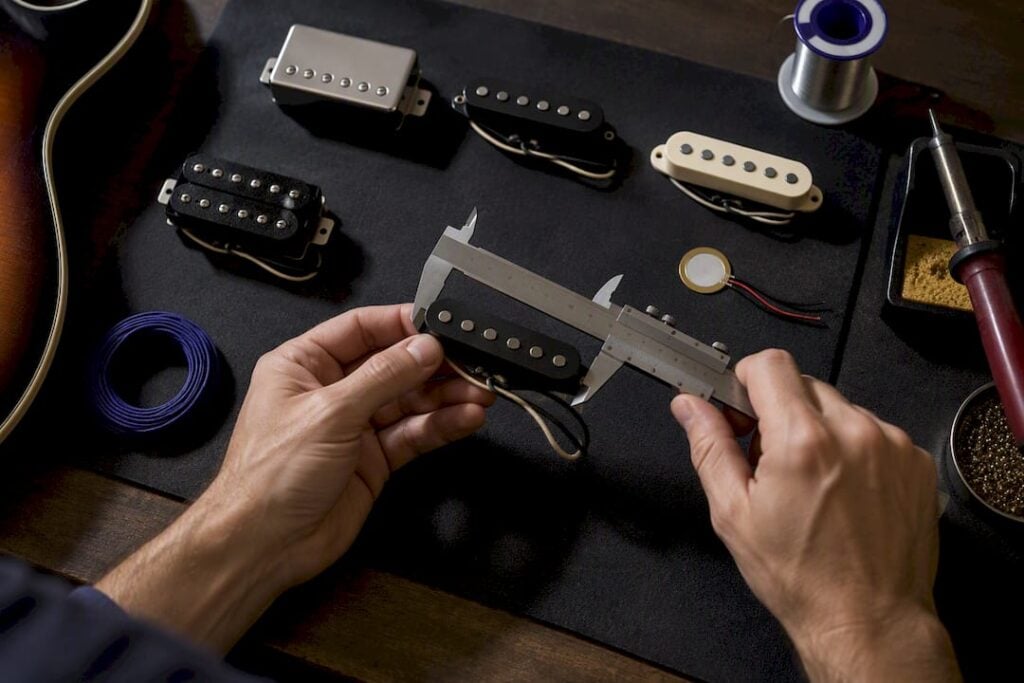
Guitar pickups span a wide price range: budget single coils and basic piezo units sit at the low end, mid-tier humbuckers and active systems cost more, and hand-wound or boutique pickups sit at the top. Labor for a straightforward drop-in swap is usually quick; a job needing new routing, shielding, or wiring runs longer.
Turntable cartridges follow a similar spread from entry-level moving magnet models to high-end moving coil units. A stylus-only swap on a compatible moving magnet cartridge is fast, while a full cartridge change needs careful alignment of azimuth, overhang, and tracking force.
Costs that are easy to overlook:
- Routing or shielding work on a guitar body if the new pickup does not match the existing cavity.
- A phono preamp upgrade if the new cartridge’s output does not suit your current setup.
- Professional alignment and test time after installation, which affects both sound and stylus wear.
- Return shipping or a second visit if the first setup needs adjustment.
Which pickup and cartridge types actually change the sound
The type of pickup or cartridge you choose shapes tone as much as, or more than, brand or price.
- Single coils tend to sound brighter and more detailed but pick up more hum than humbuckers.
- Humbuckers cancel that hum and push a thicker, warmer tone with generally higher output.
- Active pickups run through an onboard preamp, giving a more consistent, higher-output signal that behaves differently under gain than passive types.
- Piezo and contact pickups, common retrofits for acoustic guitars, capture string and top vibration directly and tend to sound more percussive, per the Kirstein guide to acoustic guitar pickups.
- Moving magnet cartridges offer a hotter output and a user-replaceable stylus, while moving coil cartridges usually need higher gain and, per Ortofon’s cartridge upgrade guide, often require a full cartridge exchange or paid re-tip since the stylus is not swappable on its own.
None of this happens in isolation. According to Gitarrenelektronik, cable capacitance and amplifier input impedance shift a pickup’s resonant frequency, so the same pickup can sound noticeably different through two different rigs. Technique matters too. As explained in this piece on how playing technique shapes vintage guitar tone, a hardware change only goes so far if the player’s touch stays the same.
DIY versus professional installation: risks and what a pro checks
A simple drop-in pickup swap with matching connectors, or a stylus replacement on a compatible moving magnet cartridge, is often manageable at home with basic tools and patience. Anything involving new routing, rewiring an acoustic’s internal preamp, or precise tonearm and cartridge alignment is better left to someone with the right gauges and experience.
- Confirm whether the swap needs new wiring, shielding, or cavity work, since that changes the risk level substantially.
- Ask a technician to check alignment, soldering joints, shielding, and intonation or tracking force after the install.
- Watch for common DIY mistakes: cold solder joints, reversed polarity on humbuckers, and cartridge azimuth left untouched.
- Ask any technician for before-and-after photos and an itemized invoice, useful both for warranty questions and for future resale.
Readers who want to confirm an electric guitar’s pickups are original before modifying anything can use these three quick checks for identifying original pickups.
Maintenance and how upkeep protects long-term value
A retrofit is not a one-time event. Styli wear, electronics drift, and wiring loosens over years of use.
- Stylus life typically runs from about 300 to 1,000 hours depending on the stylus type and how well it’s cared for, and a worn stylus can make records sound muffled, skip, or damage the vinyl itself.
- Active pickup systems need periodic battery checks, and both guitars and turntables benefit from occasional inspection of pots, jacks, and wiring for corrosion or loose connections.
- Documentation matters as much after the install as before it: keep receipts, dated photos, and the original parts together.
A stylus rated for roughly 300 to 1,000 hours of use will eventually degrade sound quality well before it fails outright, so replacing it on schedule protects both the cartridge and your records.
How a specialist evaluates a retrofit before you sell
A trained evaluator looks past the sound and checks what a retrofit did to the instrument’s history and structure.
- Whether the pickup or cartridge is original, and if not, how the modification was carried out.
- Whether the change is reversible, and whether original parts survive to restore it.
- Physical wear from the installation itself, such as new holes, solder residue, or altered hardware.
- How the change affects tone and output compared with the factory configuration.
This kind of check is central to Vintage Guitar World’s testing appointments, valuation, and certification work, and it typically produces documentation that a future buyer can trust, similar to what’s outlined in this guide to obtaining a guitar appraisal.
A player’s upgrade is a collector’s compromise
Working musicians should chase the tone that helps them play better and worry less about resale. Hobbyists sit in between: upgrade if you plan to keep the instrument, hold off if you might sell soon. Collectors should default to reversible work with full documentation, since that single habit protects value more than any pickup choice.
— Vintage
How Vintage Guitar World can help you decide
If you are weighing a retrofit against an instrument’s long-term value, Vintage Guitar World offers a way to get a professional opinion before you touch a screwdriver.

- In-person testing appointments let you try an instrument and hear how any changes affect its sound.
- Certification and valuation services provide written appraisals considering originality, modifications, and reversibility.
- Restoration services help bring modified instruments closer to their original condition.
- Consignment selling services are offered if selling the instrument is preferred over upgrading.
Book an appointment or request a valuation through Vintage Guitar World and get a clear answer before you spend a euro on new electronics.
Sources
- Tonabnehmer tauschen – Wann und wie sollte man Gitarren-Pickups wechseln? – Bonedo
- Upgrade Your Cartridge | Ortofon
- Upgrading Your Cartridge | Audio-Technica
- Gitarrenelektronik
FAQ
Can you retrofit a pickup on an acoustic guitar?
Yes, acoustic guitars commonly accept piezo, contact, or magnetic soundhole pickups, ranging from adhesive units to under-bridge systems with internal preamps, according to Kirstein’s guide to acoustic pickups. The best choice depends on whether you prioritize easy reversibility or a more integrated internal system.
What does a luthier typically charge per hour?
Hourly luthier rates are not published in a single standard figure and vary by region, workshop, and the complexity of the job. For a detailed look at restoration pricing, see Vintage Guitar World’s restoration cost page.
How much does restringing a guitar typically cost?
Restringing costs are not standardized publicly and depend on the shop, string brand, and whether a setup is included. Ask a local luthier or check a specialist’s restoration pricing, such as Vintage Guitar World’s restoration page, for a specific quote.
What resonant frequency does a guitar pickup have?
A pickup’s resonant frequency is not one fixed number since it shifts with cable capacitance and amplifier input impedance, as detailed on Gitarrenelektronik. That’s why the same pickup can sound brighter or darker depending on the cable and amp it’s paired with.
Does a cartridge upgrade improve turntable sound more than other changes?
Cartridge upgrades are often considered among the highest-value changes you can make to a turntable’s sound, according to What Hi-Fi’s cartridge buying guide, typically ranked just behind speakers and isolation. A common guideline is to spend roughly a quarter to a third of the turntable’s own value on the cartridge.