













TL;DR:
- Luthiers shape flamenco guitars by designing them for speed, precision, and percussive techniques unique to the style. They make deliberate choices, such as lighter tops, lower action, and cypress wood, to meet the music’s rhythmic demands. Their craftsmanship directly influences the instrument’s responsiveness, tone, and cultural significance.
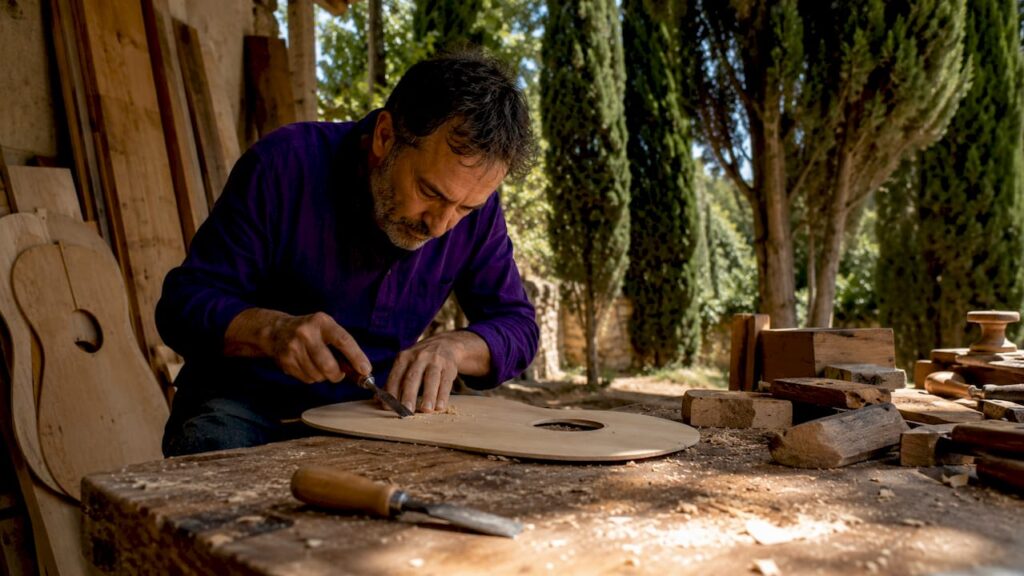
Luthiers are the architects of flamenco guitar identity, building instruments specifically engineered for the music’s rhythmic demands and percussive intensity. The role of luthiers in flamenco extends far beyond woodworking. They make deliberate construction choices, from bracing patterns to wood selection to action height, that determine whether a guitar can serve as a true percussive partner to the dancer and singer. Without that specialized craftsmanship, the flamenco guitar would simply be a lighter classical guitar. It is not. It is a purpose-built instrument, and the luthier is the reason why.
What defines a flamenco guitar and how luthiers shape it
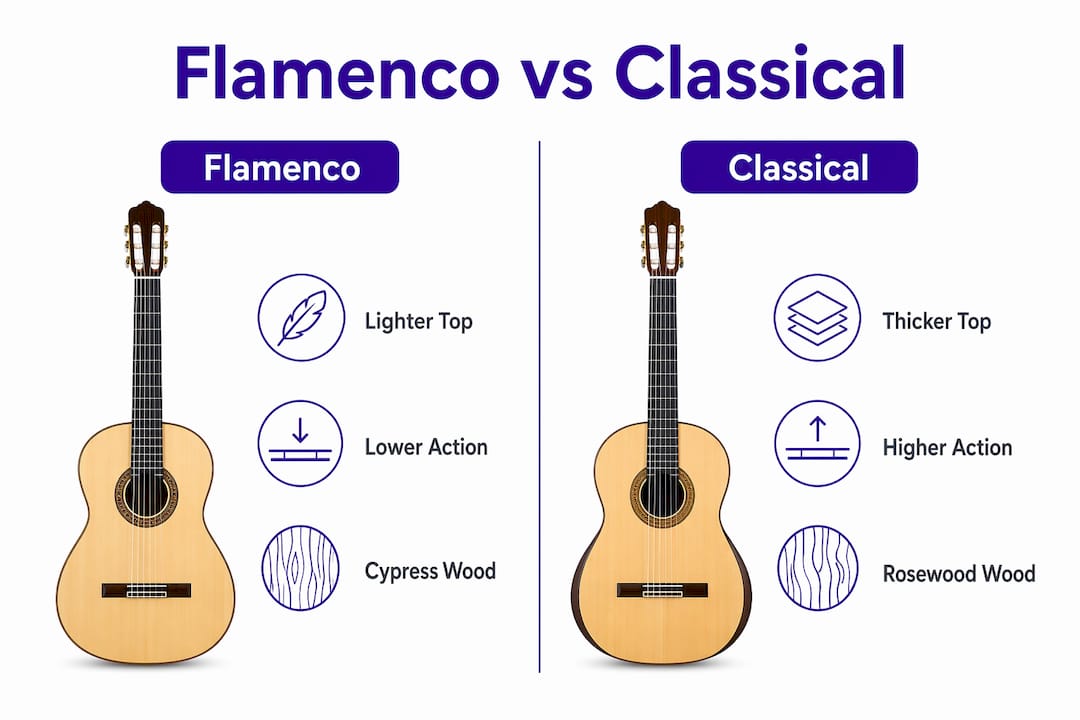
The flamenco guitar is defined by its lighter construction and lower action, both of which serve the music’s demand for speed and immediate tonal response. A classical guitar is built for tonal bloom and sustain. A flamenco guitar is built for attack, clarity, and rhythmic truth. That philosophical difference drives every decision a luthier makes at the workbench.
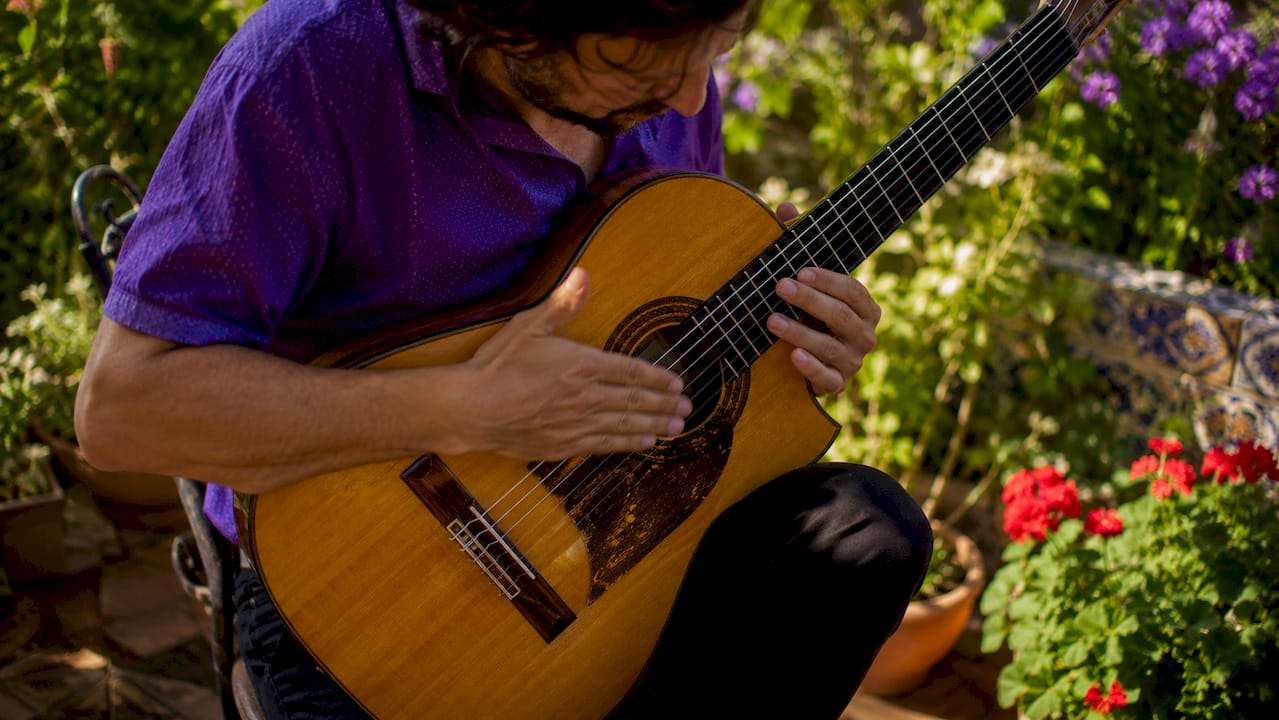
The most visible marker of luthier intent is the golpeador, the tap plate mounted on the guitar’s top. The golpeador protects the soundboard from the repeated finger strikes called golpes, which are central to flamenco technique. Without it, the top would crack or dent within months of regular playing. Luthiers do not treat the golpeador as an afterthought. It shapes the entire bracing and top thickness strategy, since the top must be light enough to resonate freely yet strong enough to absorb percussive impact.
Wood selection is another area where luthier contributions to flamenco are most visible. Cypress is the traditional choice for flamenco guitar backs and sides, producing a bright, cutting tone with less warmth than the rosewood used in classical instruments. Some modern luthiers use sycamore or maple as alternatives, but cypress remains the benchmark for the traditional flamenco sound known as blanca style.
Flamenco vs. classical guitar: key construction differences
| Feature | Flamenco guitar | Classical guitar |
|---|---|---|
| Top wood | Spruce or cedar, thinner | Spruce or cedar, standard thickness |
| Back and sides | Cypress or sycamore | Rosewood or mahogany |
| Action height | Lower for speed | Higher for tone and sustain |
| Golpeador | Standard feature | Rarely included |
| Weight | Lighter overall | Heavier overall |
| Tonal character | Bright, percussive, immediate | Warm, sustained, complex |
The flamenco guitar’s philosophy centers on immediacy and rhythmic truth, not tonal complexity. That philosophy is not abstract. It is structural. Luthiers translate it into thinner tops, lighter bracing, and tighter string clearance.
How luthiers shaped flamenco guitar history
Flamenco guitar history facts begin with Antonio de Torres, the 19th-century Spanish luthier who established the fan-bracing system still used in classical and flamenco guitars today. Torres did not initially distinguish between the two styles. He built guitars for both classical and flamenco players using similar construction principles. The separation between classical and flamenco guitar came later, driven by luthiers who recognized that flamenco’s percussive demands required a fundamentally different approach.
Luthiers like Andrés Avelar and the Granada school of makers developed flamenco-specific designs through the 20th century. They reduced body mass, lowered the action, and began standardizing the golpeador as a structural necessity rather than a cosmetic addition. These were not minor tweaks. They were deliberate departures from classical guitar tradition, made in direct response to what flamenco players needed on stage.
Key milestones in flamenco guitar making
| Era | Development | Luthier contribution |
|---|---|---|
| Mid-1800s | Torres establishes fan bracing | Foundation for all Spanish guitars |
| Early 1900s | Granada school emerges | Cypress-body flamenco guitars standardized |
| Mid-1900s | Golpeador becomes standard | Top protection built into design strategy |
| Late 1900s | Flamenco Negra style develops | Rosewood used for fuller tonal range |
| 2000s onward | Custom builds for individual players | Luthiers collaborate directly with artists |
The 20th century also saw the rise of the flamenco negra, a hybrid instrument using rosewood back and sides for a warmer, more complex tone. This style emerged because concert flamenco guitarists like Paco de Lucía pushed the music into new harmonic territory. Luthiers responded by building instruments that could handle both traditional percussive technique and sophisticated melodic expression. That responsiveness to musical evolution is a defining characteristic of luthier contributions to flamenco across every era.
Why specialized craftsmanship matters for flamenco sound and playability
The flamenco guitar requires fast response and tactile feedback that classical guitars are not designed to provide. When a player executes a rasgueado, a rapid fan-stroke across all strings, the guitar must respond instantly without muddying the attack. When golpes land on the top, the sound must cut through without the top flexing excessively. These are engineering problems, and luthiers solve them through precise construction choices.
Lower action on flamenco guitars facilitates both speed and percussive technique. Action that is too high slows down left-hand movement and reduces the snap of the attack. Action that is too low causes fret buzz, which destroys tonal clarity. Luthiers set action within a very narrow tolerance, often customized to the individual player’s technique and finger pressure. This is not a factory setting. It is a judgment call made by a skilled craftsperson who understands how the player works.
Flamenco guitarists apply golpes and other percussive techniques that demand reinforced tops and specific bracing configurations. A luthier building for a heavy golpe player will brace the top differently than one building for a player who uses lighter technique. That level of customization is only possible through direct communication between player and maker.
Pro Tip: Before commissioning a custom flamenco guitar, record yourself playing and share the video with your luthier. Watching your technique, especially your golpe force and right-hand position, gives the luthier concrete data to inform bracing weight and top thickness decisions.
Key technical areas where luthier craftsmanship directly affects flamenco playability:
- Top thickness: Thinner tops produce faster response but require careful bracing to avoid structural failure under percussive playing.
- Bracing pattern: Fan bracing angle and strut weight determine how the top vibrates and how quickly it recovers between notes.
- Nut and saddle height: These two points control action and must be precisely filed for the player’s specific technique.
- String tension: Luthiers advise on string gauge and tension based on the guitar’s construction, since a light top paired with high-tension strings can warp over time.
The luthier’s challenge today is balancing tradition with players’ evolving needs. Modern flamenco incorporates jazz harmony, Latin rhythms, and electronic amplification. Luthiers must build guitars that honor the percussive core of the tradition while accommodating these new demands.
How luthiers support flamenco musicians and culture today
The working relationship between musicians and luthiers is not a one-time transaction. It is an ongoing partnership that covers setup adjustments, repairs, humidity-related maintenance, and tonal refinements as the player’s technique matures. A flamenco guitar played daily will need neck resets, fret leveling, and saddle adjustments over its lifetime. A luthier who built the instrument understands its specific construction and can service it more accurately than a general repair technician.
Custom builds represent the deepest form of luthier contribution to flamenco today. A player commissioning a custom guitar works with the luthier to specify body depth, string length, top stiffness, and even the weight of the finish. These variables are not cosmetic. Each one affects how the guitar sounds and feels under the player’s hands. Custom builds are often final decisions, since return policies are limited and the instrument is built to a specific brief. That makes the relationship between player and luthier the most important factor in the outcome.
Modern trends in flamenco guitar making reflect both tradition and innovation:
- Lattice bracing experiments: Some luthiers are testing lattice bracing, borrowed from high-end classical guitar making, to achieve greater volume and projection without adding weight.
- Sustainable wood sourcing: With traditional cypress and spruce under supply pressure, luthiers are exploring certified alternatives that match the tonal profile of traditional materials.
- Amplification-ready builds: Luthiers now install undersaddle pickups and internal microphone systems at the build stage, rather than retrofitting them later, preserving the guitar’s acoustic integrity.
- Collaboration with flamenco academies: Leading luthiers partner with flamenco schools in Seville and Jerez to build student-grade instruments that teach proper technique without compromising on construction quality.
Experienced luthiers advise players to try as many guitars as possible before committing to a custom build. Playing different instruments from different makers reveals preferences that are difficult to articulate in words but immediately obvious when felt in the hands. That tactile knowledge becomes the foundation of a productive conversation with a luthier.
Key Takeaways
Luthiers are the primary force shaping flamenco guitar identity, translating the music’s percussive and rhythmic demands into specific construction choices that no factory process can replicate.
| Point | Details |
|---|---|
| Flamenco guitar construction | Lighter tops, lower action, and cypress wood define the instrument’s percussive character. |
| Golpeador function | The tap plate is a structural necessity, not decoration, shaping top thickness and bracing strategy. |
| Historical luthier role | Antonio de Torres laid the foundation; later makers like Andrés Avelar created flamenco-specific designs. |
| Player-luthier relationship | Ongoing collaboration covers setup, maintenance, and custom builds tailored to individual technique. |
| Modern craftsmanship | Luthiers balance traditional construction with new demands like amplification and sustainable materials. |
What I have learned from years of watching luthiers work
I have handled a lot of flamenco guitars at Vintage-guitar-world, and the ones that stop you cold are always luthier-made instruments. Not because they look extraordinary, though many do. Because they feel alive the moment you hold them. The top vibrates under your thumb before you even play a note. That is not an accident. It is the result of a luthier making hundreds of small decisions correctly.
The conventional wisdom says that tone is everything in a guitar. In flamenco, that is only half true. Responsiveness matters just as much. A guitar that blooms beautifully but responds slowly is useless for a player executing rapid picado runs or driving a bulerias at full tempo. The best flamenco luthiers understand this instinctively. They build for the moment of attack, not the moment of decay.
What I find underappreciated is how much the luthier’s role in guitar history is a story of listening. The great flamenco guitar makers were not imposing their vision on the music. They were watching players, hearing what the music needed, and solving the engineering problem. That is a different kind of artistry than composition or performance, but it is no less creative. The flamenco guitar as we know it today is a co-creation between players and makers across generations.
If you are a luthier considering specializing in flamenco, my honest advice is to spend time with flamenco players before you build a single instrument. Watch how they use the top as a percussion surface. Feel how they hold the guitar against their body. Understand the music before you touch the wood. The construction knowledge is learnable. The understanding of what the music demands is what separates a competent luthier from an exceptional one.
— Vintage
Explore luthier-crafted flamenco guitars at Vintage-guitar-world

Vintage-guitar-world curates a selection of handcrafted and vintage guitars that represent the full range of luthier artistry, including flamenco instruments built by makers who understood the music from the inside out. If you want to understand what separates a factory guitar from a luthier-made instrument, holding one is the fastest education available. Our handcrafted guitar collection covers the construction details and tonal characteristics that define quality in flamenco and classical instruments. For collectors and serious players, our guide to vintage guitar types covers the historical context and investment value of instruments built by the makers who shaped the tradition. Every guitar we list comes with expert evaluation and detailed provenance documentation.
FAQ
What does a luthier do specifically for flamenco guitars?
A flamenco luthier builds instruments with lighter tops, lower action, cypress or sycamore back and sides, and a golpeador to support percussive playing techniques like golpes and rasgueados. They also handle ongoing setup, maintenance, and custom builds tailored to individual players.
How is a flamenco guitar different from a classical guitar?
A flamenco guitar uses lighter construction, lower string action, and typically cypress back and sides, producing a brighter and more immediate tone than a classical guitar. The golpeador tap plate is standard on flamenco instruments and rare on classical ones.
Who was the most influential luthier in flamenco guitar history?
Antonio de Torres established the fan-bracing system that underlies all Spanish guitar construction, but later makers including Andrés Avelar and the Granada school developed the flamenco-specific designs that define the instrument today.
Why does the golpeador matter so much to luthiers?
The golpeador is not cosmetic. It protects the soundboard from repeated percussive strikes and shapes the luthier’s entire approach to top thickness and bracing, since the top must be light enough to resonate freely while withstanding physical impact.
How do I find the right luthier for a custom flamenco guitar?
Play as many luthier-made guitars as possible before commissioning a build, and share video of your playing technique with any maker you consider. Trust and clear communication are the foundation of a successful custom build, since return options are typically limited once construction begins.