














TL;DR:
- Guitar aesthetics define an instrument’s identity by shaping how players connect and how collectors value it. Visual design elements like body shape, finish, color, and hardware communicate genre, era, and attitude even before playing. Relicing and aged finishes are genuine artistic choices that enhance emotional connection and market appeal.
Guitar aesthetics define an instrument’s identity by combining visual design, finish craftsmanship, and body shape into a single, unified statement about who the player is. The role of guitar aesthetics goes far beyond surface appearance. It shapes how a musician connects with an instrument, how collectors assign value, and how a guitar communicates culture before a single note is played. From nitrocellulose lacquer aging to radical body silhouettes, every visual choice carries weight. Vintage-guitar-world has spent years studying these connections, and the evidence is clear: aesthetics are not decoration. They are the instrument’s first language.
How does visual design shape guitar identity?
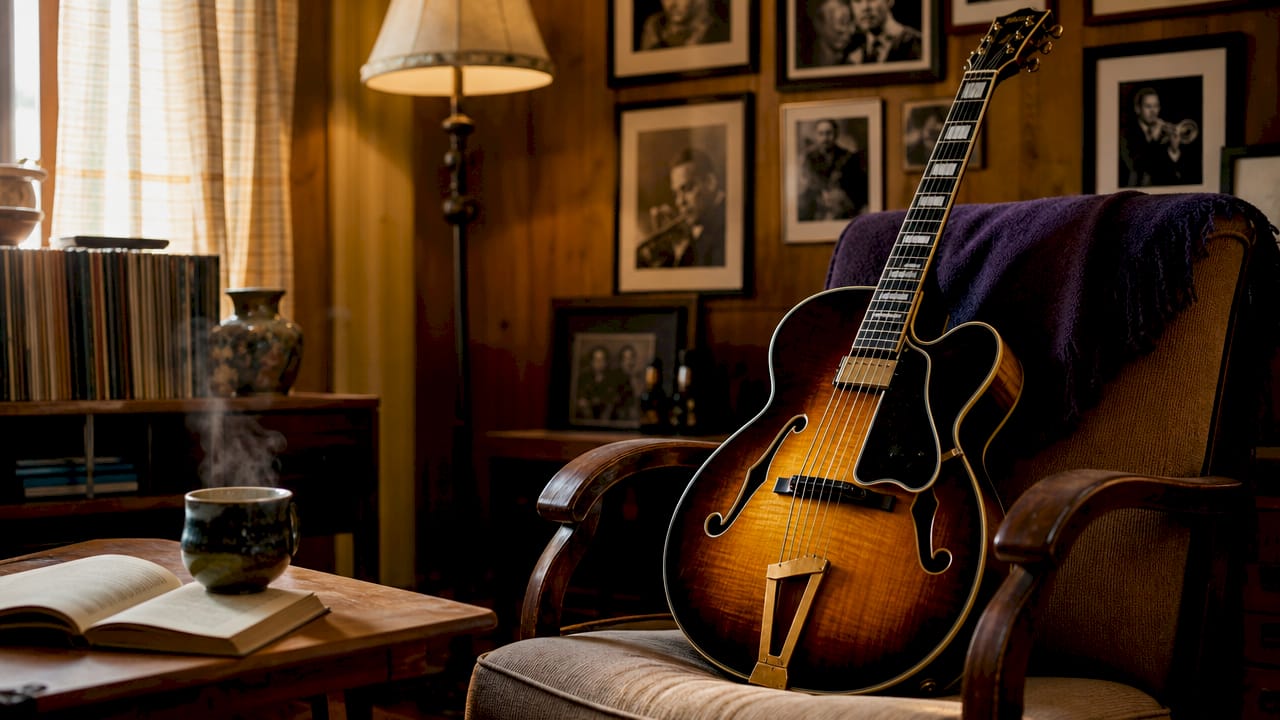
Guitar body shape is the most immediate aesthetic signal an instrument sends. A single-cutaway archtop reads as jazz and elegance. A sharp, angular body reads as aggression and rebellion. These associations are not accidental. They are the result of decades of cultural reinforcement between visual form and musical genre.
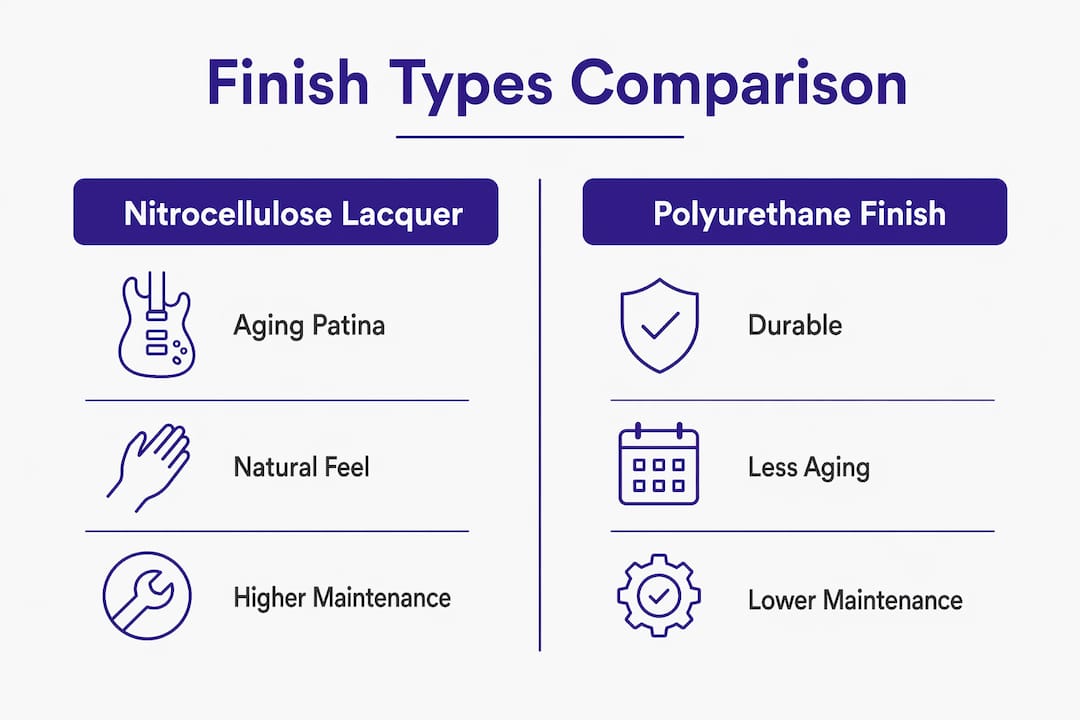
Finish type adds another layer of identity. Nitro lacquer produces a natural aging patina over time, creating a visual record of the guitar’s life. Polyurethane finishes are more durable and resist wear, but many players describe them as feeling synthetic against the skin. The choice between the two is as much about personal identity as it is about maintenance preference.
Color and wood grain visibility directly affect perceived value. A transparent or sunburst finish that reveals figured maple or quilted mahogany signals premium craftsmanship. Opaque finishes serve a different purpose: they hide multi-piece body blanks or inconsistent grain patterns, giving manufacturers flexibility while still producing iconic looks. Solid colors like Candy Apple Red or Olympic White became legendary not despite hiding the wood, but because of the bold visual statement they made.
Key visual design elements that shape guitar identity include:
- Body shape: Communicates genre, era, and attitude before the player touches a string.
- Finish type: Nitro lacquer ages visibly and feels organic; poly finishes stay uniform and resist damage.
- Color choice: Transparent finishes showcase wood quality; solid colors create bold, timeless visual branding.
- Hardware finish: Gold, chrome, and black hardware each carry distinct aesthetic associations tied to era and style.
- Binding and inlays: Ornate binding and fretboard inlays signal craftsmanship and elevate perceived instrument quality.
Pro Tip: When evaluating a guitar’s visual appeal, look at the finish edge near the binding. Clean, even application with no lifting or cracking signals quality craftsmanship that holds up over decades.
How do ergonomics and aesthetics work together in guitar design?
The most forward-thinking guitar designs treat ergonomics and aesthetics as the same problem. Traditional 1960s body shapes were built around manufacturing convenience and visual tradition, not player comfort. Modern designers have challenged that assumption directly.
The Ernie Ball Music Man Kaizen, developed with guitarist Tosin Abasi, is a clear example. Its Infinity Radius fretboard eliminates the need to tilt the guitar to see the fretboard clearly, and its string alignment improves fretting accuracy. The visual result is a guitar that looks unlike anything from the 1960s. That visual difference is not a side effect. It is proof that the design solved a real problem.
Gibson’s Flying V took the opposite approach decades earlier. It introduced sharp lines and a silhouette that had no precedent in acoustic tradition. The Flying V did not succeed because it was comfortable. It succeeded because it looked like nothing else on stage, and that visual boldness became its own form of cultural authority.
The contrast between these two approaches reveals something important:
- Traditional shapes prioritize visual continuity with established guitar culture, reinforcing genre identity and collector appeal.
- Ergonomic redesigns prioritize player interaction and comfort, using visual difference as proof of functional innovation.
- Radical silhouettes use visual disruption as the primary statement, with playability as a secondary consideration.
- Signature modifications blend personal visual identity with functional tweaks, as seen in artist-specific body contours and custom hardware placement.
| Design approach | Primary aesthetic goal | Functional trade-off |
|---|---|---|
| Traditional 1960s shapes | Visual continuity and genre recognition | Limited ergonomic adaptation |
| Ergonomic modern designs | Visual proof of functional innovation | Departure from collector familiarity |
| Radical silhouettes | Cultural disruption and stage presence | Comfort varies by player |
| Signature artist builds | Personal visual branding | Optimized for one player’s style |
Pro Tip: If you play long sessions, look for guitars with forearm and ribcage contours. These ergonomic details often appear on instruments with modern aesthetic profiles, and they make a measurable difference in comfort after two hours.
Why do musicians and collectors value reliced and aged guitars?
Relicing is the practice of artificially aging a guitar’s finish to replicate the worn look of a decades-old instrument. Fender masterbuilders describe relicing as an artistic choice rooted in personal preference, not an attempt to fake history or deceive buyers. Players who choose reliced guitars describe the worn aesthetic as immediately comfortable, as if the instrument has already been broken in.
The appeal connects to something deeper than looks. A heavily worn finish signals that a guitar has been played hard and loved. For many musicians, that visual story creates an instant emotional bond with the instrument. The guitar feels like it belongs to them before they have played a single chord.
Custom-aged guitar commissions reflect how seriously the market takes this aesthetic. Lead times run 4–12 months, with costs starting around $5,000. That investment shows how much players and collectors value a precisely executed aged finish. It is not a shortcut. It is a craft.
Key reasons musicians and collectors choose reliced aesthetics:
- Tactile comfort: Worn finishes feel smoother and more natural against the body and forearm.
- Visual authenticity: The aged look communicates a connection to guitar history and tradition.
- Personal expression: Specific wear patterns can reflect a player’s actual playing style and habits.
- Collector appeal: Well-executed relicing on a high-quality instrument can increase desirability in the vintage market.
The cultural significance of aged finishes runs through the entire history of guitar collecting. A guitar that looks like it has lived a life carries more narrative weight than a pristine instrument in a case.
Does finish type actually affect tone, or is it mostly aesthetics?
Finish type has a measurable but limited effect on tone. Less than 10% of tonal difference is attributable to finish type compared to the far greater influence of pickups and hardware. That finding reframes the entire debate. Players who choose nitro lacquer for tonal reasons are largely responding to a myth. Players who choose it for aesthetic and tactile reasons are making a fully rational decision.
Nitrocellulose lacquer’s real value lies in how it ages visually and how it feels. It develops checking, yellowing, and wear patterns that many players find deeply appealing. Polyurethane finishes resist all of that. They stay consistent for decades, which is practical for gigging musicians but less interesting for collectors who value visual character.
| Finish type | Aesthetic quality | Maintenance demand | Tonal impact |
|---|---|---|---|
| Nitrocellulose lacquer | Ages naturally, develops patina | Higher, requires careful cleaning | Minimal |
| Polyurethane | Stays uniform, resists wear | Lower, very durable | Minimal |
| Oil finish | Reveals raw wood texture | Moderate, needs periodic reapplication | Minimal |
| Shellac | Warm amber tone, vintage look | High, sensitive to heat and moisture | Minimal |
The practical takeaway is direct: choose your finish based on how you want the guitar to look and feel in ten years, not on tonal promises. A nitro finish on a well-built guitar will look more interesting with age. A poly finish on the same guitar will look nearly identical to the day you bought it.
Key Takeaways
Guitar aesthetics shape identity, value, and player connection at every level, from finish chemistry to body silhouette.
| Point | Details |
|---|---|
| Finish type drives feel, not tone | Nitro and poly finishes produce less than 10% tonal difference; choose based on aging preference and maintenance. |
| Body shape communicates identity | Silhouette signals genre, era, and attitude before a note is played. |
| Relicing is legitimate artistry | Custom-aged guitars reflect personal expression and can take 4–12 months to complete at significant cost. |
| Ergonomics and aesthetics are linked | Modern designs like the Ernie Ball Music Man Kaizen prove that visual innovation and player comfort solve the same problem. |
| Opaque finishes serve real purposes | Solid colors hide construction variables while creating iconic visual identities. |
Why aesthetics matter more than most players admit
Aesthetics shaped my relationship with guitars long before I understood why. The first instrument I truly bonded with was not the best-sounding guitar in the room. It was the one that looked like it had a story. The worn finish, the slightly yellowed binding, the way the sunburst had faded unevenly over the years. That guitar looked like it had already been somewhere. Playing it felt like continuing something rather than starting from scratch.
What I have come to understand is that visual appeal is not vanity. It is motivation. A guitar you find beautiful is a guitar you pick up more often. A guitar that reflects your identity is a guitar you play with more confidence. The evolution of guitar design shows this clearly: every era produced instruments that looked like the music being made on them. The aesthetics were not separate from the culture. They were the culture made visible.
Collectors understand this instinctively. The instruments that hold value are rarely the ones that were purely functional. They are the ones that captured a moment, a style, or a personality so completely that the visual form became inseparable from the music. Eddie Van Halen’s Frankenstrat is a perfect example. Unique visual modifications turned a generic body into one of the most recognizable instruments in rock history. The sound mattered. The look made it legendary.
My honest advice: never dismiss aesthetics as secondary. They are the reason you reach for one guitar over another at 11 p.m. when you just want to play. That choice matters more than any spec sheet.
— Vintage
Vintage-guitar-world: find guitars that match your aesthetic vision
Every guitar at Vintage-guitar-world is selected because it represents something specific: a moment in design history, a finish that aged beautifully, a silhouette that still turns heads. The connection between visual craftsmanship and personal expression is at the center of every instrument in the collection.

Whether you are drawn to the natural patina of a nitro-finished acoustic, the bold lines of a mid-century electric, or the tactile comfort of a well-worn vintage body, the catalog reflects the full range of what guitar aesthetics can be. Explore the types of vintage guitars available, each documented with detailed finish history, condition notes, and provenance. For collectors who want to understand what makes an instrument worth owning, the signs of collectible guitars guide offers a practical framework grounded in real market experience.
FAQ
What is the role of guitar aesthetics in player identity?
Guitar aesthetics define how a player presents themselves through their instrument. Body shape, finish type, and color choices communicate genre, era, and personal style before a note is played.
Does guitar finish type affect sound quality?
Finish type accounts for less than 10% of tonal difference compared to pickups and hardware. The choice between nitro and poly finishes matters far more for aging appearance and tactile feel than for sound.
What is relicing and why do players choose it?
Relicing is the process of artificially aging a guitar’s finish to replicate natural wear. Players choose it for the tactile comfort of a worn surface and the visual authenticity it conveys, not to misrepresent the instrument’s age.
How do ergonomic designs change guitar aesthetics?
Modern ergonomic designs like the Ernie Ball Music Man Kaizen use visual innovation as proof of functional improvement. The look signals that the instrument solves real playing problems rather than simply replicating tradition.
Why do opaque guitar finishes remain popular with manufacturers?
Solid-color finishes allow manufacturers to use multi-piece body blanks or wood with inconsistent grain without visual penalty. They also produce iconic, instantly recognizable looks that have defined entire eras of guitar culture.