












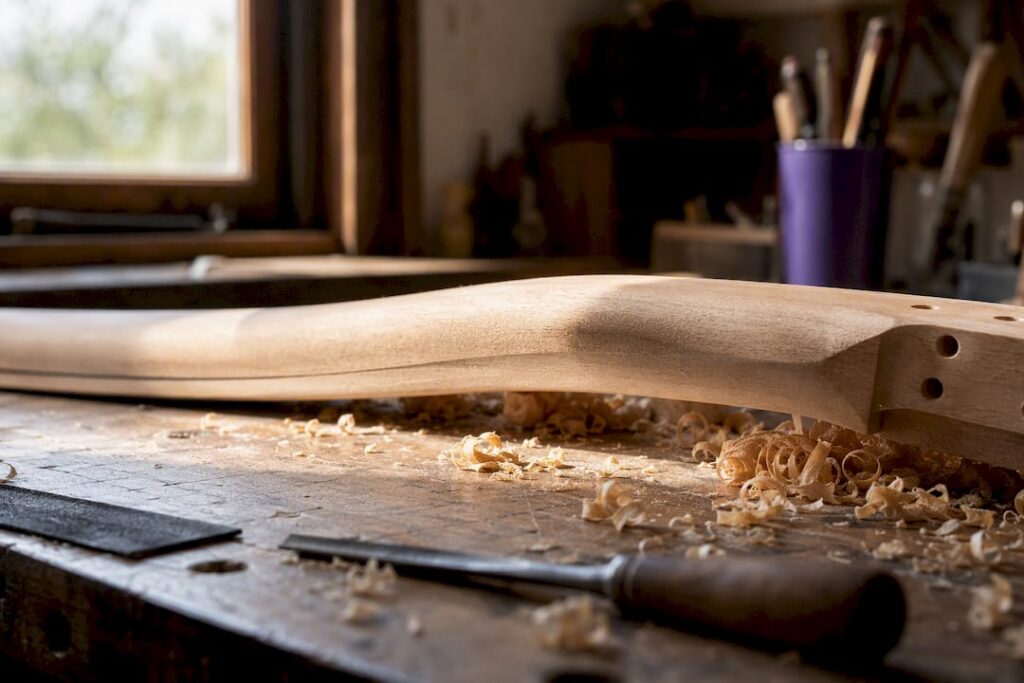

A neck profile is the cross-sectional shape of the back of the guitar neck, the part your fretting hand actually touches. It’s the single biggest factor in how a guitar feels under your hand, and that feel drives playability far more than it drives tone. Get the profile wrong for your hand and technique, and even a great-sounding guitar will fight you.
Here’s what actually matters when you’re evaluating one:
- The profile determines thumb placement, palm contact, and how easily you bend strings or chord.
- Letters like C, D, U, and V describe the shape, but depth and width vary by maker.
- There’s no universal “best” profile. The right one is whatever lets your hand relax.
- Tone changes attributed to neck shape are almost always about playability, not wood resonance.
Key Takeaways
Neck profile shapes how comfortable and efficient your playing feels, and it only reveals its true character when tested alongside nut width, radius, and scale length together.
| Point | Details |
|---|---|
| Profile drives feel, not tone | The cross-sectional neck shape affects comfort and technique; tonal shifts are usually indirect. |
| Letters are shorthand, not specs | A “C” or “V” label varies by maker, so always check actual measured depth and width. |
| No universal best profile | Choice depends on hand shape, thumb position, and whether you favor bends or fast runs. |
| Test full spec combinations | Profile, nut width, radius, and scale length together determine real comfort, not profile alone. |
| Play before you decide | Test chords, scales, and bends for 10 to 15 minutes to catch fatigue or hotspots early. |
Table of Contents
- What Is a Neck Profile, and How Do Makers Label It?
- Which Neck Profile Feels Right for Your Playing Style?
- How Does Neck Profile Affect Technique and Fatigue?
- Why Nut Width and Fretboard Radius Change How a Profile Feels
- How Do You Test and Choose a Neck Profile in Person?
- How Vintage-guitar-world Helps You Verify Neck Feel
- The Neck Profile Debate Most Guides Get Wrong
- Frequently Asked Questions
- Sources
What Is a Neck Profile, and How Do Makers Label It?
A neck profile is distinct from three specs it often gets confused with: neck depth (how thick the neck is front to back), nut width (how wide the fretboard is at the headstock), and fretboard radius (how curved the surface is across its width). Profile describes the shape of that back curve. Depth, width, and radius describe its dimensions.
Manufacturers use letters, C, D, U, V, to describe the general silhouette, but there’s no industry-wide standard dictating exact measurements. Fender’s own replacement-neck guide makes this point directly: a “C” on one model can measure noticeably different from a “C” on another. The label is shorthand, not a spec sheet.
Profile also shifts along the neck itself. Most necks carve thinner near the nut and grow slightly fuller by the 12th fret, so what you feel during an open chord isn’t quite what you’ll feel soloing up high. If you want a closer look at how these shapes compare side by side, our breakdown of guitar neck profile types walks through the physical differences in more depth.
Which Neck Profile Feels Right for Your Playing Style?
Each profile creates a distinct sensation in your palm, and each tends to suit certain techniques better than others.
- C profile: rounded and moderate in depth, this is the default on countless guitars because it works reasonably well for chording, soloing, and everything between. It’s the safe starting point for most beginners.
- D profile (flat-oval): flatter across the back with slightly squared shoulders. It encourages a lower thumb position, which speeds up scale runs and legato playing but can feel restrictive for players who like to wrap the thumb over the top.
- U profile: deep and chunky, offering a wide gripping surface. Players who anchor their thumb behind the neck for leverage, common in blues and rhythm-heavy styles, often gravitate here.
- V profile: a subtle ridge or peak running down the center back. It gives the thumb a natural resting point, which is why thumb-over playing (think classic rock rhythm work) and some vintage instruments favor this shape.
Modern builders have pushed past the four basic letters. Ibanez’s “Wizard” neck is a thin, fast D-based carve built for shredders who value speed over grip. Asymmetric profiles shave material off the treble side while keeping more mass on the bass side, aiming to give chords a solid feel while keeping solo runs quick and unobstructed. If you’re curious how a V-shaped neck actually differs from these newer designs, our dedicated guide to V-shaped necks breaks down the geometry.
Pro Tip: Don’t assume your hand size dictates your profile. Plenty of players with small hands prefer a chunky U because it gives their thumb something substantial to lean against, and plenty of big-handed players like a slim D for speed. Preference beats measurement here.
How Does Neck Profile Affect Technique and Fatigue?
Thumb placement changes everything downstream. A flatter D or thin Wizard-style neck pulls your thumb low, behind the neck, which opens up reach for wide stretches and fast runs. A deep U or V pulls your thumb higher, wrapping toward the top strings, which gives you leverage for bends and vibrato but can slow you down across six strings.
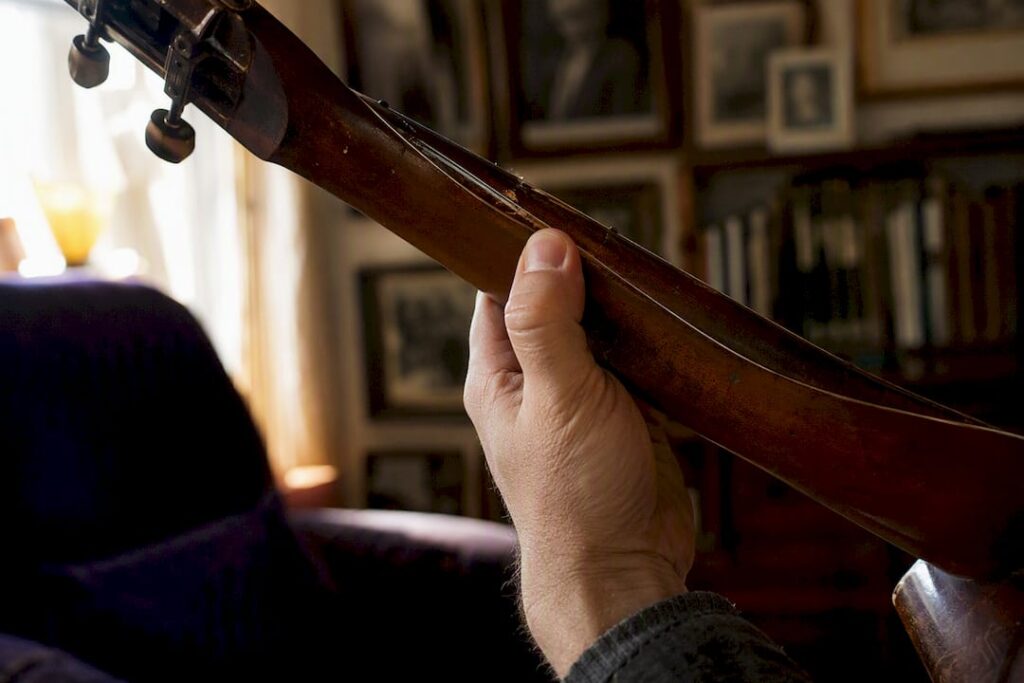
That leverage difference explains why blues and rock players often favor deeper profiles for aggressive bending, while metal and fusion players lean toward flatter carves for legato speed. Neither is objectively better. They optimize for different motions.
Fatigue is where profile choice gets serious. A neck that traps your wrist at an awkward angle for 10 to 15 minutes of continuous play can produce real hotspots on the palm or, in worse cases, contribute to nerve compression symptoms in the wrist. A deeper neck paired with a narrow nut width often creates this exact problem, forcing your hand into a cramped grip it wasn’t built for.
One more thing worth repeating: profile’s effect on tone is indirect at best. Any tonal shift you notice from a thicker neck is far more likely a byproduct of how comfortably you’re playing than the neck’s mass affecting sustain.
Why Nut Width and Fretboard Radius Change How a Profile Feels
Profile never works alone. It combines with nut width, fretboard radius, and scale length to produce the final feel in your hand, and testing full-spec combinations matters more than judging profile in isolation.
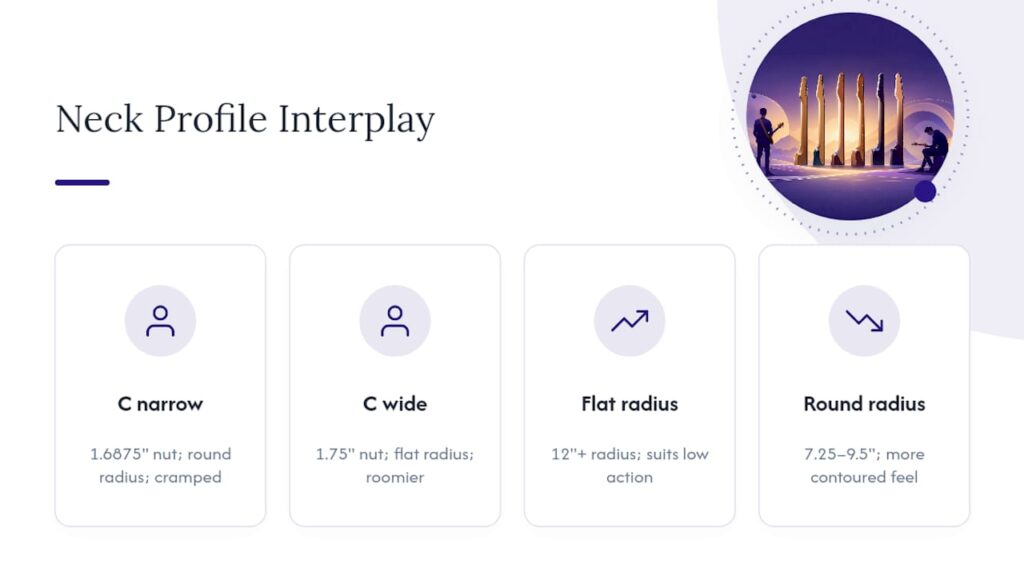
Nut width is the fretboard’s width at the headstock, typically somewhere between 1.6 and 1.75 inches on electric guitars. Radius is the curvature across the fretboard’s playing surface, flatter radii (12 inches or more) suit low action and fast bending, while rounder radii (7.25 to 9.5 inches) feel more contoured under the fingers. Scale length affects string tension and fret spacing.
Here’s the trap: two guitars can share the exact same C profile, yet one has a 1.6875-inch nut and the other a 1.75-inch nut. That eighth of an inch changes how your fingers wrap around chords entirely. A comfortable profile on a wide nut can feel cramped on a narrow one, and vice versa. Always test the whole package, not just the label.
How Do You Test and Choose a Neck Profile in Person?
Testing a neck properly takes more than a quick strum. Follow this sequence:
- Play open chords near the nut, then barre chords higher up the neck. Comfort at the first fret doesn’t guarantee comfort at the seventh.
- Run scales and attempt a few bends. Notice whether your wrist stays neutral or twists to compensate.
- Ask for or measure the nut width and neck depth at the 1st and 12th frets. These numbers tell you more than the profile label alone.
- Play for at least 10 to 15 minutes before deciding. Short test runs miss fatigue signs that only show up after sustained playing.
Before you commit, ask the shop or luthier a few pointed questions: What’s the exact nut width and depth at the 12th fret? Is the radius compound (changing shape along the neck) or constant? Has the neck been reshaped or refinished, which can alter the original profile?
Pro Tip: Bring a capo and try the same chord shapes at frets 1, 5, and 9. A neck that feels great low can feel completely different by the ninth fret if the carve shifts significantly.
How Vintage-guitar-world Helps You Verify Neck Feel
Neck feel is nearly impossible to judge from photos and spec sheets alone, which is why Vintage-guitar-world offers in-person testing appointments for instruments in its collection. Every guitar in the catalog goes through expert evaluation that includes real neck measurements, not just manufacturer labels, so buyers know exactly what depth and width they’re getting before committing.
Our valuation and certification services also confirm that a neck hasn’t been reshaped or altered from its original spec, a common issue on older instruments. If you’re weighing a vintage purchase, our guide to vintage guitar types, history, and investment value is a useful next stop before you book a hands-on session.
The Neck Profile Debate Most Guides Get Wrong
Most articles on neck profile treat it like a shopping decision with a right answer: pick a C if you’re new, pick a V if you’re advanced, and so on. That framing sells guides but doesn’t hold up once you’ve handled enough instruments. The research backs this up plainly: there’s no universal best profile, only a best match between your hand, your technique, and the specific neck in front of you.
Where conventional advice really falls short is treating profile as an isolated decision. Reviewers rank “the best neck shapes” without mentioning that a great C profile on a narrow nut plays nothing like the same C on a wide one. That’s not a minor footnote. It’s the difference between a guitar you love and one you trade in within a year.
If there’s one priority worth taking from this, it’s sequencing: test the full combination (profile, nut width, radius, scale) before you judge any single spec on its own. Trust your hand over a label every time, and give any instrument real playing time before deciding. Fifteen minutes tells you things a spec sheet never will.
Frequently Asked Questions
What is the role of neck profile in how a guitar plays?
The neck profile controls thumb placement, palm contact, and wrist angle, which together determine how easily you can chord, bend, or run scales. It’s widely considered the single most significant factor in playability, more so than wood type or finish.
Does neck profile affect tone?
Only indirectly. A profile that lets you play more relaxed can improve attack and dynamics, but the shape itself doesn’t meaningfully change the guitar’s acoustic properties.
What’s the difference between a C, D, U, and V neck profile?
C is rounded and versatile, D (or flat-oval) is flatter for speed, U is deep and chunky for a firm grip, and V has a center ridge that suits thumb-over playing. Actual depth varies by manufacturer even within the same letter category.
How long should I test a guitar neck before buying?
Play it for at least 10 to 15 minutes across open chords, barre chords, and scale runs. Shorter test periods often miss the fatigue or hotspots that show up with sustained playing.
Can nut width change how a neck profile feels?
Yes, significantly. The same profile letter can feel completely different depending on whether it’s paired with a narrow or wide nut, which is why checking full-spec combinations matters more than judging the profile label alone.
Sources
- Guitar neck profiles explained: find your perfect playing partner | Guitar World
- The Complete Guitar Neck Guide (Shape, Radius, Scale & More) | GuitarCommand
- Acoustic guitar neck profiles explained: how shape and depth affect feel and playability · Guitar Gear
- Replacement neck buying guide | Fender