











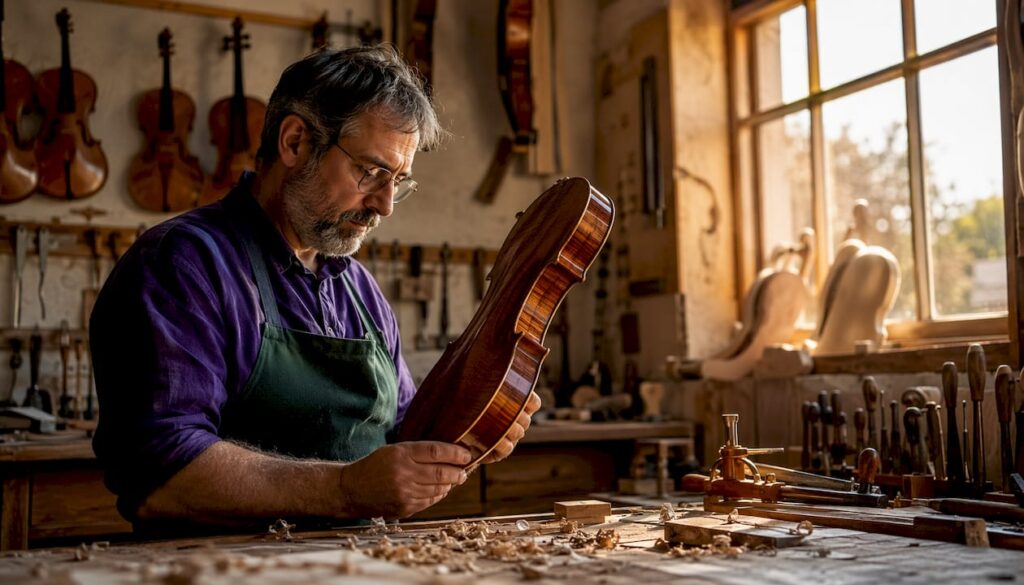

What luthiers actually do when they restore a stringed instrument
A luthier is a maker and repairer of stringed instruments, and their role in restoration goes well beyond fixing what is broken. Restoration means returning a vintage instrument to its original voice, appearance, and historical integrity, not just making it playable again. That distinction matters enormously in practice: a repair patches a crack; a restoration asks why the crack happened, what the original builder intended, and how to address it without erasing the instrument’s history.
The role of luthiers in restoration covers a specific sequence of work, each phase building on the last:
- Structural stabilization: Reconforming warped wood, repairing cracks, and regluing open seams so the instrument can safely bear string tension again
- Aesthetic integration: Replacing missing decorative elements, matching varnish, and fabricating period-correct hardware so repairs become invisible
- Setup and playability: Fret dressing, neck resetting, and soundpost fitting tailored to the player and the instrument’s structural limits
- Evaluation: Determining whether restoration is financially and historically justified before any work begins
That last point is where a skilled luthier earns their fee. Initial evaluations prevent unnecessary or excessive work by weighing structural condition against historical value, and they often save owners from spending more than an instrument is worth.
How the craft of lutherie evolved over centuries
The word “luthier” comes from the French word for lute, luth, and the profession traces directly to European lute makers of the Renaissance. As musical tastes shifted toward violins, guitars, and other plucked and bowed instruments, luthiers adapted their skills accordingly. By the 17th century, workshops in Cremona, Italy, had produced makers like Antonio Stradivari, whose instruments remain benchmarks of violin making to this day.
The craft skills that define lutherie have changed little in their fundamentals. Wood selection is the foundation: spruce for tops, maple for backs and sides, ebony for fingerboards. Each species is chosen for its acoustic properties, not just its appearance. Carving, bending, and fitting these materials requires hand tools, a trained eye, and years of tactile experience that no machine replicates. Varnishing is its own discipline, since the finish affects both tone and appearance, and historical varnish formulas remain subjects of serious study.
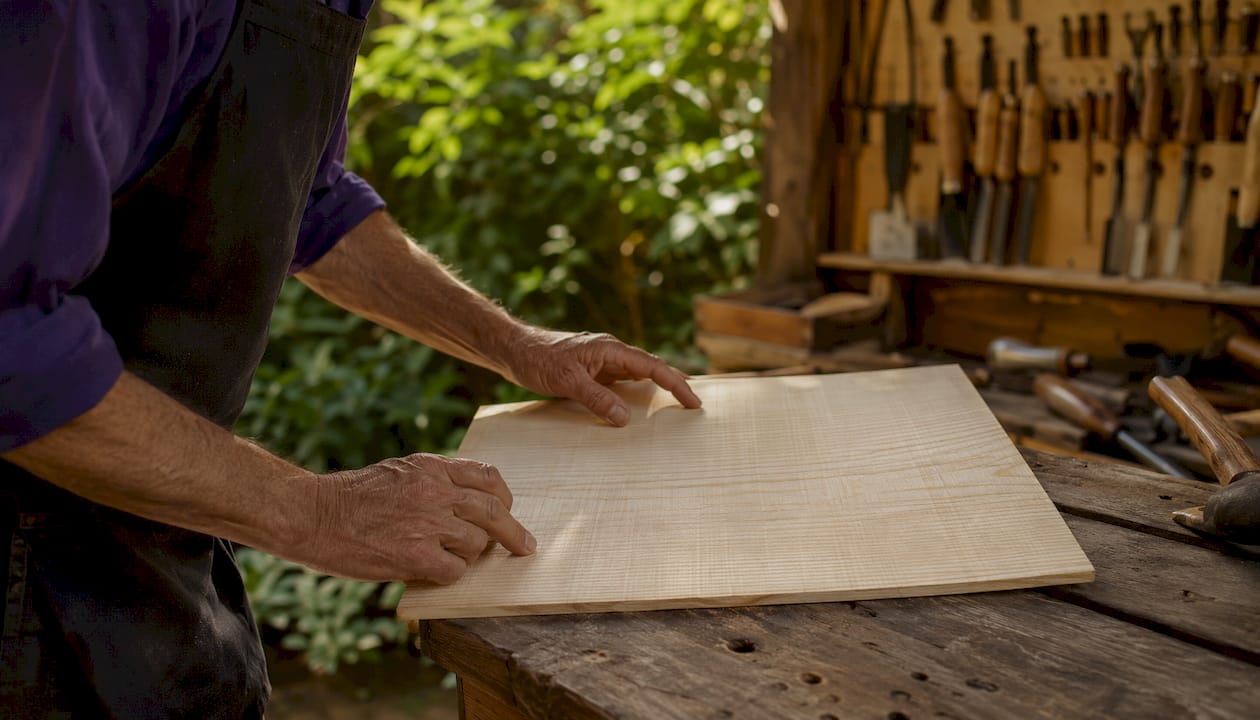
What separates a restorer from a general repair technician is historical knowledge. A luthier working on an 18th-century guitar needs to understand how that builder worked, what materials were available, and what the instrument was designed to sound like. That context shapes every decision, from which adhesive to use to whether a missing part should be replicated or left absent.
Specific techniques luthiers use to restore and repair instruments
Structural repairs form the core of most restoration work. Common procedures include:
- Crack repair: Cleating cracks from the inside with small wood patches, fitted precisely to the original grain
- Neck resetting: Adjusting the neck angle to restore correct string action, while retaining original design parameters so tonal character is not compromised
- Seam regluing: Reopening and re-adhering top and back seams with hide glue, which remains reversible for future conservation
- Inlay restoration: Fabricating replacement inlays from period-correct materials to match original decorative intent
- Soundpost and bass bar fitting: Repositioning or replacing internal components to restore acoustic balance
Aesthetic work follows structural stabilization, never precedes it. Luthiers match varnish by layering tinted finishes until the repair disappears under normal light. For more demanding work, reversible materials like pigmented microcrystalline wax and cast epoxy (Epo-Tek 301) allow future conservators to undo repairs without damaging the original wood.
Pro Tip: The best restorers work toward invisibility. If you can see the repair under normal lighting, the job is not finished. A good luthier will often spend more time on the finishing pass than on the structural fix itself.
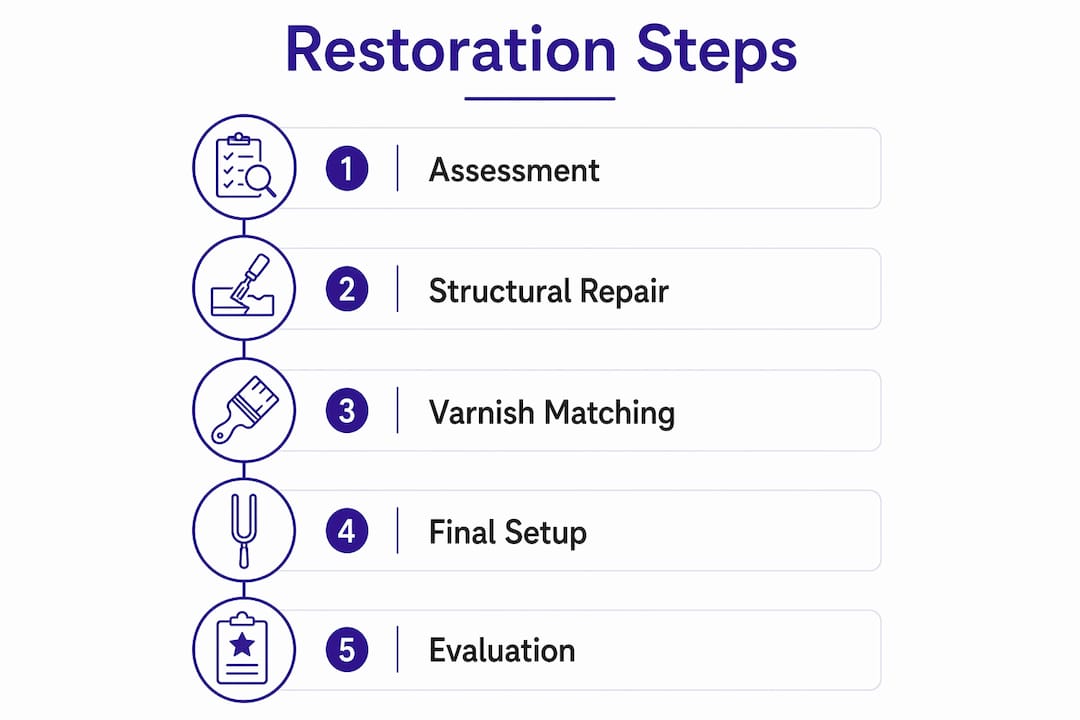
Evaluation runs throughout the entire process. A luthier does not simply start cutting; they assess what is original, what has been previously repaired, and what the instrument can structurally tolerate. Over-restoration is a real risk: excessive intervention can strip an instrument of the very character that makes it valuable.
Why the luthier-musician relationship is a long-term partnership
Stringed instruments are not static objects. Wood moves with humidity and temperature, and a guitar set up perfectly in a dry Colorado winter will need adjustment by a humid July in Nashville. This climate sensitivity means that ongoing access to a luthier is not a luxury for serious players; it is part of owning a fine instrument responsibly.
A dedicated luthier learns the quirks of a specific instrument over time: how the neck responds to seasonal changes, where the finish is thin, which frets wear fastest under a particular player’s technique. That accumulated knowledge makes each subsequent adjustment faster and more accurate. The relationship also gives musicians a trusted voice when they are considering a new acquisition or wondering whether a repair is worth pursuing.
Personalized setup is another dimension of this partnership. String height, nut slot depth, and intonation adjustments are not universal; they depend on playing style, string gauge, and the player’s physical approach. A luthier who knows you will dial these in differently than one meeting the instrument for the first time. For players who rely on their instrument professionally, that difference shows up in every performance.
Restoration versus repair: the ethical line luthiers navigate
The distinction between repair and restoration is not just semantic. Repair addresses a functional problem: a broken string, a lifted fret, a cracked headstock. Restoration goes further, aiming to recover historical authenticity and original appearance while keeping all interventions reversible and minimal.
Ethical principles guiding serious restoration work:
- Reversibility: Use materials and methods that future conservators can undo without damaging original wood or finish
- Minimal intervention: Do only what the instrument genuinely needs; avoid cosmetic improvements that were not part of the original
- Material matching: Replicate original wood grain, varnish texture, and hardware as closely as possible
- Documentation: Record every repair, material used, and decision made so the instrument’s history remains legible
- Honest counsel: Advise owners when restoration is not financially or historically justified
The chalk-fitting technique illustrates the precision this philosophy demands. A luthier shapes a replacement wood patch by rubbing chalk on the instrument’s surface, pressing the patch against it, and reading the chalk transfer to identify high spots. The patch is then carved down until it contacts the original wood perfectly across its entire surface. No gaps, no stress points, no shortcuts.
High-quality restoration is characterized by invisibility: the restorer’s goal is to preserve the soul of the instrument, not to leave a signature. That philosophy, sometimes called “less is more,” is what separates conservation-minded luthiers from technicians who simply make things look new.
How luthiers train and earn credentials in restoration
Formal training for luthiers in the United States runs through a handful of dedicated programs. The Roberto-Vega School of Lutherie in California, the Chicago School of Guitar Making, and the Violin Making School of America in Salt Lake City each offer structured curricula covering construction, repair, and restoration. Programs typically run one to three years and combine bench work with coursework in acoustics, wood science, and instrument history.
The Guild of American Luthiers, founded in 1972, serves as the primary professional organization for the field. Membership signals engagement with the broader craft community, and the Guild’s publications, including the journal American Lutherie, document restoration case studies and technical advances that practitioners rely on. There is no single national certification for luthiers in the United States, but apprenticeships with established restorers remain the most respected path into serious conservation work.
Specialization in restoration often comes after years of general lutherie practice. A luthier who has built instruments from scratch understands how they are assembled, which makes disassembly and reconstruction far more intuitive. The best restorers tend to be builders first.
Notable restorations that show what the craft can achieve
The 2012 restoration of the Sabionari guitar by Antonio Stradivari, carried out by the workshop of Sinier de Ridder, stands as one of the most documented guitar restorations on record. The instrument had been modernized around 1800 by a maker named Marconcini, who altered the peghead while preserving Stradivari’s inlaid signature panel. The 2012 work involved reversing some of those later modifications and stabilizing the original structure, with every decision guided by surviving documentation and comparable instruments.
Carriage House Violins, based in Boston, has built a reputation for restoration work on bowed instruments that prioritizes matched materials and structural soundness above cosmetic perfection. Their approach, matching grain direction, varnish texture, and wood density before touching the instrument, reflects the same philosophy that governs the best guitar restoration work.
At the Smithsonian Institution, conservators working on historical instruments face the same core tension every luthier navigates: how much intervention serves the instrument, and at what point does restoration become alteration. The Smithsonian’s collection of historical violins includes instruments that have been deliberately left unrestored in certain areas to preserve evidence of original construction methods. That restraint is itself a form of expertise.
Key Takeaways
Luthiers are the primary guardians of stringed instrument heritage, combining historical knowledge, material science, and hand skill to restore instruments without erasing their past.
| Point | Details |
|---|---|
| Restoration vs. repair | Restoration preserves historical authenticity and appearance; repair addresses only functional problems. |
| Reversibility is non-negotiable | Expert luthiers use materials like hide glue and microcrystalline wax that future conservators can safely undo. |
| Evaluation comes first | A luthier assesses structural and historical value before any work begins, preventing over-restoration. |
| Long-term partnership matters | Climate sensitivity and instrument wear mean musicians benefit from an ongoing relationship with a dedicated luthier. |
| Training takes years | Serious restoration specialists typically build instruments first, then apprentice under established restorers. |
If you are drawn to instruments with genuine history behind them, Vintage-guitar-world curates vintage and handcrafted guitars that have been evaluated, documented, and selected for their authenticity. Every instrument in the collection reflects the same standards of craftsmanship and preservation that define the best restoration work.