












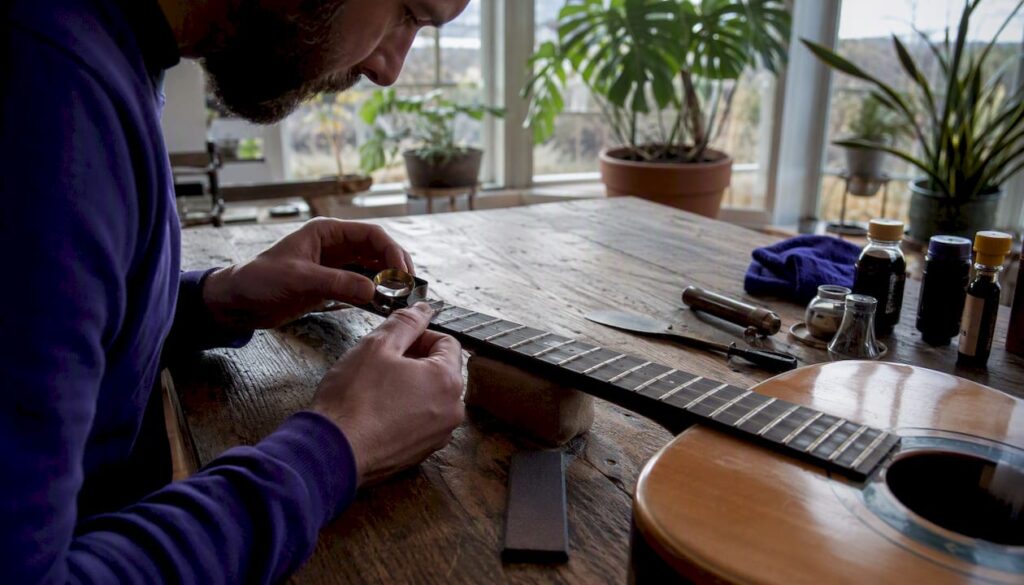

Fretboard wear is not primarily a tone problem. It’s a playability problem, and it becomes actionable the moment strings start sinking into grooves, bends catch and stick, or notes buzz and go sharp. The wood itself rarely loses its tonal character from divots or surface grime. What actually degrades is your ability to fret notes cleanly, and that degradation is measurable, diagnosable, and fixable.
Quick signs to check right now:
- Dead or muted notes at specific frets (not all over the neck)
- String catches or sticks mid-bend
- Fret buzz that appears only at certain positions
- Fret crowns that look flat or show visible pitting under the strings
If you’re seeing one or two of these, run a visual check with a magnifier and a credit card laid across three adjacent frets. If the card rocks, you have a high or low fret. One or two isolated low frets usually mean a fret dressing is enough. Widespread flattening, deep pits, or frets that are already at minimum height point toward a partial or full refret. When in doubt, a luthier can diagnose the whole neck in under ten minutes.
Table of Contents
- What actually causes fret and fretboard wear?
- How do you spot fret and fretboard wear?
- How does wear affect playability and tone?
- When should you act on fret wear?
- What are your repair options, explained plainly?
- How do you slow fretboard wear through maintenance?
- How do fretwire type and fingerboard material affect wear rates?
- When does wear typically appear, and what does repair cost?
- What luthiers actually see in the shop
- Key Takeaways
- The case for knowing your thresholds before you act
- Vintage-guitar-world’s restoration and inspection services
- Recommended reading and repair guides
What actually causes fret and fretboard wear?
The short answer: metal-on-metal friction, repeated string pressure, and everything that makes that friction worse.
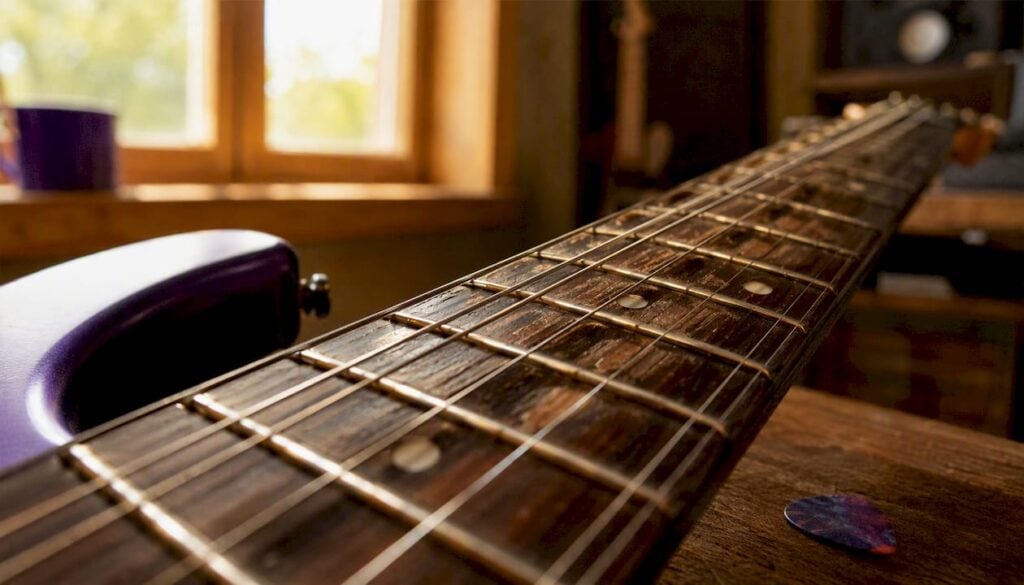
Every time you press a string against a fret, the string’s metal cuts microscopically into the fretwire. Over thousands of repetitions, that adds up to visible grooves. The thinner plain-steel strings (G, B, high E) tend to cut deeper than wound strings because their contact edge is narrower and harder, concentrating pressure into a smaller area. Heavy string gauges and aggressive playing styles, particularly string bending and vibrato, accelerate the process because they increase both pressure and lateral movement across the fret crown.
The biggest accelerators:
- Capo use. Capo-driven damage is the single largest source of accelerated fret wear according to luthier guides. A capo clamps with far more force than a fingertip and stays locked in one position, concentrating wear on one or two frets instead of spreading it across the neck.
- Heavy string gauges. More mass, more tension, more fret contact force.
- Aggressive technique. Bending, heavy vibrato, and fast picking all increase lateral string movement across the fret crown.
- Dirty hands and grit. Abrasive particles from skin, sweat, and environmental grime act like fine sandpaper on both the fret and the wood between frets.
- Abrasive cleaners and solvents. Solvents and over-oiling can loosen fret glue, damage inlays, and wick under frets, weakening the bond over time.
- Humidity swings. Low humidity causes fret ends to protrude as the wood shrinks, creating sharp edges and uneven fret heights that change how strings contact the crown.
The wood between the frets (the fretboard itself) wears more slowly, but it does develop divots under heavy string contact, particularly on unfinished rosewood or ebony boards where no lacquer layer provides a buffer.
How do you spot fret and fretboard wear?
A systematic check takes about five minutes and requires nothing more than good light, a magnifier (a 10x loupe works well), a credit card, and ideally a short straightedge that spans three frets.
Step-by-step visual and play diagnostic:
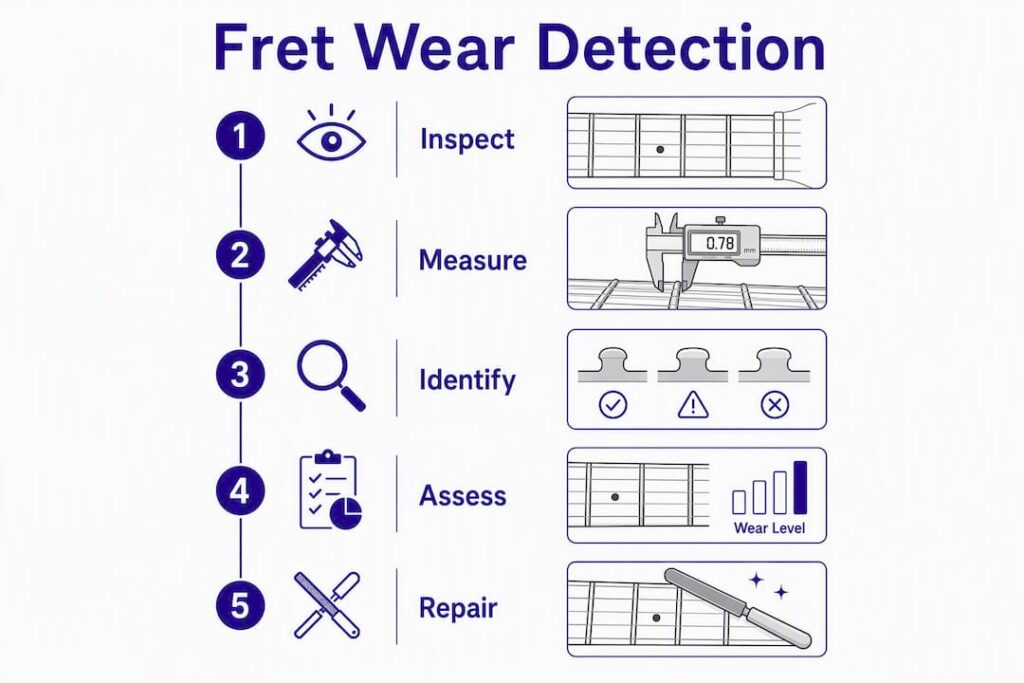
- Look at the fret crowns under magnification. Healthy frets have a rounded, domed profile. Worn frets look flat across the top, sometimes with a visible groove running along the crown where the string sits. Pits, which are small cavities punched into the fret surface, indicate later-stage wear.
- Check for divots in the wood. On unfinished boards, look for shallow grooves in the wood between or beside the frets, especially in the first five positions where most playing happens.
- Run a credit card across three adjacent frets. Lay it flat across the tops of three frets in a row. If it rocks, the middle fret is high; if it bridges (gaps at the ends), the middle fret is low. A low fret is the primary cause of buzz and dead notes.
- Use the 3-fret straightedge test. The 3-fret rule diagnostic is the industry-standard quick test: a straightedge spanning exactly three frets, rocked across the neck, reveals high or low frets that a longer straightedge would miss by averaging them out.
- Play a string-bend test. Fret a note and bend the string a whole step. If the string catches, sticks, or the pitch warbles inconsistently, there’s likely a groove or ridge trapping the string.
- Listen for position-specific buzz. Buzz that appears only at one or two frets, not across the whole neck, almost always points to a low or uneven fret rather than a setup issue like action or nut height.
- Check fret ends. Run your thumb along the edge of the neck. Sharp or protruding fret ends indicate humidity loss, not necessarily fret wear, but they affect comfort and can be addressed at the same time as other fretwork.
Distinguishing a low fret from a wood divot: A low fret feels like the string drops slightly when you fret it, and the buzz or dead note appears on the note above the low fret. A wood divot feels like a groove or depression under the string on the board itself, and it’s visible when you sight down the neck. Both can coexist, but they require different fixes.
How does wear affect playability and tone?
Fret wear rarely changes the wood’s intrinsic tonal character, but it can make a guitar sound dramatically worse through a different mechanism: you simply can’t fret notes cleanly anymore. That’s the distinction most players miss.
Direct playability effects:
- String sinking. When a fret develops a groove, the string sits lower than intended. This shortens the effective vibrating length slightly, causing the note to play sharp.
- Stuck bends. A groove or ridge catches the string mid-bend, interrupting smooth movement and sometimes causing the string to jump or mute.
- Fret buzz. A low fret allows the string to contact the next fret during vibration, producing the characteristic rattle.
- Dead spots. When a string contacts two frets simultaneously (the fretted one and a neighboring low one), the note is muted or choked.
- Intonation drift. Uneven fret heights change where the string actually stops vibrating, throwing off intonation across the neck even when the open strings are perfectly tuned.
The tone connection is indirect. Players often report no audible tone change after a refret, but a dramatic improvement in clarity. What sounded like a “dull” guitar was often just a guitar that couldn’t produce clean, fully-fretted notes. The wood was fine all along.
A practical example: if you’re getting a clattering sound on open-string bends in the first position, the likely culprit is a low second or third fret, not the nut or the setup. That’s a fret-dressing candidate, not a full refret.

When should you act on fret wear?
Not every worn fret demands immediate action. The decision comes down to how much the wear is affecting your playing and how much fret height remains.
Urgency indicators that mean act now:
- Dead notes or muted strings at specific frets that don’t respond to action adjustments
- Intonation that can’t be corrected at the saddle
- Fret crowns that are visibly flat across their full width
- Deep pits that catch strings during normal playing, not just aggressive bends
- Frets that a luthier measures as below the workable crown-height threshold
The decision flow:
- Monitor. If wear is cosmetic (light surface marks, no playability symptoms), clean and condition the board and recheck in six months.
- Fret dressing and re-crowning. When frets are uneven but still have adequate height, a luthier levels them, then re-crowns the tops to restore the rounded profile. A fret can typically be dressed two or three times before the crown height drops too low for further work.
- Partial refret. When only a few frets are too low to dress (usually the first five positions on a heavily played guitar), replacing just those frets saves money and preserves original fretwork elsewhere.
- Full refret. When fret height is below the workable threshold across most of the neck, or when deep pits make dressing impractical, a full refret is the right call. The shop removes all frets, addresses any board issues, and installs new fretwire.
The practical metric shops use is remaining crown height relative to desired string action. Once that crown is too low to leave adequate material after leveling, dressing is off the table regardless of how the frets look cosmetically.
What are your repair options, explained plainly?
| Repair | What it fixes | Best for | Rough U.S. cost range |
|---|---|---|---|
| Fret dressing / leveling | Uneven fret heights, minor buzz | Light to moderate wear, adequate fret height remaining | $60 |
| Re-crowning | Flat-topped frets after leveling | Always done after dressing | Included in dressing |
| Partial refret | A few frets worn below threshold | Heavy first-position wear, otherwise good neck | $150 |
| Full refret | Widespread low or pitted frets | Heavily played guitars, vintage instruments | $250 |
| Fretboard planing / filler | Wood divots, twisted or humped board | Severe wood wear, neck geometry issues | Varies; often part of refret |
Cost ranges reflect typical U.S. shop rates and vary by region, instrument type, and shop reputation. Vintage and classical instruments often run higher.
What each repair actually involves:
- Fret dressing: The luthier masks the fretboard, then uses a leveling beam to sand all frets to a common height. Re-crowning follows immediately, restoring the rounded top profile. The result feels like a new neck under the fingers.
- Partial refret: The shop pulls only the worn frets, addresses any slot or wood issues, and presses or glues in new fretwire matched to the original spec. The challenge is matching fret height to the undressed frets that remain.
- Full refret: All frets come out. The board is inspected, planed if needed, and refreted from scratch. This is also the right moment to upgrade fretwire material (nickel-silver to stainless, for example) if the player wants longer-lasting frets going forward.
- Fretboard wood repair: Deep divots in the wood can be filled with wood dust and glue, then leveled. Severe cases may require a board planing or, rarely, a board replacement. On a vintage instrument, conservative restoration that preserves original material is usually preferred over aggressive planing.
Pro Tip: If you’re already paying for a full refret, ask the shop about upgrading to stainless steel or EVO gold fretwire at the same time. The labor cost is identical; you’re only paying for the harder wire, and you may never need another refret on that guitar.
How do you slow fretboard wear through maintenance?
The single most effective maintenance habit is also the simplest: wash your hands before you play. Skin oils, sweat, and grit are abrasive, and they accumulate in the fret slots and on the board surface with every session.
A practical maintenance schedule:
- After every session: Wipe down the strings and neck with a dry microfiber cloth. This removes the bulk of sweat and oils before they work into the wood or fret slots.
- Every string change (unfinished boards): Clean the board with a targeted cleaner, then condition lightly. Unfinished boards (rosewood, ebony, pau ferro) benefit from conditioning one to two times per year; finished maple boards need only cleaning.
- Annually: Have a luthier inspect fret height and neck relief. Catching a low fret early means a dressing instead of a refret.
Gear and habit choices that reduce wear:
- Capo selection. Use a capo with adjustable tension and release it when not playing. A capo left clamped on a fret between sets concentrates wear on that fret faster than almost anything else.
- String gauge. Lighter gauges reduce fret contact pressure. If you’re wearing through frets quickly, dropping from .012s to .011s won’t compromise your tone dramatically but will extend fret life.
- Avoid steel wool. Steel wool leaves behind tiny metal particles that can damage electronics and embed in wood grain. Use non-woven abrasive pads or fine polishing tools instead.
- Humidity control. Keep your guitar in a case with a humidity pack (45–55% relative humidity is the standard target). Stable humidity prevents fret-end protrusion and keeps the board from drying and cracking. The guitar care and storage fundamentals apply here directly.
Pro Tip: Plan your fretboard conditioning around string changes. The strings are already off, you have full access to the board, and the timing is natural. Condition unfinished boards once or twice a year maximum. Over-oiling can wick oil under frets and weaken the bond between fretwire and fret slots.
How do fretwire type and fingerboard material affect wear rates?
Material choice is the single biggest variable in how long your frets last, and it’s a decision you can make at refret time.
Fretwire materials compared:
- Nickel-silver (German silver). The standard on most production guitars. Soft enough to work easily, but it wears faster than alternatives. Expect visible wear on a heavily played guitar within a few years of regular gigging.
- EVO gold. A titanium-bronze alloy that’s significantly harder than nickel-silver. It machines well, has a warm gold appearance, and is a popular choice for vintage-style instruments where stainless looks out of place.
- Stainless steel. The hardest common fretwire option. Stainless frets can outlast nickel-silver frets by a wide margin on the same instrument. The tradeoff: they’re harder to install and dress, which means higher labor costs, and some players find the feel slightly different under the fingers.
Fingerboard finish and wood:
- Finished boards (maple). The lacquer layer provides a barrier between the wood and everything that contacts it. Wear shows on the finish before it reaches the wood, and cleaning is straightforward with a damp cloth.
- Unfinished boards (rosewood, ebony, pau ferro). No protective layer means the wood is directly exposed to skin oils, sweat, and grit. These boards need periodic conditioning to stay hydrated and resist surface wear, but they also develop a natural patina that many players prefer.
Fret profile and height:
Taller, wider frets (jumbo or medium-jumbo) last longer simply because there’s more material to wear through before the crown drops below the workable threshold. Narrow vintage frets wear faster and leave less material for dressing. If longevity is a priority, taller fretwire at refret time is a straightforward upgrade. For handcrafted guitars built with specific tonal and playability intentions, the original fret spec often matters, and a luthier familiar with the instrument’s design should guide that choice.
When does wear typically appear, and what does repair cost?
Timeline depends almost entirely on how much you play and how you play.
Rough wear timelines by player type:
- Light hobbyist (a few hours per week, no capo, light strings): Visible fret wear may take five to ten years to become functionally significant.
- Regular player (daily practice, occasional gigging): Noticeable wear in the first five positions within three to five years on nickel-silver frets.
- Heavy gigging player or capo-heavy player: Frets in the first three positions can show significant flattening within one to two years, particularly under capo use.
Ballpark U.S. repair costs and turnaround:
| Service | Typical cost range | Typical turnaround |
|---|---|---|
| Fret dressing | $60 | 1–3 days |
| Partial refret (5–7 frets) | $150 | 3–7 days |
| Full refret | $250 | 5 days |
| Fretboard planing | $100 | Part of refret |
These are U.S. market estimates. Vintage instruments, classical guitars, and instruments requiring specialty fretwire typically fall at the higher end or above these ranges. Always get a written estimate before authorizing work.
A worn fret can be dressed two or three times before replacement is necessary, so a guitar that gets a dressing at year three may not need a full refret until year eight or ten, depending on play intensity.
What luthiers actually see in the shop
The most common finding in a fretwork inspection isn’t dramatic pitting or catastrophic wear. It’s gradual loss of fret height that the player has been compensating for, often without realizing it, by raising the action slightly or avoiding certain positions.
The single biggest driver of fretwork demand in most shops is capo use. Luthier guides note that capo-driven fret damage is so prevalent that if players stopped using capos, a luthier’s fretwork income would drop by roughly 60%. The mechanism is simple: a capo applies far more clamping force than a fingertip, concentrated on one or two frets, every time it’s used.
Experienced technicians also note that most guitars get two or three dressings before a refret becomes unavoidable. The decision to refret is driven by remaining crown height, not by how the guitar looks. A guitar with cosmetically ugly frets but adequate height can often be dressed back to excellent playability. A guitar with smooth, shiny frets that are simply too low cannot.
Shop-prep checklist before your luthier visit:
- Photograph the frets under good light, especially the first five positions
- Note exactly where the problem occurs (which frets, which strings, which techniques)
- Record your current string gauge and brand
- List any recent maintenance (cleaning, conditioning, setup adjustments)
- Bring the guitar in at its normal string tension, not detuned, so the luthier sees the neck under real playing conditions
The guitar appraisal checklist from Vintage-guitar-world covers many of these same points and is worth reviewing before any inspection appointment.
Key Takeaways
Fretboard wear is a playability issue first: once fret crowns flatten or drop below workable height, no setup adjustment compensates, and the right repair restores the guitar completely.
| Point | Details |
|---|---|
| Wear hurts playability, not wood tone | Strings sinking into grooves cause buzz, sharp notes, and stuck bends — the wood’s tone is rarely affected. |
| Capo use is the top accelerator | Luthier guides cite capo-driven damage as the single largest source of accelerated fret wear; if players stopped using capos, a luthier’s fretwork income would drop by roughly 60%. |
| Dressing before refret | A fret can typically be dressed two or three times before replacement becomes necessary. |
| Material choice matters at refret | Upgrading to stainless or EVO fretwire at refret time significantly extends the next service interval. |
| Vintage-guitar-world for valuable instruments | For collectible or vintage guitars, Vintage-guitar-world pairs restoration and fretwork with valuation and certification services. |
The case for knowing your thresholds before you act
Most players wait too long, and most collectors act too fast. That’s the real pattern in fretboard wear decisions.
A player who gigs regularly tends to ignore gradual wear because the guitar still makes sound. By the time they bring it in, frets that could have been dressed twice are now below threshold and need full replacement. The cost doubles, and the downtime is longer. A simple annual inspection would have caught the problem at the dressing stage both times.
Collectors face the opposite pressure. The moment they see any wear on a vintage instrument, the instinct is to restore it to pristine condition. But aggressive fretwork on a collectible guitar, particularly a full refret with modern fretwire on a 1950s or 1960s instrument, can reduce its market value more than the wear itself would. Conservative fret dressing that preserves original fretwire is almost always the right call for a collector, even if it means accepting some cosmetic imperfection.
The practical recommendation: know which category your guitar falls into before you authorize any work. A player’s workhorse should be set up for maximum playability, full stop. A collectible instrument deserves a conversation about what the repair does to its originality and value before any fret comes out.
Vintage-guitar-world’s restoration and inspection services

For players and collectors dealing with significant fretboard wear on a valuable instrument, Vintage-guitar-world offers inspection, setup, refret and restoration services, along with guitar appraisal and certification for collectible instruments. The certification process is particularly useful after fretwork: it documents the instrument’s condition before and after, which matters for insurance, resale, and provenance.
Before booking, gather close-up photos of the worn frets (good light, first five positions), a short description of where the playability problem occurs, your current string gauge, and any maintenance history you have. That information lets the team assess the scope of work before the guitar arrives and give you an accurate estimate.
For vintage and handcrafted instruments, Vintage-guitar-world typically pairs restoration with a full appraisal so owners leave with both a playable guitar and documented proof of its condition and authenticity. Request an inspection or quote directly through the site.
Recommended reading and repair guides
For players who want to go deeper on fretwork diagnosis and maintenance, these are the most useful sources:
- Understanding Frets and Fret Wear — Premier Guitar: The clearest overview of fret wear mechanics, capo effects, and when to dress vs. refret. A reliable first reference.
- Frets.com reference materials: Deep technical detail on the 3-fret straightedge diagnostic, crown height thresholds, and shop decision-making. Written by a working luthier.
- How to Clean a Guitar Fretboard — Acoustic Guitar: Practical, safe cleaning and conditioning guidance with clear warnings about solvents and steel wool.
- Cleaning and Conditioning Your Fretboard — MusicRadar: Good on the finished vs. unfinished board distinction and conditioning frequency.
- Acoustic Guitar Forum — fret wear discussion: Player-reported before-and-after accounts of refrets, useful for setting realistic expectations.
For significant wear on any instrument you value, a professional inspection is the right next step. Bring photos and detailed play notes. A luthier who can see the actual fret profiles and measure crown height will give you a far more accurate repair recommendation than any online guide.