












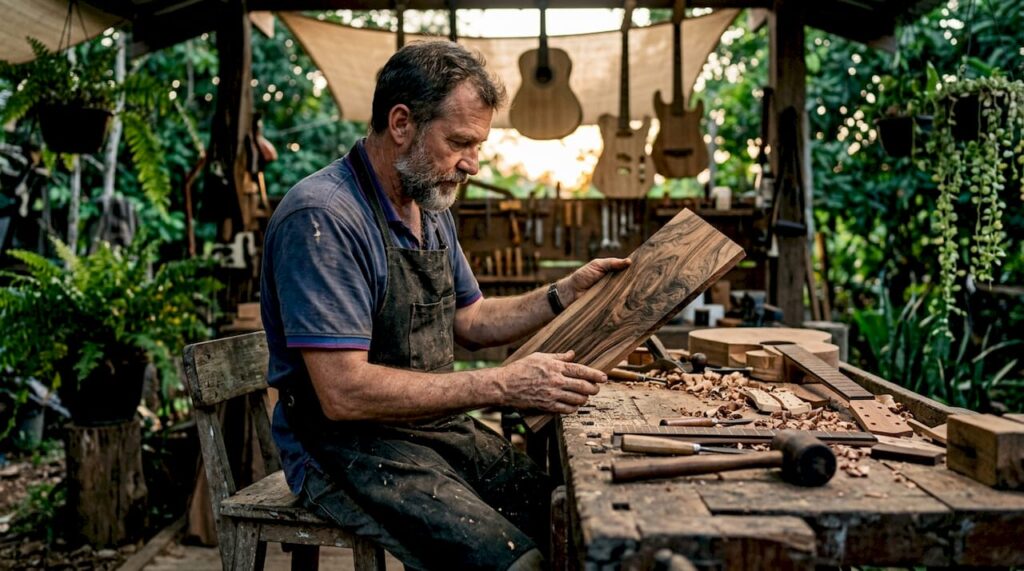

TL;DR:
- Rare guitar woods are valued for their scarcity and unique tonal qualities. Most are not endangered, but market demand and legal protections make them rare and expensive. Collectors should consider sourcing documentation and the instrument’s sourcing history when purchasing these woods.
Rare guitar woods, known in lutherie as exotic tonewoods, are wood species valued for biological scarcity, limited market availability, or tonal qualities that standard production woods cannot replicate. The best examples of rare guitar woods include Koa, Brazilian Rosewood, Pink Ivory, and Ebony, each prized by collectors and players for distinct sound and visual character. A 2026 meta-analysis found that 65% of “rare” guitar woods are classified as Least Concern by conservation standards. That fact reframes the entire conversation: rarity in guitar making is as much about market forces as it is about ecology.
What are the best-known examples of rare guitar woods?
The classic rare guitar tonewood examples share three traits: limited geographic origin, high demand from builders and collectors, and tonal profiles that standard woods cannot match. Understanding each species gives you a real edge when evaluating an instrument.
-
Koa. Native to Hawaii, Koa is prized for its golden to deep brown color and curly grain. Its tone blends the warm midrange of mahogany with the clarity and sparkle of rosewood. High cost and limited production make it one of the most sought-after woods for backs, sides, and soundboards on premium acoustic guitars.
-
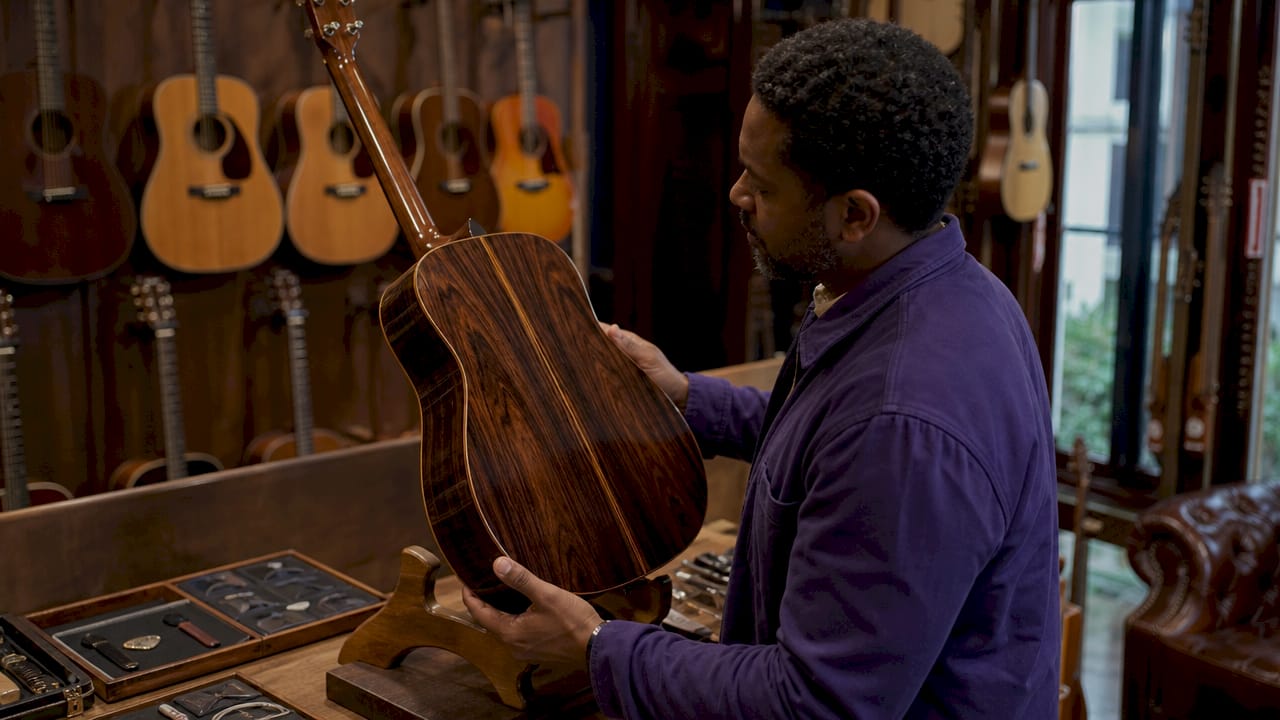
Brazilian Rosewood. This is the legendary standard against which all other tonewoods are measured. Brazilian Rosewood delivers a rich, crystal-clear tone with complex overtones and a striking dark, streaked appearance. It is critically endangered, and CITES regulations tightly restrict its trade. Instruments built before the 1992 ban carry significant collector value.
-
Pink Ivory. Sourced from southern Africa, Pink Ivory is extremely rare and commands prices that rival precious metals by the board foot. Its vivid pink to red color is unlike any other tonewood, and its density produces bright, cutting highs. Boutique builders use it for fingerboards, bridges, and decorative accents.
-
Ebony. Dense, dark, and nearly impervious to wear, Ebony is the fingerboard wood of choice on high-end classical and flamenco guitars. Its hardness translates directly into note clarity and fast attack. African Ebony and Macassar Ebony are the two most common varieties in guitar making, though both face increasing supply pressure.
-
Exotic Mahogany varieties. Standard Mahogany from Africa and Central America is widely available, but certain Mahogany species from restricted regions are genuinely scarce. These rarer variants share the characteristic warm, woody midrange tone but offer tighter grain and greater resonance. Luthiers who source them pay a significant premium.
Pro Tip: When you examine a guitar built with Brazilian Rosewood, check for a CITES certificate or documentation proving the instrument predates 1992. Without that paperwork, resale and international transport become legally complicated.
Which lesser-known species qualify as rare guitar tonewoods?
Beyond the famous names, a second tier of exotic woods for guitars exists almost entirely within the boutique and custom building world. These species rarely appear in production instruments, which makes them genuinely exciting for collectors who want something no catalog guitar will ever offer.
-
Heart Rimu. A New Zealand native, Heart Rimu offers a warm, complex tone with a distinctive reddish-brown heartwood. Its grain patterns vary dramatically from piece to piece, making every guitar built from it visually one of a kind. Supply is limited because Rimu is a protected species in New Zealand, and only salvaged or legally harvested timber reaches luthiers.
-
Higuella. This Central American hardwood is almost unknown outside specialist luthiery circles. Higuella produces a balanced tonal response with good sustain and a medium-density structure that works well for backs and sides. Its scarcity comes from low commercial logging volume rather than conservation restrictions.
-
Knysna Blackwood. Sourced from the Knysna forest region of South Africa, Knysna Blackwood is prized for its dark, fine grain and tonal similarity to Brazilian Rosewood. Boutique luthiers treat it as a legal and tonally credible alternative to the endangered original. Supply is tightly controlled by South African forestry authorities.
-
Japanese Horse Chestnut. Used occasionally by Japanese luthiers, this wood has an unusually light density for a hardwood. It produces a warm, open tone with strong fundamental notes. Its rarity outside Japan is almost entirely a function of geography and trade, not biology.
-
Larch. Larch appears in experimental guitar building as a soundboard wood. Its stiffness-to-weight ratio rivals Sitka Spruce in some cuts, and its resinous character gives it a bright, projecting voice. Few production builders use it, which keeps it firmly in the rare category by market definition.
Boutique builders experiment with these woods because market availability and manufacturer preferences shape rarity as much as biology does. A wood that no major factory orders becomes rare by default, even if the trees are plentiful.
How do rare woods compare tonally and visually to popular guitar wood choices?
A guitar tonewood comparison between rare and common species reveals clear patterns. Rare woods tend toward higher density, more complex grain, and tonal profiles that sit at the extremes of the brightness-warmth spectrum.
| Wood | Tone character | Visual character | Rarity level |
|---|---|---|---|
| Koa | Warm with bright clarity | Curly golden to brown grain | High (market scarcity) |
| Brazilian Rosewood | Rich, crystal-clear, complex | Dark streaked, oily surface | Critical (CITES protected) |
| Pink Ivory | Bright, cutting highs | Vivid pink to red | Very high (geographic limit) |
| Ebony | Fast attack, high clarity | Near-black, fine grain | High (supply pressure) |
| Sitka Spruce | Balanced, wide dynamic range | Pale cream, straight grain | Common |
| Alder | Neutral, even frequency response | Plain light tan | Common |
| Mahogany (standard) | Warm, woody midrange | Medium brown, open grain | Common to moderate |
Rare woods vary widely in density and Janka hardness, and those physical differences translate directly into how a guitar sounds and feels under your hands. A dense wood like Ebony transmits vibration quickly, producing fast note attack. A lighter exotic like Japanese Horse Chestnut sustains longer because it absorbs and releases energy more slowly.
Visual character matters just as much to collectors as tone does. Rare woods contribute to both the collectible value and aesthetic appeal of an instrument. A guitar with figured Koa back and sides commands attention in a room before a single note is played.
Pro Tip: Run your hand along the grain of any exotic tonewood before buying. Irregular grain direction, which is common in figured Koa and Knysna Blackwood, can affect how the wood responds to humidity changes over time. Ask the seller about the instrument’s storage history.
What factors make a guitar wood rare today?
Wood rarity in guitar making results from three distinct forces working simultaneously. Understanding all three helps you make smarter decisions about wood selection for guitars and long-term instrument value.
-
Conservation status and legal protection. CITES Appendix I and II listings restrict the international trade of species like Brazilian Rosewood and certain Ebony varieties. Rarity results from a combination of biological scarcity, market demand, and legal protections. A guitar crossing international borders with a CITES-listed wood requires documentation, and missing paperwork can result in confiscation.
-
Market demand versus biological abundance. Koa trees are not endangered, but demand from guitar builders, furniture makers, and the Hawaiian craft industry far exceeds sustainable harvest volumes. This market-driven scarcity pushes prices up and limits supply to luthiers. The same dynamic applies to Pink Ivory, where the wood’s fame in collector circles outpaces what the forests can supply.
-
Sustainability efforts and ethical sourcing. Responsible luthiers and dealers now prioritize certified timber, salvaged wood, and plantation-grown alternatives. Sustainability certification from bodies like the Forest Stewardship Council (FSC) adds provenance value to an instrument. Collectors increasingly ask for sourcing documentation alongside tonal and aesthetic credentials.
-
Cost and collector value. Rarity drives price, and price signals collector interest. A guitar built with pre-ban Brazilian Rosewood or a one-piece figured Koa top carries a premium that reflects both the wood’s scarcity and the instrument’s historical moment. Collectors seek guitars with exotic woods for both sound and investment potential.
When should you seek out rare woods in a guitar?
Not every player needs a guitar built from exotic tonewoods. The decision depends on what you want from the instrument and how you plan to use it.
-
Collectors seeking uniqueness. If your goal is an instrument that no production run will ever duplicate, rare woods deliver that guarantee. A guitar with Heart Rimu back and sides or a Pink Ivory fingerboard is, by definition, a singular object. Vintage-guitar-world specializes in exactly this category, curating instruments where wood choice is part of the instrument’s identity.
-
Players wanting a distinct tonal signature. Koa’s blend of warmth and clarity suits fingerstyle players who want presence without harshness. Knysna Blackwood suits players who love the Brazilian Rosewood sound but need a legally uncomplicated instrument. Match the wood’s tonal profile to your playing style before you commit.
-
Balancing rarity with playability and budget. A rare wood on a poorly built guitar is a waste of the material. Prioritize construction quality first, then wood species. Boutique guitars built with rare woods represent the intersection of fine craftsmanship and exceptional materials.
-
Caring for rare wood instruments. Exotic tonewoods often require more attention than standard species. Maintain humidity between 45% and 55% relative humidity. Use species-appropriate conditioning oils on unfinished fingerboards. Store the guitar in a case when not in use, away from direct sunlight and heating vents.
Key Takeaways
Rare guitar woods are defined by market scarcity and legal status as much as by biological rarity, making informed sourcing the most critical skill for collectors.
| Point | Details |
|---|---|
| Rarity has three causes | Biology, market demand, and legal protections each independently make a wood rare. |
| 65% of rare woods are Least Concern | Most exotic tonewoods are not endangered; supply constraints drive their scarcity. |
| Tone follows density | Denser woods like Ebony produce fast attack; lighter exotics sustain longer. |
| Documentation protects value | CITES paperwork and sourcing certificates directly affect resale and transport legality. |
| Boutique builders lead exploration | Lesser-known species like Knysna Blackwood and Heart Rimu appear almost exclusively in custom instruments. |
Why rare woods reward patience more than impulse
I have handled enough guitars over the years to say this plainly: the most memorable instruments I have encountered were not always the most expensive. They were the ones where the builder chose a wood with intention. A guitar with a Koa top does not just look beautiful. It sounds like the builder made a decision, and that decision shaped every note the instrument will ever produce.
What surprises most collectors is how often the lesser-known woods outperform the famous ones in actual playing situations. Knysna Blackwood, for example, delivers a tonal complexity that rivals pre-ban Brazilian Rosewood on a good day. Heart Rimu produces warmth that no spruce top can replicate. These woods are rare because few people know to ask for them, not because they are inferior.
My honest advice: do not chase a wood name. Chase the sound and the story. Ask where the wood came from, how it was sourced, and why the builder chose it. A luthier who can answer those questions built the guitar with care. That care shows up in every note. Vintage-guitar-world’s approach to guitar tonewood selection reflects exactly this philosophy: the wood is the beginning of the instrument’s character, not a marketing detail.
— Vintage
Rare wood guitars worth adding to your collection
Vintage-guitar-world curates a selection of vintage and handcrafted guitars where wood choice is central to the instrument’s identity and value. Each guitar in the collection is evaluated by specialists who assess tonal quality, construction integrity, and provenance documentation.

Collectors who want instruments built with Koa, Ebony, or other exotic tonewoods will find options across classical, flamenco, acoustic, and electric formats. Every listing includes detailed wood identification and sourcing context. For collectors ready to invest in instruments where rarity and craftsmanship meet, the vintage guitar collection at Vintage-guitar-world is the right place to start. Expert valuation and certification services are available for instruments you already own.
FAQ
What makes a guitar wood “rare”?
A guitar wood is rare when biological scarcity, legal trade restrictions, or market demand limits its supply to builders. Most rare tonewoods are not endangered species; supply and demand define their rarity more than conservation status does.
Is Brazilian Rosewood still used in new guitars?
Brazilian Rosewood is critically endangered and protected under CITES Appendix I, which bans new commercial trade. Luthiers legally use it only from pre-1992 stock, and instruments containing it require documentation for international transport.
What is the best rare wood for tone?
Koa is widely regarded as the most tonally versatile rare wood, blending mahogany warmth with rosewood clarity. Brazilian Rosewood is considered the benchmark for richness and complexity, though its legal status limits availability.
Are rare guitar woods worth the extra cost?
Rare tonewoods add both tonal uniqueness and collector value to an instrument. The premium is justified when the wood is properly sourced, the construction quality is high, and the tonal profile matches the player’s needs.
What are good alternatives to endangered rare woods?
Knysna Blackwood and Higuella offer tonal profiles comparable to Brazilian Rosewood without CITES complications. Plantation-grown Ebony and certified Mahogany variants provide legal, sustainable options for builders and collectors who prioritize ethical sourcing.