


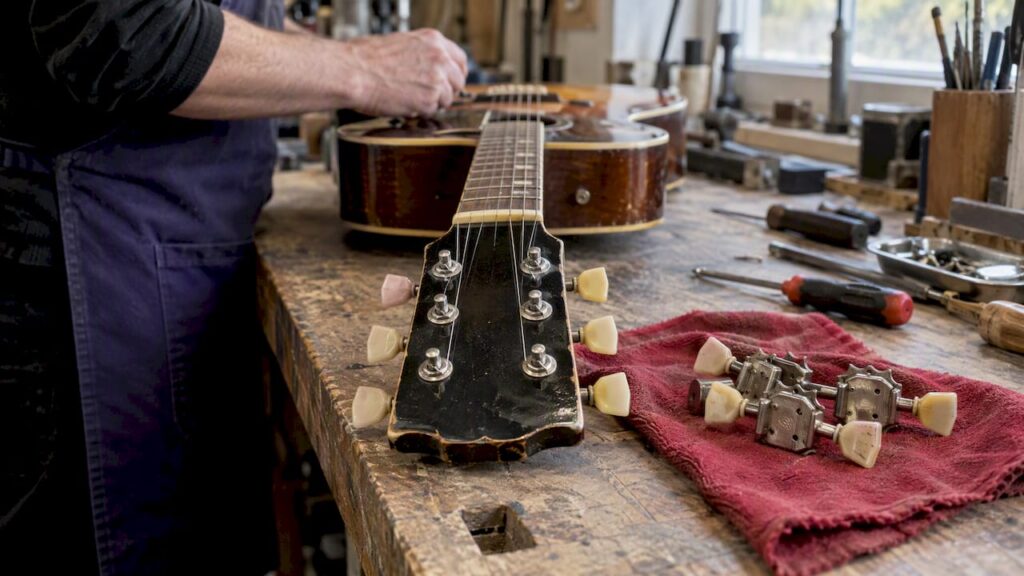

Replacing the tuning machines on a collector-grade vintage guitar usually lowers its resale value unless the work is reversible, uses period-correct parts, and comes with documentation from a specialist. On a player-grade instrument, swapping worn or unreliable tuners for better ones is often value-neutral and can even widen your buyer pool. The safest move either way: keep the originals, photograph the process, and get the change on paper before you sell.
TL;DR:
- Replacing tuners on a rare or collector-grade vintage guitar typically lowers resale value unless the work is fully reversible and well-documented.
- For guitars used for playing or recording, modern tuners can enhance appeal and facilitate better tuning stability without decreasing value.
- When replacing tuners, avoid enlarging holes or altering the headstock and always keep original parts, photographed and stored securely, to preserve future resale options.
- Cost of tuner replacement varies widely, but on collector-grade guitars, it is often a sunk cost, whereas on player instruments, it can make the guitar more marketable.
- Engaging a professional for appraisal and restoration ensures the work is properly documented, which can help maintain or even increase the instrument’s value.
Table of Contents
- How tuners shape what a guitar sells for
- When a tuner swap helps or hurts
- What replacement costs and whether you get it back
- How to swap tuners without losing resale value
- When to call in a luthier or appraiser
- How we think about tuners and restoration
- Get an honest valuation before you sell or restore
- Sources
- FAQ
How tuners shape what a guitar sells for
Appraisers and collectors look at the same handful of signals when pricing a used guitar: originality, function, condition, and provenance. For a vintage instrument, having its original hardware intact, sometimes called “survivor” status, is one of the strongest premium signals a seller can offer. Original parts and an intact finish are repeatedly cited as decisive factors in how buyers price a used guitar, and non-original hardware tends to pull the number down unless the swap is professionally documented.
Player guitars run on a different logic. A gigging musician cares whether the tuners hold pitch, not whether they left the factory with the instrument. Here, function and playability dominate the price conversation, and tuners that slip or bind will cost you more in buyer confidence than age-appropriate wear ever would.
A few patterns hold across both markets:
- Non-functioning tuners depress price more than honest cosmetic wear does.
- Visible mismatches, stripped screw holes, or crude installation work erode buyer confidence fast.
- Clear documentation of what was changed and why can offset part of the loss, even on a collector piece.
The gap between these two markets is why the same repair can be a smart upgrade on one guitar and a costly mistake on another.
When a tuner swap helps or hurts
Map your guitar to one of these situations before you touch a screwdriver.
- Rare or limited-run vintage models with original hardware intact carry the highest risk: any replacement, even a careful one, tends to shave resale value because originality is the whole premium.
- Guitars with documented collector provenance (a known first owner, original receipts, a notable player history) lose more from a swap than an anonymous example of the same model, since the paper trail is part of what you’re selling.
- Mass-market player instruments built for everyday use carry little originality premium, so a tuner upgrade rarely costs you anything at resale.
- Guitars bought for gigging or recording, where tuning stability matters more than vintage correctness, usually gain saleability from modern tuners rather than lose it.
- Instruments with genuinely irreparable tuners, pitted beyond polishing or missing parts entirely, often have to be replaced regardless of category, which makes installation quality the deciding factor rather than the decision to replace at all.
Community restoration threads consistently recommend conservative cleaning before replacement, since deeply pitted plating often can’t be restored and replacement sometimes becomes the only practical option. Where replacement is unavoidable, how cleanly and reversibly it’s done determines how much value survives the job. A set installed without enlarging the original screw holes or altering the headstock keeps your options open in a way an irreversible mod never will.
What replacement costs and whether you get it back
Parts range from inexpensive economy sets to premium locking or vintage-correct tuners, with labor on top if you’re not doing the install yourself. Whether that spend comes back at resale depends entirely on which guitar you own.
- On a player-grade instrument, a tuner upgrade is often marketable: buyers searching for a reliable gigging guitar will pay a little more for tuners that already hold pitch.
- On a collector-grade vintage guitar, the same job is usually a sunk cost: buyers in that market are paying for originality, not convenience.
- Either way, keep every receipt. A documented invoice and photo record narrows the discount buyers demand for a modified instrument.
A documented, reversible installation preserves resale options that an irreversible one closes off for good. Valuation guides treat condition, originality, model and serial data, and provenance as the core checklist buyers and appraisers work from, and a tuner swap touches at least two of those four.
When you do list a guitar that’s had tuners changed, say so plainly in the description, show the original parts in a photo even if they’re not installed, and include the installer’s receipt. Forum sellers who do this report that buyers trust the listing more and negotiate less aggressively on price.
How to swap tuners without losing resale value
If you’ve decided a change is the right call, do it in a way that leaves every door open.
- Remove the original tuners carefully and set them aside rather than discarding them, even if they’re not going back on.
- Label each part (left side, right side, screws, bushings) and photograph them individually before they go into storage.
- Choose period-correct or drop-in replacements that match the original screw pattern and bushing size whenever one exists, rather than a tuner that requires new holes.
- Avoid enlarging holes, routing new channels, or filling old holes with filler that a future owner or restorer would have to undo.
- Photograph each stage of the install, note the guitar’s serial number in your records, and keep the installer’s name and contact details on file.
- Keep the originals in a labeled bag or box with the guitar’s paperwork, so a future sale can include them as part of the listing.
Pro Tip: Store the original tuners in the case pocket with the guitar, not in a separate drawer. A buyer who sees the originals included with the instrument reads the whole deal differently than one who’s told they exist somewhere else.
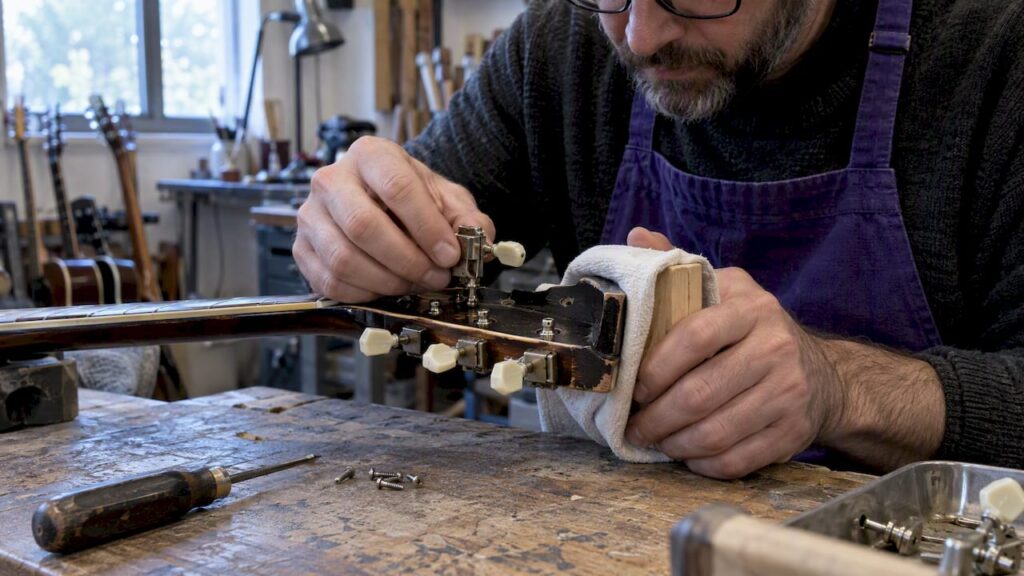
This kind of sympathetic, reversible work is exactly what separates a tasteful upgrade from a value-destroying mod, and it’s the same standard a professional restorer uses when choosing how to protect a headstock during a tuner swap.
When to call in a luthier or appraiser
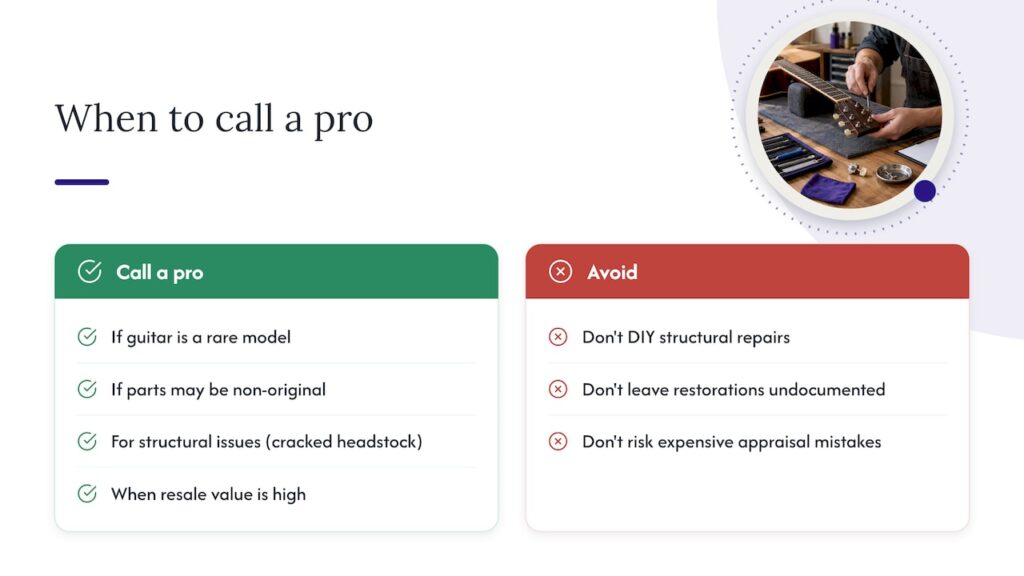
Some situations call for a professional rather than a home workbench. Book an appraisal or consult a luthier when you’re dealing with a rare model, any suspicion of non-original parts elsewhere on the guitar, structural issues like a cracked headstock or loose neck joint, or simply an instrument whose expected resale value is high enough that a mistake would be expensive.
A professional appraisal gives you independent verification of what you actually have, a written document trail, and in many cases a better asking price than you could support alone. Certified restoration work, documented step by step, can also soften the value hit from a necessary tuner change by proving exactly what was done and by whom. That kind of stepwise restoration record is often what convinces a skeptical buyer that a modified vintage guitar still deserves a serious price.
How we think about tuners and restoration
We treat original hardware as something to preserve first and replace only when playability or safety genuinely require it. When a tuner swap is unavoidable, we document the work with dated photos and a written invoice, and we keep the original parts with the instrument rather than letting them disappear into a parts bin. That same philosophy shapes how we evaluate whether a given restoration actually protects value before we recommend it to a consignor. Our valuation and consignment work exists to help sellers price a guitar honestly, modifications and all, rather than guess at what the market will accept.
— Vintage
Get an honest valuation before you sell or restore
If you’re staring at worn tuners and wondering whether to touch them, get a second opinion before you decide. We offer:
- Certification and valuation services to document your guitar’s condition and originality before any work happens.
- Restoration services for sympathetic, reversible repairs that protect rather than erode resale value.
- Consignment sales and exclusive playtest appointments to present your guitar to interested collectors and players.

Whether your instrument needs a careful cleaning, a documented restoration, or a straight path to the right buyer, start with a conversation at Vintage Guitar World before you decide what to change.
Sources
For more on the collector versus player distinction, see how tuning machines affect tuning stability and tone, and for hands-on cleaning advice, the Musiker-Board restoration thread is worth a read.
- Gitarre verkaufen: Preise, Tipps & Wege 2026
- Wie bekomme ich alte Mechaniken wieder sauber / restauriert?? | Musiker-Board
FAQ
Does replacing tuners always reduce a guitar’s value?
No. It typically lowers value on rare or collector-grade vintage guitars where originality drives the price, but it’s often neutral or even positive on player-grade instruments bought for regular use.
How much does it cost to restring a guitar?
Restringing is a low-cost, routine maintenance task compared to structural work like refretting, which carries a much larger price tag and bigger resale impact. A local shop or luthier can give you an exact quote for your specific guitar and string gauge.
How much does a guitar setup cost?
A setup typically falls in the same low-cost maintenance category as restringing rather than the structural-repair category, though exact pricing depends on your guitar and local technician rates. It’s worth asking a luthier for a quote alongside any tuner work, since both are often done in the same visit.
What is my guitar worth?
Market value comes down to condition, originality, model and serial data, and provenance, the same checklist valuation guides use to price a used instrument. A written appraisal from a specialist is the most reliable way to get a number you can trust when selling.
How much does it cost to refret a guitar?
Refretting is a structural repair, and valuation guides treat it as a larger job with a correspondingly larger effect on resale value than routine maintenance. Costs vary by guitar and technician, so get a specific quote from a luthier before deciding whether the investment makes sense for your instrument.