












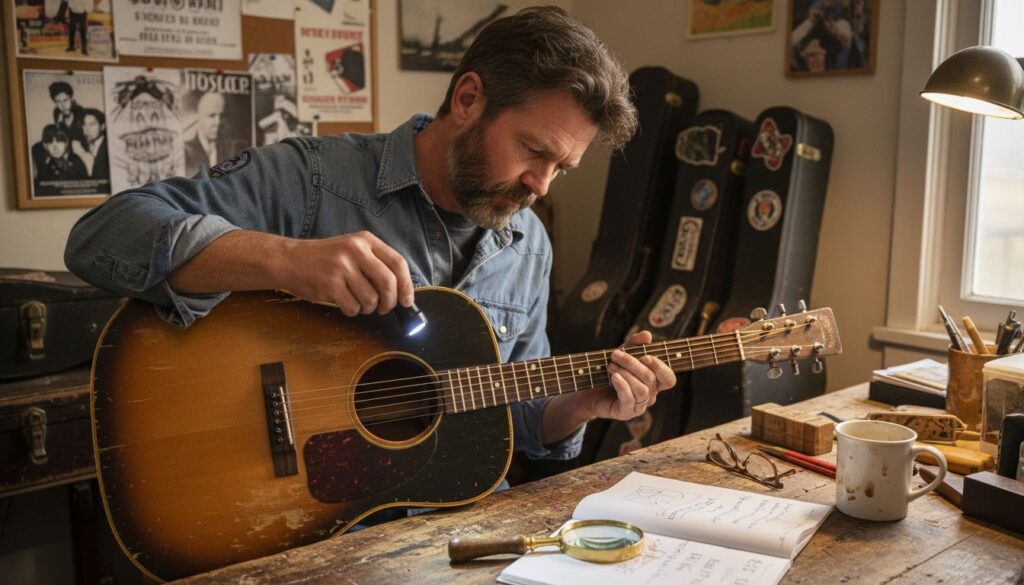

Rare vintage guitars hold stories and secrets only careful inspection can reveal. Accurate valuation hinges on noticing subtle details in materials, finish, and construction, like the use of Brazilian rosewood or original shellac finishes found in prized instruments. Professional musicians and collectors alike know that a methodical approach protects an instrument’s value and authenticity. This guide delivers expert insight so you can confidently assess every detail before making a decision that could shape your collection or playing career.
Table of Contents
- Step 1: Prepare Inspection Tools And Environment
- Step 2: Examine Guitar Construction And Materials
- Step 3: Assess Playability And Sound Quality
- Step 4: Verify Originality And Provenance
- Step 5: Evaluate Investment And Performance Value
Quick Summary
| Key Insight | Explanation |
|---|---|
| 1. Gather Essential Tools | Use a straightedge, tuner, and feeler gauge to inspect neck alignment and action accurately. |
| 2. Control Your Environment | Ensure stable humidity (45-55% RH) and temperature (70-75°F) for accurate guitar condition assessments. |
| 3. Examine Construction Quality | Assess wood type and finish authenticity to determine the guitar’s true value and playability. |
| 4. Verify Originality | Inspect all components and documentation to ensure the guitar’s authenticity and increase collector appeal. |
| 5. Research Investment Potential | Analyze recent sales data and rarity to evaluate the guitar’s long-term value and performance effectiveness. |
Step 1: Prepare Inspection Tools and Environment
Before you evaluate a vintage guitar, you need the right tools and a controlled space. This step ensures accurate assessments and protects the instrument during handling.
Start by gathering your core inspection toolkit. You’ll want a straightedge or metal ruler to check neck alignment, a feeler gauge set for action measurements, a tuner to assess intonation, and a light source like a headlamp or flashlight. A magnifying glass helps you spot finish cracks, binding issues, and fret wear that matter for valuation.
Additional tools make your evaluation comprehensive:
- Tape measure for body dimensions and scale length verification
- Capo to assess relief and fret leveling
- Small mirror to inspect the headstock back and tuning machines
- Camera or smartphone for documenting condition
- Notebook for recording findings
- Humidity and temperature meter
Your inspection environment matters as much as your tools. Set up in a space with consistent, natural lighting—avoiding direct sunlight that distorts colors and finishes. A clean, organized work table with a padded surface protects the guitar from scratches during handling.
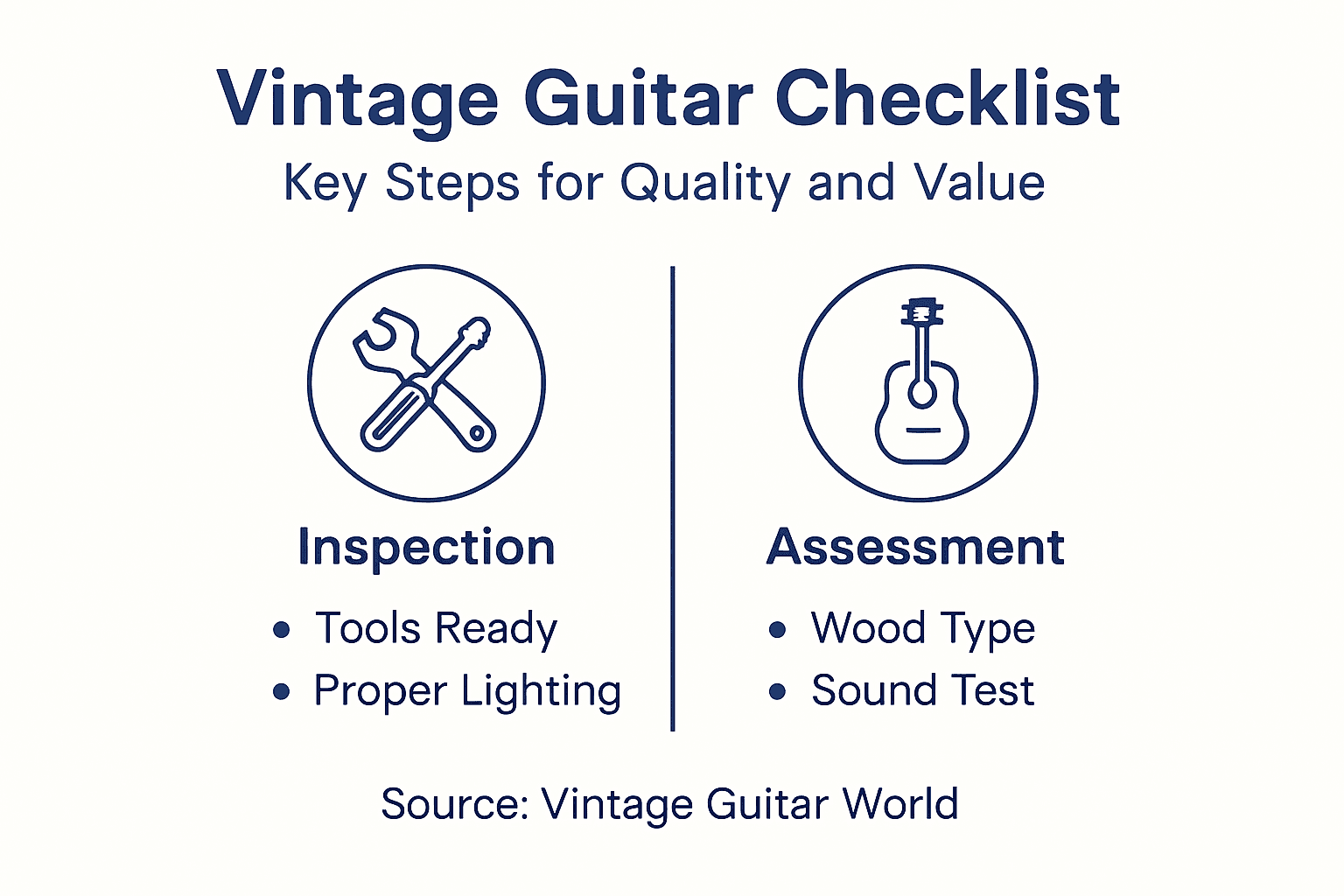
Temperature and humidity control is critical for vintage instruments. Most guitars perform best between 45-55% relative humidity and 70-75 degrees Fahrenheit. Fluctuating conditions reveal structural issues like lifting braces or separating seams that might not appear in stable environments. If you’re testing multiple guitars, this consistency also lets you compare their responses accurately.
Here’s a summary of optimal conditions and their importance for vintage guitar inspection:
| Factor | Ideal Range | Why It Matters |
|---|---|---|
| Temperature | 70-75°F | Maintains wood stability |
| Humidity | 45-55% RH | Prevents cracks and seam separation |
| Lighting | Consistent natural light | Reveals finish flaws and color fades |
| Work Surface | Padded, clean table | Protects against scratches and dents |
| Workspace Clutter | Minimal, organized | Reduces accident risk, enhances focus |
Keep your workspace clutter-free and dedicated to guitar inspection—it protects valuable instruments and helps you focus on details that determine authenticity and value.
Pro tip: Use a white sheet or mat under the guitar while inspecting to increase visibility of dust and debris patterns inside the sound hole, which reveal playing history and maintenance practices that collectors want to know about.
Step 2: Examine Guitar Construction and Materials
Construction quality and materials are the foundation of vintage guitar value. This step reveals whether you’re looking at a genuinely exceptional instrument or one with hidden structural problems.
Start by examining the wood type and quality. Vintage guitars often feature materials no longer readily available, like Brazilian rosewood for backs and sides, or old-growth spruce for tops. These woods offer superior tonal properties and rarity that modern alternatives cannot match. Look inside the sound hole with your light source to spot the top wood grain and check for repairs or cracks that might be hidden from outside views.
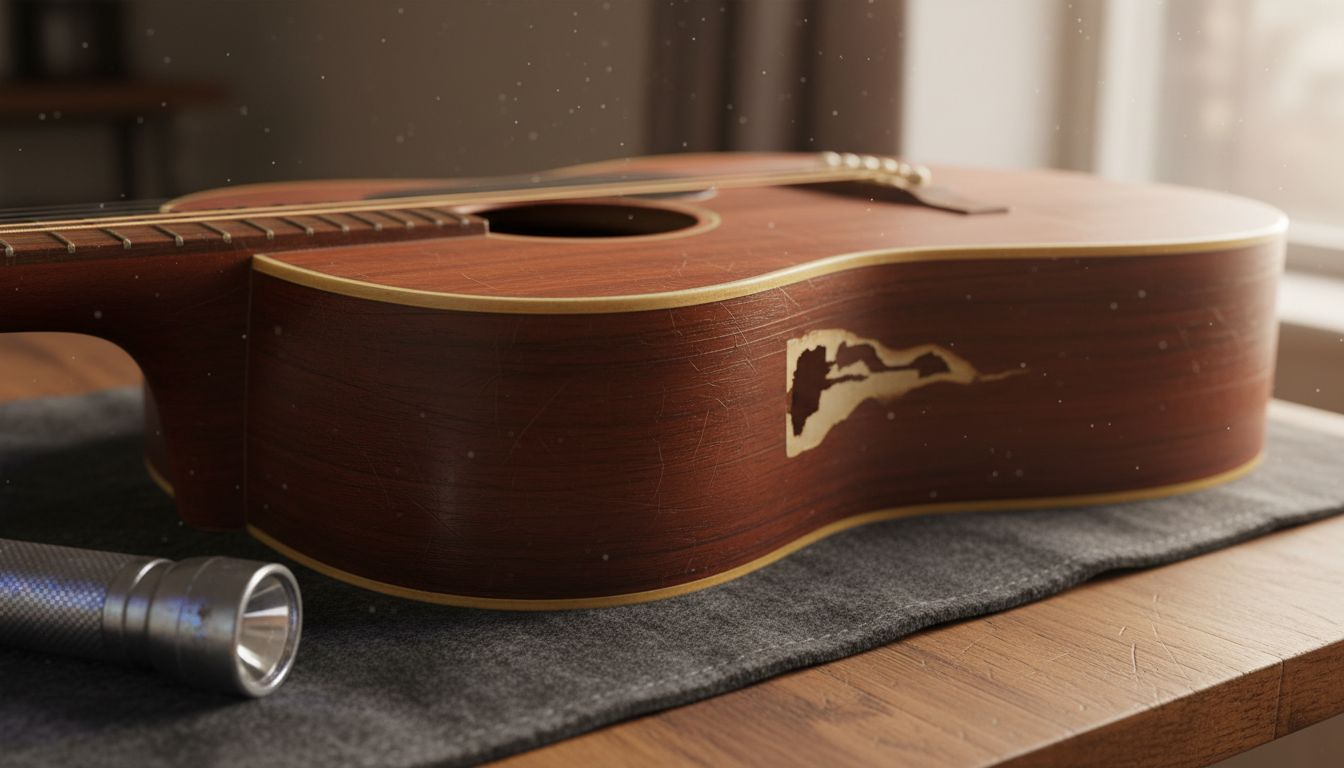
Inspect the finish carefully for authenticity clues. Varnish or shellac finishes typically indicate pre-1950s guitars, while polyurethane suggests later manufacture. Original finishes show natural wear patterns, crazing lines, and color fading consistent with age. Thick refinishes hide the instrument’s true character and reduce value significantly for collectors.
Key construction elements to examine include:
- Binding quality around the body edges and headstock
- Bracing patterns inside the body for structural integrity
- Neck joint type (dovetail, bolt-on, or set neck)
- Fret material and levelness across the fingerboard
- Hardware quality and original versus replaced components
- Label or maker’s mark inside the body for identification
Run your fingers along the neck to feel for twists or bows that suggest structural movement. Check the body for cracks around the waist, top, or back. These aren’t always deal-breakers, but they significantly impact value and playability.
Original construction details and materials tell the story of how a guitar was built and how well it has aged—knowledge that directly determines both its investment potential and musical capability.
Pro tip: Photograph any maker’s labels, serial numbers, or identifying marks from inside the sound hole with good lighting, as these details are crucial for authentication and valuation research that you’ll need later.
Step 3: Assess Playability and Sound Quality
Playability and sound quality determine whether a vintage guitar is actually worth playing or just worth displaying. This step reveals the instrument’s real-world performance and identifies any issues that affect both value and usability.
Start by checking the action, which is the height of strings above the fretboard. Use your feeler gauge to measure action at the 12th fret, comparing it to the specifications typical for that guitar’s era. Most vintage guitars perform best with action between 2.0 and 2.5 millimeters on the bass side. High action makes the guitar difficult to play, while low action causes buzzing and intonation problems.
Play the guitar across all frets and strings. Listen for clean tone without buzzing, deadened notes, or inconsistent response. Press each string firmly and listen to how the note sustains—vintage guitars should ring clearly without choking out prematurely. Pay attention to how the instrument feels under your hands, testing bends, vibrato, and fingerpicking patterns.
Key playability assessment points include:
- Neck straightness when sighting down the fretboard
- Fret condition and wear patterns indicating playing history
- String response consistency across all registers
- Tuning stability over time
- Overall comfort and balance while playing
Evaluate tone characteristics by playing open chords and individual notes. Does the guitar produce a warm, clear tone or does it sound thin and harsh? Vintage instruments often possess a complexity and responsiveness that modern guitars struggle to match. Note how the guitar responds to different playing dynamics and techniques.
Compare the guitar’s response to your expectations for its type and era. Understanding how vintage guitars differ from modern instruments helps you recognize whether sound qualities result from age-appropriate character or actual damage.
A vintage guitar that plays beautifully commands premium value because collectors and musicians understand that outstanding playability combined with historical authenticity is genuinely rare.
Pro tip: Record a short audio sample of the guitar being played, then play it back later in a different environment—this removes the initial impression bias and reveals whether the tone holds up objectively across different listening contexts.
Step 4: Verify Originality and Provenance
Originality and provenance are what separate investment-grade vintage guitars from merely old instruments. This step confirms whether the guitar is authentically original or has undergone modifications that impact value.
Start by examining all original components carefully. Check if the tuning machines, bridge, nut, and pickups (on electric guitars) match the era and style of the instrument. Replaced hardware is common, but extensive modifications significantly reduce collector value. Look for mismatched screw holes, paint overspray, or routing marks that indicate hardware swaps.
Inspect the serial number and maker’s marks inside the body. Compare these against manufacturer records to verify authenticity and determine the production year. Different brands used different numbering systems, and understanding these helps you spot counterfeit or misidentified guitars. Document everything with photographs for your records.
Originality assessment includes:
- Original finish versus refinish (original is always more valuable)
- Factory-original appointments and hardware
- Presence of all original case candy or documentation
- Evidence of restoration versus modification
- Factory labels and stamps inside the body
- Neck stamp consistency with body manufacture date
Research the guitar’s history by checking auction records, collector databases, and vintage guitar references. Understanding how to identify authentic vintage guitars helps you spot common fakes and reproductions that flood the market.
If possible, obtain documentation or provenance evidence. Receipts, letters from previous owners, or photographs showing the guitar in historical contexts add significant value. Even without formal documentation, a consistent ownership history strengthens the guitar’s credibility.
A guitar with documented provenance and original components commands premium prices because collectors trust that what they’re buying is genuinely what it claims to be.
Pro tip: Create a detailed provenance file with serial number documentation, maker’s marks, original hardware photos, and any historical records you can gather—this file becomes invaluable if you ever sell or need to authenticate the instrument professionally.
Step 5: Evaluate Investment and Performance Value
Understanding both investment potential and real-world performance helps you make informed decisions about which vintage guitars are worth acquiring. This step separates guitars with genuine appreciation potential from those that are simply old.
Start by researching comparable sales data. Check auction results, online marketplaces, and dealer pricing for similar models in comparable condition. Track price trends over the past 3-5 years to identify guitars that have appreciated consistently versus those that stagnate. Rare models from sought-after makers command premium prices, while mass-produced instruments appreciate more slowly.
Consider the rarity and desirability of the specific model. Certain years, finishes, and configurations become collectible because musicians and enthusiasts actively seek them. A 1959 Fender Stratocaster in sunburst finish represents a different investment category than a 1975 model, even though both are legitimate vintage guitars. Understanding what makes certain vintage guitars collectible helps you identify diamonds in the rough before market demand increases.
Key valuation factors to evaluate:
- Condition relative to comparable instruments
- Original components and finish integrity
- Playability and tonal characteristics
- Historical significance or artist associations
- Market demand within collector communities
- Rarity of specific model and year
Balancing investment and performance means recognizing that the best vintage guitars serve dual purposes. They appreciate financially while also performing beautifully in your hands. A guitar that plays exceptionally well attracts both investors and musicians, broadening its appeal and strengthening its value trajectory.
Assess whether this particular guitar fits your goals. Are you primarily collecting for investment, or do you want an instrument to play regularly? The answer determines whether mint condition or playable condition matters more for your decision.
The table below contrasts factors that impact a vintage guitar’s investment vs. playability value:
| Factor | Investment Value Impact | Playability Value Impact |
|---|---|---|
| Original components | Raises collector desirability | May affect stability and sound |
| Refinished body | Reduces resale potential | May not affect feel |
| Structural repairs | Lowers collector confidence | Can improve playability |
| Tonal quality | Enhances market appeal | Directly improves performance |
| Documented provenance | Increases long-term appreciation | Minimal effect on sound |
The most successful vintage guitar acquisitions combine strong investment fundamentals with genuine playability and sonic character that justify ownership beyond pure financial speculation.
Pro tip: Track your evaluation data in a spreadsheet including purchase price, condition notes, comparable sales, and projected appreciation timeline—this creates accountability and helps you identify which types of guitars consistently deliver returns in your market.
Elevate Your Vintage Guitar Experience with Expert Guidance and Curated Selection
Testing vintage guitars for quality and value requires precision and deep knowledge to avoid costly mistakes. From inspecting wood type and finish authenticity to verifying originality and assessing playability, the challenges can be overwhelming. Many enthusiasts struggle with identifying structural issues, understanding tonal characteristics, and validating provenance—critical steps that determine a guitar’s true worth and investment potential.
At Vintage Guitar World, we understand these complexities and offer a curated selection of rare and well-maintained instruments that meet the highest standards of craftsmanship and authenticity. Our expert evaluation services complement your own inspections, providing certified insights that unlock confidence in every purchase. Explore our exclusive collection and benefit from detailed product descriptions and historical context that empower you to make informed decisions.
Discover the difference precision makes in your vintage guitar journey.

Ready to enhance your collection with trusted, investment-grade guitars or find a beautiful instrument to play today Visit Vintage Guitar World to browse our premium selection and schedule a personalized evaluation. Take the next step toward owning a true vintage treasure by exploring our shop and leverage expert guidance tailored for discerning musicians and collectors. Don’t wait quality and authenticity in vintage guitars await you now.
Frequently Asked Questions
How do I check the action on a vintage guitar?
To check the action on a vintage guitar, measure the height of the strings above the fretboard at the 12th fret using a feeler gauge. Aim for an action of between 2.0 and 2.5 millimeters on the bass side for optimal playability.
What should I look for to assess a vintage guitar’s construction quality?
Evaluate the wood type, finish authenticity, and various construction details such as binding quality and neck joint type. Document any findings and compare with known standards for the guitar’s era to determine its overall craftsmanship.
How can I determine if a vintage guitar has original components?
Carefully inspect the tuning machines, bridge, nut, and pickups for signs of replacement or modification. Look for matching serial numbers or maker’s markings inside the body to confirm originality.
What factors influence the investment value of a vintage guitar?
Investment value is influenced by factors such as condition, originality of components, rarity, and historical significance. Research comparable sales and market trends to evaluate the long-term appreciation potential of the guitar.
How do I assess the sound quality of a vintage guitar?
Play the guitar across all frets and listen for clean tones without buzzing or dead spots. Evaluate how well the guitar responds to different dynamics and techniques to determine its sonic characteristics.
Why is documenting provenance important for vintage guitars?
Documenting provenance provides evidence of ownership history and original components, which can significantly enhance a guitar’s value. Create a detailed file with photographs and any historical records to support future sales or authentication efforts.