














TL;DR:
- Researching luthier backgrounds involves using census, genealogical, and regional records to establish verified identity and activity periods. Stylistic analysis helps confirm training and regional influences, especially when documentation is incomplete or uncertain. Cross-referencing multiple sources and considering historical context are essential to avoid bias and misattribution.
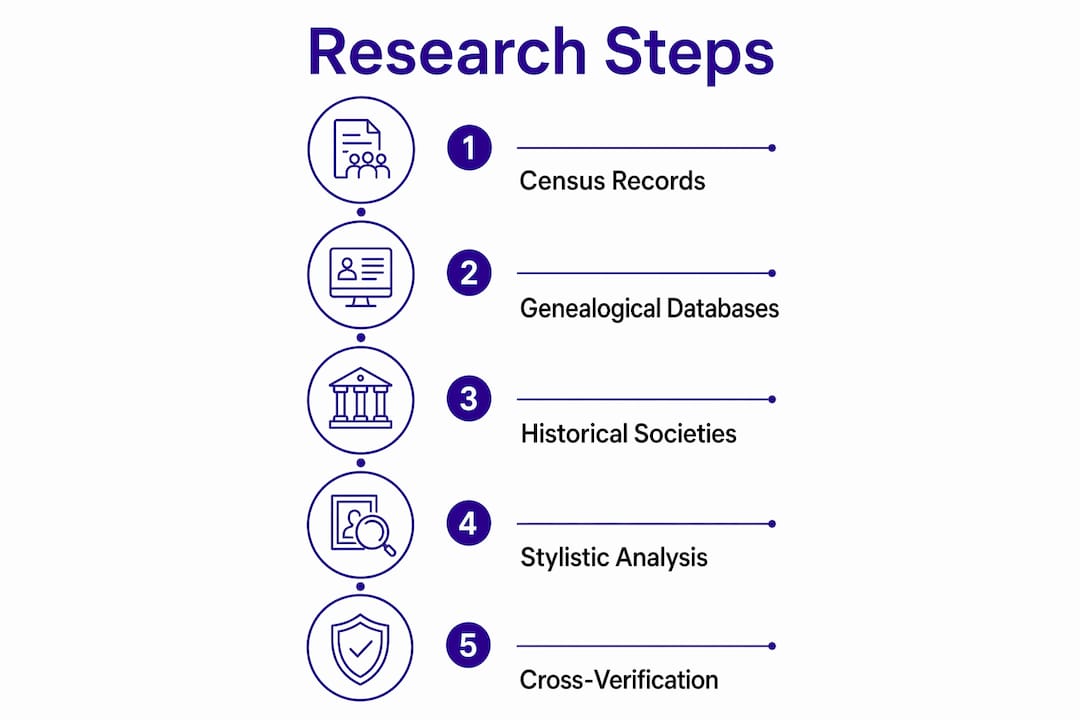
A luthier’s background is defined as the documented history of their training, workshop affiliations, regional influences, and construction methods. For guitar enthusiasts, knowing how to research luthier backgrounds separates an informed purchase from an expensive guess. The right maker’s history directly affects an instrument’s tonal quality, collector value, and authenticity. Primary sources for this research include census records, genealogical databases like FamilySearch.org and Ancestry.com, historical societies, and stylistic analysis of the instrument itself. Each method fills gaps the others leave behind.
How to research luthier backgrounds using primary records

Census records are the most reliable starting point for any luthier background check. Census returns updated every decade contain detailed occupational data that can confirm a maker’s trade, place of residence, and household context through at least the 1940s. That occupational data gives you a factual anchor before you touch any secondary source.
Genealogical platforms extend that anchor considerably. FamilySearch.org offers free access to digitized birth, death, and marriage records across dozens of countries. Ancestry.com adds municipal trades directories and immigration records that can trace a luthier’s family line across borders. Both platforms work best when you treat them as starting points, not final answers.
Complementary records fill the gaps that census data leaves open. Birth and death certificates confirm life dates, which are critical for ruling out misattributions. Municipal trades directories from the 19th and early 20th centuries often list workshop addresses and apprenticeship relationships. Local newspaper archives, accessible through platforms like Chronicling America, occasionally publish obituaries or trade notices that name a maker’s teacher or guild.
| Record type | What it reveals | Best source |
|---|---|---|
| Census records | Occupation, household, location | FamilySearch.org, Ancestry.com |
| Birth and death certificates | Life dates, family connections | National and regional archives |
| Municipal trades directories | Workshop address, apprenticeships | Local library collections |
| Newspaper archives | Obituaries, trade notices, awards | Chronicling America, local papers |
| Instrument labels | Workshop name, date, location | The instrument itself |
Pro Tip: Search FamilySearch.org before paying for Ancestry.com. FamilySearch holds millions of records at no cost, and many luthier families appear in its European and American collections.
One real limitation collectors face is incomplete digitization. Many pre-1900 records exist only on microfilm or in regional archives that require an in-person visit. Plan for that possibility before concluding that a luthier left no paper trail.
What archival and historical society sources add to finding luthier history
Digital databases cover the most common records, but contacting local historical societies yields unpublished photos, scrapbooks, and documents that never made it online. Organizations like the Norway Historical Society or the Maine Historical Society hold materials specific to their regions that no search engine indexes. A single letter or workshop photograph can reframe an entire attribution.
Unpublished materials carry a different kind of authority. Curator interviews, university theses on regional instrument making, and private family scrapbooks often contain details that published sources omit. These materials require direct outreach, but the payoff is frequently worth the effort.
Local newspapers deserve more attention than most collectors give them. A trade notice from 1887 naming a luthier’s apprentice, or a review of a regional music fair listing prize winners, can confirm workshop relationships that genealogical records only hint at. Municipal archives sometimes hold business license applications that name a maker’s specialty and years of operation.
- Contact the historical society of the city or region where the luthier worked, not just where they were born.
- Request finding aids before visiting in person. Many societies will email a list of relevant holdings.
- Ask specifically about trade guild records, music school archives, and instrument maker associations.
- Check university library special collections for regional music history theses.
- Look for exhibition catalogs from 19th and early 20th century trade fairs, where luthiers often competed for medals.
Small or older luthier workshops frequently have inaccessible or missing business records. When that happens, the instrument label becomes the primary chronological anchor. Labels are imperfect but they are often the only dated document a maker left behind.
Pro Tip: Multiple spelling variations of a luthier’s name appear across different records. Try phonetic variants, anglicized versions, and regional dialect spellings before concluding a maker is untraceable.
How does stylistic analysis help evaluate luthier qualifications?
Stylistic analysis is the method of examining physical construction features to identify a maker’s training, regional school, and period of work. Stylistic attribution examines tool marks, varnish composition, wood selection, and bracing patterns to place a maker’s work within a specific tradition. These physical markers frequently surpass incomplete genealogical data in confirming authenticity.
Tool marks reveal the specific chisels and planes a maker used. Varnish ingredients, identifiable through ultraviolet light or chemical analysis, often tie a maker to a specific regional tradition or time period. Wood selection reflects both the maker’s access to materials and their training. A luthier trained in the Viennese school used different bracing geometry than one trained in the Spanish tradition, and those differences are measurable.
When many makers share a common name, construction technique and stylistic evidence provide the strongest identification. This is especially relevant for guitar enthusiasts researching makers from Italy, Spain, or Germany, where family names repeat across generations of instrument makers. Stylistic analysis cuts through that ambiguity in ways that genealogical records cannot.
Understanding a luthier’s role in guitar history also helps contextualize their construction choices. A maker working in Barcelona in the 1890s operated within a specific set of material constraints, musical demands, and pedagogical traditions. Knowing that context makes stylistic clues more readable.
| Method | Strengths | Limitations |
|---|---|---|
| Archival research | Confirms identity, dates, and location | Records are often incomplete or inaccessible |
| Stylistic analysis | Identifies training and regional school | Requires expert examination |
| Genealogical databases | Traces family and occupational history | Coverage varies by country and period |
| Instrument labels | Provides direct maker attribution | Labels can be forged or misapplied |
Pro Tip: Examine famous craftsmanship styles before attempting stylistic attribution on your own. Knowing the visual and structural vocabulary of major regional schools makes independent analysis far more reliable.
What are the most common pitfalls in luthier qualifications research?
Confirmation bias is the single most damaging error in luthier background research. Researchers who only seek data supporting an existing story produce attributions that collapse under scrutiny. The correct approach is to build a chronological framework from verified life dates first, then test every claim against that framework.
Cross-referencing multiple independent sources is the standard for credible attribution. Combining census records, municipal documents, and newspaper archives builds a factual timeline that family lore and secondary accounts cannot provide on their own. A single source, no matter how authoritative it appears, is never sufficient.
Broader historical context shapes luthier careers in ways that pure genealogical research misses. Wars, economic depressions, regional music school closures, and trade restrictions all affected which workshops survived and which did not. A luthier who stopped producing instruments in 1914 may have been drafted, not retired. That distinction matters for dating and attribution.
Family stories carry emotional weight but factual risk. Oral histories compress timelines, confuse generations, and sometimes invent connections to famous makers. Treat family accounts as leads to investigate, not facts to publish.
Verification steps for any luthier background check:
- Establish confirmed life dates from primary records before making any attribution.
- Identify the maker’s region and period of activity using census and municipal records.
- Cross-reference at least three independent primary sources for any major claim.
- Apply stylistic analysis to confirm or challenge archival findings.
- Account for historical events that may have interrupted the maker’s career.
- Document every source with its location, date accessed, and record type.
“The most dangerous document in luthier research is the one that confirms exactly what you hoped to find. Treat convenient evidence with the most skepticism, not the least.”
Labeling inconsistencies add another layer of complexity. Makers sometimes used multiple label formats across their careers. Dealers occasionally relabeled instruments to increase their market value. A label that matches a known maker’s name is a starting point for investigation, not a conclusion.
Key Takeaways
Researching a luthier’s background requires combining census records, genealogical databases, historical society archives, and stylistic analysis to build a credible, cross-referenced profile of the maker’s identity and craftsmanship.
| Point | Details |
|---|---|
| Start with census records | Census data confirms occupation and location through at least the 1940s. |
| Use genealogical databases | FamilySearch.org and Ancestry.com trace family history and workshop affiliations across borders. |
| Contact historical societies | Local organizations hold unpublished photos and documents unavailable through digital searches. |
| Apply stylistic analysis | Tool marks, varnish, and bracing patterns identify a maker’s training when records fall short. |
| Avoid confirmation bias | Build a chronological framework from verified dates and cross-reference at least three independent sources. |
What years of research have taught me about evaluating luthiers
The most valuable lesson I have learned working with vintage and handcrafted instruments is that no single method tells the whole story. Archival research gives you a skeleton. Stylistic analysis puts flesh on the bones. Neither works well without the other.
I have seen collectors dismiss an instrument because the maker’s name appeared in no database, only to discover later that the luthier worked under a workshop name rather than their own. I have also seen the reverse: a beautifully documented maker whose instruments showed construction quality inconsistent with their supposed training. The documents said one thing. The guitar said another. The guitar was right.
Patience is not a soft skill in this work. It is a research method. The most significant discoveries I have made came from following a lead that looked irrelevant at first. A trade fair catalog from 1903. A single line in a regional newspaper. A spelling variant that unlocked three generations of records. Serendipity rewards the researcher who keeps looking.
My advice to any collector is this: trust the instrument as much as you trust the paper. A guitar’s luthier craftsmanship leaves evidence that survives long after records are lost. Learn to read that evidence, and you will make better decisions than any database alone can support.
— Vintage
Guitars with verified provenance at Vintage-guitar-world
Knowing a maker’s history changes how you hear an instrument. At Vintage-guitar-world, every guitar in the collection comes with documented context about its origin, construction, and maker.

The team at Vintage-guitar-world specializes in curating classical, flamenco, acoustic, and electric guitars whose provenance has been carefully evaluated. Whether you are building a collection or searching for one exceptional instrument, the catalog covers vintage guitar features and investment value in depth. Each listing reflects the same research discipline this article describes. Instruments with well-researched backgrounds hold their value. They also play better, because you know exactly what you are holding.
FAQ
What records are most useful for a luthier background check?
Census records, birth and death certificates, and municipal trades directories are the most reliable primary sources. Cross-referencing these with newspaper archives and instrument labels produces the most credible attribution.
How do I find luthier history when records are missing?
Contact the historical society of the region where the maker worked. Local organizations often hold unpublished photos, scrapbooks, and documents that never appear in digital archives.
Can stylistic analysis replace genealogical research?
Stylistic analysis does not replace archival research, but it often surpasses it when records are incomplete. Tool marks, varnish composition, and bracing patterns can confirm a maker’s training and regional school with strong reliability.
What is confirmation bias in luthier research?
Confirmation bias occurs when a researcher only seeks evidence that supports an existing attribution. Experts recommend building a chronological framework from verified life dates first, then testing every claim against that framework.
How does historical context affect luthier background research?
Wars, economic shifts, and regional music school closures directly shaped which workshops survived and how long makers were active. Accounting for those events prevents misreading gaps in a maker’s production record as evidence of poor craftsmanship or misattribution.