












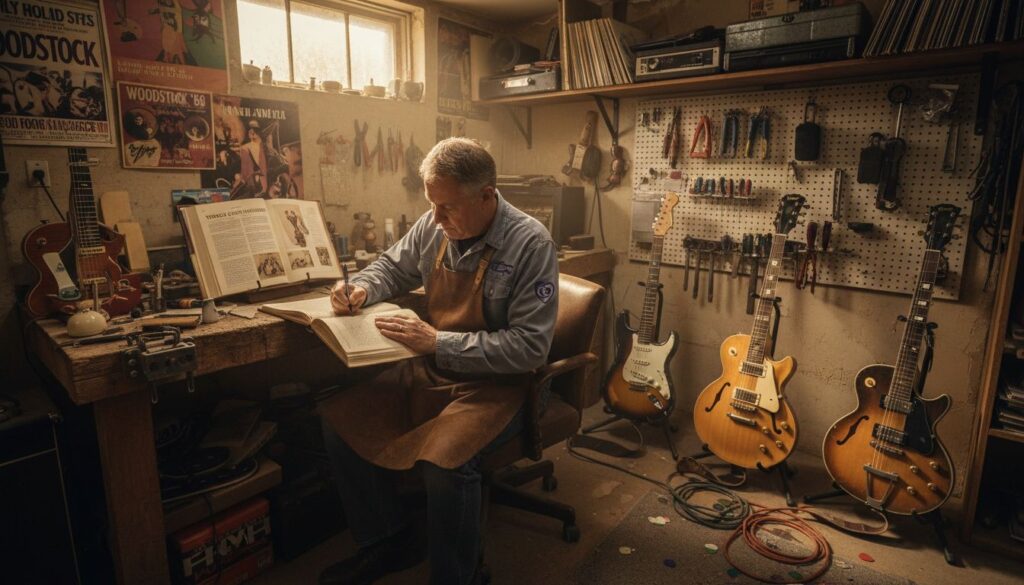

Finding a truly rare vintage guitar can feel like searching for treasure in New York or Tokyo. For collectors and professional musicians, especially those drawn to acoustic and classical instruments, the line between investment and performance quality often depends on careful research and documentation. By focusing on era-specific construction methods, hardware, and unique identifying details, you lay a foundation for authenticating high-value finds and avoiding costly mistakes in the global vintage market.
Table of Contents
- Step 1: Prepare By Gathering Key Guitar Details
- Step 2: Examine Brands, Serial Numbers, And Markings
- Step 3: Inspect Construction, Materials, And Features
- Step 4: Verify Authenticity With Trusted Resources
- Step 5: Assess Condition And Market Value
Quick Summary
| Key Insight | Explanation |
|---|---|
| 1. Document Essential Guitar Details | Record serial numbers, measurements, and photographs to aid in authentication. Accurate documentation is critical for future reference. |
| 2. Investigate Brand Markings Thoroughly | Examine serial numbers and distinctive markings to determine authenticity. Cross-reference findings with reputable databases and resources. |
| 3. Assess Construction and Materials | Analyze the guitar’s structure, wood types, and hardware to reveal its historical authenticity. These details greatly influence overall value. |
| 4. Validate Authenticity with Experts | Use trusted resources and expert opinions to verify the guitar’s authenticity. Engage with vintage guitar communities and databases for comprehensive validation. |
| 5. Conduct a Detailed Condition Assessment | Evaluate the physical state of the guitar and document any damage or modifications. This assessment impacts its market value significantly. |
Step 1: Prepare by Gathering Key Guitar Details
Identifying a vintage guitar begins with meticulous preparation and strategic information gathering. Your goal in this initial stage is to collect comprehensive details that will help authenticate and evaluate the instrument accurately.
Start by assembling a detailed record of your guitar’s physical characteristics. Carefully document the instrument’s serial number typically found on the headstock or neck plate. Note the guitar’s exact measurements including total length, body width, neck width, and scale length. Take high resolution photographs from multiple angles capturing the front, back, sides, headstock, and any unique markings or potential modifications. Guitar care details become crucial during this documentation process.
Next, research the guitar’s potential origin and manufacturing history. Look for maker’s marks, stamp codes, or distinctive construction features that can indicate its specific period of manufacture. Examine wood types, hardware configurations, and finish characteristics which can provide critical clues about its provenance. Pay special attention to original components versus later replacements, as these details significantly impact a vintage guitar’s authenticity and market value.
Pro Tip: Keep your documentation organized in a dedicated digital or physical folder for easy reference during future authentication efforts.
Step 2: Examine Brands, Serial Numbers, and Markings
Authentic vintage guitars require a forensic approach when examining brand details, serial numbers, and distinctive markings. Your mission is to decode the hidden stories embedded in each unique instrument through careful, systematic investigation.
Begin by locating and carefully documenting the serial number typically found on the headstock, neck plate, or interior body label. Each manufacturer has distinctive numbering systems that can pinpoint the exact year and production location. Some brands like Gibson and Fender have well documented serial number databases that can help find your dream guitar with precise historical context. Pay close attention to font styles, stamping techniques, and placement of these serial numbers, as counterfeit instruments often miss these subtle manufacturing nuances.
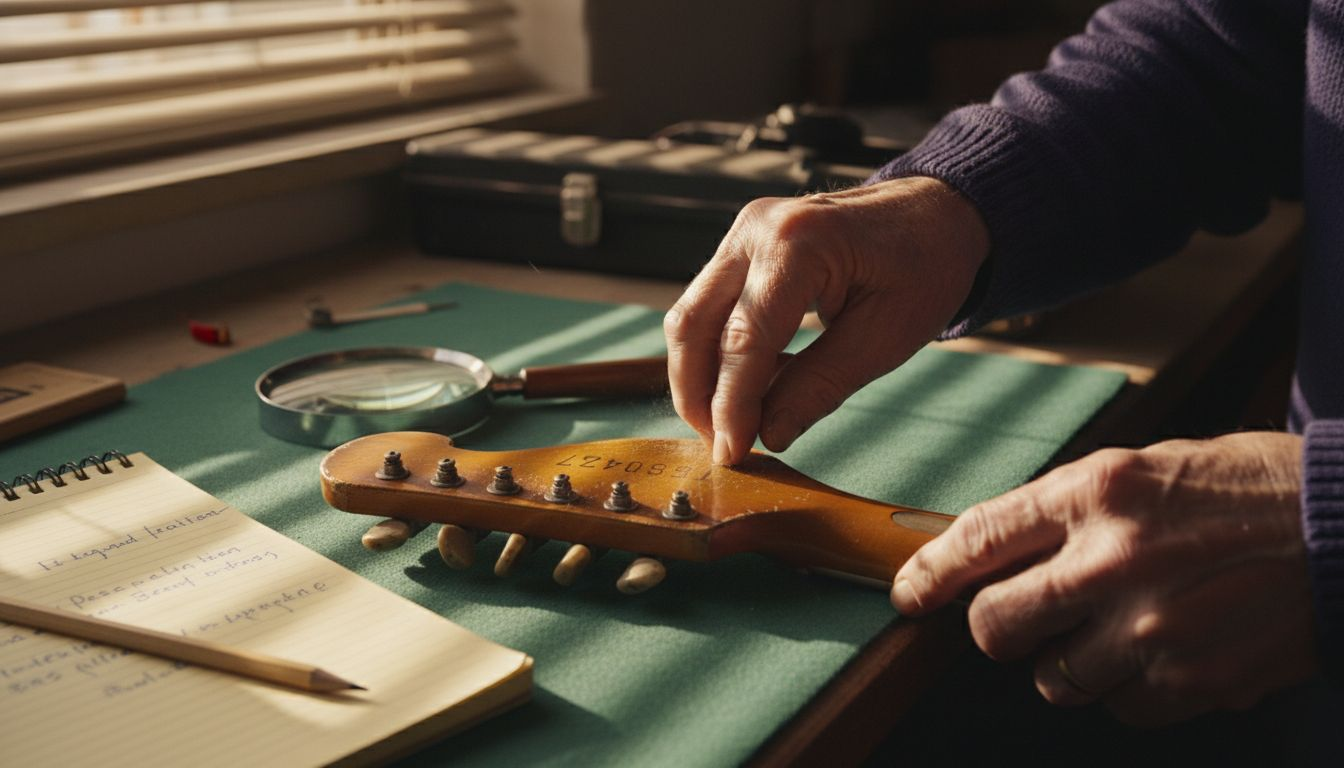
Next, scrutinize the guitar’s hardware and construction markers. Look for original manufacturer stamps, ink stamps, carved signatures, or unique inlay patterns that validate authenticity. Examine the wood grain, finish quality, and hardware configurations characteristic of specific production eras. Cross reference your findings with reputable vintage guitar reference guides and online authentication resources to confirm the instrument’s legitimate provenance.
Pro Tip: Photograph serial numbers and distinctive markings under bright, even lighting to capture intricate details that might help future authentication efforts.
Step 3: Inspect Construction, Materials, and Features
Unveiling a vintage guitar’s true identity demands a meticulous examination of its construction, materials, and distinctive features. Your investigative journey will reveal critical insights about the instrument’s historical authenticity and craftsmanship.
Start by carefully analyzing the guitar’s fundamental structural elements. Vintage guitar construction methods provide crucial indicators of its era and origin. Examine the neck joint construction typically transitioning from set necks in early models to bolt on designs in later periods. Pay special attention to wood types typically used during specific manufacturing decades mahogany, maple, rosewood and their unique grain patterns and finishes. For electric guitars, scrutinize pickup configurations, wiring harnesses, and electronic components that can pinpoint precise production years.
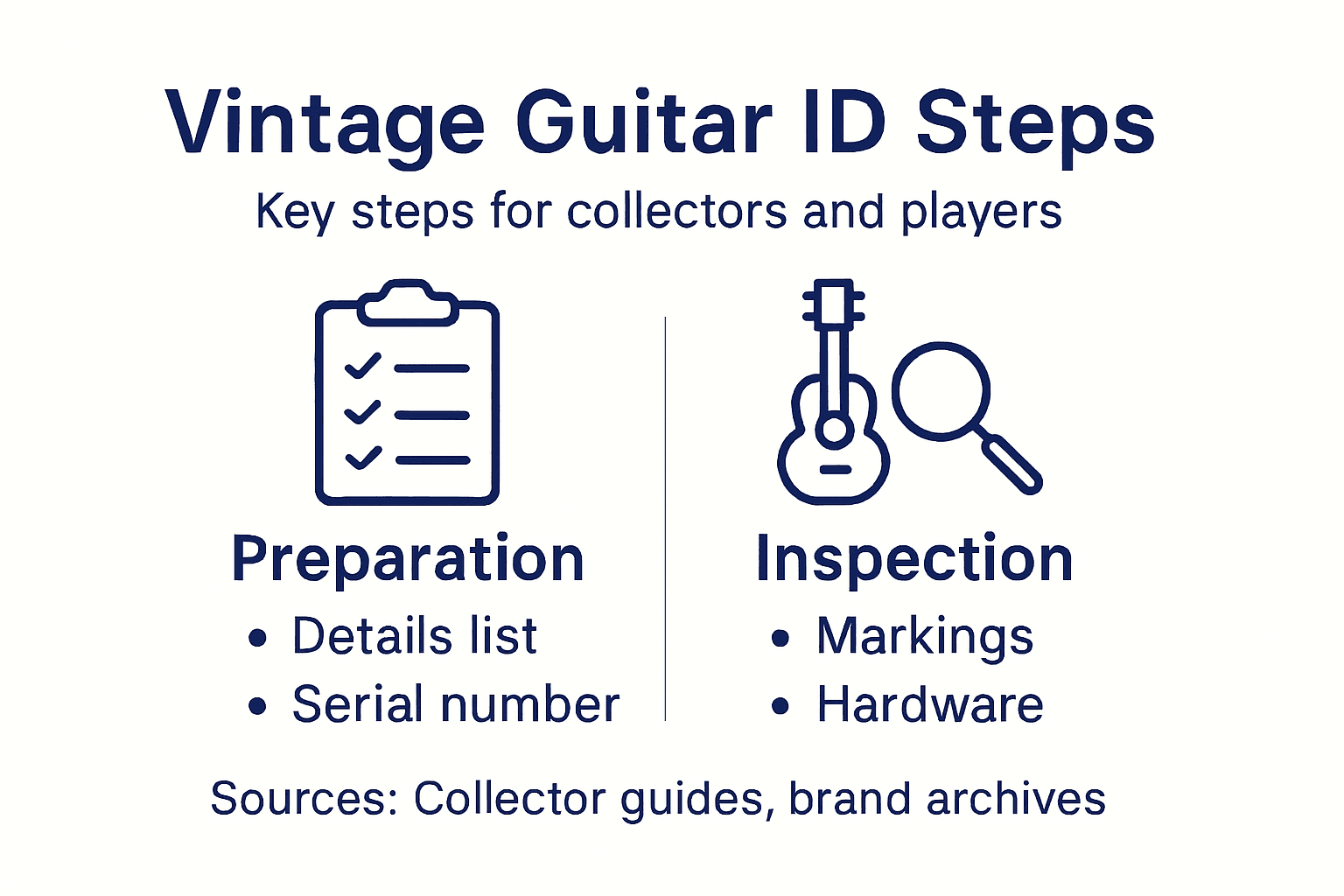
Beyond structural analysis, investigate the guitar’s hardware and finish details. Look for original tuning machines, bridge types, and control knobs that match the instrument’s purported production period. Authentic vintage guitars often showcase subtle manufacturing nuances like specific binding styles, inlay techniques, and finish applications that modern reproductions struggle to replicate accurately. Carefully document these observations, comparing them against authoritative vintage guitar reference materials to build a comprehensive authentication profile.
Pro Tip: Invest in a high powered magnifying glass to examine microscopic construction details that can reveal an instruments true provenance.
Here’s how major vintage guitar elements impact authentication and value:
| Aspect Analyzed | Impact on Authentication | Impact on Market Value |
|---|---|---|
| Serial Number | Confirms production year and location | Higher accuracy increases buyer confidence |
| Hardware | Validates era and originality | Original hardware boosts collectibility |
| Finish Details | Reveals manufacturing techniques | Original finish increases desirability |
| Wood Type | Indicates period authenticity | Rare woods enhance instrument value |
| Modifications | Signals potential authenticity concerns | Non-original parts often reduce value |
Step 4: Verify Authenticity with Trusted Resources
Authenticity verification requires a comprehensive approach that combines your initial research with expert validation from specialized vintage guitar resources. Your goal is to transform your observations into a reliable authentication strategy that withstands professional scrutiny.
Consult multiple authoritative sources to cross reference your findings. Find your dream guitar experts recommend connecting with specialized vintage guitar forums, authenticated collector databases, and manufacturer archives. Research specific brand registries that maintain detailed production records for different eras. Contact manufacturer heritage departments or certified authentication services who can provide definitive insights about your instrument’s historical background. Professional appraisers and vintage guitar museums often maintain comprehensive documentation that can validate subtle manufacturing details specific to particular production periods.
Utilize digital and print reference materials strategically. Invest in comprehensive vintage guitar reference guides that document manufacturing techniques, serial number databases, and historical production variations. Online resources like specialized collector websites, vintage guitar museums digital archives, and expert blogs can provide additional verification layers. Compare your instrument against multiple reference points to build a robust authentication profile that accounts for potential variations and manufacturing nuances across different production years.
Pro Tip: Develop a network of vintage guitar experts who can provide personalized insights and professional verification when standard resources prove inconclusive.
The following table summarizes trusted resources for authenticating vintage guitars:
| Resource Type | Strengths | Typical Use Case |
|---|---|---|
| Manufacturer Archives | Detailed production info | Serial number validation |
| Vintage Guitar Forums | Collective expertise | Identifying rare features |
| Collector Databases | Previous sales records | Market value comparison |
| Certified Appraisers | Professional opinion | Insurance or sale appraisals |
| Museum Collections | Reference for construction details | Cross-checking authenticity |
Step 5: Assess Condition and Market Value
Evaluating a vintage guitar requires a nuanced approach that combines detailed condition assessment with sophisticated market analysis. Your objective is to create a comprehensive valuation profile that captures both the instrument’s physical integrity and its potential investment potential.
Begin with a meticulous condition assessment that examines every aspect of the guitar’s physical state. Find your dream guitar collectors understand that condition dramatically impacts market value. Systematically document any wear patterns, structural damages, replaced components, and original finish integrity. Look for signs of professional restoration, amateur repairs, or modifications that could positively or negatively influence the instrument’s collectible status. Pay special attention to areas like the neck joint, fretboard, bridge, and electronics that often reveal the most telling signs of wear and potential structural compromise.
Translate your condition assessment into a precise market valuation strategy. Research recent sales of comparable vintage guitars through specialized auction platforms, collector databases, and professional appraisal resources. Consider factors beyond physical condition such as rarity, historical significance, original ownership history, and current market trends in vintage guitar collecting. Consult multiple pricing guides and engage with professional vintage guitar appraisers who can provide nuanced insights into your instrument’s true market potential. Remember that valuation is both an art and a science requiring deep understanding of collector markets and historical context.
Pro Tip: Document your guitar’s condition through high resolution photographs from multiple angles to create a comprehensive visual record for future valuation and potential sale.
Discover Authentic Vintage Guitars with Confidence
Identifying vintage guitars can be a complex challenge filled with uncertainties about authenticity, condition, and true market value. You want to avoid costly mistakes by verifying serial numbers, construction details, and historical provenance just like the steps outlined in this article. At Vintage Guitar World, we understand these challenges and provide you with expertly evaluated, rare guitars that match your passion for craftsmanship and heritage.

Explore our curated collection of vintage, handcrafted, and restored guitars online. Each instrument includes detailed descriptions and historical context to support your journey in collecting or playing. Don’t let the uncertainty of vintage guitar authentication hold you back—take advantage of our specialized services like professional valuation, certification, and guitar testing appointments today. Visit Vintage Guitar World now, and start owning your dream guitar with confidence. Learn more about how to find your dream guitar and master guitar care details to protect your investment.
Frequently Asked Questions
How do I document the physical details of my vintage guitar?
To document your vintage guitar’s physical details, start by recording the serial number, measurements, and taking high-resolution photographs from multiple angles. Ensure you capture clear images of the front, back, sides, and headstock to aid in future authentication efforts.
What markings should I look for to verify my vintage guitar’s authenticity?
When verifying your vintage guitar’s authenticity, closely examine the serial number, brand details, and any distinctive markings found on the instrument. Look for original manufacturer stamps and unique inlay patterns, as these can provide crucial insights into the guitar’s provenance.
How can I assess the construction and materials of my vintage guitar?
Assess the construction and materials by analyzing the neck joint, wood types, and hardware components used in the guitar. Document your findings and compare them to authoritative references to determine if they match the manufacturing characteristics of the era.
What resources can I use for verifying my vintage guitar’s authenticity?
You can use manufacturer archives, specialized vintage guitar forums, and collector databases to verify your vintage guitar’s authenticity. Cross-reference your findings with multiple sources to build a robust authentication profile that supports your claims.
How should I evaluate the condition of my vintage guitar?
To evaluate the condition of your vintage guitar, carefully examine it for wear patterns, structural damages, and signs of replacements or repairs. Document your observations in detail, as a thorough condition assessment is vital for determining its market value.
What factors impact the market value of my vintage guitar?
The market value of your vintage guitar is influenced by its condition, rarity, historical significance, and original components. Research comparable sales and consult with experts to understand how these factors can affect your guitar’s potential value.