












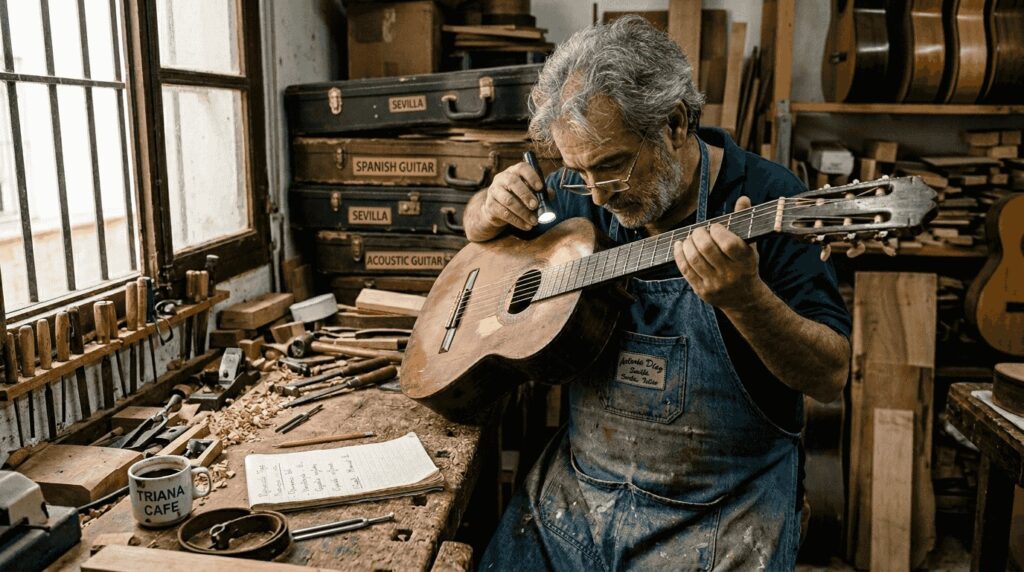

Choosing a vintage flamenco guitar demands more than just an eye for beauty. Serious musicians face the challenge of distinguishing authentic instruments from classical guitars marketed as flamenco models. The difference lies in subtle construction details, wood selection, and provenance that directly impact tone and playability. This guide walks you through essential criteria for selecting a high-quality vintage flamenco guitar, from understanding specialized construction to verifying maker authenticity. Whether you’re seeking the percussive snap of cypress or the historical legacy of renowned Spanish luthiers, these expert insights will help you make an informed decision that honors both craftsmanship and performance.
Table of Contents
- Understanding Flamenco Guitar Construction And Sound
- Choosing The Right Woods For Authentic Vintage Flamenco Tone
- Recognizing Craftsmanship And Provenance In Vintage Flamenco Guitars
- Practical Steps And Checklist For Selecting Your Vintage Flamenco Guitar
- Explore Premium Vintage Flamenco Guitars From Vintage Guitar World
- How To Choose A Vintage Flamenco Guitar – Frequently Asked Questions
Key takeaways
| Point | Details |
|---|---|
| Specialized construction | Flamenco guitars feature thinner tops, shallower bodies, and narrow string spacing for rapid techniques and percussive attack. |
| Wood selection matters | Traditional cypress or plane tree back and sides paired with spruce tops create the bright, responsive flamenco tone. |
| Provenance verification | Authentic vintage guitars display specific labels, maker signatures, and historical workshop addresses that confirm legitimacy. |
| Bracing patterns | Fan bracing with 7–9 struts supports tonal balance and the quick decay characteristic of flamenco sound. |
| Expert inspection | Testing tap-tone responsiveness and examining wood condition reveals true flamenco qualities before purchase. |
Understanding flamenco guitar construction and sound
Flamenco guitars possess distinct structural features that separate them from classical models, directly influencing tone and responsiveness. The construction prioritizes percussive attack and quick note decay, essential for flamenco’s rhythmic complexity. Understanding these differences helps you identify authentic vintage instruments and avoid classical guitars misrepresented as flamenco models.
The traditional fan bracing pattern uses 7–9 struts radiating from the sound hole, creating tonal balance and supporting the percussive snap flamenco demands. This bracing design allows the thinner top to vibrate freely while maintaining structural integrity. The pattern differs from classical guitar bracing, which often uses more struts for sustained resonance rather than quick decay.
String spacing represents another critical distinction. Flamenco guitars typically feature narrow spacing of 50–52 mm at the nut, facilitating the rapid fingerstyle techniques and rasgueado strumming patterns fundamental to flamenco performance. Classical guitars use wider spacing around 52–54 mm, optimized for fingerpicking clarity rather than speed. This seemingly small difference dramatically affects playability and technique execution.
Thinner tops and shallower bodies create the tap-tone responsiveness that defines flamenco sound. The reduced mass allows faster vibration and quicker sound projection, producing the characteristic bright attack. When you tap the top near the bridge, an authentic flamenco guitar responds with immediate, clear resonance that decays quickly. Our flamenco guitar guide explores these acoustic properties in greater detail.
Pro Tip: Before purchasing, tap the guitar top lightly near the bridge and listen for immediate, bright response with quick decay. Sustained resonance suggests classical construction rather than true flamenco design.
| Feature | Flamenco Guitar | Classical Guitar |
|---|---|---|
| String Spacing | 50–52 mm | 52–54 mm |
| Top Thickness | Thinner (2.0–2.5 mm) | Thicker (2.5–3.0 mm) |
| Body Depth | Shallower (95–100 mm) | Deeper (100–105 mm) |
| Bracing Struts | 7–9 fan struts | 7–11 struts |
| Tonal Character | Bright, percussive, quick decay | Warm, sustained, complex overtones |
Choosing the right woods for authentic vintage flamenco tone
Wood selection profoundly influences flamenco guitar tone, with traditional materials producing the bright, percussive sound that defines the genre. Vintage instruments crafted from authentic Spanish woods offer tonal qualities impossible to replicate with modern substitutes. Understanding these materials helps you evaluate the sonic potential and historical value of vintage guitars.
Traditional flamenco guitars use cypress or plane tree for back and sides, paired with European spruce tops. Cypress delivers the quintessential flamenco sound with bright trebles, focused midrange, and minimal sustain. The wood’s density and cellular structure create immediate attack and rapid decay, perfect for percussive golpe techniques. Plane tree offers similar characteristics with slightly warmer midrange, though it’s less common in vintage instruments.
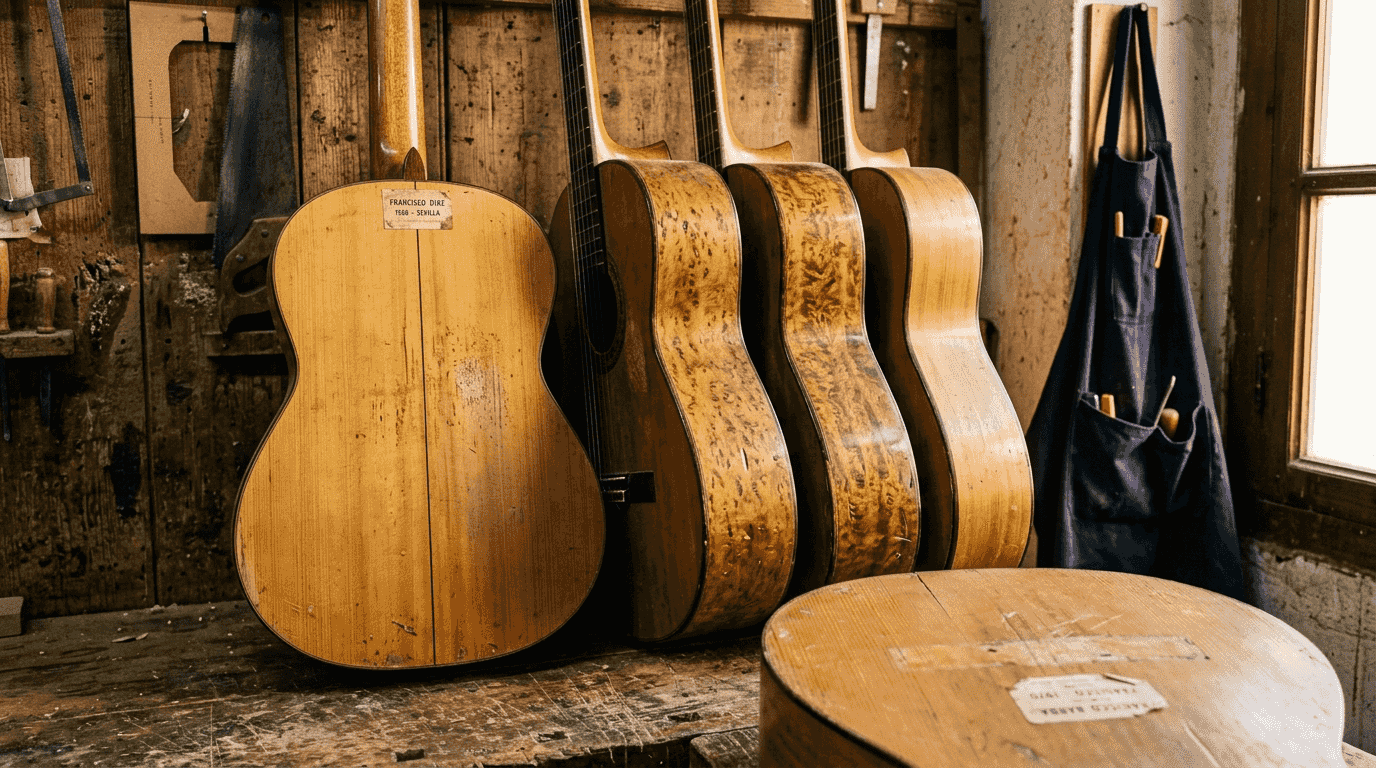
Spruce tops provide the responsiveness and projection flamenco demands. European spruce, favored by Spanish luthiers, offers tight grain patterns and stiffness that support quick vibration and clear articulation. The wood choice significantly impacts the guitar’s ability to produce the characteristic snap and immediate response. Aged spruce in vintage guitars often develops enhanced tonal complexity while maintaining the brightness essential for flamenco.
Well-preserved authentic wood in vintage guitars represents both sonic and investment value. Decades of vibration and environmental exposure can improve tonal response, a phenomenon called “opening up.” However, improper storage or climate damage can compromise structural integrity and sound quality. Inspect for cracks, warping, or finish deterioration that might indicate environmental stress.
Pro Tip: Examine the wood grain closely under good lighting. Authentic cypress shows distinctive figure patterns and color variation, while plane tree displays straighter grain with subtle flecking. Inconsistent grain or uniform coloring may indicate modern laminates or non-traditional woods.
- Cypress back and sides: Bright, percussive tone with quick decay and minimal sustain, ideal for traditional flamenco techniques
- Plane tree alternatives: Slightly warmer midrange than cypress while maintaining flamenco brightness and responsiveness
- European spruce tops: Tight grain provides stiffness and quick response, aging improves tonal complexity over decades
- Wood aging characteristics: Vintage instruments often develop enhanced projection and tonal separation as wood cells stabilize
- Environmental impact: Proper storage preserves wood integrity; climate damage appears as cracks, warping, or finish checking
For more guidance on wood evaluation, consult our flamenco guitar checklist covering inspection techniques. Understanding traditional wood selection principles helps you recognize authentic materials and avoid modern substitutes that compromise flamenco tone.
Recognizing craftsmanship and provenance in vintage flamenco guitars
Verifying authenticity separates valuable vintage instruments from questionable reproductions or misattributed guitars. Provenance documentation and maker signatures provide the historical context that confirms legitimacy and supports valuation. Understanding the lineage of renowned Spanish luthiers helps you recognize genuine craftsmanship.
Vintage flamenco guitars often display labels including ‘Viuda de Manuel Ramírez’ with individual craftsman initials, acknowledging the workshop legacy while identifying the specific builder. After Manuel Ramírez’s death in 1916, his widow continued the workshop, employing master craftsmen who later established their own renowned shops. These labels represent a crucial transition period in Spanish guitar making, with initials like D.E. (Domingo Esteso), S.H. (Santos Hernández), and M.B. (Modesto Borreguero) marking instruments of exceptional quality.
“The transition from apprentice to independent master luthier appears directly on guitar labels, where craftsmen acknowledged their training under Ramírez while establishing individual reputations that would define 20th-century Spanish guitar making.”
Domingo Esteso, Santos Hernández, and Modesto Borreguero established independent workshops in the early 20th century, creating instruments now considered among the finest vintage flamenco guitars. Esteso opened his shop on Gravina Street in Madrid around 1915, Hernández established his workshop on Atocha Street in 1924, and Borreguero worked independently from 1920. These addresses appear on labels and provide authentication markers for serious collectors.
Verifying provenance requires systematic examination of multiple authentication elements:
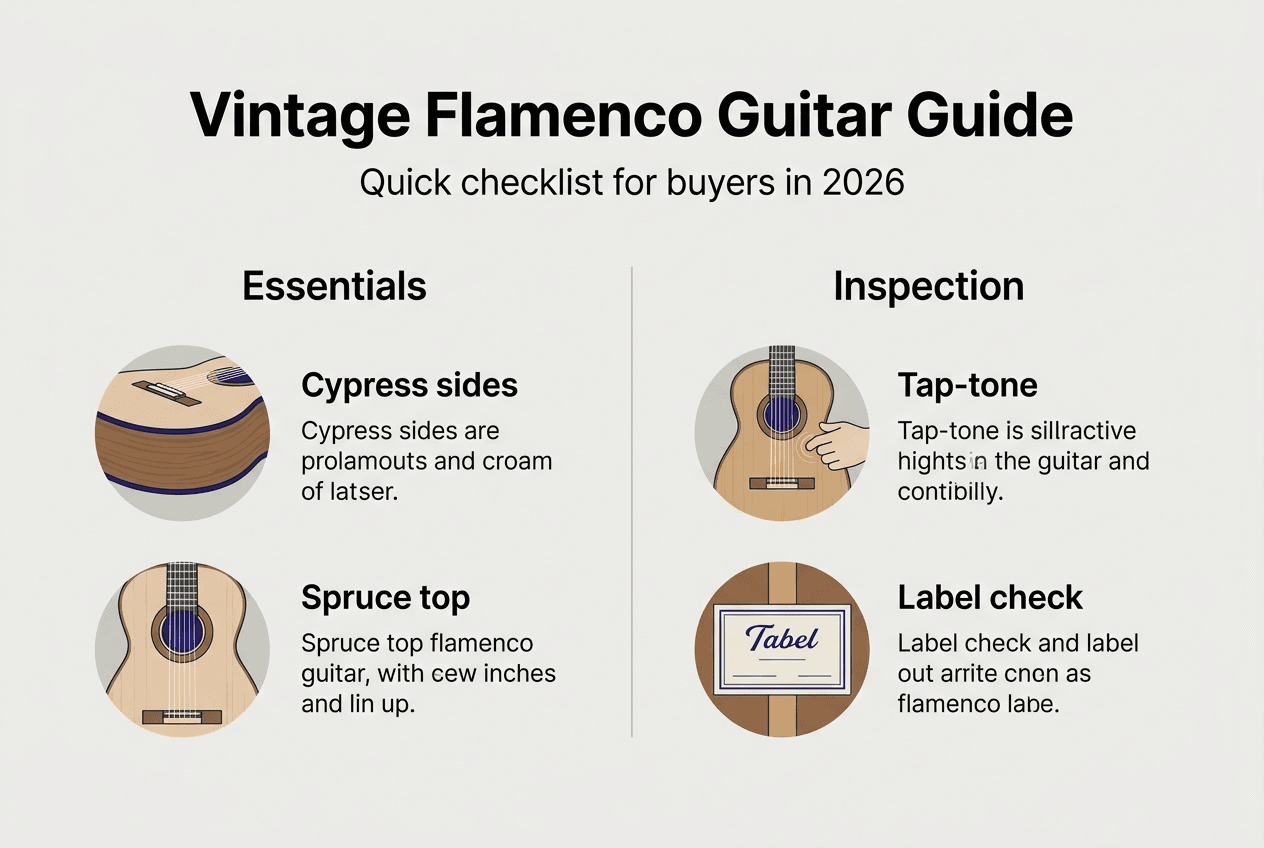
- Examine internal labels for maker name, workshop address, and construction date, comparing against known historical records and label variations.
- Identify craftsman initials or signatures, particularly on guitars from transitional periods when makers worked under established workshops before independence.
- Research workshop addresses against historical documentation, as luthiers often moved shops, providing dating clues through address changes.
- Inspect construction techniques characteristic of specific makers, including bracing patterns, joinery methods, and decorative elements unique to particular workshops.
- Verify wood selection and aging patterns consistent with the claimed construction period, as modern reproductions often use different materials or artificial aging.
- Consult expert references and authentication guides, particularly for high-value instruments where professional appraisal justifies the investment.
- Document provenance chain through previous owners, sales records, or certificates of authenticity that establish continuous ownership history.
Our authenticity checking guide provides detailed techniques for examining labels, construction details, and historical markers. Professional authentication becomes essential for instruments attributed to renowned makers, where market value depends heavily on confirmed provenance.
Practical steps and checklist for selecting your vintage flamenco guitar
Systematic preparation and thorough inspection protect your investment and ensure you acquire an authentic instrument matching your performance needs. This checklist consolidates essential evaluation steps, helping you navigate the vintage market with confidence and avoid common pitfalls that trap inexperienced buyers.
Before viewing instruments, prepare through targeted research:
- Research target makers and historical periods, focusing on luthiers known for flamenco guitars and understanding their characteristic construction methods and tonal qualities.
- Study wood identification techniques to recognize authentic cypress, plane tree, and European spruce, distinguishing them from modern substitutes or laminate construction.
- Review provenance markers including typical label formats, workshop addresses, and signature styles for makers you’re considering, establishing baseline authentication knowledge.
- Set budget parameters accounting for instrument cost, potential restoration needs, and professional authentication services if purchasing high-value guitars.
- Identify performance priorities whether seeking traditional blanca construction for bright attack or negra models with rosewood for slightly warmer tone.
During physical inspection, systematically evaluate construction and condition:
- Test bracing response by tapping the top near the bridge, listening for immediate bright attack with quick decay characteristic of proper flamenco construction.
- Measure string spacing at the nut, confirming the 50–52 mm range that facilitates rapid flamenco techniques rather than classical guitar spacing.
- Examine wood condition for cracks, warping, or finish deterioration, paying particular attention to the top around the bridge where string tension creates stress.
- Verify label authenticity by comparing internal labels against documented examples, noting paper quality, typography, and information consistency with claimed period.
- Play test under supervision if possible, evaluating tone, projection, and playability across the fingerboard, particularly in upper positions where vintage guitars sometimes show intonation issues.
Pro Tip: Always arrange to test vintage guitars with an experienced flamenco player or knowledgeable dealer present. Their expertise helps identify subtle construction issues or tonal characteristics you might miss, protecting you from costly mistakes.
Avoid classical guitars marketed as flamenco models by confirming thinner tops, shallower bodies, and the specific responsiveness that defines authentic flamenco construction. Many vintage classical guitars get misrepresented due to similar appearance, but the tonal differences become immediately apparent when played.
| Feature | Authentic Flamenco | Classical Lookalike |
|---|---|---|
| Tap-tone response | Immediate bright attack, quick decay | Sustained resonance, complex overtones |
| Body depth | Shallower (95–100 mm) | Deeper (100–105 mm) |
| String spacing | Narrow (50–52 mm) | Wide (52–54 mm) |
| Top thickness | Thinner for percussion | Thicker for sustain |
| Back/sides wood | Cypress or plane tree | Often rosewood or mahogany |
| Playing feel | Facilitates rapid techniques | Optimized for fingerpicking clarity |
Common pitfalls include purchasing instruments with hidden structural damage, overpaying for misattributed guitars, or selecting models unsuited to your playing style. Our flamenco guitar checklist provides expanded guidance on inspection techniques and red flags that indicate problems.
Consider professional consultation for high-value purchases, particularly instruments attributed to renowned makers where authentication directly impacts market value. Investment in expert appraisal often pays for itself by preventing costly authentication mistakes or revealing restoration needs that affect pricing negotiations.
Explore premium vintage flamenco guitars from Vintage Guitar World
Now that you understand the essential criteria for selecting authentic vintage flamenco guitars, you’re ready to explore curated collections from trusted specialists. Vintage Guitar World offers carefully evaluated instruments with documented provenance, expert restoration, and detailed historical context. Each guitar undergoes thorough authentication and condition assessment, providing confidence in your investment.

Our specialists understand the nuances that distinguish exceptional flamenco guitars from ordinary instruments. Discover why we love vintage guitars and how decades of craftsmanship evolution created the tonal characteristics modern players seek. Browse authenticated instruments in our vintage guitar shop, where detailed descriptions and expert guidance support informed decisions. Use our vintage guitar buying checklist to systematically evaluate options and connect with specialists who share your passion for authentic Spanish craftsmanship.
How to choose a vintage flamenco guitar – frequently asked questions
What distinguishes a flamenco guitar from a classical guitar?
Flamenco guitars feature thinner tops, shallower bodies, and narrower string spacing designed for percussive attack and rapid techniques. Classical guitars prioritize sustained resonance with thicker construction and wider spacing. The tonal difference is immediate, with flamenco producing bright, quick-decay sound versus classical’s warm sustain.
How can I verify the authenticity of a vintage flamenco guitar?
Examine internal labels for maker signatures, workshop addresses, and construction dates, comparing against documented historical records. Inspect construction techniques, wood selection, and aging patterns consistent with the claimed period. Professional authentication provides additional confidence for high-value instruments where provenance directly impacts market value.
Why is wood choice critical in vintage flamenco guitars?
Traditional cypress or plane tree back and sides create the bright, percussive tone fundamental to flamenco sound, while European spruce tops provide responsiveness and projection. Aged authentic woods develop enhanced tonal complexity over decades. Modern substitutes or laminates cannot replicate the acoustic properties of properly aged Spanish woods.
What should I look for in the labels of vintage flamenco guitars?
Authentic labels display maker names, workshop addresses, and often craftsman initials for instruments built in established shops before independence. Labels from the Ramírez workshop showing initials like D.E., S.H., or M.B. indicate guitars by renowned makers during their apprentice period. Paper quality, typography, and information consistency with the claimed construction period provide authentication clues.
Are there common mistakes to avoid when buying vintage flamenco guitars?
Avoid purchasing classical guitars misrepresented as flamenco models by confirming construction differences including body depth, string spacing, and tap-tone response. Don’t overlook hidden structural damage like cracks or warping that compromise sound and value. Resist overpaying for instruments with questionable provenance, and always consider professional authentication for high-value purchases where maker attribution significantly impacts pricing.