


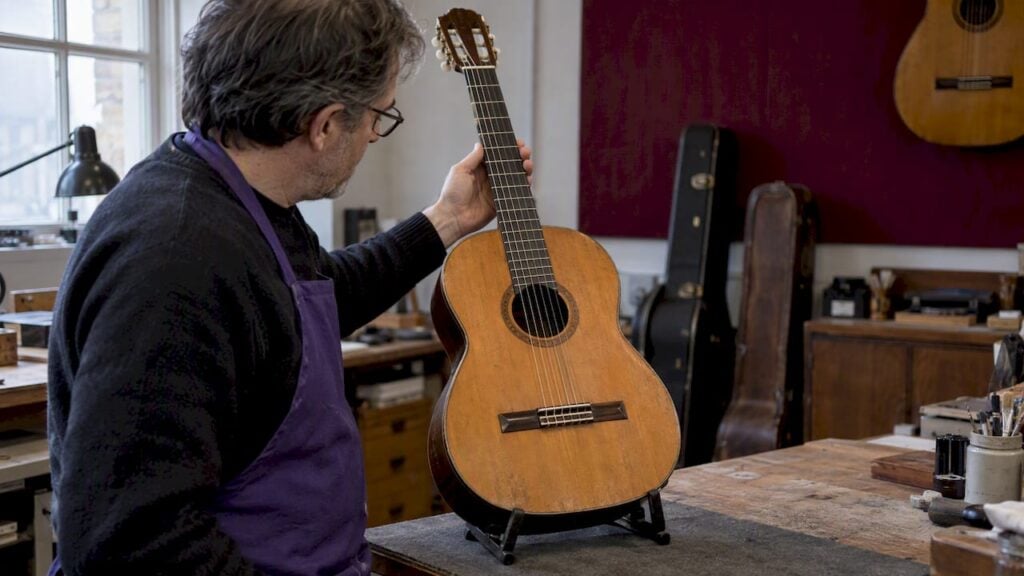

Used Hauser guitars range from mid-five figures for later signed examples to six-figure-plus prices for Hermann Hauser Sr. instruments with top provenance. Auction results from Christie’s and Bonhams set the top-end benchmarks, but every listing still needs its label, serial number, and ownership documentation confirmed before you treat any asking price as real value.
TL;DR:
- Christie’s 1939 Hermann Hauser Sr. sold for $134,500, while a 1968 Hauser II brought $37,500, illustrating the price gap between generations.
- A 1959 Hauser II sold at Bonhams for £32,450 including the buyer’s premium, but taxes, import fees, shipping, and insurance raise total cost.
- Original finish, an unaltered soundboard, and original tuners support value, while refinishing or structural repairs can lower it; request dated photos and restoration records.
- For early or valuable examples, verify the label, serial number, ownership records, and certificates, then seek a specialist valuation instead of relying on comparables alone.
Table of Contents
- Price ranges by maker and era: what buyers should expect
- Auction records and market anchors: what Christie’s and Bonhams results show
- What drives a Hauser’s price: condition, provenance, materials, and generation
- How to estimate the price of a specific used Hauser guitar
- How we evaluate Hauser guitars for buyers and consignors
- Get an expert valuation, certificate, or consignment sale started
- FAQ
- Sources
Price ranges by maker and era: what buyers should expect
A Hauser’s price depends heavily on which generation made it. Hermann Hauser Sr. instruments sit at the top of the collector tier, with fine-provenance examples reaching high prices. Hermann Hauser II guitars typically land in mid-range prices, sometimes reaching higher amounts depending on model, year, and condition. Earlier or pre-Iberian workshop pieces tend to price lower than mainline Sr. instruments but remain genuinely collectible.
Several factors push a given guitar toward the top or bottom of its band:
- Rarity: fewer surviving examples from a given year raise demand against limited supply.
- Production numbers: Hauser II’s signed and numbered output between 1953 and 1983 reached roughly 500 to 600 instruments, which keeps mid-tier prices more stable than Sr.’s scarcer output.
- Model year and specification: earlier or transitional models with documented features often command a premium over later, more standardized examples.
A Hermann Hauser Sr. guitar from Munich, 1939, realised $134,500 at Christie’s, while a Hermann Hauser II from Reisbach, 1968, realised $37,500 at Christie’s. That gap illustrates the generational divide buyers should expect before comparing any two listings.
Auction records and market anchors: what Christie’s and Bonhams results show
Auction houses provide the clearest public record of what collectors have actually paid, and both Christie’s and Bonhams have handled notable Hauser sales. A rare early seven-string Hauser from Munich, 1924, carried an estimate of £20,000 to £30,000 at Bonhams, showing that even pre-Iberian Hauser instruments draw serious collector interest. A six-string Hauser II from Reisbach, 1959, numbered 661, sold for £32,450 including premium at Bonhams, a useful mid-market comparable.
A few things to keep in mind when reading these figures: as with other musical instruments, premium or collectible pricing behavior sometimes parallels those seen with signature drumsticks and similar specialized gear.
- The hammer price is not the final cost: buyer’s premiums, local taxes, and import fees can add a meaningful amount on top.
- Published estimates reflect what a specific lot was expected to bring, not a universal price for that model and year.
- A past realised price shows what one buyer paid on one day. It is evidence, not a promise of future resale value.
What drives a Hauser’s price: condition, provenance, materials, and generation
Four factors explain most of the spread between a modest sale and a record one.
- Condition: original finish, absence of cracks, an unaltered soundboard, original frets, and a neck that has never needed resetting all support a higher price. Heavy refinishing or structural repair work tends to carry a discount.
- Provenance: documented ownership, inscriptions, or ties to a notable player can move a guitar into an entirely different price bracket. Collectors and specialists consistently point to Andrés Segovia associations as producing large premiums over comparable instruments without that history.
- Materials: original Brazilian rosewood, original tuners, and untouched original varnish all support value, since replacement parts break the chain of originality that collectors pay for.
- Maker generation: Sr. instruments are rarer and tied to an earlier, smaller body of work, which explains much of the price gap against the more widely produced Hauser II guitars.
Pro Tip: Ask any seller for dated photos of the label, the soundboard interior, and any repair work, and request written restoration records before you factor condition into your offer.
Our guide to checking the authenticity of a vintage guitar walks through label and serial verification in more detail.
How to estimate the price of a specific used Hauser guitar
A realistic estimate comes from matching your guitar against real comparables, not from a single asking price.
- Identify the maker, read the label text carefully, and note any signature and serial number using our guide to identifying a Hauser guitar.
- Search auction archives for comparable lots matched by year, model, and condition, then adjust the realised price for buyer’s premium and any applicable fees.
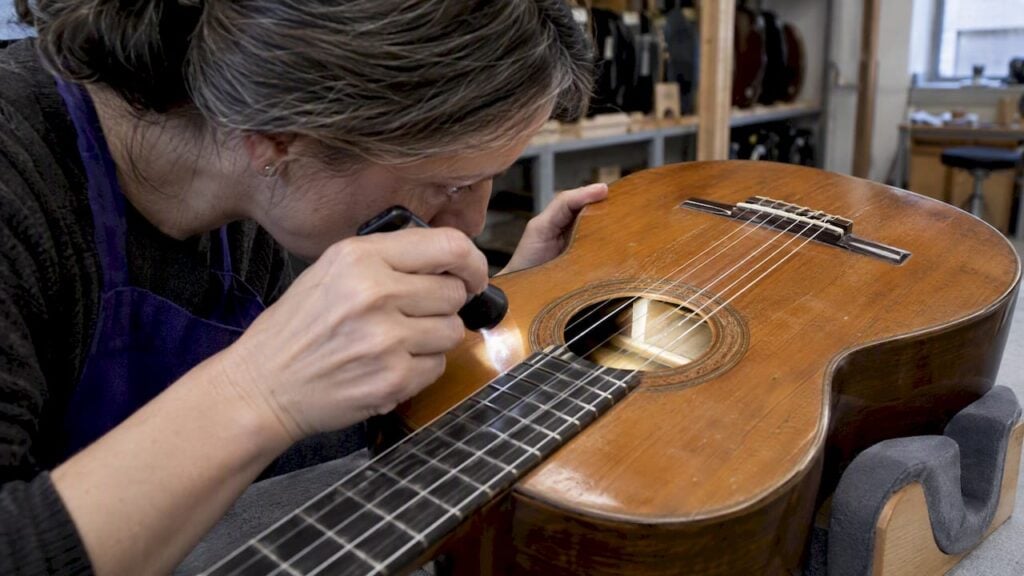
- Document condition thoroughly: photograph the finish, soundboard, frets, and neck joint, and request any available restoration records from the seller.
- Use our used guitar evaluation checklist to score condition before you compare prices.
- When the instrument appears to be an early or high-value example, seek a professional valuation or certificate rather than relying on comparables alone.
A 1931 Hermann Hauser I sold for £27,000 at Gardiner Houlgate in 2024, a reminder that even early Hauser instruments continue to draw active bidding well above typical vintage guitar prices. Once you have a comparable figure, build your budget around the full cost: hammer or asking price, plus premium, shipping, and insurance, not the headline number alone.
How we evaluate Hauser guitars for buyers and consignors
Our evaluation process starts with a visual inspection of the label, soundboard, and hardware, followed by a documentation review covering ownership history and any certificates. We arrange a testing appointment where the instrument can be played and examined directly, and we consider auction comparables to support a fair valuation. Our guide to authenticating vintage guitars outlines the same principles we apply in-house.
— Vintage
Get an expert valuation, certificate, or consignment sale started
If you are holding a Hauser or considering one, the fastest way to a reliable number is a professional opinion rather than a guess built from auction headlines alone.

- Zertifikate und Wertgutachten: we provide certificates and written valuations that document authenticity and condition for buyers, insurers, or future resale.
- Restaurierung: when a guitar needs conservation work, our restoration services address structural and cosmetic issues while preserving collector value.
- Exklusive Anspieltermine: we arrange private testing appointments so you can evaluate an instrument in person before committing.
- Verkauf in Kommission: owners looking to sell can consign through us, with our evaluation process applied to set a realistic asking price.
Browse our current vintage guitars or concert guitars collection, or get in touch through our main page to request a valuation or book an appointment.
FAQ
What is a used Hauser guitar worth today?
Prices vary widely by generation and condition: Hermann Hauser Sr. instruments with strong provenance can reach six figures, while Hermann Hauser II examples more commonly sell in the mid to high five figures. The only reliable way to narrow that range for a specific instrument is to match it against documented auction comparables and verify its condition.
Why do Hermann Hauser Sr. guitars cost more than Hauser II guitars?
Hauser Sr. instruments are rarer and tied to an earlier body of work associated with major 20th-century players, while Hauser II’s numbered production between 1953 and 1983 reached roughly 500 to 600 instruments, making them more available. That difference in scarcity is the main reason Sr. instruments command a premium bracket.
Does provenance really change a Hauser’s price?
Yes, documented ownership or association with a notable player can move a guitar into a significantly higher price bracket. Auction catalog descriptions that highlight ties to Andrés Segovia consistently show this effect, so certificates and written history matter as much as the instrument’s physical condition.
How do I get a used Hauser guitar authenticated or valued?
Start by checking the label, serial number, and any signature against known references, then gather whatever ownership documentation exists. From there, a professional valuation or certificate from a specialist, combined with auction comparables for the same model and year, gives the most reliable estimate.
Does restoration history lower a Hauser’s resale value?
It can, since heavy refinishing or structural repairs are often flagged as reducing investment value compared to an original, unaltered instrument. A well-documented, professionally done restoration still supports a fair price, but buyers should always ask for records before assuming an undisclosed repair has no effect.
Sources
- Bonhams : A rare, early seven string Guitar by Hermann Hauser 1, Munich 1924 (2)
- HERMANN HAUSER II , A CLASSICAL GUITAR, REISBACH, 1968 | Christie’s