












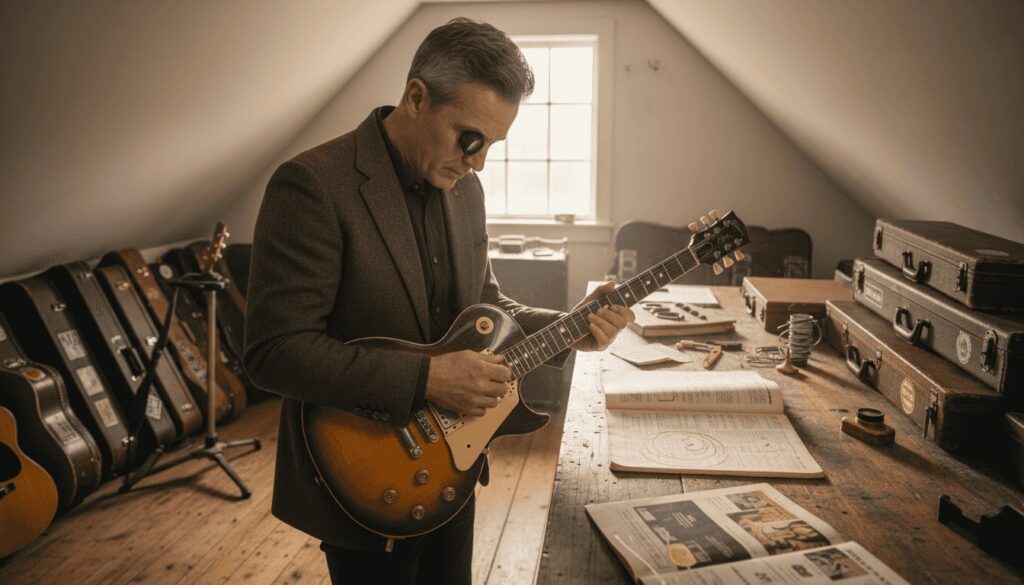

Sorting truth from myth in vintage guitar valuation often means looking past auction headlines and dealer hearsay. For collectors and musicians across North America and Europe, understanding how expert appraisers distinguish true market value from market price is crucial for making sound investments. This guide reveals how guitars are treated as works of art and explains the multiple factors—from maker reputation to provenance and shifting market dynamics—that shape what your heritage instrument is really worth.
Table of Contents
- Defining Guitar Valuation And Market Myths
- Types Of Guitars And Value Categories
- What Drives Vintage Guitar Market Value
- Expert Valuation Methods And Documentation
- Risks, Common Pitfalls, And Investment Impact
Key Takeaways
| Point | Details |
|---|---|
| Understanding Market Value vs. Market Price | Market value reflects the estimated price in ideal conditions, while market price is based on actual recent sales. Distinguishing these can prevent costly buying mistakes. |
| Valuation Myths | Misconceptions such as age determining value or condition being everything can lead collectors to make poor decisions. Authenticity and maker reputation are crucial factors. |
| Professional Appraisal Importance | Relying on expert appraisals rather than generic online tools is essential for accurate valuation. Detailed documentation enhances credibility and can significantly affect value. |
| Market Timeliness | Timing investments according to market trends and understanding potential fluctuations can optimize financial returns. Documenting and verifying provenance is key to maintaining value. |
Defining Guitar Valuation and Market Myths
Guitar valuation isn’t simply what you paid for an instrument or what someone offers you tomorrow. The definition goes much deeper, separating real market value from common misconceptions that mislead collectors daily.
Market value represents the estimated price between knowledgeable buyers and sellers under ideal conditions. This differs fundamentally from market price, which is what actually sold yesterday at auction. Understanding this distinction prevents costly mistakes when building your collection.
When understanding how guitars are valued, recognize that vintage instruments function as works of art rather than consumer goods. Their worth depends on multiple interconnected factors beyond simple supply and demand.
Key elements shaping valuation include:
- Historical significance and maker reputation
- Complete provenance documentation
- Original condition and restoration quality
- Market demand fluctuations
- Cultural relevance within music history
- Rarity relative to production numbers
Your guitar’s true value combines economic factors with cultural variables. A handcrafted Spanish classical guitar commands different pricing than an electric instrument from the same era.
Common Valuation Myths That Cost Collectors Money
Myth one: Age alone determines value. A 1950s production-line acoustic isn’t automatically worth more than a meticulously restored 1980s instrument from a respected luthier. Authenticity and craftsmanship matter far more than simply being old.
Myth two: Condition is everything. Minor cosmetic wear on a rare vintage instrument rarely justifies price reductions when the acoustic properties remain uncompromised. Professional musicians prioritize playability over pristine appearance.
Myth three: Recent sale prices predict future value. Guitar markets shift based on collector preferences, availability of comparable instruments, and broader economic conditions. Yesterday’s $8,000 sale doesn’t guarantee today’s valuation.
Myth four: Appraisals from online databases are accurate. Generic pricing tools lack context about your specific instrument’s provenance, restoration history, and unique characteristics. Professional evaluation considers factors automation cannot assess.
Professional valuation considers historical significance, maker reputation, complete provenance, and market dynamics—not just age or recent sales prices.
Misunderstanding these myths leads collectors to overpay, undervalue their collections, or make poor acquisition decisions. Working with specialists who understand how to value collectible guitars prevents expensive errors.
The distinction between fair value and market price matters significantly. Fair value reflects what a knowledgeable buyer should reasonably pay, while market price represents actual transactions. These numbers frequently diverge, especially in niche collector markets where fewer instruments trade hands.
Pro tip: Request detailed written valuations explaining the reasoning behind estimates rather than accepting single figures, ensuring you understand which specific factors drive the pricing for your instruments.
Types of Guitars and Value Categories
Guitar value depends heavily on instrument type. Acoustic guitars, electric guitars, and bass guitars each occupy distinct market segments with different collector priorities and pricing dynamics.
Acoustic guitars appeal to classical purists, folk musicians, and fingerstyle players. These instruments prioritize tonal warmth and sustain, making handcrafted construction from premium tonewoods essential. A vintage Spanish classical guitar with proven provenance commands significantly higher prices than mass-produced acoustic models from identical eras.
Electric guitars attract rock, jazz, and contemporary musicians. Their value centers on electronics, playability, and cultural significance rather than wood quality alone. A 1959 Fender Stratocaster trades differently than a vintage classical instrument despite their similar age.
Bass guitars form their own niche. Professional-grade vintage basses maintain collector value, particularly instruments from respected manufacturers. However, they represent a smaller market segment compared to six-string instruments.
The global guitar market reflects distinct consumer segments including amateurs, learners, and professionals with varying budget capacities and collection motivations.
Here’s a concise comparison of how valuation criteria differ across guitar types:
| Guitar Type | Main Value Drivers | Key Collector Focus | Pricing Impact |
|---|---|---|---|
| Acoustic Guitar | Tonewood, craftsmanship | Sound quality, history | Higher for vintage, rare |
| Electric Guitar | Electronics, brand, culture | Playability, heritage | Driven by iconic models |
| Bass Guitar | Maker, playability | Professional use | Limited premium segment |
| Custom/Boutique | Uniqueness, provenance | Rarity, originality | Premium for specialized |
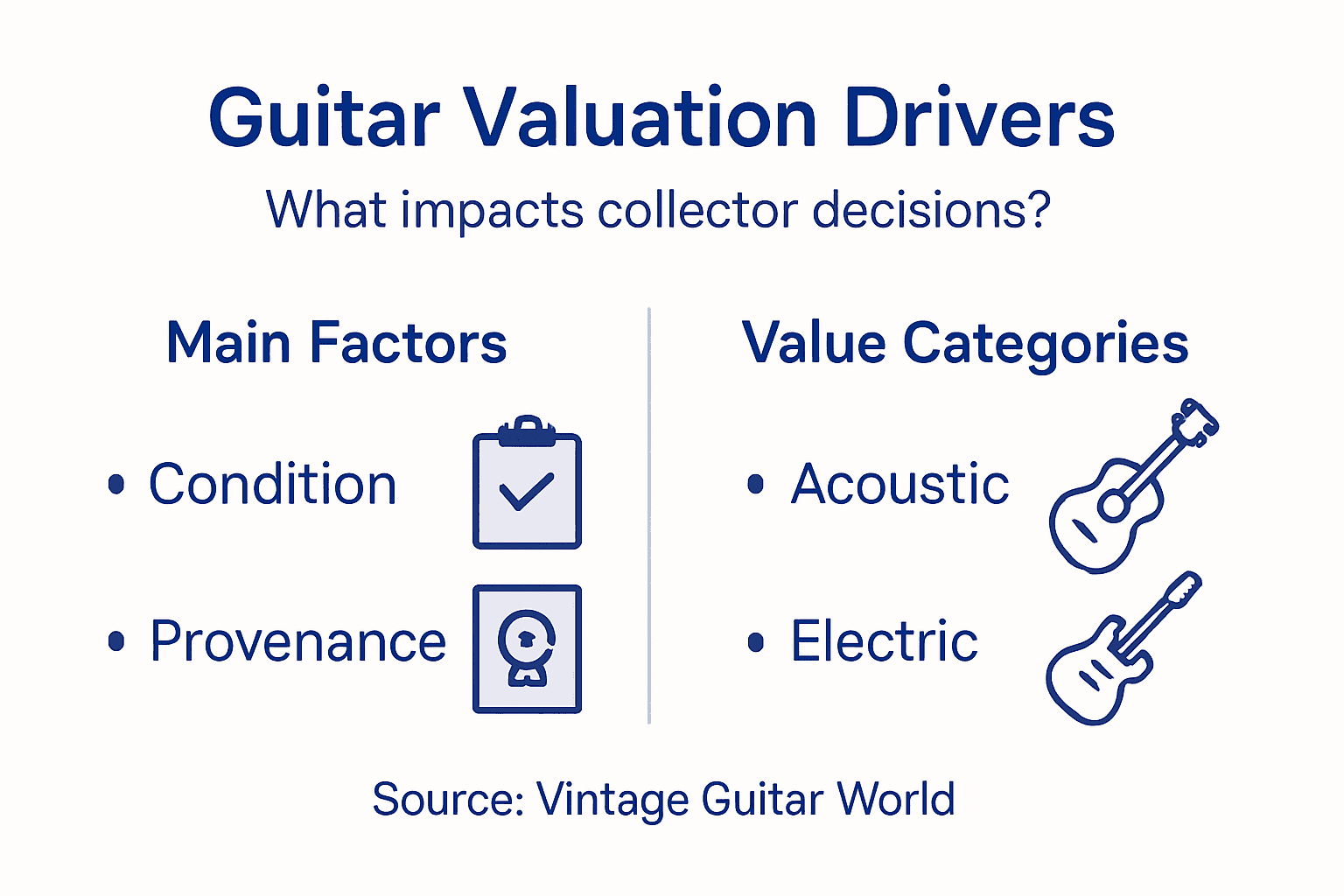
Value Categories Across Guitar Types
Value categories break down into clear tiers:
- Entry-level instruments: Mass-produced guitars under $500, limited collector interest
- Mid-range collectibles: Quality vintage guitars from $500-$2,500, growing appreciation
- Premium collectibles: Rare instruments from $2,500-$10,000, established market demand
- Ultra-rare guitars: Exceptional pieces exceeding $10,000, institutional collector status
Handcrafted classical guitars consistently maintain higher values than factory-produced acoustics from identical periods. A single-owner luthier instrument with original case, documentation, and unaltered construction attracts premium pricing.
Vintage electric guitars appreciate differently based on brand heritage and rarity. Production numbers directly impact value—a guitar manufactured in limited quantities commands more than mass-produced alternatives.
Each guitar type has distinct value drivers: acoustics value tonal character and materials, electrics value electronics and cultural significance, and basses value playability and maker reputation.
Condition assessment varies by category. A minor fret divot on a rare classical guitar matters less than equivalent wear on a budget acoustic. Professional players evaluate functionality over cosmetics.
Boutique and custom-built instruments form an emerging value category. These specialized guitars attract collectors seeking unique characteristics unavailable in commercial production. Understanding what makes guitars collectible helps identify which instruments retain value across changing market conditions.
Market demand shifts influence category valuations differently. Classical guitars maintain consistent collector interest, while electric guitar values fluctuate with vintage trend cycles.
Pro tip: When evaluating guitars across categories, compare within type (classical to classical, electric to electric) rather than cross-category, since market mechanics and collector priorities differ fundamentally between instrument types.
What Drives Vintage Guitar Market Value
Vintage guitar values fluctuate based on interconnected factors that go far beyond simple supply and demand. Understanding these drivers helps collectors make informed acquisition decisions rather than chasing trends blindly.
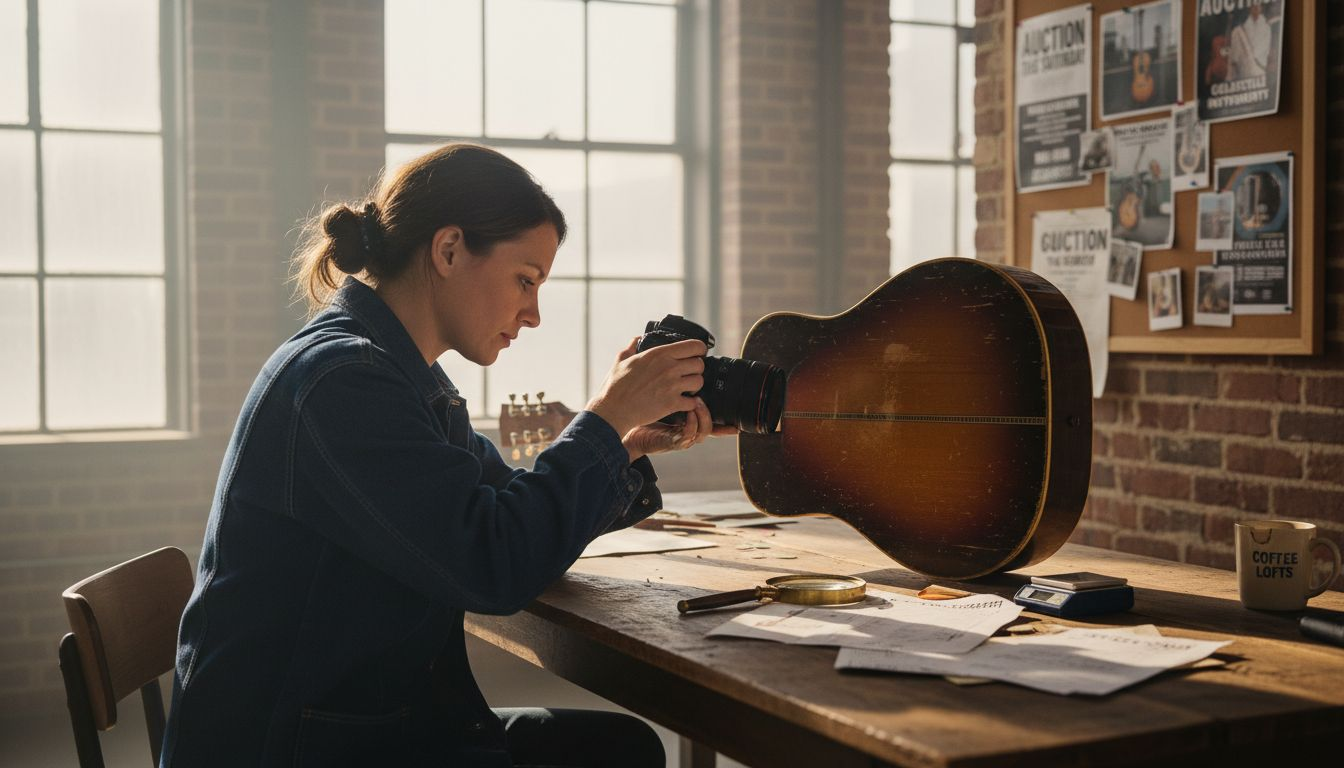
Provenance and documentation form the foundation of market value. A guitar with original case, receipts, repair records, and ownership history commands premium pricing compared to an identical instrument with questionable background. Collectors pay significantly for instruments they can trace through decades of ownership.
Condition matters enormously, but context determines how much. Historical changes in demand, quality perception, and origin shape what collectors prioritize. A mint condition mass-produced 1970s acoustic differs drastically from a well-used but tonally superior handcrafted classical guitar.
Maker reputation and manufacturing origin influence value substantially. American manufacturers like Gibson and Fender established benchmark standards that guide pricing across the market. Japanese-made instruments from the same era trade differently, reflecting collector preferences shaped by decades of market perception.
Key value drivers include:
- Original finish and hardware (unrestored preferred)
- Complete and matching serial numbers
- Rarity within production runs
- Tonal characteristics and playability
- Cultural significance in music history
- Condition of frets, neck, and body
Hand-crafted and custom instruments increasingly command higher values due to craftsmanship and uniqueness. A single-maker classical guitar appreciates differently than factory-produced alternatives, even when both are identical ages.
Production shifts and import competition altered market dynamics considerably. When overseas manufacturers entered markets with lower-cost alternatives, vintage American instruments gained collector appeal. Scarcity created value where commodity pricing once dominated.
Original condition with complete provenance consistently outweighs cosmetic perfection; collectors prefer playable instruments with documented history over pristine-but-questionable guitars.
Market demand cycles reflect broader cultural trends. Vintage electric guitars surge when rock history receives renewed media attention. Classical guitars maintain steady appreciation independent of trends. Understanding current vintage guitar market trends helps identify whether value appreciation stems from lasting fundamentals or temporary collector enthusiasm.
Rarity creates the strongest value foundation. A guitar manufactured in limited quantities or discontinued quickly maintains value through market shifts. Mass-production runs—even vintage ones—appreciate slowly unless exceptional circumstances boost demand.
Authenticity verification determines whether a guitar retains investment potential. Modified electronics, replaced bridges, or refinished bodies reduce value substantially. Professional assessment prevents costly mistakes when evaluating instruments with unclear histories.
Pro tip: Document everything about your guitars immediately: photograph serial numbers, original receipts, repair work performed, and condition before making significant purchases or sales, ensuring your own instruments maintain maximum credibility and value when you eventually sell.
Expert Valuation Methods and Documentation
Professional guitar valuation requires systematic methodology, not guesswork or gut feeling. Experts follow established standards to produce defensible appraisals that collectors and institutions can rely upon.
Market analysis forms the backbone of objective valuation. Specialists examine comparative sales data, auction results across global markets, and documented transactions involving similar instruments. This comparative approach removes subjective bias from pricing decisions.
Arm’s-length transactions define how professionals establish credibility. Real sales between knowledgeable, unrelated parties create reliable benchmarks. Family sales, insurance settlements, or distressed transactions don’t reflect true market conditions and skew appraisals downward.
Professional valuation methods rely on economic standards defining market value distinctions rather than emotional attachment or personal preference. Fair value measurements exclude special advantages unique to individual buyers.
Essential documentation includes:
- Original purchase receipts and invoices
- Complete ownership history dating to acquisition
- Serial number photographs and verification
- Condition assessments from different time periods
- Professional repair documentation
- Certificate of authenticity from recognized experts
- Original case, tags, or factory documentation
Originality verification distinguishes valuable guitars from modified instruments. Experts inspect hardware, finishes, electronics, and structural elements for evidence of replacement or restoration. Original paint matters significantly more than flawless refinishes.
Documentation proves provenance and protects your investment. A guitar with complete paper trail commands 20-40 percent premiums over identical instruments lacking documentation. Insurance companies, auction houses, and future buyers demand proof.
Objective valuations exclude personal sentimentality and special value advantages; they reflect what knowledgeable buyers would pay under normal market conditions.
Condition assessment requires systematic evaluation. Experts photograph instruments from multiple angles, document specific wear patterns, and note structural integrity. This creates a permanent record supporting valuation decisions.
Global market comparison prevents regional pricing bias. A classical guitar valued in isolation might trade differently when compared against comparable European instruments or recent auction results. Professional appraisers track international sales patterns.
Authenticity verification prevents costly mistakes. Counterfeit serial numbers, reproduction hardware, or refinished bodies reduce value dramatically. Professional testing and quality assessment identifies modifications that casual inspection misses.
Pro tip: Create a detailed inventory documenting each guitar’s serial number, purchase details, condition photographs taken under consistent lighting, and any professional appraisals, storing copies digitally and physically for insurance claims and future sales.
Risks, Common Pitfalls, and Investment Impact
Guitar investing carries real financial risks that casual collectors often overlook. Understanding these dangers protects your capital and prevents costly mistakes that can eliminate years of appreciation.
Market fluctuations affect guitar values unpredictably. A classical guitar commanding $8,000 five years ago might trade for $6,500 today based on shifting collector preferences. Assuming consistent price inflation leads to poor acquisition decisions and speculative purchases that lose value rapidly.
False provenance claims represent a catastrophic pitfall. Sellers exaggerate instrument history, fabricate ownership documentation, or misrepresent restoration work. A guitar with inflated provenance loses 30-50 percent of value once fraud surfaces, and recovery through legal action proves nearly impossible.
Common investment risks arise from market fluctuations, false provenance claims, and overreliance on market price trends without thorough research. Informed decision-making and expert verification mitigate these dangers substantially.
Major pitfalls include:
- Assuming brand names guarantee value regardless of condition
- Purchasing without professional appraisal or authentication
- Ignoring documentation requirements and provenance gaps
- Buying speculatively based on auction hype
- Neglecting structural inspections before acquisition
- Underestimating restoration costs when acquiring damaged instruments
Overreliance on recent sales data clouds judgment. Yesterday’s market price reflects specific conditions—particular buyer enthusiasm, seasonal demand, or auction competition. Extrapolating isolated sales into general market trends leads to overpaying.
Authentication shortcuts cost money. Accepting seller claims without expert verification exposes you to counterfeit guitars, reproduction hardware, and misidentified manufacturers. Professional authentication fees ($200-$500) seem expensive until you avoid a $5,000 counterfeit.
Speculative purchases lacking documentation and expert appraisal maximize financial loss; informed timing, verification, and research optimize long-term returns.
Timing your investments matters significantly. Collectors who purchase during market peaks lose appreciation potential. Conversely, strategic acquisitions during depressed demand cycles yield stronger long-term returns.
Documentation gaps destroy value systematically. A guitar missing original case, receipts, or repair records trades at 15-25 percent discounts compared to fully documented equivalents. This compounds over time as collectors inherit instruments without provenance.
Restoration surprises derail budgets. A $6,000 vintage acoustic might require $2,000-$3,000 in professional work before it’s investment-grade. Assess structural integrity and playability before committing capital.
To clarify investment risks and best practices, here’s a summary table:
| Risk Type | Impact on Value | Collector Best Practice |
|---|---|---|
| Market fluctuations | Value swings, losses | Research trends before buying |
| False provenance claims | Steep price reduction | Verify documentation thoroughly |
| Overreliance on recent sales | Poor purchase timing | Consider broader market data |
| Inadequate authentication | Loss from counterfeits | Use expert advisors |
Market timing requires patience and discipline. Emotional purchasing decisions—buying your “dream” guitar regardless of valuation—contradicts investment principles. Professional collectors separate passion from portfolio decisions.
Pro tip: Before purchasing any guitar as an investment, obtain written appraisals from independent specialists, verify all documentation independently, and calculate total acquisition costs including authentication and necessary restoration to ensure the instrument meets your financial objectives.
Master Your Guitar Investments with Vintage Guitar World
Understanding the true value of vintage guitars can feel overwhelming with myths and fluctuating market trends clouding your decisions. This article highlights the challenges collectors face like distinguishing fair value from actual market price and verifying provenance to avoid costly mistakes. Whether you seek clarity on condition impact or need trusted expert evaluation, the risk of overpaying or undervaluing is real without proper guidance.
At Vintage Guitar World, we specialize in navigating these complexities for you. Our curated collection features only high-quality, expertly evaluated vintage guitars backed by thorough documentation and craftsmanship insights. Benefit from personalized valuation services and trusted certifications that protect your investment while enriching your collection’s heritage.
Explore our shop to find instruments that meet discerning collector standards. Learn more about how to value collectible guitars and discover what makes guitars collectible with our expert content.

Don’t let uncertainty hold you back from acquiring your perfect vintage guitar. Visit Vintage Guitar World today and make confident, informed decisions that preserve and grow your collection’s worth.
Frequently Asked Questions
How do I determine the market value of my guitar?
Understanding the market value of your guitar involves considering factors such as provenance, historical significance, condition, rarity, and market demand. Professional appraisals typically analyze recent sales data and comparable instruments to establish fair value.
What are the common myths about guitar valuation?
Some common myths include the belief that age alone determines value, that condition is everything, and that recent sale prices predict future value. However, authenticity, craftsmanship, and market dynamics often play a more significant role in a guitar’s true value.
Why is it essential to have documentation when valuing a guitar?
Documentation, such as original receipts, ownership history, and repair records, is crucial in establishing a guitar’s provenance. A well-documented instrument can command a premium price compared to similar guitars without such records.
What role does the condition of a guitar play in its valuation?
While condition is important, it must be assessed in context. Minor cosmetic wear on a rare vintage guitar may not drastically impact its value if the instrument remains tonally sound. For musicians, playability is often prioritized over appearance.