












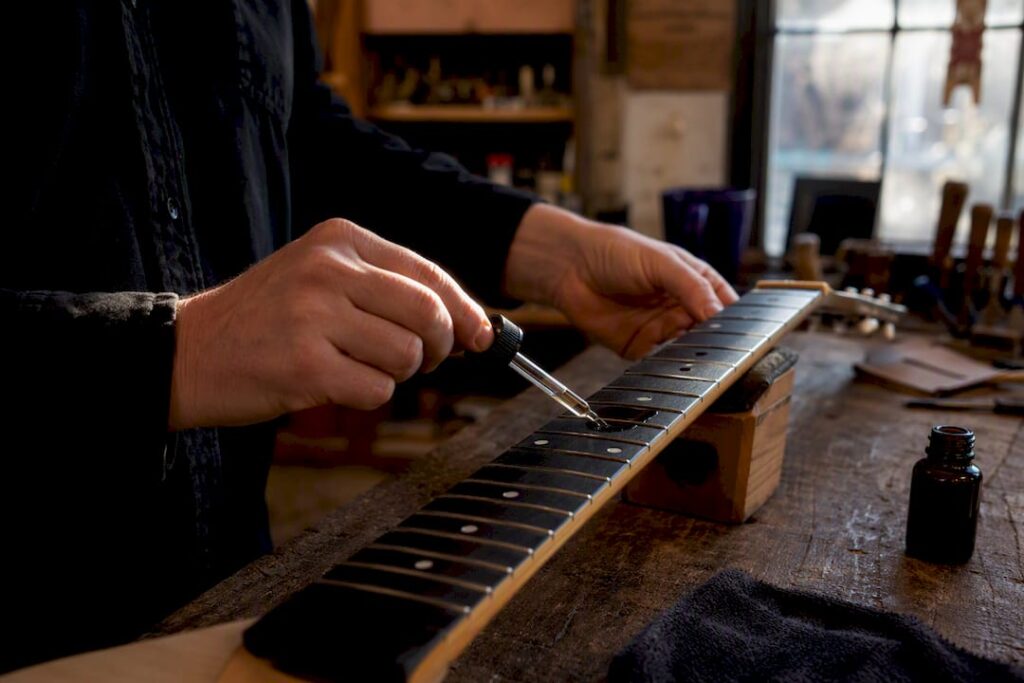

Only condition an ebony fretboard sparingly, and only when it looks dry or feels grimy under your fingers. Ebony is dense and naturally oily, so it doesn’t need the frequent feeding that some players assume. When it does need attention, the safe products are food-grade mineral oil or an instrument-grade fretboard conditioner. Skip anything acidic or solvent-based: lemon juice, vinegar, and furniture polish can damage the wood and hardware rather than protect it.
The whole process, in one line: clean the surface, apply a tiny drop of oil, let it sit for 20 to 30 minutes, then buff off every trace until the wood feels dry again.
- Clean first with a dry microfiber cloth before any oil touches the board.
- Use less oil than feels right. A drop the size of a pea covers an entire fretboard.
- Never oil a glossy, sealed fretboard. That’s a different situation entirely, covered below.
Key Takeaways
Ebony fretboards stay healthy with minimal, careful conditioning, not frequent oiling, and most damage comes from the wrong products rather than too little care.
| Point | Details |
|---|---|
| Identify the surface first | Confirm unfinished vs. sealed before applying any oil to avoid ruining a lacquered neck. |
| Use the right oil | Stick to food-grade mineral oil or an instrument-grade conditioner, never linseed, tung, or lemon oil. |
| Condition sparingly | A drop-sized amount, 20 to 30 minutes to absorb, then buff dry is the full routine. |
| Match frequency to climate | Once a year suits stable climates; twice a year fits dry conditions or heavy gigging. |
| Escalate structural issues | Cracks, loose frets, or finish failure call for a luthier, not another round of oil. |
Table of Contents
- How To Tell Finished vs. Unfinished Ebony Fretboards
- Step-by-Step Cleaning and Conditioning Routine for Ebony
- Which Oils Are Safe and Which Household Products to Avoid
- How Often Should You Condition an Ebony Fretboard?
- Troubleshooting Stains, Residue, and Cracks
- Why Trust Vintage-guitar-world’s Fretboard Guidance
- The Case for Doing Less to Your Fretboard
- Sources
How To Tell Finished vs. Unfinished Ebony Fretboards
Before you touch any oil, figure out what kind of surface you’re actually dealing with. This single step prevents most fretboard mistakes.
A finished (sealed) fretboard feels glassy and slightly slick, almost like the neck’s lacquer, with no visible wood texture. An unfinished ebony board feels slightly dry and porous, and you can usually see faint grain lines if you look closely under a strong light. Finished boards should never be oiled. The oil sits on top of a lacquer or polyurethane layer, does nothing for the wood underneath, and can leave a cloudy or sticky film that’s a pain to remove.
Here’s a quick way to check before you commit to anything:
- Wipe a small, inconspicuous section with a clean, dry white cloth.
- Look at the cloth. A finished board leaves nothing behind.
- An unfinished board may leave a faint dry residue or dust, which is normal.
- If the cloth picks up dark, almost inky residue, stop. That could mean the board is stained or ebonized rather than genuine ebony, and it needs different handling than raw wood.
Pro Tip: If you’re not sure whether your fretboard is real ebony or a dyed substitute, check under bright, indirect light near the higher frets. Ebonized woods often show a slightly uneven tone where the dye has worn thin from years of playing.
Red flags that mean stop and consult a professional rather than experimenting: cracking along the grain, a chalky gray cast that doesn’t respond to a light wipe, or lifting finish near the edges. Those are structural issues, not cleanliness issues, and covered later in this guide.
Step-by-Step Cleaning and Conditioning Routine for Ebony
This is the routine to follow when your unfinished ebony board genuinely needs attention, not a weekly ritual.
- Protect the strings. Loosen them or remove them entirely so you have clear access to the wood without fighting tension.
- Dry wipe first. Run the microfiber cloth along the length of the board to lift dust and loose grime. This alone handles most day-to-day buildup.
- Brush out debris. Use the soft brush along the fret edges where dead skin and dust collect, since those spots resist a simple wipe.
- Damp wipe only if needed. If there’s stubborn grime, use a barely damp cloth, not a wet one, and dry the board completely before moving to the next step. Skip any household cleaner here; plain water is enough for light dirt.
- Apply oil sparingly. Put a drop-sized amount on your cloth, not directly on the wood, and rub it into one small section at a time.
- Let it sit. Give the oil 20 to 30 minutes to absorb into the fibers. Ebony drinks slowly compared to rosewood, so resist the urge to add more.
- Buff thoroughly. Wipe every section with a clean, dry cloth until the surface feels dry to the touch, with zero tacky residue left behind, especially near the frets.
- Restring and check. Bring the guitar back to pitch, check intonation, and play a few chords to confirm nothing feels sticky or slick under your fingers.
Pro Tip: Work in sections rather than oiling the whole neck at once. It’s much easier to control how much oil goes on when you’re only managing three or four frets at a time.
Once you’re done, store the guitar somewhere with stable humidity rather than a closet that swings between damp and dry. That single habit does more for long-term fretboard health than any oil.
Which Oils Are Safe and Which Household Products to Avoid
The rule of thumb: ebony wants a non-drying oil, not something that hardens or builds a film. Food-grade mineral oil is the standard choice among luthiers because it conditions without curing on the surface, and vetted instrument-specific conditioners are formulated the same way. A small number of luthiers also favor camellia oil for its light, non-greasy feel, though it’s less widely available than mineral oil.
What to avoid, and why each one causes a specific problem:
- Linseed oil and tung oil are drying oils meant for furniture finishing. They cure and harden on the fretboard, leaving a gummy build-up over time.
- Lemon oil and furniture polish often contain solvents or citrus acids that can bleach or dry out the wood rather than nourish it.
- Vinegar, baking soda, and all-purpose cleaners are too acidic or abrasive for wood this dense, and can also corrode nearby frets and hardware.
- Steel wool or abrasive pads should never touch the wood surface; they’re only appropriate for fret polishing, and even then with caution.
When you’re shopping, read the ingredient list. If a product lists a solvent, a drying agent, or citrus extract near the top, put it back.
How Often Should You Condition an Ebony Fretboard?
Wipe the board down after every session with a dry cloth. That habit alone prevents most buildup before it ever becomes a problem. Clean more thoroughly every time you change strings, since that’s the easiest window to reach the whole board.
Actual conditioning is a different matter and needs far less frequency:
- Once a year is typically enough for a normal, stable climate.
- Twice a year makes sense in dry climates, heated winters, or for players who gig heavily.
- Aim for 45 to 55 percent relative humidity around the instrument, using a case humidifier or a room humidifier in dry months.
- Condition immediately if the wood looks ashy or gray, feels rough instead of smooth, or shows fine hairline checking.
Over-conditioning leaves a greasy, tacky film that attracts dust. Under-conditioning risks cracking, especially in low-humidity winters. Both extremes come from the same mistake: treating a fixed schedule as more important than what the wood is actually telling you.
Troubleshooting Stains, Residue, and Cracks
Most surface issues are cosmetic and fixable at home. Structural issues are not, and pushing through them yourself usually makes things worse.
Wipe the area with a dry cloth first. If residue transfers easily and the wood underneath feels smooth, that’s just leftover oil or grime, and a repeat cleaning plus a lighter conditioning pass fixes it. If the surface feels rough, pitted, or shows a visible line that catches your fingernail, you’re looking at something more serious, and no amount of oil resolves it.
- Fine surface grime or dull residue: clean and re-buff, no oil needed yet.
- Sticky, greasy feel after conditioning: you used too much oil, so wipe again with a dry cloth and skip the next scheduled conditioning.
- Hairline cracks, loose frets, deep chips, or lifting finish: stop and book a professional evaluation.
Pro Tip: Before any appointment, jot down what oil or cleaner you used last, roughly how often you condition the board, and where the guitar has been stored. That history helps a technician diagnose the issue faster than guesswork.
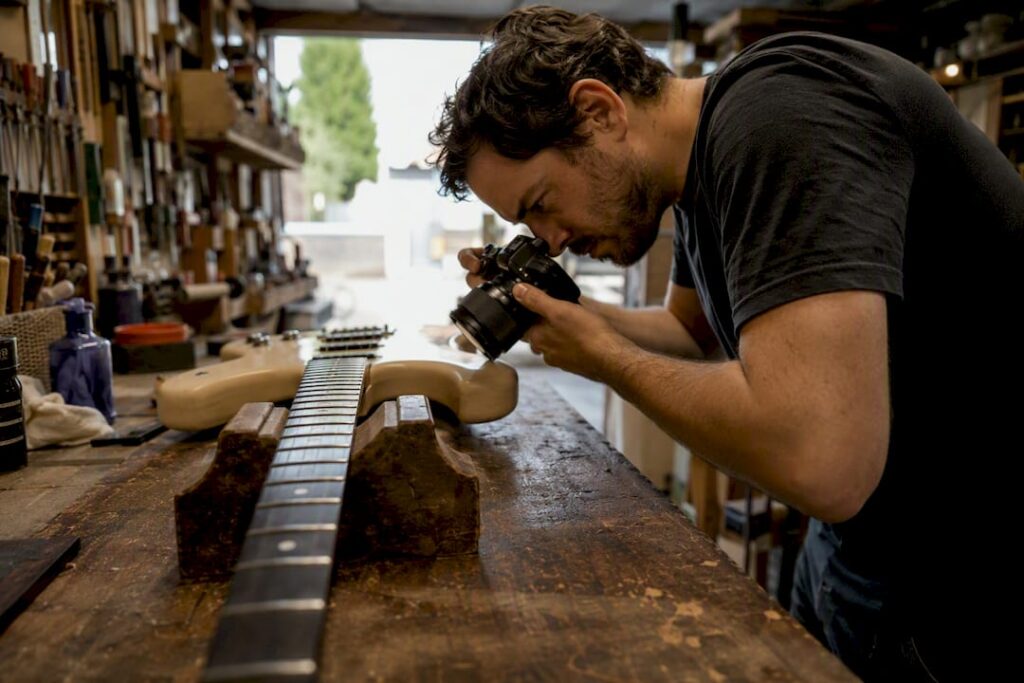
Photograph the affected area in natural light before you bring the guitar in. It gives a tech a clear before-and-after reference once the repair is done.
Why Trust Vintage-guitar-world’s Fretboard Guidance
Vintage-guitar-world evaluates, restores, and certifies instruments across classical, flamenco, acoustic, and electric guitars every day, which is exactly the kind of hands-on exposure to aged ebony and rosewood boards that shapes conservative, do-less-not-more advice like the routine above.
That experience directly informs why this guide leans cautious rather than prescribing a heavy conditioning schedule:
- Restoration work regularly involves undoing damage from over-oiling or the wrong household product, not from neglect.
- Testing appointments let a technician confirm whether a board is finished, unfinished, or ebonized before anyone reaches for oil.
- Valuation and certification services matter most for rare or vintage instruments, where a fretboard mistake can meaningfully affect resale value.
If your guitar carries real collector or investment value, a professional restoration workflow is worth the appointment before you experiment with any oil at home. For everyday players, browsing what separates a well-maintained vintage instrument from a neglected one is a good place to start.
The Case for Doing Less to Your Fretboard
Most players over-oil out of good intentions, not neglect. That’s the pattern worth correcting. Ebony is dense, naturally resinous wood that simply doesn’t drink oil the way rosewood does, so the popular habit of conditioning every few months usually just builds a film the wood never needed.
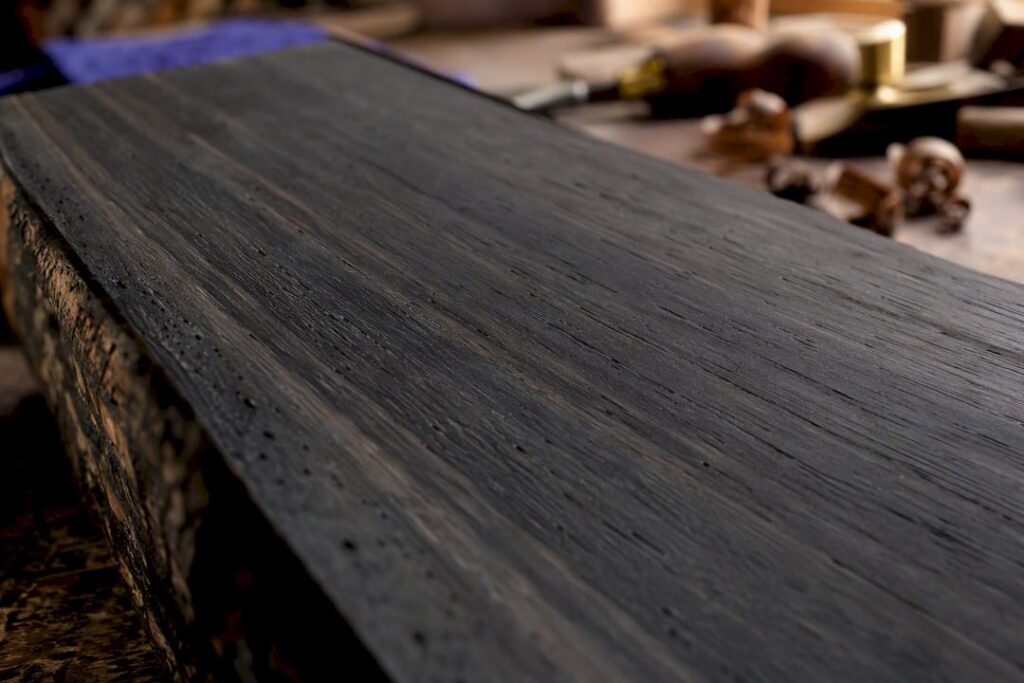
The conventional advice online treats fretboard oil like sunscreen, something to apply on a fixed schedule regardless of condition. That’s backward. The board itself tells you what it needs: dryness, dullness, or a rough patch under your thumb. Absent those signs, a dry cloth after each session and a humidity-controlled case do more good than any oil ever will.
If you take one thing from this guide, prioritize humidity control over conditioning frequency. A stable case environment prevents most of the cracking and checking that oil gets blamed for after the fact. Oil is the fix for a problem; humidity control is the way you avoid needing the fix at all.
— Vintage
Sources
- Griffbrett Reinigung — Die Gitarre und den Bass sauber machen
- Griffbrett reinigen — Heimwerk
- How to properly maintain an ebony fretboard — Riff-Mag
- What’s the best type of oil for an ebony fretboard?