













Statutory Gewährleistung applies the moment a dealer sells you a used instrument as a consumer, and that protection can only be shortened from the default two years to a shorter minimum period if expressly and separately agreed by the seller in writing. This rests on §§ 433, 437, and 443 BGB, the German rules governing consumer goods sales, and a dealer cannot bury that shortened term inside standard terms and conditions.
Before you pay, do three things:
- Read the product description line by line and note anything left vague.
- Ask for the shortened warranty term in writing if one is offered, not just verbally.
- Request an independent inspection or condition report for anything above a few hundred euros.
Pro Tip: If a listing says “gebraucht, funktionstüchtig” with no further detail, that vagueness itself is a warning sign. A dealer confident in an instrument’s condition usually says so specifically.
Key Takeaways
Statutory Gewährleistung protects buyers of used instruments from German dealers for at least one year, with the burden of proof favoring the buyer for the first twelve months.
| Point | Details |
|---|---|
| Statutory minimum | Gewährleistung on used goods can be shortened to a period not less than one year with agreement, but only by express, individual agreement. |
| Proof favors buyers early on | Defects found within 12 months are presumed pre-existing; the dealer must prove otherwise. |
| Defect vs. wear | Disclosed, age-appropriate wear isn’t a Sachmangel; undisclosed functional faults are. |
| Guarantee is extra, not a substitute | A voluntary Garantie supplements Gewährleistung and needs written terms on duration and scope. |
| Get it documented | Vintage Guitar World’s testing appointments and certification reports create the paper trail that backs a claim if a defect appears later. |
Table of Contents
- Gewährleistung Gebrauchte Instrumente Händler: What the Law Actually Says
- Why Independent Evaluation Matters for Vintage Guitars
- Book a Pre-Purchase Inspection Before You Buy
- Where to Verify These Rules Yourself
- Sources
Gewährleistung Gebrauchte Instrumente Händler: What the Law Actually Says
Every commercial dealer selling to a private buyer in Germany owes statutory Gewährleistung on used goods, full stop. The default term is two years from delivery, but sellers of used goods can cut that to one year, provided the reduction is agreed individually rather than tucked into boilerplate.
Here’s where it gets useful for you as a buyer: within the first twelve months after handover, the burden of proof flips in your favor. If a defect shows up, the law presumes it existed at the point of sale, and the dealer has to prove otherwise. After that first year, the burden shifts back to you, which is exactly why documenting an instrument’s condition at purchase matters so much.
A Sachmangel, a material defect, does not include ordinary wear expected with age. A guitar with fret buzz that was disclosed and priced in isn’t a defect. A guitar with a hidden truss rod crack, an undisclosed refinish, or electronics that fail intermittently is a genuine Sachmangel under German law, whether or not the seller knew about it. Dealers carry a duty to describe the instrument accurately and disclose known flaws; a listing that omits a repaired headstock or replaced pickup can itself become the basis for a claim.
If you’re buying from a dealer’s online store rather than in person, you also get a 14-day right of withdrawal under Fernabsatzrecht rules. That right lets you inspect and briefly test the instrument, but excessive playing or use during that window can trigger a deduction for value lost, so treat it as an inspection period, not a two-week rental. None of this applies to private-to-private sales, where Gewährleistung is typically excluded, which is the strongest argument for buying from a registered dealer in the first place.
Gewährleistung and a voluntary Garantie are distinct legal concepts, and dealers sometimes blur the line. A guarantee is an extra promise on top of your statutory rights, not a replacement for them, and any guarantee terms must be handed over on a durable medium, spelling out duration, scope, and contact details. If a dealer offers a “2-year guarantee” on a used amp, that’s on top of, not instead of, whatever Gewährleistung period applies.
When something does go wrong, your remedies follow a set order: first Nacherfüllung, meaning repair or replacement, and only if that fails or is refused do you move to price reduction, rescission of the contract, or damages. You can’t skip straight to a refund demand on day one.
One more shift is coming. Starting September 27, 2026, online sellers must display an EU Gewährleistungs label on product listings, including used goods, with a QR code linking to an EU information page. For used instruments specifically, that label will need to flag when the statutory period has been shortened to one year, giving buyers a visible, standardized signal instead of having to dig through fine print.
Why Independent Evaluation Matters for Vintage Guitars
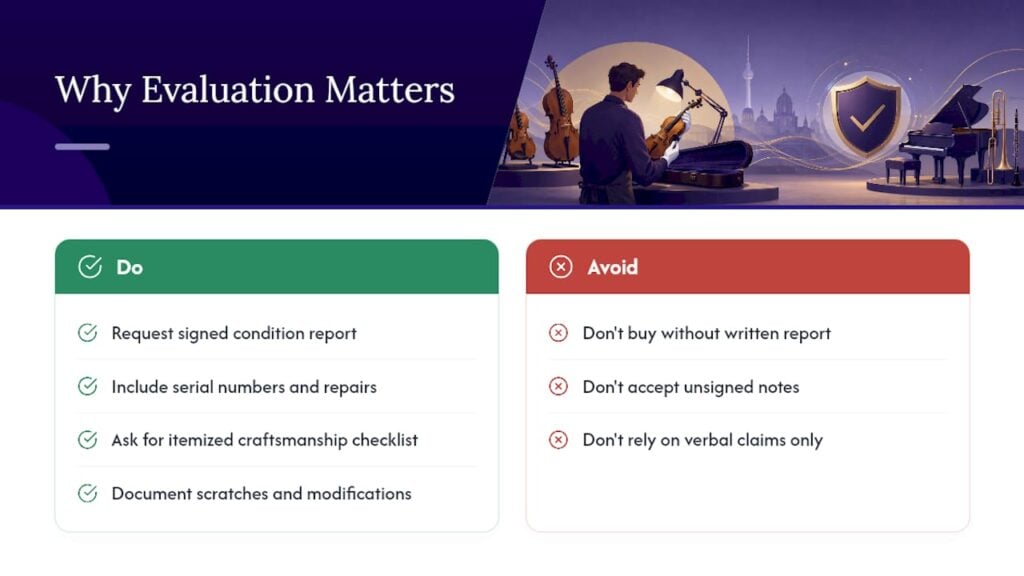
Vintage Guitar World evaluates and tests instruments before they ever reach a listing, because a thorough condition report protects both sides of a sale. Detailed, documented descriptions of scratches, repairs, and modifications head off disputes before they start, since the description itself becomes part of the contract.
Buyers who request a signed report noting serial numbers, prior repairs, and setup notes are in a stronger position if a defect ever surfaces. That’s why we recommend getting a written, itemized craftsmanship checklist before any purchase involving a high-value or vintage instrument, used or otherwise.
Book a Pre-Purchase Inspection Before You Buy
Testing an instrument in person, or having someone qualified test it for you, catches problems a written description can’t. A cracked bridge, a warped neck, or electronics that cut out under load rarely show up in photos.
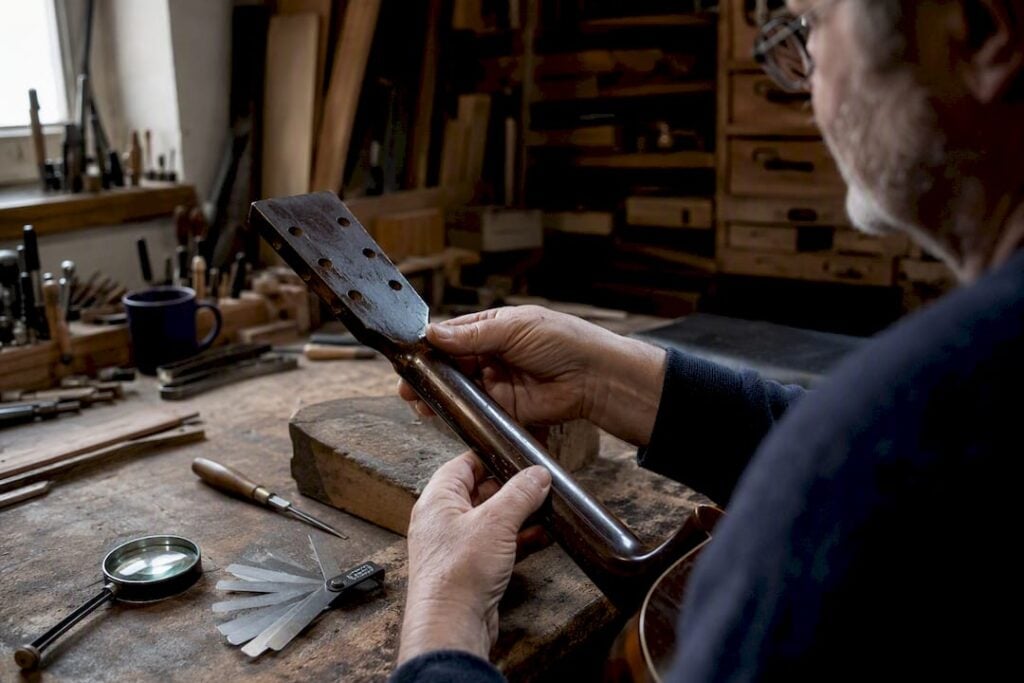
Vintage Guitar World offers testing appointments where you can play an instrument hands-on before committing, along with appraisal and certification services that produce the kind of documented, itemized record that strengthens your position if a hidden defect turns up later. Combine that with an independent luthier check for anything you’re buying sight unseen, and outside sources like MusicStreet’s testing guide can round out what to listen and look for.
If you’re weighing whether a particular instrument is worth the asking price, browsing our range of vintage guitars is a reasonable place to start, since each listing carries the condition detail and history a private sale rarely offers. Book a testing appointment, request a written evaluation, and buy with the paperwork already in hand rather than chasing it after the fact.
Where to Verify These Rules Yourself
- Verwaltung (Bund): official guidance on shortening Gewährleistungsfristen for used goods.
- IHK Düsseldorf: the formal difference between Gewährleistung and Garantie.
- Disclaimer: Widerrufsrecht specifics for online used-goods purchases.
- Händlerbund FAQ: what the 2026 EU label requires and how it will look.
Save these pages before you sign anything. They’re the wording you’ll want if a dispute ever reaches the point of quoting the law back to a dealer.
Sources
- Rechte und Pflichten — Verwaltung (Bund)
- Defect case — Kanzlei Herfurtner
- Disclaimer
- Gewährleistung, Umtausch und Garantie beim Kaufvertrag — IHK Düsseldorf