












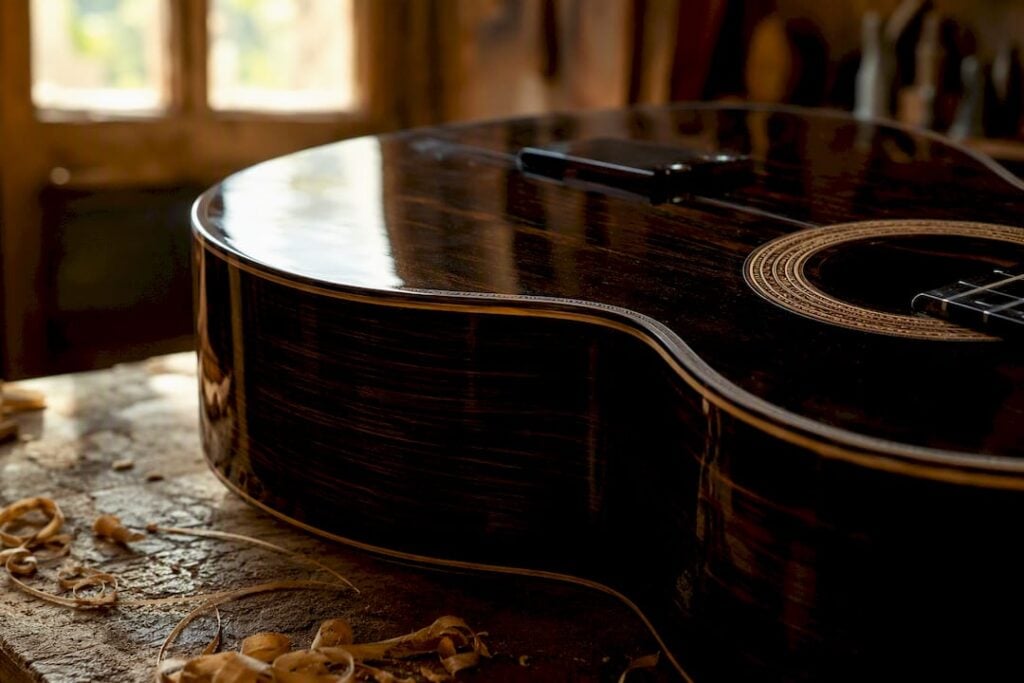

Blanca guitars, built from cypress, deliver a bright, fast, percussive attack that suits rhythmic accompaniment. Negra guitars, built from rosewood, produce more sustain and warmth, which is why so many soloists reach for one. Neither wood is “better.” A blanca answers a rasgueo pattern with clarity; a negra lets a falseta ring a beat longer.
That said, plenty of working professionals play both roles on the same instrument, because the line between the two has blurred over the last few decades. Your decision should hinge on three things:
- Your primary role: Accompanying cante or baile favors blanca’s speed. Solo concert work favors negra’s sustain.
- Your sound preference: Some players just prefer a rounder, warmer voice regardless of role.
- Your repertoire: Traditional compás-heavy pieces lean blanca; contemporary, harmonically dense falsetas lean negra.
Key Takeaways
The right flamenco guitar comes down to matching cypress’s speed and rosewood’s sustain to your actual playing role, not to wood labels alone.
| Point | Details |
|---|---|
| Blanca favors rhythm | Cypress construction gives quick attack and short sustain, ideal for accompaniment and golpe work. |
| Negra favors sustain | Rosewood back and sides add warmth, harmonic depth, and longer note decay for solo playing. |
| Bracing shapes tone too | Top thickness and bracing pattern can shift attack and sustain as much as wood species does. |
| Test the same passage twice | Play identical compás, falseta, and tremolo excerpts on both types before deciding. |
| Vintage-guitar-world offers hands-on testing | Book a testing appointment and get expert appraisal before buying a flamenco blanca or negra. |
Table of Contents
- Flamenco Blanca vs. Negra Starts With Wood, But Doesn’t End There
- Flamenco Negra: Denser Wood, Longer Voice
- How Wood Choice Reshapes Your Technique
- What to Actually Test Before You Buy
- What Our Team Notices in the Shop
- Where Blanca and Negra Came From
- Regional Habits and Local Variations
- Choose the Role, Not Just the Wood
- Ready to Try a Blanca or Negra in Person?
- Sources
Flamenco Blanca vs. Negra Starts With Wood, But Doesn’t End There
The word “blanca” means white, a reference to the pale, untreated cypress that builders have used for generations because it grows fast, weighs little, and costs less than tropical hardwoods. A traditional blanca pairs a spruce top with cypress back and sides, and the whole instrument comes in noticeably lighter than a classical guitar of similar size. That lightness isn’t a side effect. It’s the entire point.
Cypress has a lower density and a quicker damping response than rosewood, so the string’s energy dissipates faster. That translates to a shorter sustain and a snappier attack, exactly what you want when you’re driving a compás and need every rasgueo stroke to cut through a singer’s voice or a dancer’s zapateado. Samuel Moore’s breakdown of flamenco construction confirms this pairing as the traditional standard, and it’s still the benchmark builders work from today.
Three things separate a well built blanca from a mediocre one:
- Lower action. Flamenco players dig into the strings hard and fast, so the strings sit closer to the fretboard than on a classical guitar, cutting down on left hand travel.
- A thinner top or lighter internal bracing. This is what lets the top move freely and respond instantly, rather than storing energy the way a heavier top would.
- A shallower body depth. Less air inside the box means less low-end bloom, which keeps the tone tight and percussive instead of boomy.
When you’re testing one, listen for a dry, woody snap on golpe taps and a rasgueo that sounds crisp rather than washy. If the notes bleed into each other, the top is probably too stiff or the bracing too heavy for a genuine blanca voice.
Pro Tip: Tap the top gently with a knuckle before you even tune up. A blanca should give a bright, short “thwok,” almost like knocking on a hollow gourd. A dull or ringing tap usually means heavier bracing than you’d expect from a true rhythm guitar.
Rhythm players, accompanists working with singers or dancers, and anyone whose technique leans on golpe and rapid rasgueo patterns will feel most at home here.
Flamenco Negra: Denser Wood, Longer Voice
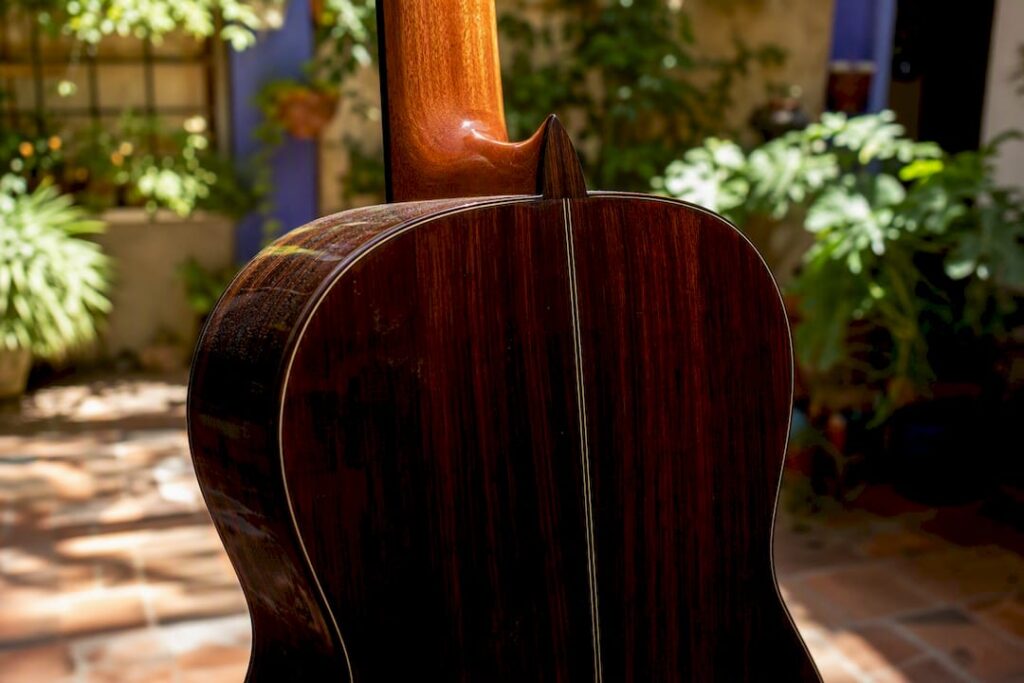
“Negra” refers to the darker rosewood, or occasionally other dense tropical woods, used for the back and sides, and that material choice reshapes the entire tonal picture. A negra typically keeps the same spruce top as a blanca but swaps cypress for Indian rosewood, which is denser, heavier, and structurally stiffer.
That density changes how the instrument behaves under your fingers in three specific ways:
- Sustain stretches out. Rosewood reflects vibrational energy back into the string rather than absorbing it as quickly as cypress does, so notes hang in the air longer.
- Harmonic complexity increases. Denser woods tend to reinforce more overtones, giving each note a richer, more layered color instead of a single clean pitch.
- Low-end response deepens. The added mass and stiffness let the body move more air at lower frequencies, filling out the bottom string in a way cypress rarely matches.
Setup wise, a well built negra still keeps the fast, low action flamenco players expect. The difference shows up in tonal response, not playability. Where a blanca answers quickly and fades fast, a negra takes a fraction longer to open up and holds each note a beat longer, which changes how phrases connect to each other.
Soloists gravitate toward negra guitars because sustain and harmonic depth serve melodic lines and slower, more expressive falsetas better than a percussive attack does. Players crossing over from classical technique also tend to prefer the fuller voice, since it feels closer to what they’re used to on a concert classical instrument. If your set list leans toward Paco de Lucía era compositions or contemporary concert flamenco, a negra will likely reward you more than a blanca will.
How Wood Choice Reshapes Your Technique
The blanca versus negra question isn’t just theoretical. It changes how specific techniques sound and feel under your hands, and the difference is bigger for some techniques than others.
- Rasgueo: A blanca gives each stroke a sharp, articulate edge, so complex rasgueo patterns stay distinct even at speed. A negra smooths those same strokes into a warmer wash, which can sound beautiful but muddies fast, intricate patterns.
- Picado and speed runs: Blanca’s quick decay means each picado note clears out of the way before the next one lands, so rapid lines sound cleaner. On a negra, the added sustain can make very fast runs blur slightly, though most players find this only noticeable above a certain tempo.
- Tremolo: This is where negra tends to shine. Tremolo depends on overlapping decay to create a smooth, singing line, and rosewood’s longer sustain does exactly that work for you. A blanca’s faster decay can make tremolo sound choppier unless your right hand technique compensates.
- Golpe and percussive effects: Blanca wins here without much argument. The tighter, drier body gives golpe taps more definition against the strings, which matters when you’re accompanying footwork.
Builders and players alike generally agree that blanca favors speed, clarity, and percussion, while negra favors depth, musicality, and sustain, and that distinction plays out technique by technique, not just as a vague tonal impression.
The trade-off gets real for players who need both attack and sustain in the same set. A soleá with dance accompaniment followed by a solo granaína puts genuinely different demands on the same instrument, which is exactly why some professionals own one of each rather than forcing one guitar to do both jobs.
What to Actually Test Before You Buy
Reading specs online only gets you so far. You need to hear and feel the instrument doing what you’ll actually ask it to do.
- Play a compás passage first. Run a straightforward soleá or bulería rhythm and listen for how cleanly the rasgueo strokes separate from each other.
- Move to a falseta. Pick something melodic and slower, and pay attention to how long notes ring and how the harmonics bloom (or don’t).
- Add a tremolo excerpt. This exposes sustain differences faster than almost anything else you can play.
- Finish with golpe. Tap out a percussive pattern and listen for definition versus boom.
- Compare the same passage on both types, ideally back to back, since players comparing the same falseta on both wood types is a long standing practice in flamenco circles for good reason. A recorded demo of one falseta played on both a negra and a blanca is worth listening to before you even step into a shop, just to calibrate your ear.
Beyond sound, ask about top thickness and bracing pattern specifically, since luthiers point out that these construction details can shift attack and sustain more than the back and side wood alone. Two blancas from different builders can sound meaningfully different because of bracing choices, not just wood.
If you’re buying online, ask the seller for a video of the same passage played on the exact instrument you’re considering, not a generic demo of “a blanca” or “a negra.” Ask what setup work was done recently and whether a return window exists if the guitar doesn’t match the sound in the video.
Pro Tip: Bring your own set of strings if you’re testing in person. A shop’s demo strings might be old or a different brand than what you play, and that alone can mask or exaggerate tonal differences that have nothing to do with the wood.
For a broader rundown of what to physically check on any flamenco instrument, our flamenco guitar checklist walks through the full testing routine step by step.
What Our Team Notices in the Shop
Handling flamenco instruments day to day teaches you things a spec sheet never will.
- Setup changes perceived sustain more than players expect. Raising the action a fraction of a millimeter on a blanca can add a noticeable amount of ring without sacrificing much attack, a tweak worth discussing with a luthier before assuming you need a different guitar entirely.
- Bracing age matters. Older cypress blancas that have been played hard for decades often open up and gain warmth over time, sometimes narrowing the tonal gap with a negra.
- Buyers underestimate body depth. Two guitars with identical woods can feel and sound different if one has a noticeably deeper body.
Vintage-guitar-world offers testing appointments, expert consultation, and appraisal and certification services specifically because these nuances rarely translate through a listing photo or spec sheet alone.
Where Blanca and Negra Came From
Flamenco guitar making traces back to 19th century Andalusia, where builders like Antonio de Torres established the body shape and proportions that still define the instrument today. For most of that history, there wasn’t a formal “blanca versus negra” split. Builders used whatever quality wood was available and affordable, and cypress was cheap, local, and plentiful across southern Spain, which made it the default choice for working musicians who couldn’t afford imported hardwoods.
Rosewood entered the picture as flamenco guitarists began crossing paths with the classical guitar world, where rosewood backs and sides had long been standard on higher end instruments. Builders started offering a rosewood option for players who wanted more sustain and a fuller voice, particularly as flamenco moved from strictly accompanying cante and baile into concert halls as a solo art form. Paco de Lucía’s rise in the mid 20th century accelerated that shift. His melodic, harmonically ambitious style demanded an instrument that could sustain and color notes the way a cypress blanca simply couldn’t.
The names themselves, blanca for “white” and negra for “black,” describe the visible wood tone rather than any formal classification system. Cypress dries to a pale, almost blonde color, while rosewood darkens to deep brown or near black. Over time those color descriptions hardened into shorthand for two distinct tonal philosophies, even though, as luthiers will tell you, the wood alone never tells the whole story.
Regional Habits and Local Variations
Flamenco guitar making has always clustered around specific cities, and those regional workshops developed their own habits around blanca and negra construction. Granada, Seville, and Córdoba each built strong luthier traditions, and builders in each city often favored particular bracing patterns or body proportions that shaped a local sound.
Andalusian workshops, particularly those closest to flamenco’s roots in Jerez de la Frontera and Seville, tend to still favor traditional lightweight blancas for accompanists, since that regional tradition never fully separated from live cante and baile performance where speed and clarity matter most. Madrid, and later international builders working outside Spain, produced more negra guitars aimed at the growing solo concert circuit, where recital halls and recordings rewarded sustain and tonal color over raw percussive punch.
Outside Spain, flamenco’s popularity in places like Japan and parts of Latin America created demand for both types, though solo focused players in those markets have historically leaned toward negra guitars, mirroring the classical guitar influence in those regions. None of this means one region “owns” one style. It just means the instrument’s split personality grew out of real geographic and musical currents, not an arbitrary marketing distinction.
Choose the Role, Not Just the Wood
Most buying advice fixates on wood species as though it’s the whole story, and that’s the piece of conventional wisdom worth pushing back on. Bracing pattern, top thickness, and body depth often shift tone as much as cypress versus rosewood does, a point luthiers raise consistently and one casual buyers rarely hear.
The more useful question isn’t “blanca or negra?” It’s “what am I actually going to play on this guitar most often?” A dedicated accompanist buying a negra because it sounds prettier alone in a quiet room might find it fights against them the moment a singer or dancer needs a crisp golpe to land on time. A soloist buying a blanca because tradition says accompanists use them might spend years wishing their tremolo held together better.
Prioritize testing the actual passages you play, not adjectives you’ve read online. Sound preference matters, repertoire matters more, and wood label matters least of the three. That ordering runs against how most buying guides frame the decision, but it’s the one that holds up once you’ve actually sat with both types in your hands.
Ready to Try a Blanca or Negra in Person?
Reading about tonal differences only gets you partway there. At some point you need cypress and rosewood under your fingers, played through your own repertoire, before the choice actually clicks. Vintage-guitar-world curates a hand-selected range of flamenco instruments, each with detailed history and construction notes, so you’re never guessing at what a listing photo can’t tell you.

We offer testing appointments where you can run the exact compás, falseta, and tremolo passages covered above on real instruments, side by side, before committing. Our team can also walk you through setup history, top bracing, and prior repairs on any guitar you’re considering, along with valuation and certification if you’re buying with resale or collector value in mind. Browse our current flamenco selection through the vintage guitar catalog and book a testing appointment to hear the difference for yourself, on your own hands, before you decide.
Sources
- Flamenco Guitars — Samuel Moore
- The flamenco Guitar
- Differences Between Blancas, Negras, and Classicals – Ethan Deutsch