













TL;DR:
- Museum guitars are rare instruments distinguished by their historical significance, craftsmanship, and unique materials. They often feature materials like gut frets, tortoiseshell, and ivory, and are linked to renowned makers, with provenance and design innovation also influencing their museum status. Museums display these guitars to connect their craftsmanship to cultural history, emphasizing condition and originality as vital to their value.
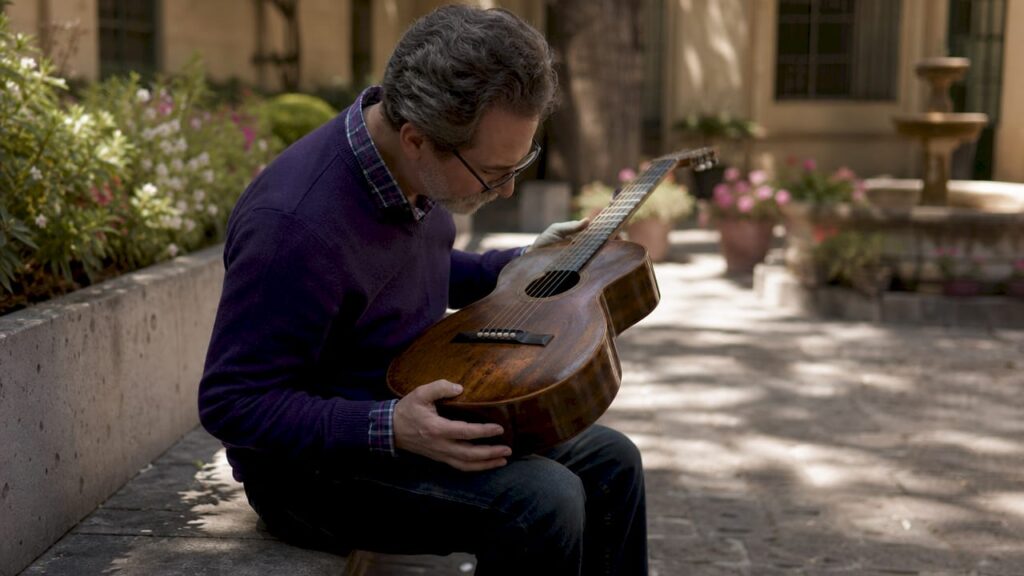
Museum guitars are defined as instruments that combine exceptional historical significance, master-level craftsmanship, and rare physical attributes that place them beyond ordinary collectibles. These are not simply old guitars. They are artifacts that document the evolution of music, lutherie, and cultural identity across centuries. Understanding the features of museum guitars gives collectors and musicians a sharper eye for what separates a truly historic instrument from a well-aged one. Institutions like the Musical Instrument Museum in Phoenix have built entire curatorial frameworks around these distinctions, and permanent collections typically focus on 70 to 100 instruments to represent the full breadth of acoustic, electric, and experimental guitar design.
1. What are the key features of museum guitars?
Museum-quality guitars share a specific set of attributes that curators, collectors, and luthiers recognize immediately. These attributes fall into three broad categories: construction materials, maker provenance, and design innovation. A guitar earns museum status when it scores high across all three. Physical condition matters, but it is secondary to historical significance and craftsmanship depth.
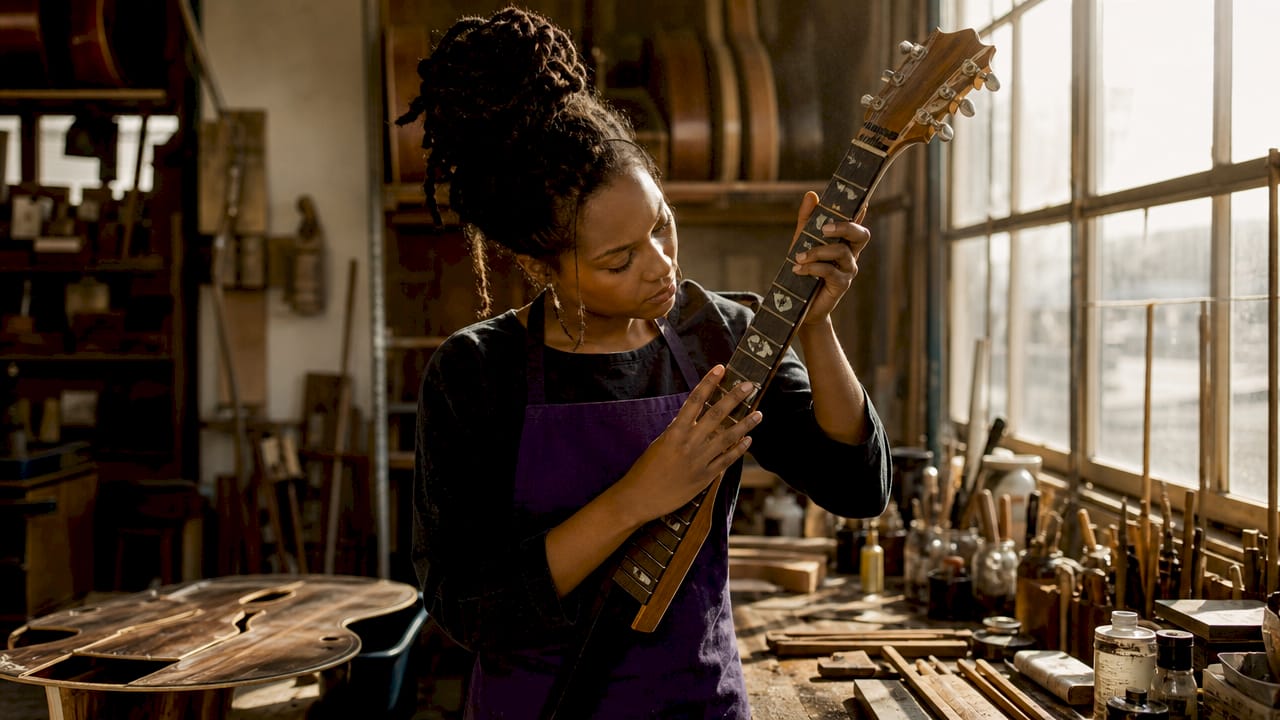
The craftsmanship of vintage guitars at the museum level reflects techniques that were either pioneering for their era or so refined that they have never been surpassed. Baroque guitars from the 17th century, for example, used materials and joinery methods that modern luthiers still study. Understanding these features is the foundation for any serious collector.
2. Rare construction materials that define museum instruments
The materials used in historic guitars are among the clearest markers of museum quality. Gut-tied frets, tortoiseshell binding, and ivory nuts or saddles appear on instruments from the 16th through 19th centuries. These materials are now regulated or prohibited under CITES and other international agreements, which means their presence on an instrument is a direct provenance marker that helps authenticate age and origin.
Key construction materials found on museum guitars include:
- Gut frets: Tied directly around the neck, these identify instruments predating the metal fret era and are critical for dating.
- Tortoiseshell and ivory: Used for binding, tuning pegs, and decorative inlays. Their presence confirms pre-regulation manufacture.
- Spruce and cedar tops: Historically sourced from old-growth forests, producing tonal qualities that modern timber cannot replicate.
- Ebony and rosewood fingerboards: Cut from dense, slow-grown stock that gives historic instruments their distinctive feel and sustain.
- Elaborate marquetry and purfling: Decorative inlay work around the soundhole and body edges, often using exotic woods or bone.
Bracing patterns also distinguish museum instruments. The fan bracing system developed by Antonio de Torres in the 19th century transformed classical guitar construction. Torres guitars in museum collections show the direct lineage between his structural experiments and every modern classical guitar built today.
Pro Tip: When examining a historic guitar, check the fret material first. Gut frets confirm pre-19th-century origin and immediately elevate the instrument’s museum classification.
3. Maker legacies and provenance that elevate a guitar to museum status
The identity of the maker is often the single most important factor in museum classification. Golden Age guitar makers like Giorgio Sellas, René Voboam, and Joachim Tielke hold status equivalent to Antonio Stradivari in violin history. Their instruments are key highlights in museum exhibits worldwide, and a confirmed attribution to any of these makers places a guitar in the top tier of collectibility.
Provenance goes beyond the maker’s label. It includes documented ownership history, exhibition records, and any connection to significant musical events or performers. Curators treat provenance as a narrative tool. A guitar owned by a 19th-century concert performer carries a different story than an identical instrument that spent its life in a private collection.
“Museum guitars tell stories beyond their physical form, reflecting the unique vision and experimentation of their builders. The cultural significance of these instruments is inseparable from the hands that made and played them.”
Museum curation often groups guitars by maker pedigree and historical era, mirroring violin tier systems to communicate craftsmanship hierarchies. This approach helps visitors understand not just what an instrument looks like, but where it stands in the full arc of lutherie history. Collectors who understand these hierarchies make sharper acquisition decisions and can identify undervalued instruments before the market catches up.
The role of luthiers in shaping guitar history is inseparable from the museum value of their instruments. Learning which makers defined each era is the most direct path to understanding why certain guitars command museum-level attention.
4. Unique design innovations found in museum-quality guitars
Some museum guitars earn their place not through age alone but through extraordinary design ambition. The Pikasso Guitar, built in 1984 for jazz guitarist Pat Metheny, is the clearest modern example. It integrates 42 strings, four necks, and multiple sound holes into a single playable instrument. That level of structural complexity has no parallel in standard guitar production.
The Pikasso Guitar’s key design features include:
- Four necks: Each tuned differently, giving the player access to a range of voicings impossible on a standard instrument.
- 42 strings: Arranged across the necks and a harp-style section, enabling both melodic and harmonic textures simultaneously.
- Wedge body shape: Designed to improve string visibility and player comfort without sacrificing acoustic volume.
- Multiple sound holes: Positioned to project sound in different directions, creating a fuller acoustic field.
- Integrated pickups: Piezo and hexaphonic systems allow the instrument to be amplified while preserving its acoustic character.
| Feature | Purpose | Impact |
|---|---|---|
| Four necks | Extended range and tuning variety | Expands harmonic and melodic options |
| Wedge body | Ergonomic comfort | Reduces strain during complex playing |
| 42 strings | Harp-like resonance | Adds textural depth beyond standard guitars |
| Hexaphonic pickups | Individual string amplification | Preserves acoustic nuance when amplified |
The Wedge body design improves string visibility and player comfort while preserving acoustic volume. That balance between ergonomics and acoustics is a defining characteristic of the best experimental museum instruments.
Pro Tip: When evaluating experimental guitars for museum quality, look for design features that solve a real playing problem. Pure novelty fades. Functional innovation endures.
5. How museums curate and present guitars to connect history and craft
Museum exhibit design for guitars goes far beyond placing instruments in glass cases. The most effective exhibits connect guitar-making traditions to violin-making, highlighting shared structural innovations from the 17th century onward. The Musical Instrument Museum in Phoenix places instruments by Stradivari alongside guitars by Golden Age luthiers, showing visitors how the same design principles traveled across instrument families.
Curation strategies that define the best guitar exhibits include:
- Comparative displays: Placing guitars next to violins and lutes to show shared construction logic and historical cross-pollination.
- Performance video integration: Over half of exhibited instruments are accompanied by performance video, connecting the artifact to living musical practice.
- Era-based grouping: Organizing instruments by historical period to show how design evolved in response to musical demands.
- Material storytelling: Using labels and displays to explain why specific materials were chosen and what they reveal about the era of manufacture.
| Display Method | What It Communicates |
|---|---|
| Comparative instrument grouping | Shared lutherie traditions across instrument families |
| Performance video | How the instrument sounds and functions in practice |
| Provenance documentation | Ownership history and cultural connections |
| Material explanation panels | Why specific woods and materials define an era |
Pop-up exhibits typically select 8 to 10 representative instruments to showcase craftsmanship breadth. That constraint forces curators to choose instruments that each tell a distinct story, which is a useful framework for collectors building their own focused collections.
6. Body shape and acoustic engineering as museum criteria
Body shape is one of the most telling features of a historic guitar. The transition from the Baroque guitar’s smaller, waisted body to the larger Torres-influenced classical form tracks directly with the expansion of concert halls and the demand for greater projection. Each shape change was an engineering response to a musical problem.
The historical context behind a guitar’s body shape adds measurable value for collectors. A guitar with a documented body shape that predates the Torres revolution is a primary source for understanding how lutherie evolved. Museums treat these instruments as evidence, not decoration.
Acoustic engineering features that appear on museum instruments include ladder bracing on early flat-top guitars, X-bracing innovations from the 19th century, and the asymmetric fan bracing patterns of Spanish luthiers. Each system produces a different tonal character and reflects the musical priorities of its era. Collectors who can identify these systems by sight have a significant advantage when evaluating instruments.
7. Musical instrument preservation and condition standards
Preservation condition directly affects both museum classification and market value. A guitar in original, unaltered condition carries more historical information than one that has been repaired or refinished. Original finish, original tuning machines, and intact bracing all contribute to what conservators call “integrity of evidence.”
The signs of collectible guitars that matter most to museum curators are those that confirm the instrument has not been altered from its original state. Replaced tuning machines, refretted necks, and refinished bodies all reduce the instrument’s value as a historical document, even when the repairs were done expertly.
Proper storage conditions for museum guitars require stable humidity between 45% and 55% and temperatures between 65°F and 75°F. Fluctuations outside these ranges cause wood movement that damages joints, cracks tops, and distorts necks. Museums invest heavily in climate control precisely because the physical integrity of the instrument is the foundation of its historical value.
Key Takeaways
Museum guitars earn their status through a combination of rare materials, documented maker provenance, design innovation, and preserved physical integrity that no single feature alone can establish.
| Point | Details |
|---|---|
| Materials confirm age | Gut frets, tortoiseshell, and ivory are regulated today, making their presence a direct authentication marker. |
| Maker identity drives value | Guitars by Sellas, Voboam, and Tielke hold the same tier as Stradivari instruments in museum classification. |
| Design innovation counts | The Pikasso Guitar’s 42 strings and four necks show that functional complexity earns museum status as much as age does. |
| Curation connects stories | Museums link guitars to violin traditions and performance video to show instruments as living cultural artifacts. |
| Condition preserves evidence | Original finish, hardware, and bracing make a guitar a primary historical source, not just a collectible object. |
Why museum guitars changed how I think about collecting
The first time I held a Baroque guitar with gut frets still intact, I stopped thinking about guitars as instruments and started thinking about them as documents. Every material choice, every construction decision, every repair or lack of repair told me something specific about the person who built it and the world they built it in. That shift in perspective is what separates serious collectors from enthusiasts who simply accumulate.
What most collectors miss is that museum guitars are not valuable because they are old. They are valuable because they are specific. A Torres guitar from 1888 is not just “an old guitar.” It is evidence of a precise moment when fan bracing became the dominant structural logic for classical instruments. The age is incidental. The specificity is everything.
The Pikasso Guitar taught me the same lesson from the opposite direction. Built in 1984, it has no age-based claim to museum status. It earns its place through the audacity of its engineering and the fact that it solved real playing problems in ways no one had attempted before. Museum quality is about depth of intention, not years on the shelf.
Collectors who approach historic instruments with this mindset find instruments that others overlook. They ask not “how old is it?” but “what does it prove?” That question leads to better acquisitions, sharper valuations, and a collection that tells a coherent story rather than a random accumulation of old wood.
— Vintage
Vintage-guitar-world: where museum-quality craftsmanship meets collectors
Vintage-guitar-world curates a selection of rare, restored, and historically significant guitars that embody the features discussed here. From classical instruments with documented provenance to handcrafted guitars built using traditional lutherie methods, the collection is assembled with the same criteria that museum curators apply.

Collectors and musicians can explore vintage guitar types organized by historical period, construction method, and rarity. Each instrument listing includes detailed historical context, condition notes, and provenance documentation. For those looking to maintain the integrity of an existing instrument, the acoustic guitar restoration guide covers preservation standards that align with museum-level care. Vintage-guitar-world also offers valuation services for collectors who want to understand exactly where their instruments stand in the current market.
FAQ
What materials identify a museum-quality guitar?
Gut-tied frets, tortoiseshell binding, and ivory hardware are the clearest material markers of museum-quality historic guitars. These materials are now regulated, so their presence on an instrument directly confirms pre-regulation manufacture and authentic age.
Which guitar makers produce museum-level instruments?
Golden Age luthiers like Giorgio Sellas, René Voboam, and Joachim Tielke hold museum-tier status equivalent to Stradivari in violin history. Their instruments are primary exhibits in major guitar collections worldwide.
How does the Pikasso Guitar qualify as a museum instrument?
The Pikasso Guitar qualifies through its extraordinary design innovation, integrating 42 strings, four necks, and a Wedge body shape built for Pat Metheny in 1984. Functional complexity and documented artistic intent place it firmly in the museum category despite its relatively recent construction.
What condition standards do museums apply to historic guitars?
Museums require original, unaltered condition with stable storage at 45%–55% humidity and 65°F–75°F. Replaced hardware, refinished bodies, or refretted necks reduce an instrument’s value as a historical document even when the work was done well.
How do museum curators decide which guitars to exhibit?
Curators group instruments by maker pedigree, historical era, and cultural significance, mirroring the tier systems used for violins. Permanent collections typically focus on 70 to 100 instruments, while pop-up exhibits select 8 to 10 to represent the broadest possible range of craftsmanship and design history.