


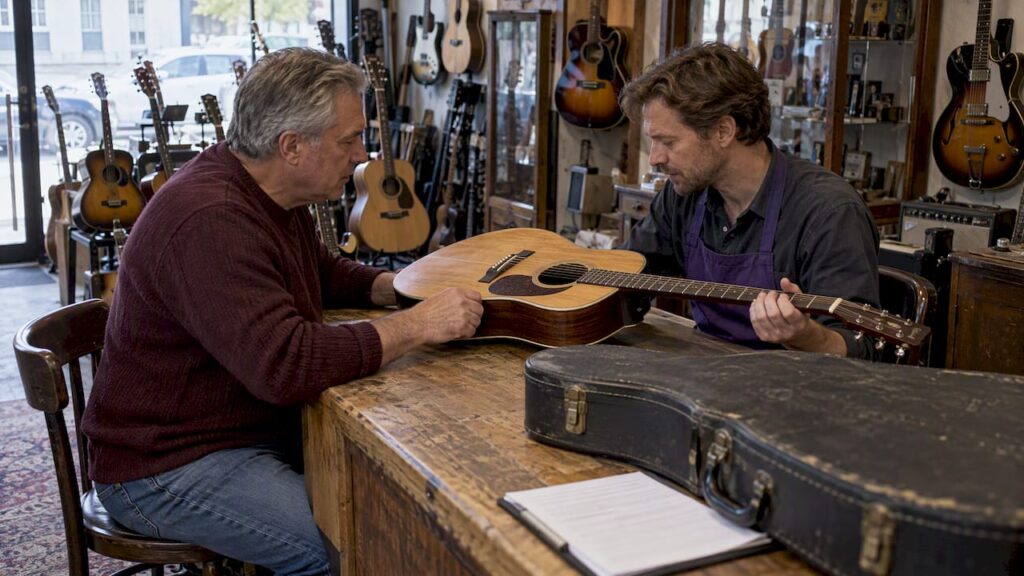

To sell a vintage guitar securely, you need a signed bill of sale, proof of ownership, clear condition photos, and, when value or provenance matters, an appraisal, often called a Gutachten. Each item solves a different problem: the bill of sale proves what was agreed, ownership records prove the guitar is yours to sell, and photos lock in the condition at the moment of handover. Start by drafting the bill of sale and photographing the instrument before you list it anywhere.
TL;DR:
- A comprehensive paper trail that includes signed bill of sale, proof of ownership, and detailed photos is essential for protecting both seller and buyer.
- Organizing documents in a logical sequence—gathering invoices, photographing the guitar, and drafting a specific condition report—prevents omissions during sale.
- An appraisal or Gutachten is particularly valuable for high-value, rare, or historically significant guitars, supporting accurate pricing and insurance needs.
- Private sellers should disclose known defects explicitly, as false or vague condition descriptions can lead to disputes, especially under German law.
- Confirmed bank transfers and signed receipts ensure safe payment and clear transfer of ownership during handover, reducing potential conflicts.
Table of Contents
- The essential documents checklist for buyers and sellers
- How to prepare and organize your sale paperwork
- Legal basics every seller should know before signing
- When to commission an appraisal and what it covers
- Completing the handover and getting a signed receipt
- Building a provenance record buyers can trust
- What a specialist weighs before recommending an appraisal
- Getting expert help with valuation, certification, or a safe sale
- FAQ
- Sources
The essential documents checklist for buyers and sellers
A complete paper trail protects both sides once money changes hands. Buyers should ask for these items before paying; sellers should have them ready before listing.
- Bill of sale (Kaufvertrag): full names and addresses of both parties, ID numbers, serial number, agreed price, date, and both signatures.
- Proof of ownership: the original purchase invoice or an earlier bill of sale showing an unbroken chain of custody.
- Service and restoration invoices: receipts for refrets, neck resets, or electronics work, each tied to a date and the shop that performed it.
- Photodocumentation: overview shots, close-ups of the serial number, and clear images of any wear or repair.
- Valuation or Gutachten: a written appraisal when the instrument is rare, high value, or has an uncertain history.
- Existing warranty or guarantee statements: anything still in effect from a prior repair or purchase that could affect a claim.
A bill of sale does not need a lawyer’s touch, but it should be specific. A specific condition description protects you far more than vague terms like “sold as seen.”
Pro Tip: Attach every supporting invoice directly to the bill of sale as numbered pages so a buyer, insurer, or future seller can trace the whole history in one document.
How to prepare and organize your sale paperwork
Good paperwork is mostly about sequence. Work through it in this order so nothing gets missed once a buyer is ready to move.
- Gather every original invoice, repair receipt, and prior bill of sale you still hold.
- Record the serial number exactly as stamped, including any letters or spacing.
- Photograph the guitar systematically: full front and back, headstock, serial number, maker’s label through the sound hole, and any wear or repaired areas.
- Draft the bill of sale using plain, specific condition language rather than vague terms like “excellent.”
- Scan and name every file consistently, for example 2026-05-08_instrument_serial123_invoice.pdf, and keep a backup copy off your main device.
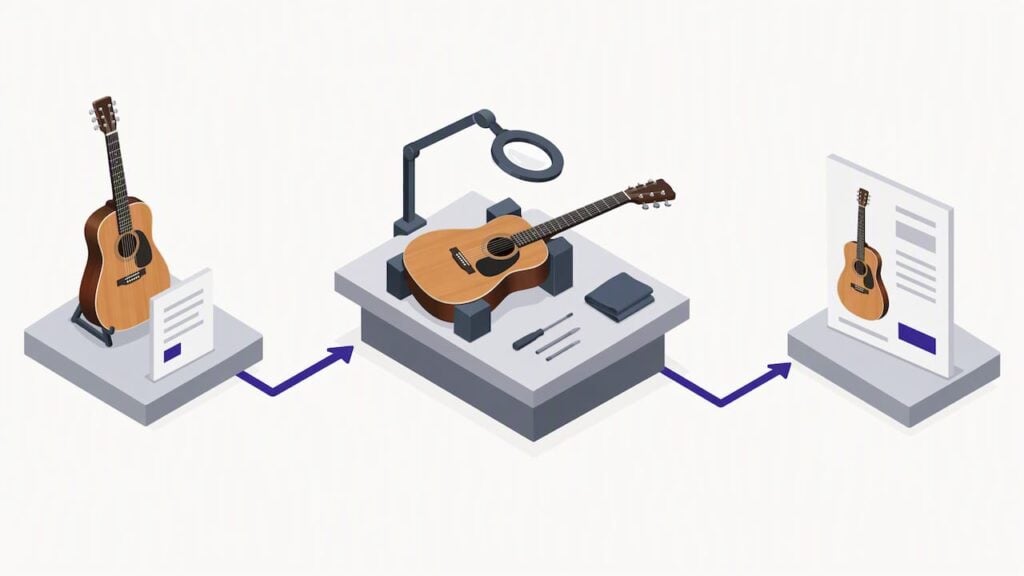
- Decide whether the value or history justifies a Gutachten, and if so, brief the appraiser with your existing invoices and photos before the appointment.
This sequence matters because an appraiser or buyer will ask for the same things in roughly the same order: identity, history, condition, then valuation.
Legal basics every seller should know before signing
Under German law, BGB § 433 sets the baseline for any sale: the seller must deliver the item and transfer ownership, and the buyer must pay the agreed price. A written contract isn’t legally required for movable goods like a guitar, but it is the simplest way to prove what both sides agreed to later.
Seller status changes the rules significantly. A private seller can often exclude liability for defects (Sachmängelhaftung), but that exclusion has limits.
- Known defects must always be disclosed, regardless of any exclusion clause.
- An exclusion becomes ineffective if the seller acted with intent to deceive (Arglist).
- Selling frequently or in a businesslike way can reclassify a private seller as an entrepreneur, which narrows what can legally be excluded.
- A clause should explicitly state the sale is made “under exclusion of Sachmängelhaftung (private sale),” naming the exclusion directly rather than implying it.
One documented fact matters more than any clause: consumer guidance from Verbraucherzentrale stresses careful inspection and full disclosure for used goods, warning buyers to be cautious of “as seen” language when a defect was concealed. Dated photos and a specific condition clause do more to prevent disputes than any boilerplate exclusion wording.
When to commission an appraisal and what it covers
Not every guitar needs a formal Gutachten, but three situations usually call for one: high market value, unclear or incomplete provenance, and insurance purposes where you need a documented figure rather than an estimate.
A standard appraisal typically includes a condition report, dated photographs, a comparison against similar instruments on the market, and a signed expert opinion. That combination gives a buyer something a casual listing cannot: an independent, written assessment rather than the seller’s own description.
- Market value appraisals support a sale price in a private transaction or consignment.
- Insurance valuations document replacement value for a policy.
- Formal Gutachten documents carry the most weight in negotiations involving rare or historically significant instruments.
Pro Tip: Reference the appraisal directly in your listing text and attach a scanned copy to the bill of sale, since buyers treat a documented Gutachten as a strong signal that the asking price is grounded in something beyond opinion.
Readers who want the full process, including how to brief an appraiser and what a finished report looks like, can see the steps for obtaining a guitar appraisal.
Completing the handover and getting a signed receipt
The handover is where paperwork either does its job or gets forgotten in the excitement of a sale. Treat payment and paperwork as a single step, not two separate ones.
- Hold the instrument and its documents until payment has fully cleared, not just been sent.
- Favor bank transfer with confirmed clearance over cash for higher-value instruments, and avoid releasing items against pending transfers.
- Have the buyer sign a short receipt confirming the instrument’s condition, included accessories, and acceptance at pickup.
For shipped sales, add a few extra steps:
- Pack the guitar in a hard case inside a properly sized shipping carton with corner protection.
- Photograph the instrument’s condition immediately before sealing the box, timestamped the same day as dispatch.
- Insure the shipment for the agreed sale price and keep the shipping receipt with your other sale documents.
A one-page receipt that lists what was sold, its condition at handover, and both signatures resolves most disputes before they start.
Building a provenance record buyers can trust
Provenance is what separates “an old guitar” from a documented piece with a traceable history, and it directly affects both price and buyer confidence.
- Primary evidence: original purchase invoices, manufacturer certificates, and prior bills of sale showing the chain of ownership.
- Secondary evidence: period photographs, maker or factory records, and a serial number that matches known production records.
- Partial provenance: disclose honestly, for example “owned since 2015, prior history undocumented,” rather than implying a complete record that doesn’t exist.
Guitars with full provenance tend to command stronger buyer interest, since documented history reduces the risk a buyer is taking on. A detailed walkthrough of what to gather and how to present it is covered in this guide to proving a guitar’s provenance.
What a specialist weighs before recommending an appraisal
The decision between a quick private sale and a fuller paper trail usually comes down to value and complexity. A well-documented guitar with clear ownership history rarely needs more than a bill of sale and good photos. A rare or historically significant instrument, or one with gaps in its history, benefits from a Gutachten and often from consignment, where testing appointments and in-person inspection replace guesswork with direct examination.
— Vintage
Getting expert help with valuation, certification, or a safe sale
Services are available involving valuation and appraisal reports, certification, consignment sales, restoration, and test appointments for buyers who wish to inspect an instrument in person before purchasing.

- A documented appraisal reduces the back and forth buyers usually expect on price.
- Consignment shifts listing, testing appointments, and handover paperwork onto people who handle it daily.
- Restoration records from a known workshop carry more weight than unverifiable repair claims.
If you want a second opinion on a guitar’s value or history before you list it, visit Vintage Guitar World to arrange an appraisal or consignment conversation.
FAQ
Do I legally need a written contract to sell a guitar?
No, German law does not require a written contract for selling movable goods like a guitar, since BGB § 433 only requires delivery and payment to form a valid sale. A written bill of sale is still strongly recommended because it documents the agreed price, condition, and terms if a dispute arises later.
What should a condition report include for a vintage guitar?
A solid condition report covers overview photos, close-ups of any wear or repairs, a clear shot of the serial number, and a written description using specific terms rather than vague ones. Pairing it with any available service invoices gives a buyer a complete picture of the instrument’s history and current state.
Can a private seller exclude all liability for defects?
A private seller can often exclude liability for general defects, but known issues must always be disclosed regardless of any exclusion clause, and the exclusion becomes invalid if the seller concealed a defect intentionally. Selling guitars frequently or in a businesslike manner can also shift a seller’s status toward an entrepreneur, which limits what can legally be excluded.
When is a Gutachten worth the cost?
A Gutachten makes the most sense for high-value instruments, guitars with incomplete provenance, or anyone needing a documented figure for insurance purposes. It typically includes a condition report, dated photos, market comparables, and a signed expert opinion, which gives buyers more confidence than a seller’s own description alone.
What is the safest way to receive payment for a private guitar sale?
Confirmed bank transfer is generally safer than cash for higher-value instruments, and the instrument and its documents should stay with the seller until the funds have fully cleared. A signed receipt noting the instrument’s condition at handover protects both sides regardless of the payment method used.