












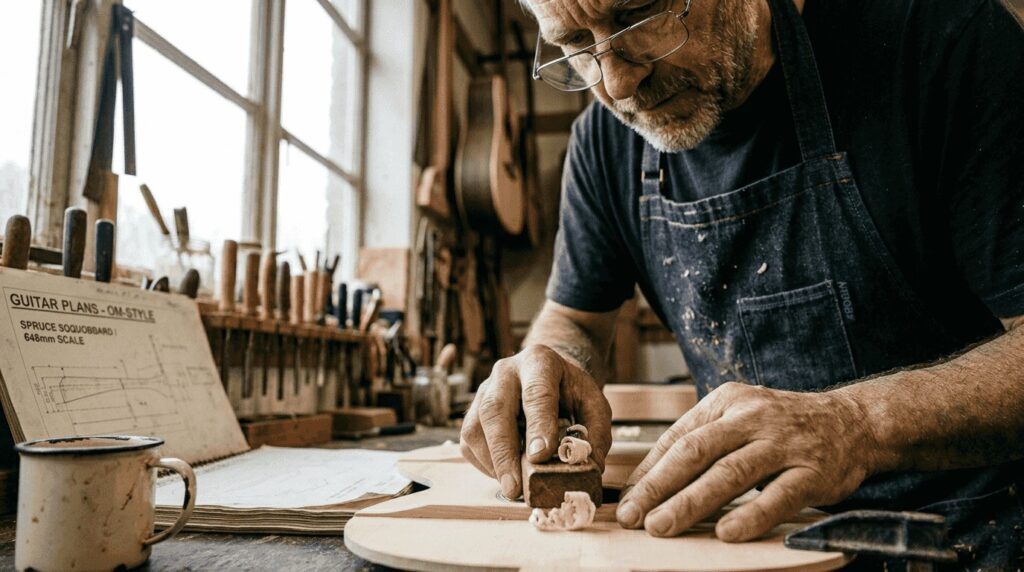

Many guitar enthusiasts assume that instruments within the same category deliver similar sound and feel, but craftsmanship creates dramatic tonal and playability differences that distinguish exceptional guitars from ordinary ones. The luthier’s expertise in wood selection, resonance tuning, and hand adjustment transforms raw materials into instruments with unique voices and character. Understanding these craftsmanship elements helps collectors and players recognize why vintage and handmade guitars command premium prices and lasting devotion. This guide reveals how expert techniques shape every aspect of guitar quality, from acoustic properties to aesthetic details, empowering you to make informed choices and deepen your appreciation for these remarkable instruments.
Table of Contents
- Understanding Guitar Craftsmanship: What It Means For Sound And Playability
- The Crucial Role Of Wood In Guitar Craftsmanship And Acoustic Quality
- Visual Design, Playability, And The Luthier’s Craftsmanship Signature
- Why Craftsmanship Defines The Legacy And Value Of Vintage And Handmade Guitars
- Explore Unique Vintage And Handmade Guitars At Vintage Guitar World
- Frequently Asked Questions About Craftsmanship In Guitars
Key takeaways
| Point | Details |
|---|---|
| Craftsmanship shapes sound | Expert wood selection and resonance tuning create each guitar’s unique tonal signature and acoustic character. |
| Handmade means individual adjustment | Luthiers modify construction techniques based on wood variations to optimize playability and sound quality. |
| Visual design affects experience | Aesthetic choices and structural details influence both appearance and how the instrument feels during play. |
| Vintage value reflects skill | Historic craftsmanship techniques and documented provenance drive collector interest and market value. |
| No two guitars are identical | Each handcrafted instrument embodies the luthier’s artistic vision and technical approach differently. |
Understanding guitar craftsmanship: What it means for sound and playability
Craftsmanship in guitar making integrates three essential dimensions: visual aesthetics, playability characteristics, and acoustic sound qualities. Guitar makers consider these main aspects when designing and building instruments, ensuring each element contributes to the overall playing experience. This holistic approach distinguishes master luthiers from basic manufacturers, as skilled craftspeople balance competing demands while maintaining structural integrity and tonal excellence.
The technical complexity of guitar construction requires diverse expertise across multiple disciplines. An instrument maker should understand mechanics, forces, and vibrating string laws alongside drawing skills and acoustic principles. This multidisciplinary knowledge allows luthiers to predict how design choices will affect the finished instrument’s performance and longevity.
String vibration on guitars produces relatively weak acoustic energy compared to instruments like violins or pianos. The classical guitar must be made with careful sensitivity to amplify this limited vibration effectively through the soundboard and body. This fundamental challenge drives many craftsmanship decisions, from wood thickness to bracing patterns, as luthiers work to maximize resonance without sacrificing structural stability.
Playability considerations extend beyond sound production to encompass the physical relationship between player and instrument. Key factors include:
- Fret shaping and height for smooth string transitions
- String spacing that accommodates different playing styles
- Neck dimensions and profile for comfortable hand positioning
- Action height balancing ease of play with tone production
Pro Tip: Understanding how luthiers tune the resonance plate through precise wood shaping deepens your appreciation for handmade quality and helps you evaluate instruments more effectively when shopping.
The guitar craftsmanship quality guide provides additional context for recognizing superior construction techniques. These principles have evolved over centuries, with modern luthiers building on traditions established during the history of classical guitars while incorporating contemporary innovations.
The crucial role of wood in guitar craftsmanship and acoustic quality
Wood selection represents perhaps the most critical decision in guitar construction, as different species and cuts produce distinct resonance characteristics and tonal colors. Luthiers evaluate grain patterns, density, stiffness, and moisture content when choosing materials for soundboards, backs, sides, and necks. These properties interact in complex ways to shape the instrument’s acoustic signature and response to different playing techniques.
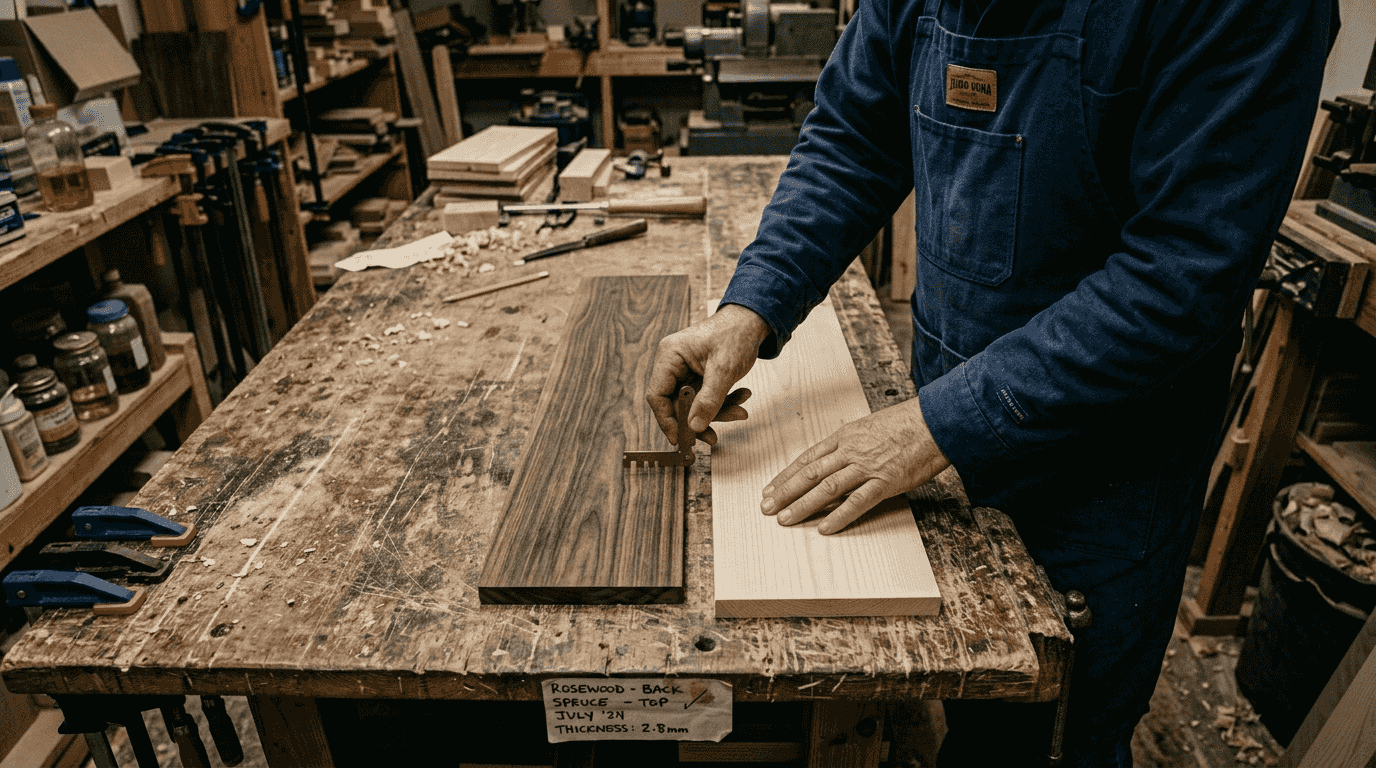
Resonance plate tuning involves the shaping of wood through precise thickness graduation and strategic bracing placement to influence acoustic properties. This process requires both scientific understanding and intuitive feel, as luthiers tap and flex wood components while adjusting their dimensions. The goal is achieving specific resonant frequencies that enhance the guitar’s tonal balance and projection across its range.
Recent scientific research has challenged some traditional assumptions about wood’s acoustic role. One study found that varying soundboard damping had no practically relevant influence on physical and perceptual sound aspects of the tested guitar. This surprising result suggests that other factors beyond simple damping properties contribute more significantly to perceived tone quality, highlighting the complexity of acoustic guitar design.
Despite scientific uncertainties, the selection of wood for the soundboard remains crucial for guitar making, influencing perceived sound quality through mechanisms not yet fully understood. Experienced luthiers rely on accumulated knowledge and listening tests to guide material choices, often preferring specific wood sources or aging periods based on observed results.
| Wood Property | Impact on Sound | Aging Effect |
|---|---|---|
| Density | Affects resonance frequency and sustain | Decreases approximately 10% over decades |
| Stiffness | Influences brightness and attack clarity | Changes as cell structure crystallizes |
| Grain pattern | Impacts vibration transmission efficiency | Stabilizes with moisture equilibrium |
| Moisture content | Alters flexibility and damping characteristics | Reaches stable equilibrium over years |
The guitar aging wood density tone relationship explains why vintage instruments often exhibit different sonic characteristics than new guitars. Wood density reductions of roughly 10% occur as materials age and stabilize, transforming tonal qualities in ways that many players find desirable. This natural evolution contributes to the mystique surrounding why old guitars sound different and drives collector interest in historic instruments.
Pro Tip: Consider both the physical wood properties and how luthiers individually adjust each guitar during construction when evaluating tone potential, as craftsmanship technique matters as much as raw material quality.
Luthiers must account for natural wood variation even within the same species, adjusting construction methods to compensate for differences in stiffness, grain orientation, and resonant behavior. This adaptive approach distinguishes handcrafted instruments from factory production, where standardized processes cannot accommodate material variability effectively.
Visual design, playability, and the luthier’s craftsmanship signature
Visual elements contribute substantially to each guitar’s character and appeal, extending beyond mere decoration to reflect cultural traditions and artistic sensibilities. Rosette designs, binding materials, headstock shapes, and finish choices all communicate the luthier’s aesthetic vision while serving practical functions like edge protection and structural reinforcement. These details help collectors identify specific makers and periods, adding historical context to the instrument’s story.
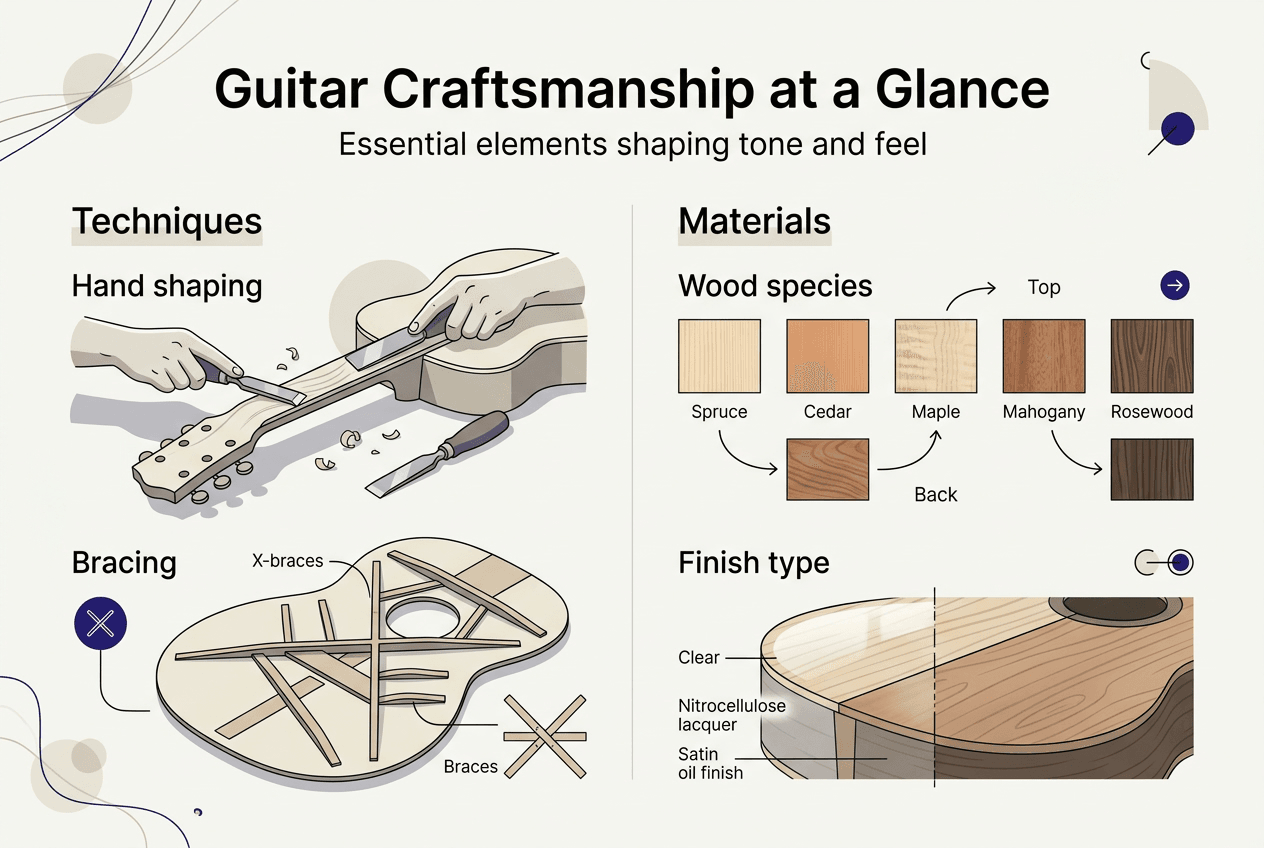
Playability encompasses ergonomic factors that determine how comfortably and efficiently a guitarist can execute techniques. Fret shape affects string bending and vibrato control, while neck dimensions influence hand positioning and reach across the fingerboard. String spacing accommodates different playing styles, with classical guitars typically featuring wider spacing than steel string instruments to facilitate fingerstyle techniques.
A fine classical guitar must be made by hand to adjust each instrument to variations in its wood, ensuring optimal playability despite natural material inconsistencies. This individualized attention allows luthiers to compensate for irregularities and fine tune action height, neck relief, and string alignment for superior playing feel. Mass production cannot replicate this level of customization, resulting in more generic playing characteristics.
| Feature | Mass Produced Guitars | Handcrafted Guitars |
|---|---|---|
| Wood selection | Standardized grades, limited variation | Individually evaluated pieces, premium selection |
| Construction adjustment | Fixed processes, minimal customization | Adapted techniques per wood characteristics |
| Fret work | Machine leveled, standard crown | Hand shaped, customized feel |
| Finish application | Spray booth automation, thick coating | Hand rubbed, thin breathable layers |
| Setup precision | Basic factory setup, wide tolerances | Detailed individual optimization |
Playability considerations intersect with acoustic design in complex ways. Action height affects both playing ease and tone production, as higher string positions increase volume and sustain while requiring more finger pressure. Neck angle determines string height at the bridge, influencing both playability and soundboard loading. Skilled luthiers balance these competing factors based on the instrument’s intended use and the player’s preferences.
Recognizing a luthier’s signature style involves observing consistent design choices across multiple instruments. Some makers favor particular headstock shapes, rosette patterns, or bracing configurations that become identifying characteristics. Others develop distinctive approaches to neck carving or bridge design that create recognizable playing feels. This consistency allows collectors to authenticate instruments and appreciate the maker’s evolving artistic vision.
Pro Tip: Study individual luthiers’ portfolios and construction philosophies to recognize signature elements, helping you identify authentic examples and understand value drivers in the vintage and handmade guitar market.
The buy handmade guitar guide offers practical advice for evaluating craftsmanship quality when shopping. Understanding what distinguishes exceptional work from competent construction helps buyers make confident decisions and appreciate the skill invested in premium instruments. Learning about famous luthiers and their contributions provides historical context for recognizing important examples.
Why craftsmanship defines the legacy and value of vintage and handmade guitars
Each handmade guitar reflects a unique combination of luthier skill, artistic vision, and material properties that cannot be perfectly replicated. Even when a maker builds multiple instruments following the same design template, wood variations and hand execution differences ensure that no two guitars sound or feel identical. This individuality appeals to collectors and players seeking instruments with distinct personalities rather than standardized characteristics.
Vintage guitars embody historical craftsmanship techniques that have evolved or disappeared as construction methods changed. Early 20th century Spanish guitars feature different bracing patterns and construction approaches than modern instruments, creating tonal qualities that contemporary luthiers study and sometimes emulate. These historic examples provide tangible connections to guitar making traditions and the musicians who played them.
Collector value often correlates strongly with craftsmanship quality, maker reputation, and documented provenance. Instruments built by recognized masters command premium prices because their superior construction and historical significance make them scarce relative to demand. Condition affects value substantially, as well maintained examples demonstrate both the original craftsmanship quality and the owner’s care in preserving it.
Handcrafting nuances create subtle tonal and aesthetic differences that experienced players and collectors prize. The way a luthier shapes a neck profile, carves a bridge, or applies finish coats leaves fingerprints on the instrument’s character. These details contribute to the playing experience in ways that measurements and specifications cannot fully capture, requiring hands on evaluation to appreciate.
Other luthiers will follow different steps and have different opinions about how they build, resulting in diverse approaches even among makers working within the same tradition. This philosophical diversity enriches the guitar making world, offering players varied sonic palettes and aesthetic choices. Understanding these differences helps collectors appreciate why certain makers’ work resonates with particular musical styles or player preferences.
Key factors driving vintage and handmade guitar value include:
- Maker reputation and documented production history
- Construction quality and materials selection
- Condition and originality of components
- Tonal characteristics and playability attributes
- Historical significance and provenance documentation
The why we love vintage guitars perspective explores emotional and practical reasons collectors pursue historic instruments. Beyond investment potential, these guitars offer connections to musical heritage and access to tonal qualities shaped by decades of wood aging and skilled original construction. Recognizing signs of collectible guitars helps buyers identify instruments with strong appreciation potential.
Pro Tip: Research individual luthiers’ construction approaches and listen to recordings of their instruments to understand why no two handcrafted guitars are alike, even from the same maker’s workshop.
Craftsmanship appreciation grows through direct experience with diverse instruments, allowing you to develop preferences and recognize quality markers. Attending guitar shows, visiting luthier workshops, and playing many examples builds the tactile and auditory memory needed to evaluate instruments confidently. This experiential knowledge complements technical understanding, creating a comprehensive foundation for collecting and playing decisions.
Explore unique vintage and handmade guitars at Vintage Guitar World
Now that you understand how craftsmanship shapes guitar quality and value, exploring curated collections helps you apply this knowledge practically. Vintage Guitar World offers expertly selected vintage and handmade guitars, each evaluated for authenticity, condition, and craftsmanship excellence. The platform provides detailed descriptions, historical context, and high resolution imagery that help you assess instruments remotely before arranging in person evaluations.

Collectors gain access to rare instruments with documented provenance and verified craftsmanship quality, reducing authentication risks when acquiring significant pieces. The site’s resources include guides for evaluating construction details, understanding maker histories, and recognizing value indicators that distinguish exceptional examples from ordinary instruments. Whether you seek a vintage guitar with proven heritage or a handmade instrument from contemporary masters, expert curation helps you find guitars matching your musical needs and collecting goals. Visit Vintage Guitar World to explore the current inventory and discover instruments that embody the craftsmanship principles discussed throughout this guide.
Frequently asked questions about craftsmanship in guitars
How does wood selection affect guitar tone and playability?
Wood species and individual piece characteristics influence resonance frequencies, sustain, and tonal color through variations in density, stiffness, and grain patterns. Luthiers select materials based on desired acoustic properties and adjust construction techniques to optimize each piece’s natural characteristics. The history of classical guitars shows how wood preferences evolved as makers discovered relationships between material properties and tonal outcomes.
What makes handmade guitars more valuable than factory instruments?
Handmade guitars receive individualized attention throughout construction, allowing luthiers to adjust techniques based on wood variations and optimize setup for superior playability and tone. This customization creates unique instruments with distinct personalities that factory standardization cannot replicate. Collector value also reflects maker reputation, limited production numbers, and the craftsmanship skill invested in each instrument.
How can I recognize quality craftsmanship when evaluating guitars?
Examine fret work for smooth edges and consistent height, inspect finish quality for even application without runs or sags, and assess joint precision where neck meets body and components join. Play the instrument across its range, noting intonation accuracy, string response evenness, and overall tonal balance. Learning to identify these quality markers helps you make confident purchasing decisions.
Why do vintage guitars often sound different from new instruments?
Wood aging reduces density by approximately 10% over decades as materials stabilize and cell structures crystallize, altering resonance characteristics and tonal qualities. Historic construction techniques also differ from modern approaches, creating distinct acoustic signatures. The how to buy vintage guitars resource explains factors to consider when evaluating aged instruments.
What role does resonance plate tuning play in guitar sound?
Resonance plate tuning involves precisely shaping soundboard thickness and bracing placement to achieve specific resonant frequencies that enhance tonal balance and projection. Luthiers tap and flex components while adjusting dimensions, using both measurements and listening tests to optimize acoustic response. This process significantly influences how the guitar responds to different playing techniques and its overall sonic character.