












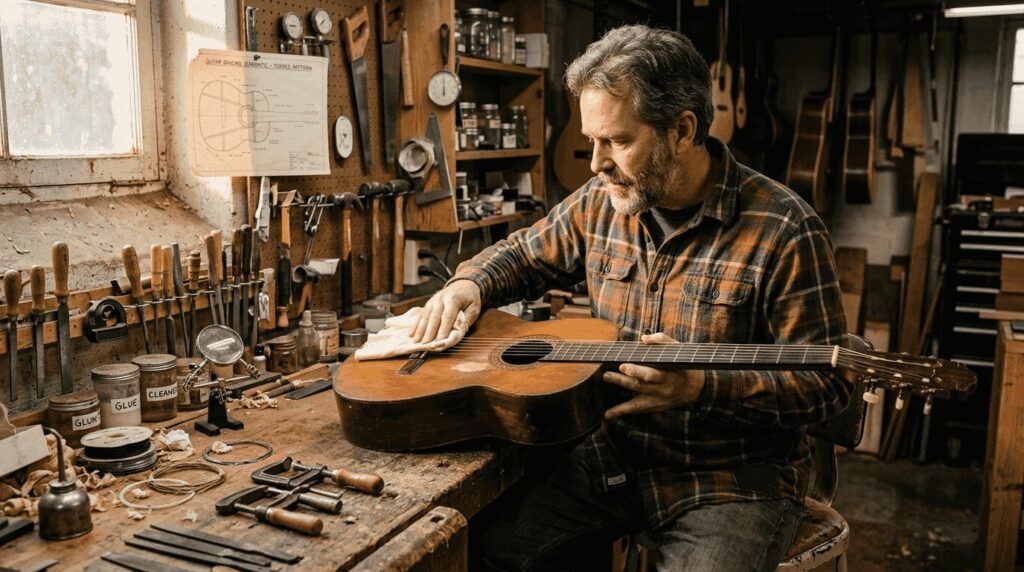

Restoring a vintage classical guitar can feel overwhelming when you risk destroying its historical value with one wrong move. Many collectors attempt restoration only to strip original finishes, swap incorrect hardware, or damage delicate wood through rushed techniques. This guide delivers expert methods to balance authentic preservation with improved playability, helping you protect craftsmanship while maximizing both musical quality and collectible worth.
Table of Contents
- Introduction To Classical Guitar Restoration
- Prerequisites: Tools, Knowledge, And Preparation
- Assessment And Documentation Before Restoration
- Safe Cleaning Techniques To Preserve Vintage Finishes
- Neck, Fret, Hardware, And Electronics Repairs
- Common Mistakes, Failure Points, And How To Avoid Them
- Expected Timelines, Costs, And Outcome Benchmarks
- Safety Considerations During Restoration
- Summary And Next Steps For Vintage Guitar Enthusiasts
- Explore Expert Vintage Guitar Resources And Services
Key takeaways
| Point | Details |
|---|---|
| Document everything first | Comprehensive photos and condition notes prevent costly mistakes and guide restoration decisions. |
| Use vintage-safe methods | Specialized polishes and gentle cleaning protect delicate nitrocellulose finishes without stripping patina. |
| Preserve authenticity | Careful structural repairs improve playability while maintaining original components and historical value. |
| Avoid aggressive changes | Refinishing or modern hardware swaps permanently harm collectible worth. |
| Plan realistically | Typical restorations take 3-6 months and cost $800-$2,500 depending on damage extent. |
Introduction to classical guitar restoration
Restoring vintage classical guitars demands technical skill and historical sensitivity. You’re not just fixing an instrument but preserving decades of craftsmanship and musical heritage. The central challenge is balancing authentic preservation with functional improvements that make the guitar playable without compromising its collectible value.
Many restoration attempts fail because enthusiasts rush into repairs without proper documentation or use inappropriate modern techniques on vintage instruments. Aggressive refinishing, modern hardware replacement, and improper drilling cause permanent loss of collectible value and represent the most common mistakes. Understanding these risks helps you set realistic goals that honor both the guitar’s history and your desire to play it.
Successful restoration requires three foundational elements:
- Deep knowledge of vintage guitar construction and materials
- Specialized tools designed for delicate restoration work
- Patience to work methodically through each repair stage
Your restoration goals matter enormously. Are you prioritizing museum-quality preservation or enhanced playability? This decision shapes every choice you make, from cleaning methods to hardware decisions. A collector focused on investment value approaches restoration differently than a musician seeking improved tone and comfort.
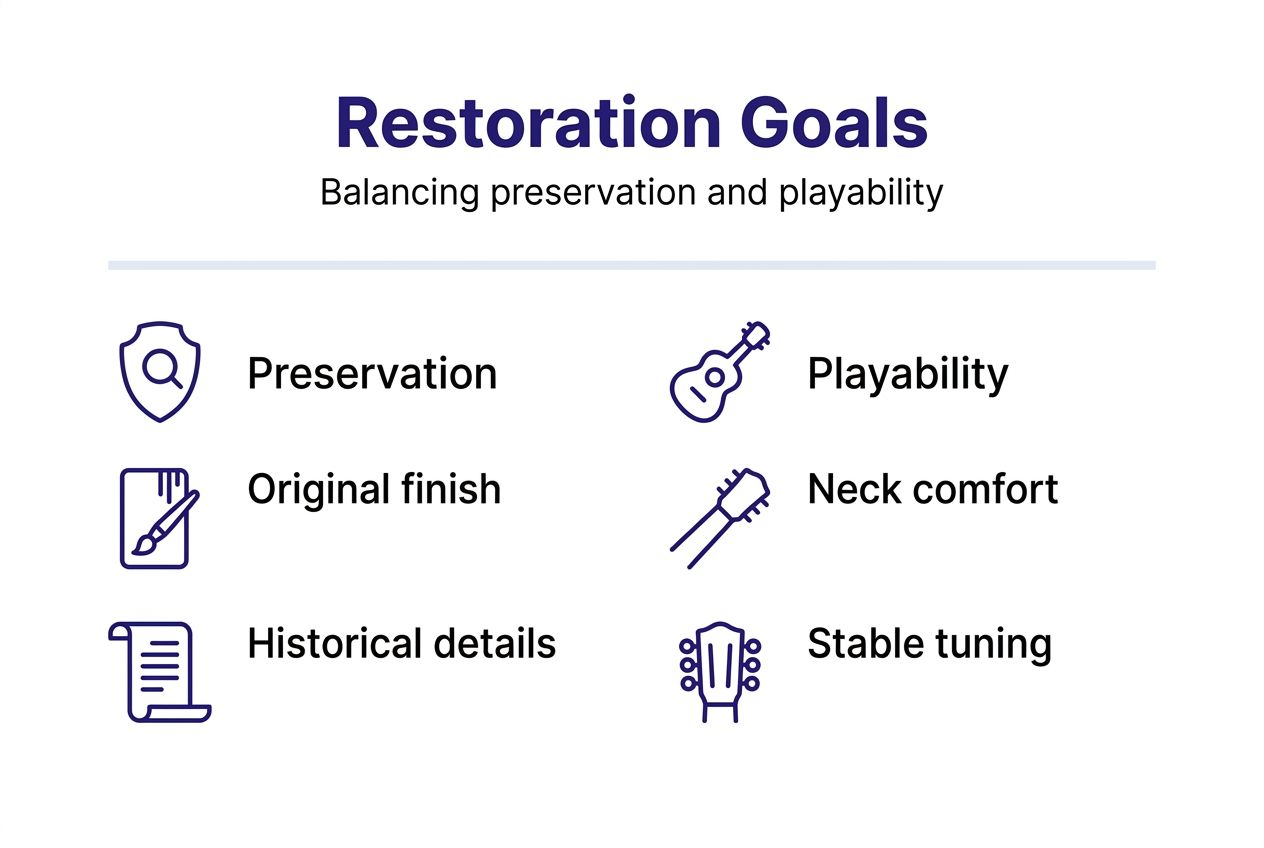
The stakes are high because mistakes are often irreversible. Strip too much original finish and you’ve destroyed patina that took decades to develop. Drill new holes for modern tuners and you’ve permanently altered the instrument’s authenticity. Each decision carries consequences for both musical function and market value, making careful planning essential before you touch the guitar.
For comprehensive guidance on balancing these priorities, review our acoustic guitar restoration guide for collectors covering detailed preservation strategies.
Prerequisites: tools, knowledge, and preparation
Before starting any restoration work, assemble the right tools and build essential knowledge about vintage guitar construction. Working without proper equipment or understanding vintage-specific techniques leads to damage that professional luthiers struggle to reverse.
Essential tools for classical guitar restoration include:
- Magnifying lens or jeweler’s loupe for inspecting cracks and finish details
- Precision screwdrivers and hex wrenches in multiple sizes
- Soft microfiber cloths that won’t scratch delicate finishes
- Digital calipers for measuring string height and neck relief
- Vintage-safe polish formulated for nitrocellulose lacquer
- Fret rocker and leveling files for action adjustment
- Humidity gauge and temperature monitor for workspace conditions
Pro Tip: Keep a dedicated restoration journal documenting every tool used, technique applied, and observation made during the process. This record becomes invaluable if you need to reverse a decision or explain restoration choices to future buyers.
| Tool Category | Purpose | Vintage Consideration |
|---|---|---|
| Cleaning supplies | Remove dirt without finish damage | Must be nitrocellulose-safe |
| Measurement tools | Assess neck relief and action | Precision matters for vintage specs |
| Repair tools | Fix structural issues | Period-appropriate methods only |
| Environmental monitors | Maintain stable conditions | Prevents wood movement during work |
Understanding vintage finishes is critical. Nitrocellulose lacquer, common on classical guitars from the 1950s through 1970s, reacts badly to modern polishes containing silicone or harsh solvents. These products can cloud the finish, strip patina, or cause discoloration that’s impossible to fix without complete refinishing.
Your workspace needs proper ventilation, stable temperature between 60-80°F, and humidity maintained at 40-60%. Fluctuations cause wood to expand and contract, potentially opening new cracks during restoration. Set up adequate lighting from multiple angles so you can see fine details without straining.
Knowledge preparation matters as much as physical tools. Research your specific guitar model to understand original construction methods, typical wear patterns, and historically accurate hardware. This research prevents mistakes like replacing original tuners with incorrect modern equivalents that damage resale value.
For detailed prerequisite checklists and vintage-specific preparation guidance, explore our vintage guitar restoration guide for authentic preservation.
Assessment and documentation before restoration
Thorough assessment and documentation form the foundation of successful restoration. Skipping this step causes over 60% of restoration failures because you can’t make informed decisions without understanding the guitar’s current condition and restoration needs.
Follow this systematic documentation process:
- Photograph the entire guitar from multiple angles in good lighting, capturing overall condition before any work begins.
- Take close-up shots of all damage including cracks, finish wear, hardware corrosion, and structural issues.
- Document serial numbers, maker’s marks, and any labels or stamps that verify authenticity and manufacturing date.
- Measure and record string action, neck relief, and fret height at multiple points along the fretboard.
- Note all modifications or previous repairs, as these affect both restoration approach and future value.
- Create a written condition report describing each issue in detail with severity ratings.
Proper initial evaluation separating preservation needs from unnecessary modifications maintains original patina and historical value. This evaluation guides your restoration plan by distinguishing between essential repairs that improve function and cosmetic work that might harm authenticity.

Pro Tip: Store all documentation digitally with cloud backup and create a physical binder with printed photos and notes. This redundancy protects your records if technology fails and provides easy reference during hands-on work.
Define clear restoration goals before proceeding. Write down specific objectives such as “improve playability while maintaining original finish” or “stabilize cracks without replacing any wood.” These written goals keep you focused and prevent scope creep that leads to over-restoration.
Evaluate how each potential repair affects value. Stabilizing a top crack preserves both function and worth, while replacing original tuners with modern equivalents typically reduces collectible value even if it improves performance. Make these trade-offs consciously rather than discovering value loss after the fact.
Authenticity verification during assessment prevents wasting effort on instruments that aren’t what they seem. Check our guide on checking the authenticity of a vintage guitar to confirm your instrument’s provenance before investing in restoration.
Safe cleaning techniques to preserve vintage finishes
Cleaning vintage classical guitars requires specialized techniques that remove decades of accumulated dirt without damaging delicate original finishes. Standard guitar polishes often contain chemicals that harm nitrocellulose lacquer, making product selection critical.
Using vintage-safe cleaning methods such as specialized polish and microfiber cloths protects finishes without stripping patina. Start with the gentlest approach and increase intensity only if necessary, always testing products on inconspicuous areas first.
Safe cleaning process:
- Begin with dry microfiber cloth to remove loose dust and surface debris
- Apply vintage-safe polish sparingly to cloth, never directly to guitar
- Work in small sections using gentle circular motions
- Immediately buff each section with clean cloth to prevent residue buildup
- Clean around hardware carefully without applying pressure to loose components
- Allow finish to rest 24 hours between cleaning sessions
Avoid these damaging materials and methods:
- Scotch-Brite pads or any abrasive cleaning tools that scratch finishes
- Furniture polish containing silicone, which clouds vintage lacquer
- Excessive moisture that can penetrate finish cracks and damage wood
- Aggressive rubbing that wears through thin vintage finishes
- Modern guitar polishes not specifically formulated for nitrocellulose
“The original finish is irreplaceable. Once you strip or damage authentic patina, you’ve permanently reduced the guitar’s historical value. Clean conservatively and accept that some aging is desirable.”
Fretboard cleaning demands extra care since rosewood or ebony absorbs oils and cleaners differently than finished wood. Use products designed specifically for unfinished fretboards, applying minimal amounts to avoid over-saturation. Work cleaner into the wood with fine steel wool (0000 grade only), following the grain to avoid scratches.
Hardware receives similar gentle treatment. Remove corrosion from metal parts using appropriate metal polish, protecting surrounding wood with masking. Original hardware patina often adds character and value, so consider whether cleaning is necessary or if natural aging should remain.
For comprehensive cleaning strategies specific to acoustic instruments, reference our acoustic guitar restoration cleaning methods covering finish-safe approaches.
Neck, fret, hardware, and electronics repairs
Structural and functional repairs require precise techniques that enhance playability while respecting vintage construction methods. These repairs directly impact how the guitar performs, making skilled execution essential for successful restoration outcomes.
Neck adjustment on classical guitars differs significantly from steel-string acoustics. Many classical guitars lack adjustable truss rods, relying instead on neck geometry and wood stability. For instruments with adjustable rods:
- Measure current neck relief using a capo at the first fret and pressing the string at the last fret, checking gap at the seventh fret.
- Make small adjustments of one-quarter turn maximum, allowing 24 hours for wood to settle before reassessing.
- Work slowly because vintage truss rods can be fragile and over-adjustment causes permanent damage.
- Document each adjustment and resulting measurements in your restoration journal.
Fret work dramatically improves playability when done correctly. Level frets by identifying high spots with a fret rocker, then carefully filing until all frets contact a straightedge evenly. Re-crown filed frets to restore proper string contact point, then polish to eliminate rough edges that cause string wear and buzzing.
Pro Tip: Practice fret leveling and crowning on an inexpensive guitar before attempting it on your vintage classical. The techniques require a light touch and specific angles that take time to master.
Hardware restoration balances function with authenticity. Original tuning machines often work fine after cleaning and lubrication, preserving both value and historical accuracy. When replacement becomes necessary, source period-appropriate hardware that matches original specifications rather than installing modern upgrades that scream “modified.”
Bridge and saddle work affects both tone and playability. Check bridge adhesion carefully, looking for gaps or movement that indicate loosening glue joints. Saddle height adjustment provides the easiest way to improve action, but maintain enough height to prevent string breakage at the tie block.
Electronics on classical guitars are less common but require careful attention when present. Original pickups and preamps often use vintage wiring that modern technicians find unfamiliar. Test electronics methodically, replacing only failed components while preserving original circuitry wherever possible.
For detailed repair procedures covering these structural elements, review our acoustic guitar restoration repairs section.
Common mistakes, failure points, and how to avoid them
Understanding typical restoration failures helps you avoid repeating mistakes that have damaged countless vintage guitars. Many errors stem from enthusiasm overwhelming caution, leading to irreversible changes that destroy both playability and value.
Aggressive refinishing, modern hardware replacement, and improper drilling represent the most destructive common mistakes. Each permanently alters the guitar in ways that serious collectors instantly recognize and heavily discount when evaluating purchase value.
Frequent restoration failures include:
- Skipping detailed documentation, making informed decisions impossible
- Using abrasive cleaners that strip original finish and patina
- Over-tightening truss rods, causing neck damage or rod failure
- Drilling new holes for modern hardware, permanently altering originality
- Rushing repairs without allowing glue or finish to cure properly
- Applying excessive finish that obscures wood grain and looks obviously refinished
- Replacing original parts without confirming they’re actually damaged
- Working in unstable environmental conditions that cause wood movement
“The biggest mistake is treating a vintage guitar like a modern instrument. These guitars were built with different materials, techniques, and tolerances. Modern solutions often create more problems than they solve.”
Neck resets on classical guitars present particular challenges. The traditional Spanish heel construction uses different joinery than steel-string guitars, requiring specialized knowledge to disassemble and reassemble properly. Amateur neck reset attempts frequently result in structural damage, finish loss around the heel, and misaligned neck angles that make the guitar unplayable.
Finish work carries extreme risk because refinishing instantly transforms a collectible vintage guitar into a “refinished vintage guitar” with drastically reduced value. Collectors pay premium prices for original finish, even when worn or damaged, because authenticity matters more than pristine appearance in the vintage market.
Hardware swaps seem harmless but signal to knowledgeable buyers that the guitar has been modified. Original tuners, even if worn, preserve authenticity and value. Modern replacements might improve function but simultaneously announce that the guitar is no longer in original condition.
Preventing these mistakes requires patience, education, and willingness to seek professional help when repairs exceed your skill level. Recognize that some restoration work demands expertise you may not possess yet, and that paying a skilled luthier costs less than repairing damage from failed amateur attempts.
For guidance on maintaining authenticity throughout restoration, explore our authentic vintage guitar restoration approach.
Expected timelines, costs, and outcome benchmarks
Realistic expectations for restoration duration and expense prevent disappointment and rushed work that compromises quality. Understanding typical timelines and costs helps you plan appropriately and recognize when a project exceeds reasonable scope.
A complete vintage classical guitar restoration typically takes between 3 to 6 months from initial assessment through final setup. This timeline includes drying time for glues and finishes, period for wood to stabilize after repairs, and careful progression through each restoration stage without rushing critical steps.
Cost varies significantly based on damage extent, parts availability, and restoration goals:
| Restoration Scope | Typical Timeline | Cost Range | Primary Factors |
|---|---|---|---|
| Minor cleaning and setup | 2-4 weeks | $200-$500 | Minimal repairs, mostly cosmetic |
| Moderate restoration | 2-3 months | $800-$1,500 | Some structural work, hardware restoration |
| Extensive restoration | 4-6 months | $1,500-$2,500 | Major repairs, significant parts replacement |
| Museum-quality restoration | 6-12 months | $2,500+ | Comprehensive work, period-accurate materials |
Budget for unexpected discoveries. Opening up a vintage guitar often reveals hidden damage that wasn’t apparent during initial assessment. Set aside 20-30% contingency funds to address unforeseen issues without compromising restoration quality or abandoning the project mid-stream.
Success benchmarks help you evaluate restoration outcomes objectively. A well-restored classical guitar should demonstrate:
- Structural soundness with no active cracks or loose bracing
- Comfortable playability with proper string action and intonation
- Preserved aesthetic showing appropriate age while remaining attractive
- Enhanced tonal quality compared to pre-restoration condition
- Maintained authenticity with original components and finish intact where possible
Compare restored condition against your documented pre-restoration baseline. Has playability improved? Does the guitar sound better? Have you preserved or enhanced value? These comparisons validate whether restoration achieved intended goals.
Timeline pressure often leads to mistakes. If a luthier quotes 6 months for your restoration, trust that estimate rather than pushing for faster completion. Rushed work produces inferior results that may require additional repairs later, ultimately costing more time and money than patient, methodical restoration from the start.
Understand how restoration choices affect future value by reviewing factors in our guide on classical guitars value factors.
Safety considerations during restoration
Safe restoration practices protect both you and the guitar from harm. Environmental hazards, ergonomic issues, and material handling all require attention to prevent injury or instrument damage during restoration work.
Workspace environmental control matters enormously for both safety and restoration success. Humidity levels between 40-60% and stable temperatures from 60-80°F prevent cracking and warping throughout the restoration process. Invest in reliable hygrometer and thermometer to monitor these conditions continuously.
Personal protective equipment includes:
- Safety glasses when using power tools or working overhead
- Dust mask or respirator when sanding or working with finish products
- Nitrile gloves when handling chemicals, adhesives, or finish materials
- Hearing protection if using loud power tools for extended periods
- Well-fitted work gloves when handling sharp metal hardware or tools
Ventilation becomes critical when working with any finish products, adhesives, or cleaning solvents. Many traditional guitar finishing materials release fumes that cause headaches, dizziness, or respiratory irritation. Work outdoors when weather permits or use exhaust fans that vent directly outside rather than recirculating air.
“Protecting yourself during restoration isn’t optional. Exposure to finish solvents and wood dust creates both immediate hazards and long-term health risks. Invest in proper safety equipment and use it consistently.”
Organize your workspace to prevent accidental damage. Create dedicated areas for different tasks, keeping finish work separate from mechanical repairs to avoid contamination. Use padded surfaces or specialized guitar support systems that hold the instrument securely without risking pressure damage to delicate areas.
Chemical storage requires attention. Keep all solvents, adhesives, and finish products in original labeled containers, stored away from heat sources and out of reach of children or pets. Many guitar restoration products are flammable or toxic, demanding proper handling and storage practices.
Ergonomic considerations prevent repetitive strain injuries during long restoration sessions. Work at comfortable height, use proper lighting to avoid eye strain, and take regular breaks to prevent fatigue that leads to mistakes or injury. Restoration demands precision that suffers when you’re physically uncomfortable or mentally fatigued.
For comprehensive safety protocols during acoustic restoration work, reference our acoustic guitar restoration safety guidelines.
Summary and next steps for vintage guitar enthusiasts
Successful vintage classical guitar restoration balances authentic preservation with functional improvement, requiring knowledge, patience, and respect for historical craftsmanship. The techniques and precautions covered in this guide provide a foundation for approaching restoration projects with confidence and appropriate caution.
Key principles to remember:
- Document everything before starting any restoration work
- Use vintage-safe methods and materials throughout the process
- Preserve authenticity by avoiding unnecessary modifications
- Work patiently, allowing proper curing time for all repairs
- Maintain appropriate environmental conditions during and after restoration
- Seek professional help when repairs exceed your current skill level
Your restored classical guitar deserves ongoing maintenance to preserve restoration results. Continue monitoring humidity and temperature, clean gently with appropriate products, and address small issues promptly before they become major problems. Regular professional setup every 12-18 months keeps the guitar playing optimally.
Keep learning about vintage guitar restoration through specialized forums, luthier workshops, and hands-on experience. Each restoration project teaches new techniques and deepens your understanding of classical guitar construction. Build relationships with experienced luthiers who can provide guidance and handle repairs beyond your expertise.
Consider joining collector communities where members share restoration experiences, discuss techniques, and help each other solve challenging problems. These networks provide invaluable support and accelerate your learning curve significantly compared to working in isolation.
For continued guidance on restoration best practices and collector resources, explore our restoration next steps for collectors.
Explore expert vintage guitar resources and services
Restoring a vintage classical guitar successfully requires both knowledge and access to quality instruments and resources. Vintage Guitar World provides comprehensive guidance for collectors and enthusiasts seeking to preserve guitar heritage while enjoying exceptional instruments.

Our 7-point checklist for buying vintage guitars helps you evaluate potential purchases before committing to restoration projects. Combined with our expert guide on how to buy vintage guitars, you’ll develop the expertise to identify instruments worth your restoration investment.
Explore our curated collection of vintage and restored classical guitars in the Vintage Guitar World shop, where each instrument undergoes thorough evaluation and documentation. Whether you’re seeking a restoration project or a professionally restored guitar ready to play, our inventory represents the highest standards of vintage guitar excellence.
Frequently asked questions
What are the most important steps before starting restoration?
Thorough photographic documentation and detailed written condition assessment form the critical foundation. Create comprehensive records of all damage, measurements, and original components before making any changes. Define clear restoration goals that balance preservation priorities with playability improvements, then develop a detailed plan addressing each identified issue systematically. Review our guide on checking guitar authenticity to verify your instrument before investing restoration effort.
How can I safely clean a vintage classical guitar?
Use polish specifically formulated for nitrocellulose lacquer applied sparingly to soft microfiber cloths, never directly to the guitar. Work in small sections with gentle circular motions, immediately buffing each area to prevent residue buildup. Avoid abrasive materials like Scotch-Brite pads, furniture polish containing silicone, and excessive moisture that penetrates finish cracks. Test all products on inconspicuous areas first and accept that some authentic patina should remain rather than stripping the finish completely.
What are common restoration mistakes to avoid?
Aggressive refinishing that removes original patina permanently reduces collectible value, as does replacing original hardware with modern components or drilling new mounting holes. Skipping comprehensive documentation before starting work leads to uninformed decisions and inability to track changes. Other critical mistakes include using abrasive cleaners on delicate finishes, over-tightening truss rods, and rushing repairs without allowing proper curing time. Work methodically, preserve authenticity, and seek professional help for repairs beyond your skill level.
What should I expect in terms of cost and time for restoration?
Complete vintage classical guitar restoration typically requires 3 to 6 months depending on damage extent and repair complexity. Costs generally range from $800 to $2,500, with minor work at the lower end and extensive structural repairs approaching or exceeding the upper limit. Budget an additional 20-30% contingency for unexpected issues discovered during disassembly or assessment. Museum-quality restorations demanding period-accurate materials and techniques may extend beyond 6 months and cost over $2,500. Patient, unhurried work produces superior results worth the investment.