













TL;DR:
- Counterfeit vintage guitars cause collectors to lose an average of $3,200 per fake purchase.
- Authenticity relies on systematic checks including serial numbers, finish analysis, and digital verification tools.
- Multiple detailed inspections and layered safeguards are essential to confidently authenticate high-value vintage guitars.
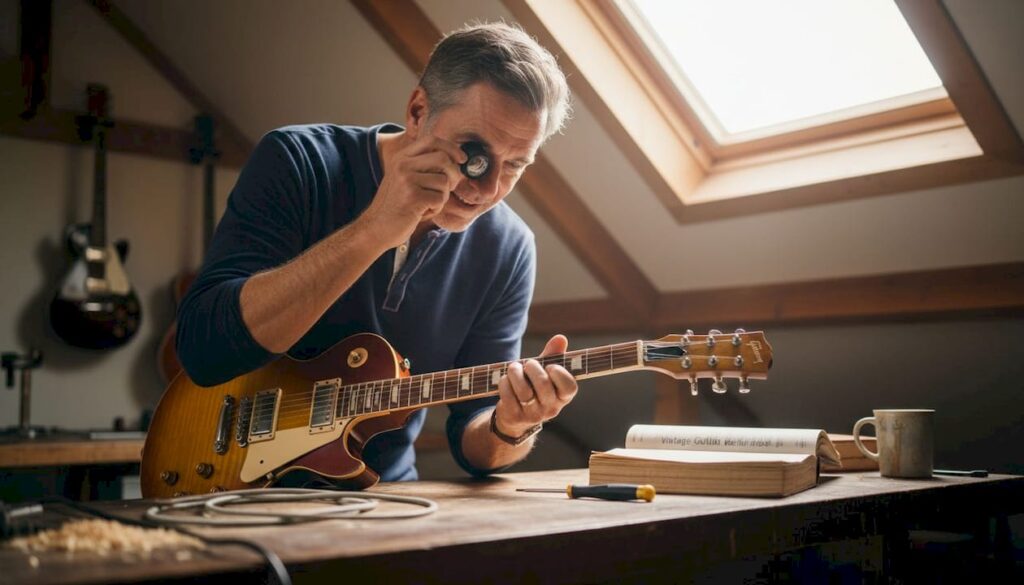
Buying a vintage guitar should feel exciting, not like a gamble. But the counterfeit market is real, and collectors lose an average of $3,200 per fake purchase. A convincing replica can fool even experienced buyers when the paperwork looks right and the finish feels aged. This guide walks you through every layer of the authentication process, from the tools you need to the serial number checks, finish analysis, and next-generation security technology that protects your investment. Whether you’re eyeing a 1959 Les Paul or a pre-CBS Stratocaster, these steps give you the confidence to buy smart.
Table of Contents
- Understand the threat: Why authentication matters
- What you’ll need: Essential tools and resources for authentication
- Step-by-step: Authenticating serial numbers and manufacturing details
- Examining finishes, materials, and hardware for signs of authenticity
- Next-gen safeguards: Counterfeit detection and future tech
- The uncomfortable truth: No single test guarantees authenticity
- Explore authentic vintage guitars and expert resources
- Frequently asked questions
Key Takeaways
| Point | Details |
|---|---|
| Serial number is key | Always verify serial and FON data with official manufacturer resources for the first layer of authentication. |
| Use scientific tools | UV lights and paint thickness gauges provide objective evidence of originality and help spot clever fakes. |
| Multiple checks matter | Cross-checking finishes, hardware, and provenance documentation builds a stronger case for authenticity. |
| Leverage modern tech | NFC chips and blockchain are raising the bar for digital authentication in the collectible guitar market. |
| No shortcut to certainty | Combining evidence and professional insight is the best defense, as even experts can be fooled by advanced forgeries. |
Understand the threat: Why authentication matters
The vintage guitar market has never been more valuable, or more vulnerable. Counterfeiters have grown remarkably sophisticated, producing instruments that replicate everything from the correct headstock angle to aged fret wear. If you’re shopping for a high-value instrument without a systematic authentication process, you’re taking a serious financial risk.
The numbers tell a sobering story. Fake guitar losses average $3,200 per transaction, and that figure climbs sharply when iconic models are involved. Gibson Les Pauls from the late 1950s can sell for $50,000 to $200,000, making them prime counterfeiting targets. Pre-CBS Fender guitars, which feature a 0-degree headstock angle, are equally targeted because of their legendary status and collector demand.
Here are the most common red flags collectors encounter:
- Fabricated provenance documents with convincing but forged signatures
- Replicated serial number stamps that match real production ranges
- Artificial aging on finishes and hardware designed to mimic decades of wear
- Mismatched components from different eras assembled to create a false instrument
- Fake celebrity signatures, with 70% of signed guitar requests estimated to be forged
The brands most frequently targeted include Gibson, Fender, and Martin, precisely because their vintage models carry the highest market premiums. A forged 1960s Martin D-28 or a fake Burst-era Les Paul can be nearly indistinguishable from the real thing without proper examination.
“The best defense against a convincing fake is a systematic, layered approach. No single check is enough on its own.”
Building that layered approach starts with knowing the lower counterfeit risk tips that experienced collectors use before they even pick up an instrument. Understanding the signs of collectible guitars is equally important, because authenticity often shows up in small, overlooked details.
What you’ll need: Essential tools and resources for authentication
Authentication without the right tools is guesswork. Before you examine any instrument, gather the following:
| Tool | Purpose | Cost range |
|---|---|---|
| UV light (365nm) | Detect nitrocellulose fluorescence | $15–$40 |
| Paint thickness gauge | Measure original finish depth | $30–$120 |
| Loupe or magnifier (10x) | Inspect stamps, grain, and hardware | $10–$50 |
| Precision screwdrivers | Access control cavities and neck joints | $10–$30 |
| Serial number reference guides | Cross-check production data | Free to $60 |
Beyond physical tools, online manufacturer databases are essential. Fender, Gibson, and Martin each maintain resources that help you verify production years and factory details. These databases are your first line of defense before you ever touch the guitar.
Emerging technology is also changing the game. NFC chips and blockchain provenance are beginning to appear in the high-end vintage market, creating digital verification layers that are far harder to forge than physical documents. While not yet universal, these tools represent the future of authenticating vintage guitars at the highest level.
Your environment matters as much as your equipment. Examine guitars under consistent, bright lighting, ideally natural daylight supplemented by a controlled lamp. Shadows and poor lighting hide the very details you need to see.
Pro Tip: Always photograph every component before and during your examination. Timestamped photos create a personal record that supports your authentication findings and can be invaluable if a dispute arises later.
For a deeper look at the technology behind vintage guitar security, understanding both the tools and their limitations helps you build a more reliable process.
Step-by-step: Authenticating serial numbers and manufacturing details
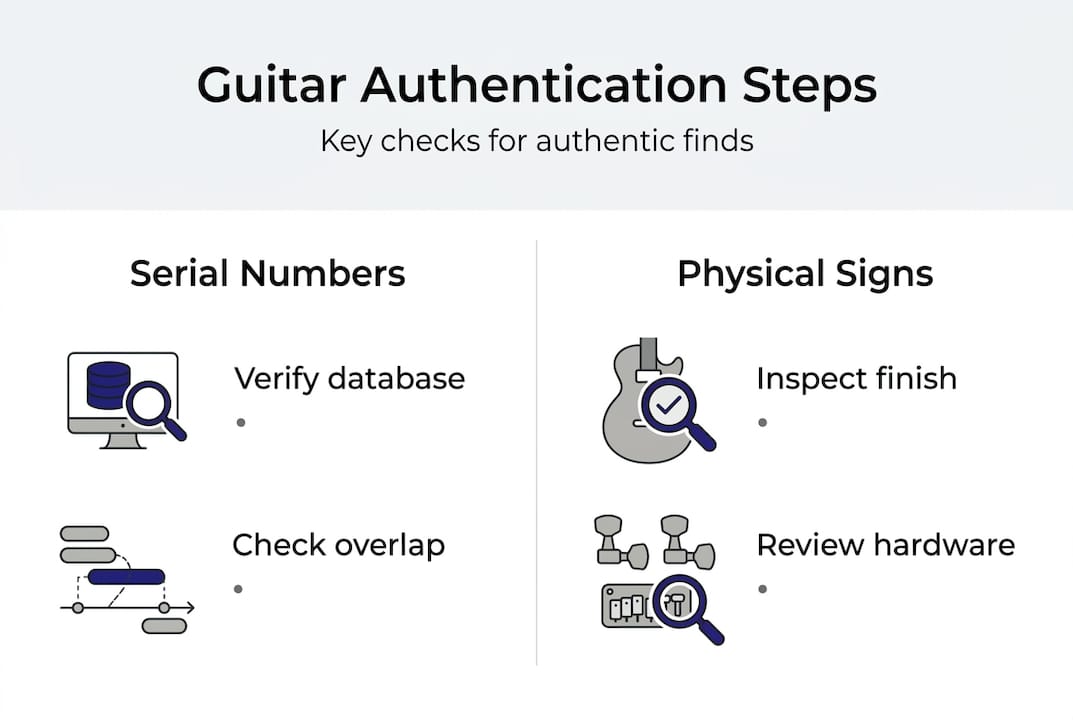
Serial number verification is the foundation of any authentication process. The primary method for authenticating collectible guitars involves cross-referencing serial numbers and Factory Order Numbers (FONs) against manufacturer databases and established reference guides.
Follow these steps in order:
- Locate the serial number. On Gibsons, check the back of the headstock or inside the control cavity. Fenders typically stamp serials on the neck plate or headstock. Martin uses the inside of the body near the neck block.
- Cross-reference with official databases. Use the Fender serial database, Gibson serial resources, and Martin serial numbers to verify production year and factory origin.
- Check the Factory Order Number (FON). Gibson used FONs alongside serial numbers through much of the 1950s and 1960s. A mismatch between the FON and serial number range is a major red flag.
- Examine the font and stamp depth. Authentic stamps have consistent depth and period-correct fonts. Shallow or uneven stamps suggest a later addition.
- Look for double stamps or corrections. These sometimes indicate a refinished or modified guitar where someone attempted to re-apply a serial after work was done.
| Brand | Serial location | Common overlap issue |
|---|---|---|
| Gibson | Back of headstock, cavity | 1960s serials overlap multiple years |
| Fender | Neck plate, headstock | Pre-CBS and CBS-era ranges overlap |
| Martin | Inside body, neck block | Early 6-digit serials span wide date ranges |
A detailed checking authenticity guide can help you navigate the overlap periods, which are the most exploited by counterfeiters. For deeper serial number research, the serial number authentication resources at Vintage Guitar World provide brand-specific breakdowns.
Pro Tip: Serial number overlaps are normal and not automatically suspicious. The problem is when the serial number range doesn’t match other physical details like pot codes, tuner styles, or hardware types from the same period.
Examining finishes, materials, and hardware for signs of authenticity
Once serial numbers check out, the physical instrument tells its own story. Finishes and materials are where many fakes fall apart under close inspection.
Vintage guitars made before the mid-1970s were almost universally finished with nitrocellulose lacquer. Under a UV light, nitrocellulose fluoresces in a way that modern polyester and polyurethane finishes do not. This single test eliminates a large percentage of fakes immediately.
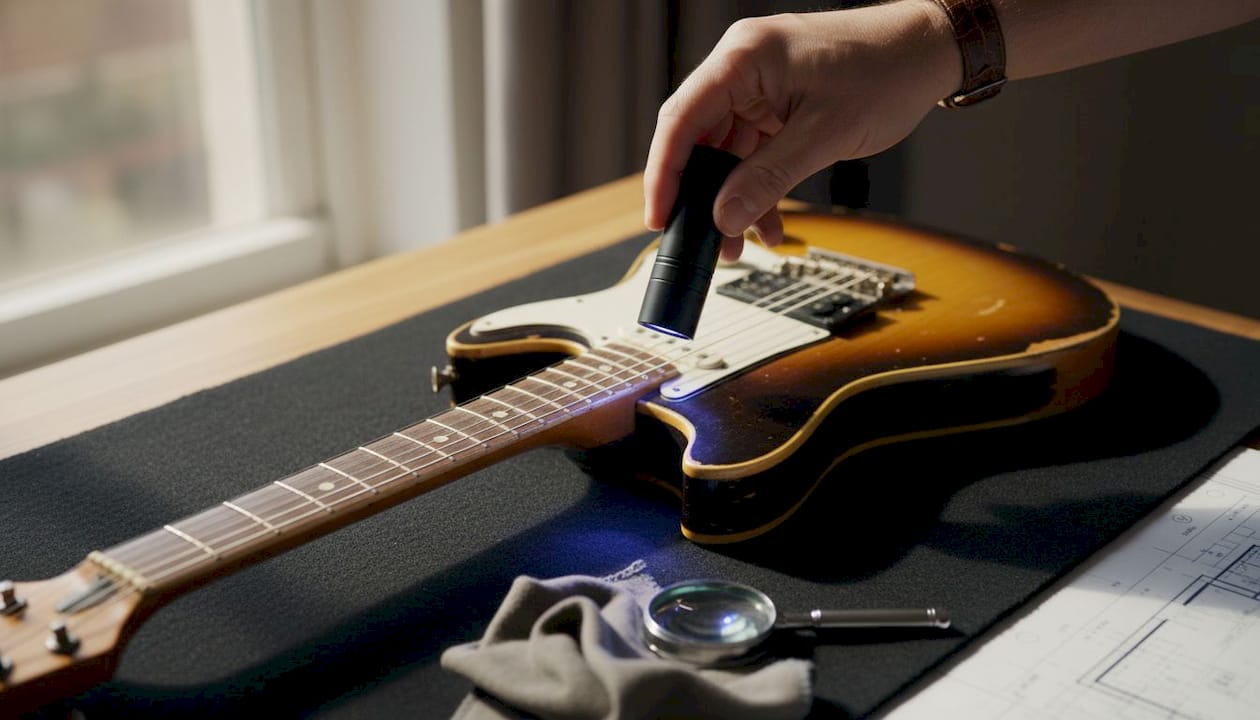
Use a paint thickness gauge to measure the finish depth. Original vintage finishes typically measure between 4 and 8 mils (thousandths of an inch). Modern refinishes tend to be thicker, often exceeding 10 mils, because builders apply extra coats to achieve the aged look.
Here’s what to look for in finish and hardware evaluation:
- Checking lacquer crazing. Authentic checking (the fine crack network in aged lacquer) follows natural stress patterns. Artificial checking is often too uniform or too dramatic.
- Fretboard wear. Real playing wear concentrates around the first five frets and follows natural hand positions. Fake wear is often distributed too evenly.
- Hardware patina. Nickel hardware from the 1950s and 1960s develops a specific yellowish tarnish. Chrome from the same era dulls differently. Both are hard to replicate convincingly.
- Tuner button material. Vintage Klusons used specific plastic compounds that age in recognizable ways. Replacements are common, but original tuners add significant authentication weight.
“Artificial aging is the counterfeiter’s most powerful tool. Learning to read honest wear takes time, but it’s one of the most valuable skills a collector can develop.”
Understanding guitar relicing aesthetics helps you distinguish intentional aging done for cosmetic purposes from the genuine wear that only decades of playing and storage can create. The guitar aging value article explores how authentic aging affects both desirability and price.
Pro Tip: Smell the inside of the body cavity. Genuine old wood and aged lacquer have a distinct, slightly sweet and musty scent. Fresh lacquer or new wood smells sharp and chemical, even after attempts to mask it.
Next-gen safeguards: Counterfeit detection and future tech
Physical examination remains the backbone of authentication, but technology is adding powerful new layers. The emerging NFC and blockchain tools being adopted in the high-value instrument market represent a significant shift in how provenance is established and verified.
Here’s how the most important technologies work:
- NFC chips. A Near Field Communication chip embedded in the guitar’s body or case can store and transmit verified ownership history, factory data, and authentication records. Scanning with a smartphone confirms the instrument’s identity in seconds.
- Blockchain provenance. Immutable digital ledgers record every ownership transfer, appraisal, and authentication event. Unlike paper certificates, blockchain records cannot be altered retroactively.
- Third-party authentication services. Organizations specializing in vintage instrument authentication provide certificates that carry significant market weight. These services use a combination of physical examination and digital records.
- High-resolution imaging. Macro photography and digital grain analysis can confirm wood species and aging patterns at a level invisible to the naked eye.
Documentation matters as much as the technology itself. A guitar with a complete, verifiable paper trail, including original receipts, repair records, and appraisals, is significantly harder to fake than one with a single certificate of authenticity.
For collectors watching the market, the guitar authentication signs that matter most are shifting. Physical indicators remain critical, but digital verification is becoming a standard expectation for any instrument valued above $10,000.
The uncomfortable truth: No single test guarantees authenticity
After years of working with vintage instruments, we’ve arrived at a conclusion that might surprise you: the most dangerous moment in authentication is when everything looks right. That’s exactly when experienced collectors get burned.
Counterfeiters who target the high end of the market know every test you’re likely to run. They use period-correct lacquer, source original hardware, and fabricate documentation that passes casual scrutiny. A guitar that clears every basic check can still be a sophisticated fake.
The collectors who rarely get fooled share one habit: they always ask what doesn’t fit. Not what confirms their hope, but what creates even the smallest doubt. A serial number that checks out but sits slightly off-center. Hardware that matches the period but shows no corrosion in the screw slots. A provenance story that’s detailed in some areas but vague in others.
Our comprehensive authentication guide reinforces this layered skepticism. No single indicator, not the serial number, not the finish, not the documentation, is enough on its own. Authenticity is the convergence of many consistent details. When the evidence layers align naturally, confidence grows. When they don’t, walk away.
Explore authentic vintage guitars and expert resources
Knowing how to authenticate a guitar is only half the equation. The other half is finding instruments where the work has already been done for you.

At Vintage Guitar World, every listed instrument goes through rigorous expert evaluation before it reaches the shop. Our curated vintage guitar shop features instruments with verified provenance, detailed condition reports, and transparent histories. If you want to understand what you’re buying before you commit, our guitar appraisal guide walks you through the valuation process step by step. For collectors still building their knowledge base, the types of vintage guitars resource covers the features, history, and investment potential of the most sought-after instruments in the market.
Frequently asked questions
What’s the most reliable way to authenticate a vintage guitar?
Verifying the serial number with manufacturer databases is the most reliable first step, validated by secondary checks like FONs, finish analysis, and hardware inspection. No single method is definitive on its own.
How can I spot a fake vintage finish?
Use a UV light to check for correct nitrocellulose fluorescence and confirm original paint thickness falls between 4 and 8 mils. Unnatural wear patterns or lacquer crazing that looks too uniform are strong indicators of artificial aging.
Why are Gibson and Fender guitars often targeted by counterfeiters?
Their high market value makes them prime targets, with Gibson Les Pauls reaching $50k–$200k and pre-CBS Fenders commanding serious premiums. The combination of desirability and high prices creates strong financial incentive for sophisticated fakes.
What new technology helps prevent guitar counterfeiting?
NFC chip tagging and blockchain provenance add digital verification layers that are far harder to forge than paper certificates, making them increasingly important for high-value instrument transactions.
Is professional appraisal necessary for all collectible guitar purchases?
Not for every instrument, but a reputable third-party appraisal provides critical supporting evidence and peace of mind for any high-value purchase where the stakes justify the cost.