





Description
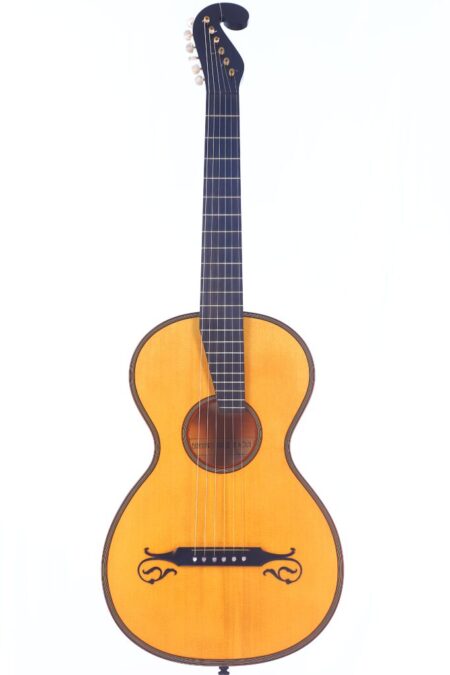
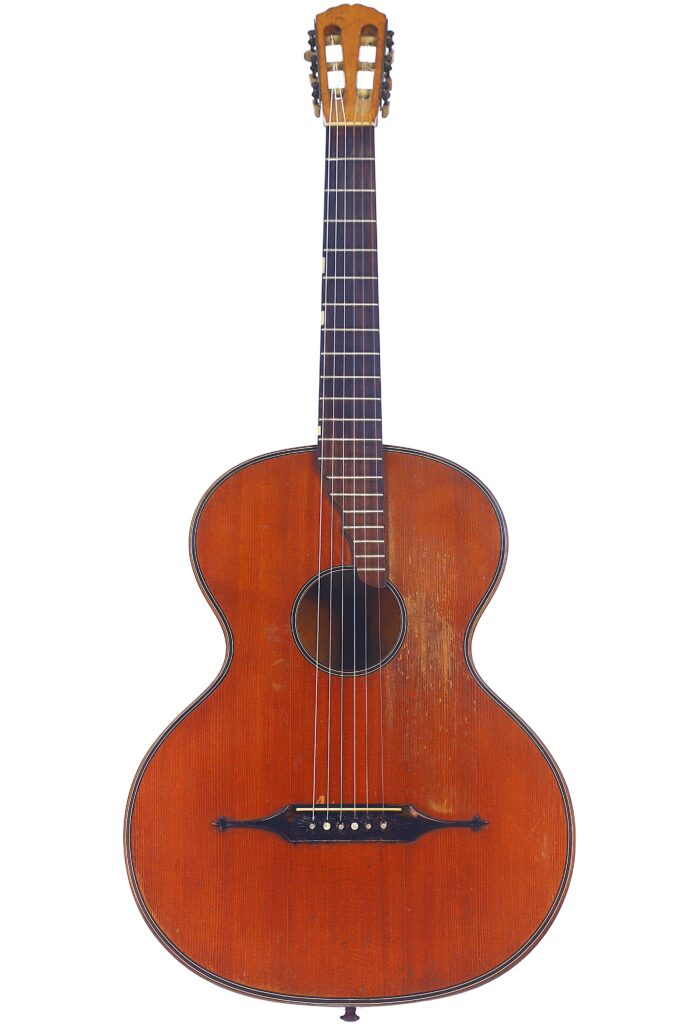
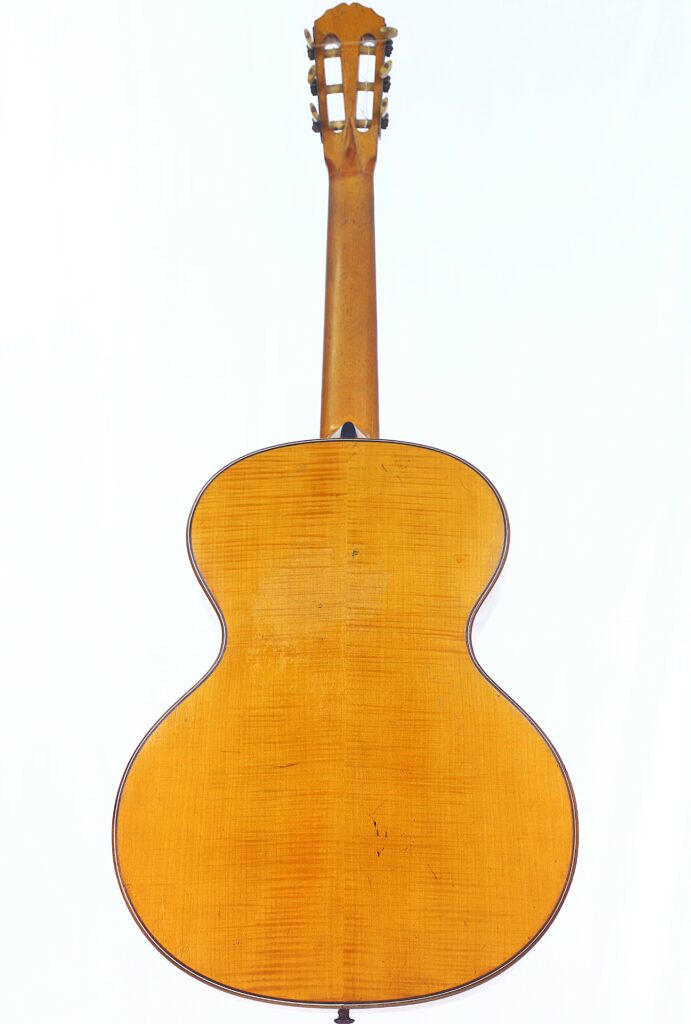
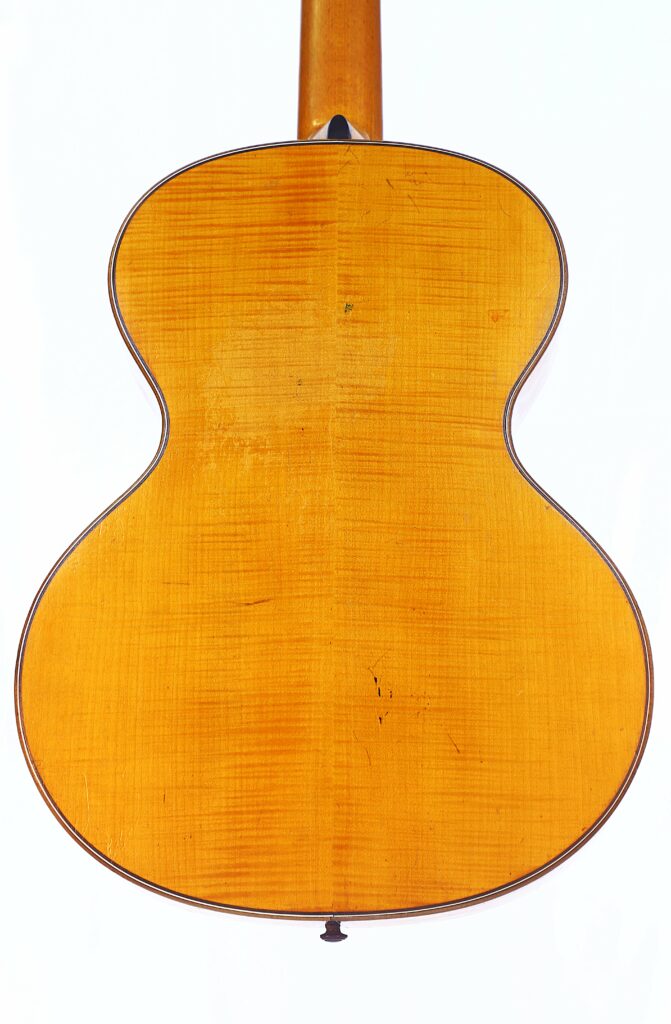
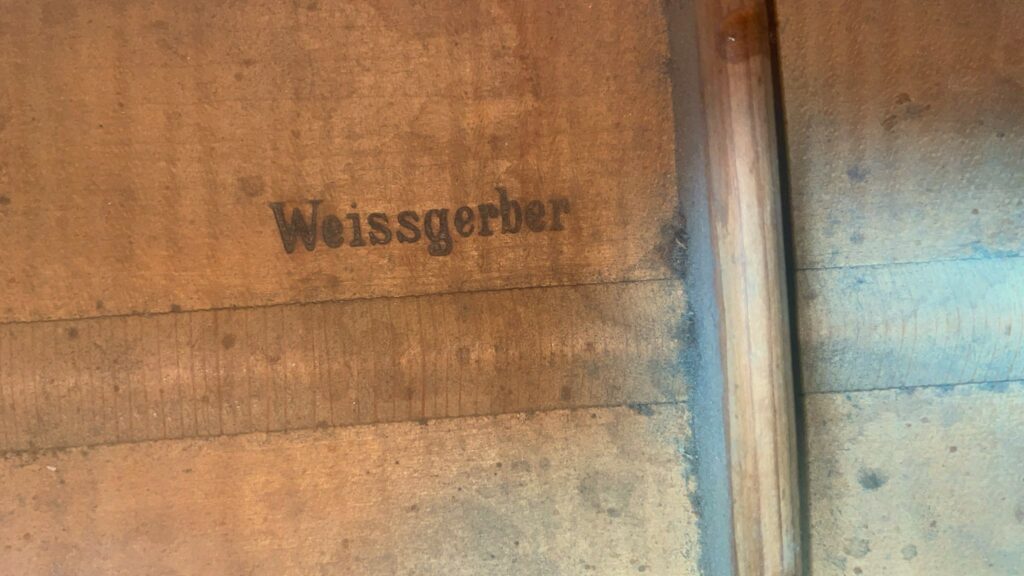
Richard Jacob Weissgerber 1923 classical guitar – a finely crafted instrument similar to a Hauser Vienna model
Richard Jacob Weissgerber was born in Markneukirchen, Germany, in 1877 into a family of guitar makers. Surrounded by his father’s intricately decorated instruments and influenced by master violin maker Christian Wilhelm Seidel, he initially trained as a zither maker before working alongside guitar maker Wilhelm Voigt for six years. In 1905, he established his own independent workshop.
Early in his career, Weissgerber patented his name as a trade mark, allowing him to innovate freely. Initially building in the popular Viennese style, he later developed unique models with exquisite finishes that set his instruments apart in the bustling guitar-making city of Markneukirchen. He traveled extensively, engaging with various guitar styles and participating in the “Guitar Movement” in Germany. Influenced by notable guitarists like Miguel Llobet and Andres Segovia, his work gradually leaned toward Spanish guitar traditions while retaining his experimental approach. Weissgerber dedicated himself to guitar making until his passing in 1960, leaving his son Martin to continue the workshop until 1990.
Weissgerber guitars quickly gained a reputation among professionals, with respected guitarists like Heinz Teuchert, Karl Scheit, and Siegfried Behrend among their players.
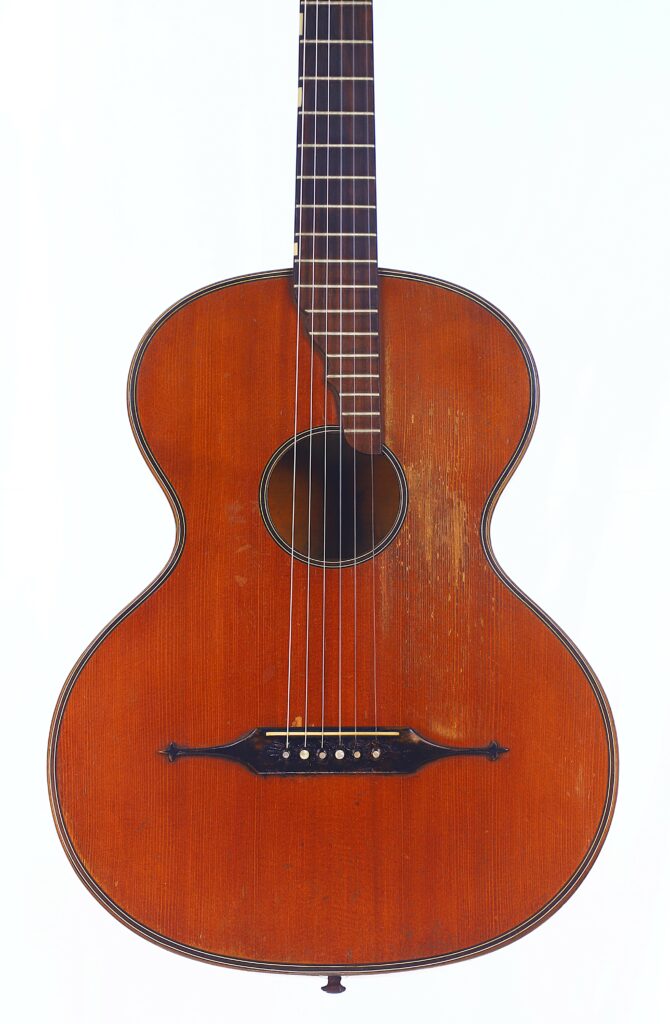
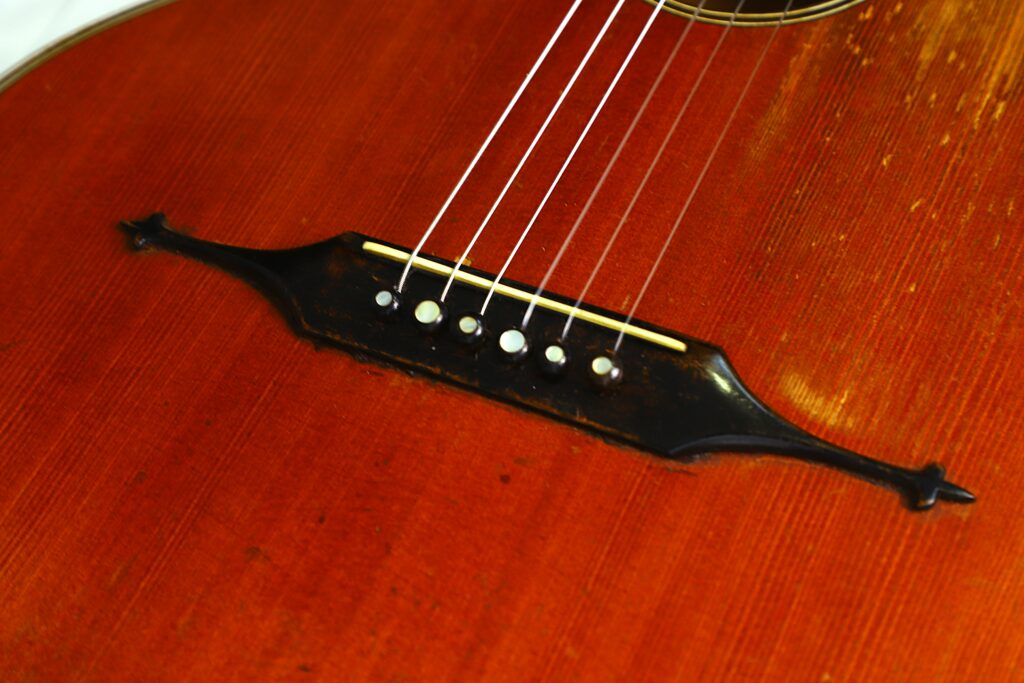
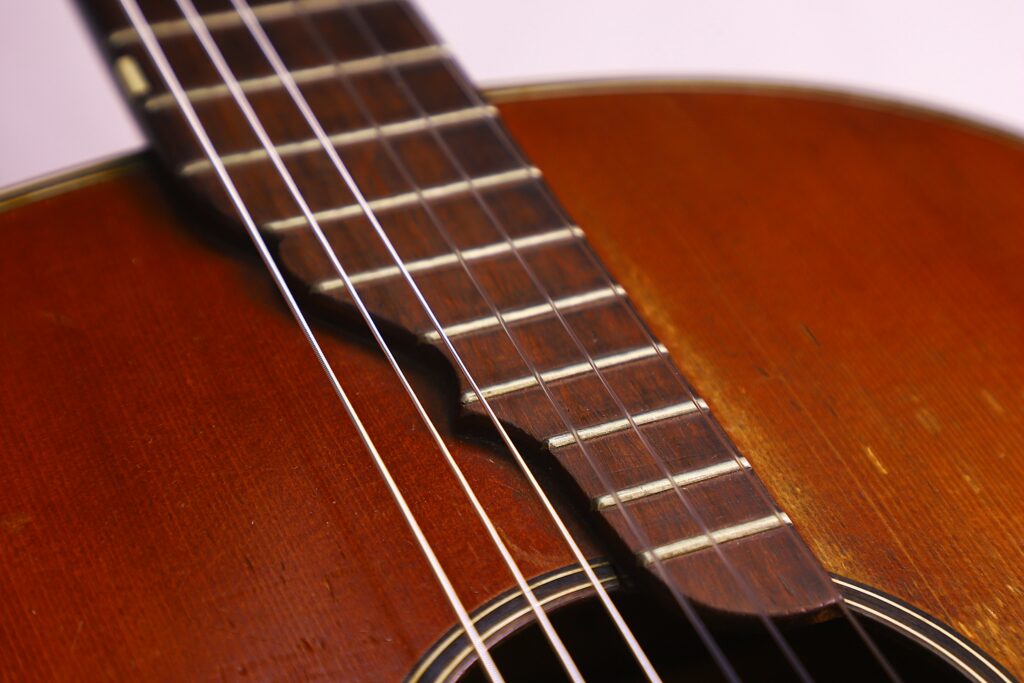
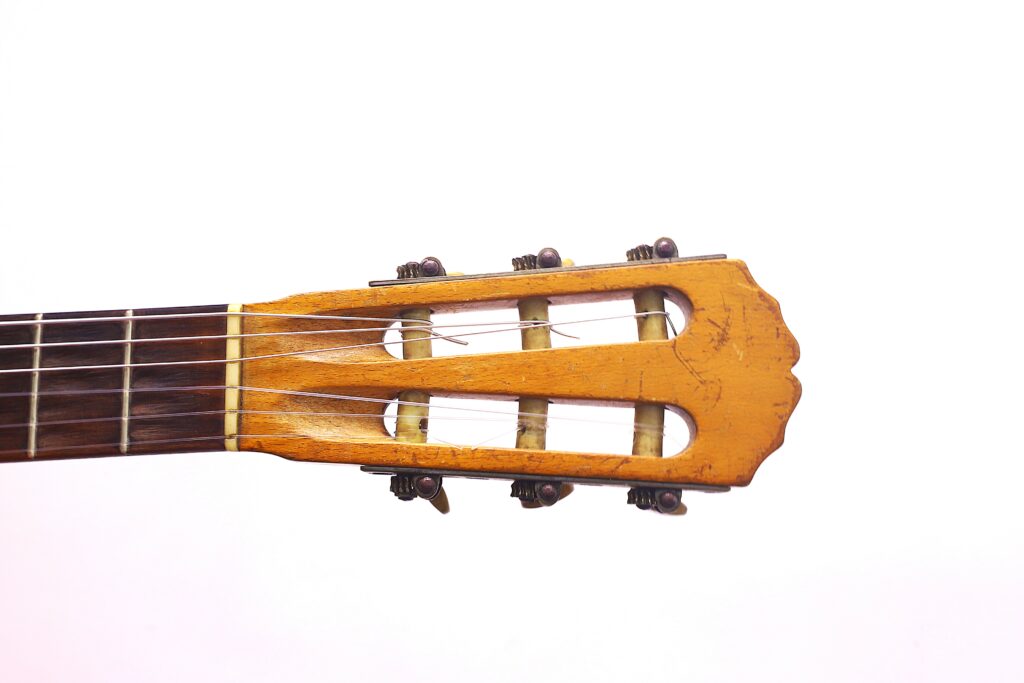
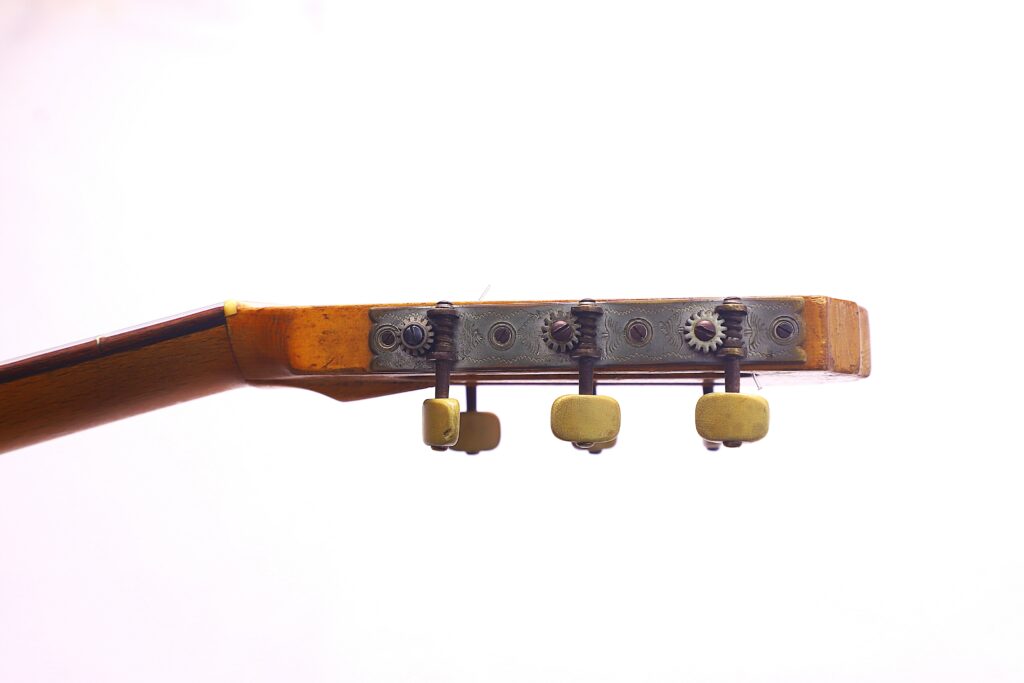
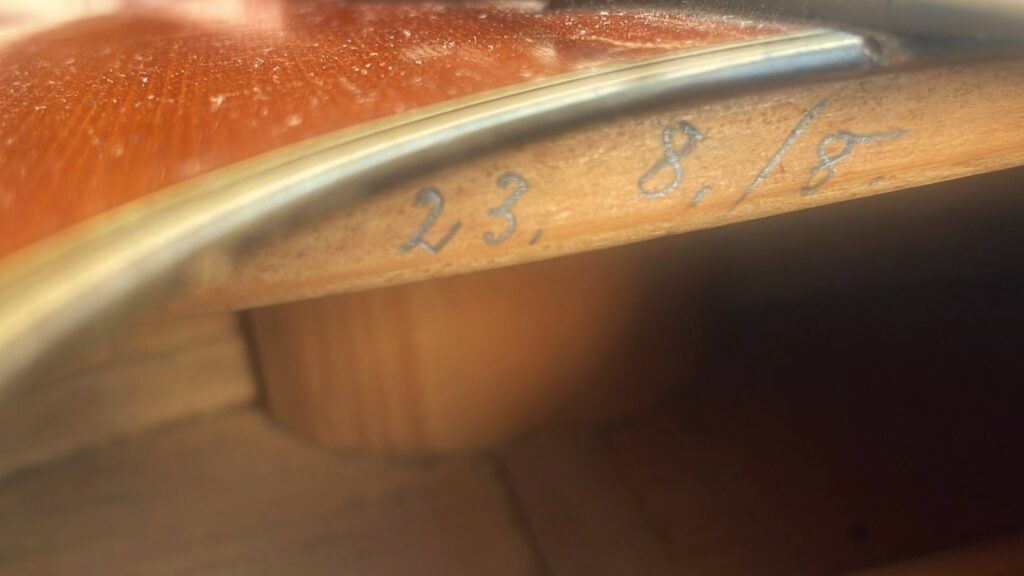
This specific instrument is a Vienna Model from 1923, notable for its elegant simplicity, compact body size, and smaller scale length, making it very easy to play with a scale length of 625 mm and a nut width of 45 mm. It is similar in body size than many Hauser Vienna models we had.
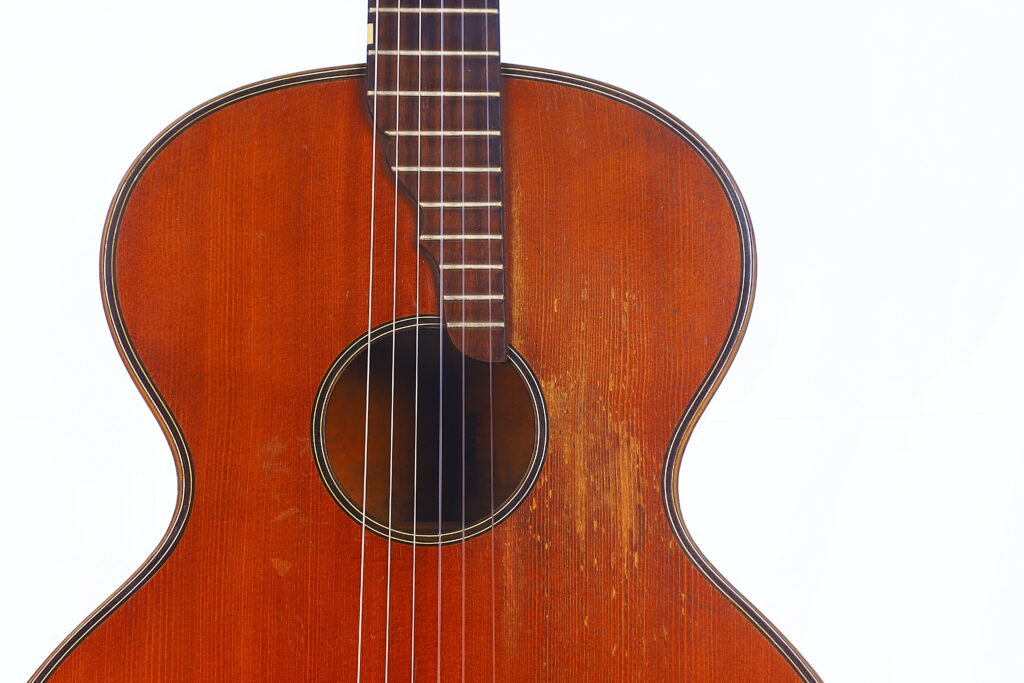
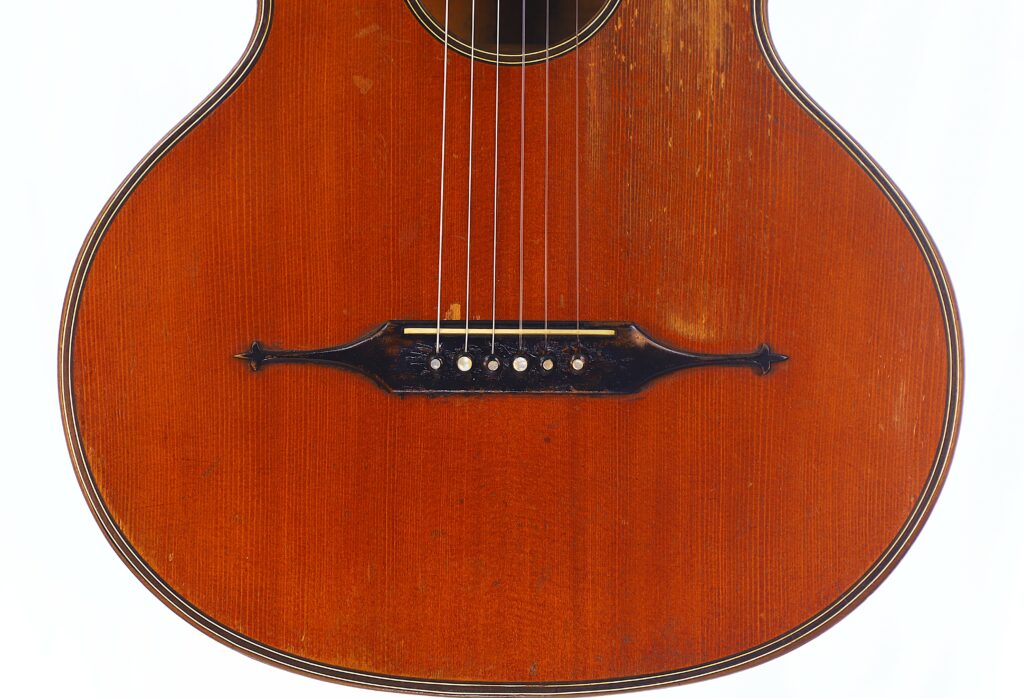
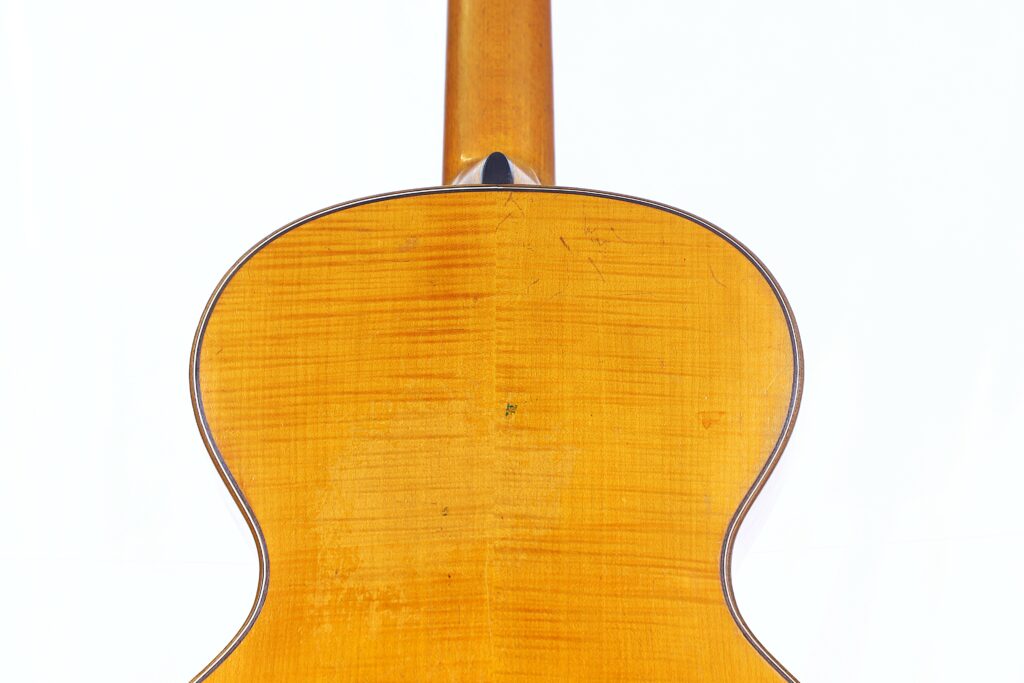
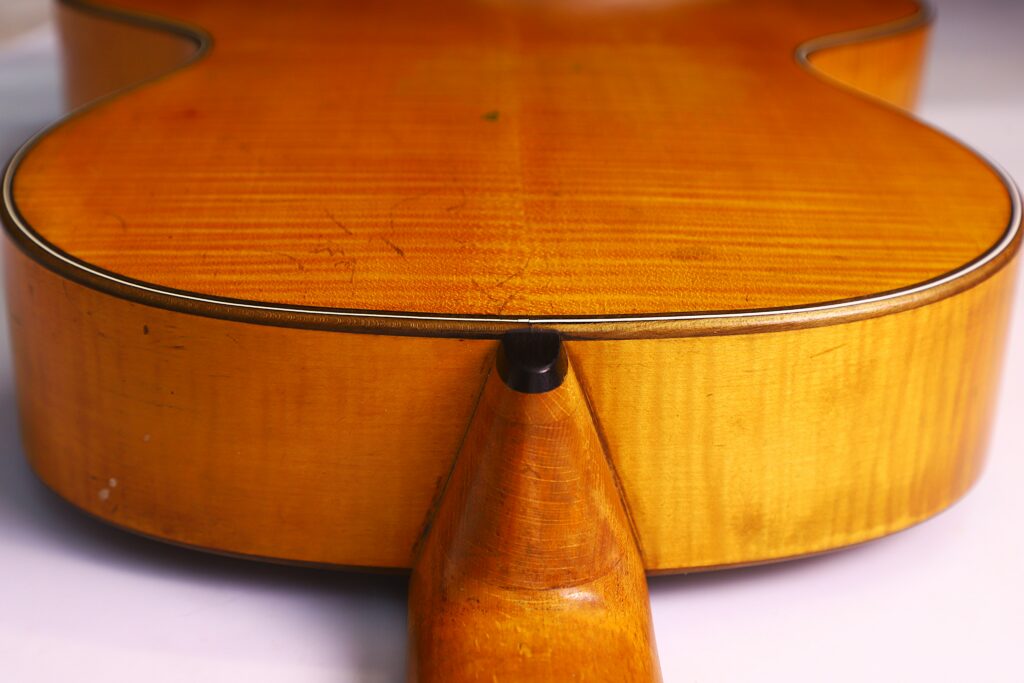
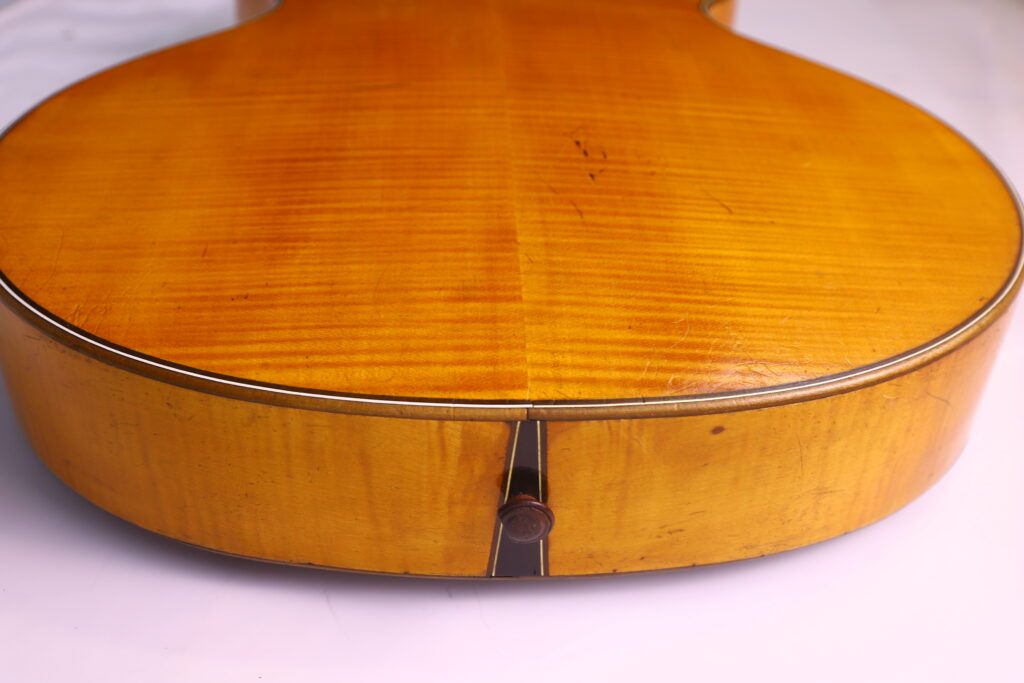
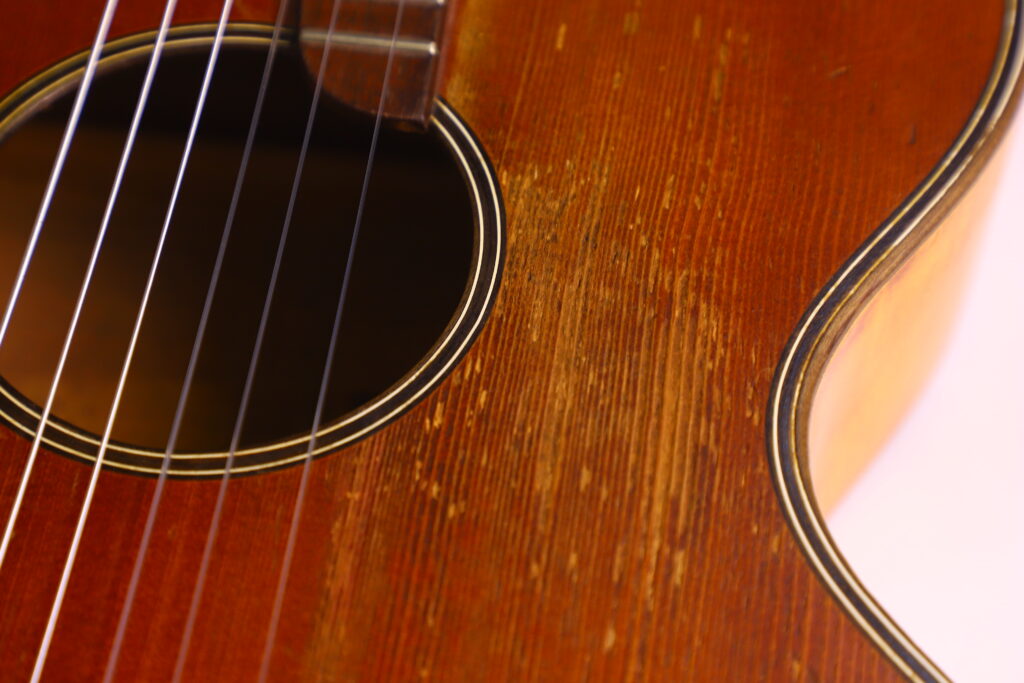
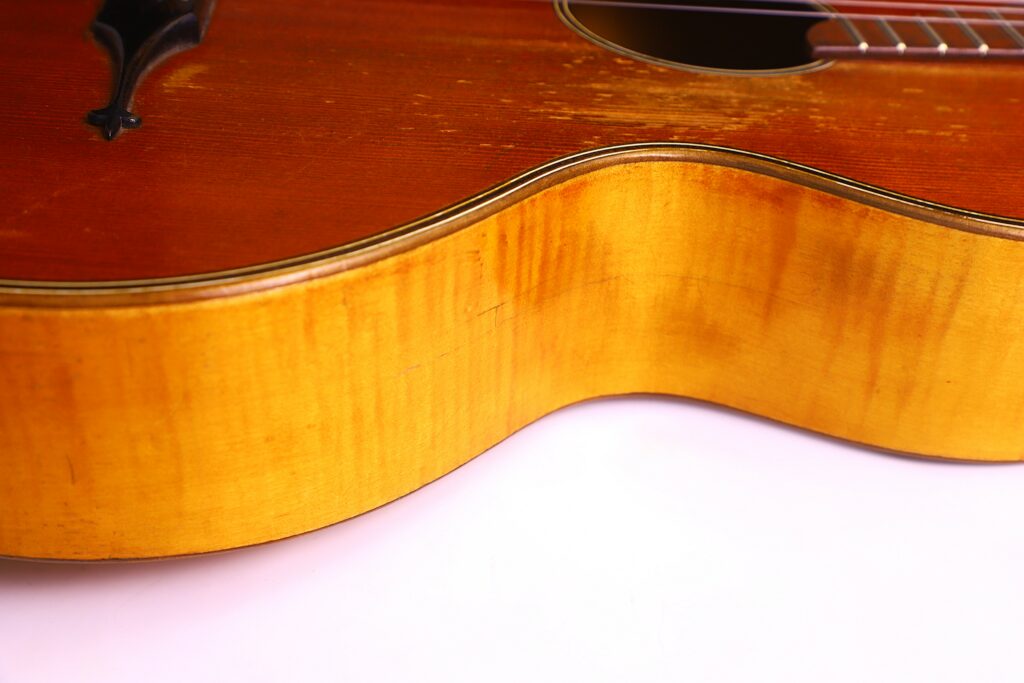
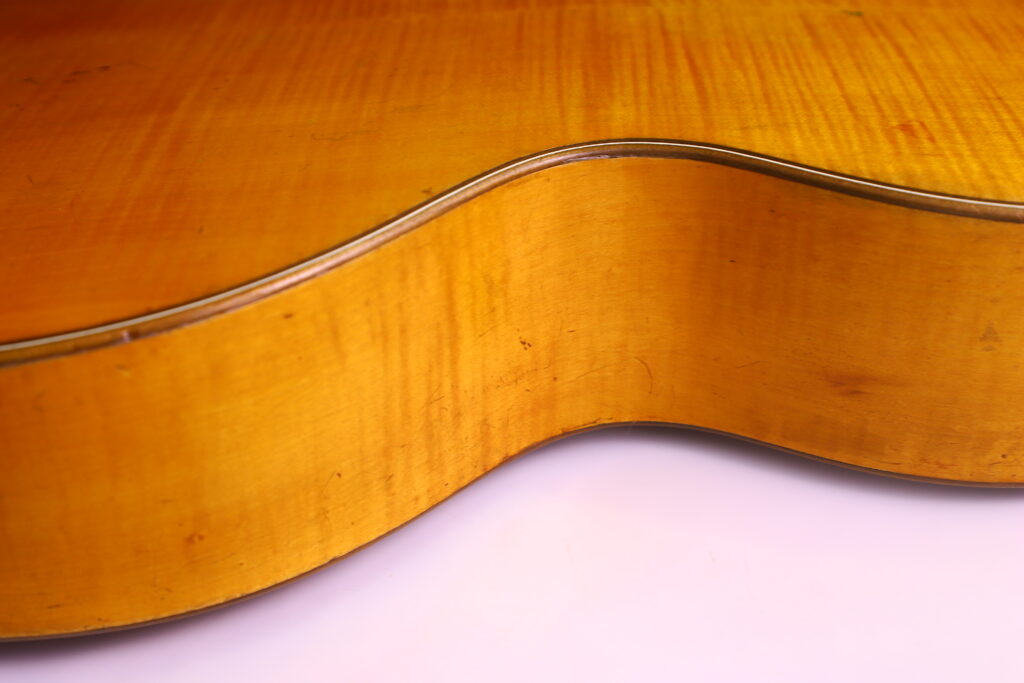
The top is made of fine spruce. Back and sides of flamed maple.
The sound of this Richard Jacob Weissgerber 1923 classical guitar is truly captivating and has even more character than most of the Hauser Vienna models we had so far. This fine guitar is creating an immediate connection with the player. It evokes deep emotions, featuring round and precise basses with an enchanting quality, and clear, singing trebles that offer a fantastic range of timbres. While fine and delicate, this guitar surprises with its impressive volume, showcasing the hallmark of a high-level Vienna model.
Aside from a professional repair at the sides by Gerold Karl Hannabach, this Richard Jacob Weissgerber 1923 classical guitar is in great condition and ready for the recording studio or concert stage. It plays great with a low action and a straight neck.

Mit dem Laden des Videos akzeptieren Sie die Datenschutzerklärung von YouTube.
Mehr erfahren