
Classical Guitars
Experience Tradition, Sound & Craftsmanship
Discover our selection of high-quality classical guitars, also known as nylon string guitars. With their warm sound and typical nylon strings, they are ideal for beginners, advanced players, and lovers of classical music. Whether crafted from fine tonewoods or built by an experienced luthier, each instrument tells its own story.
Explore our handpicked models now and experience the diversity of classical guitars!
-

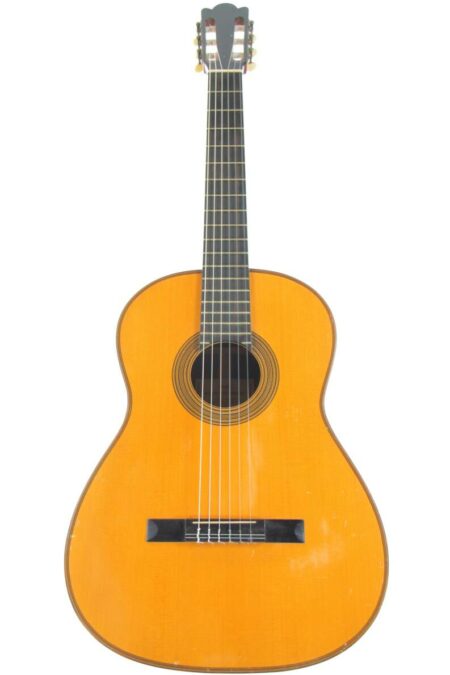
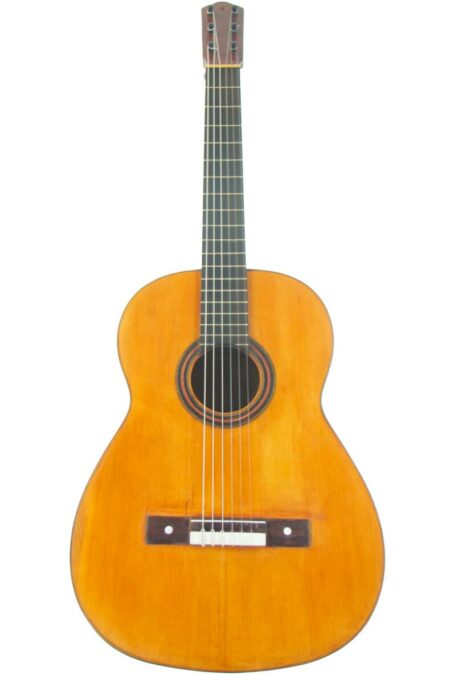
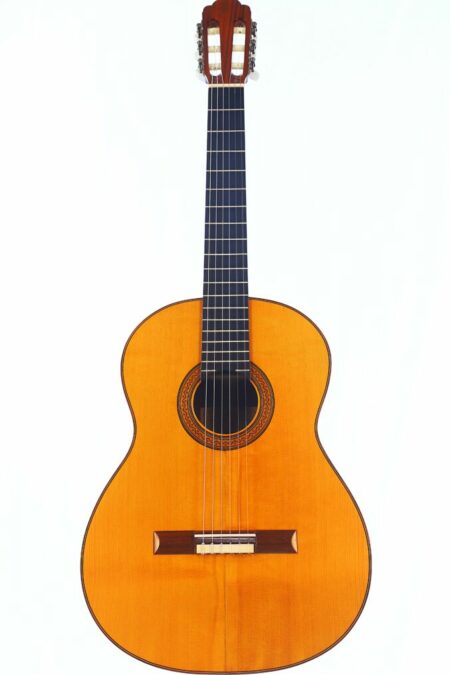
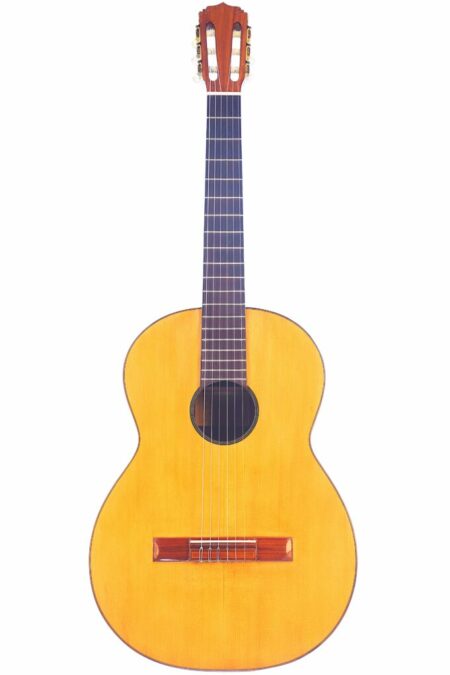
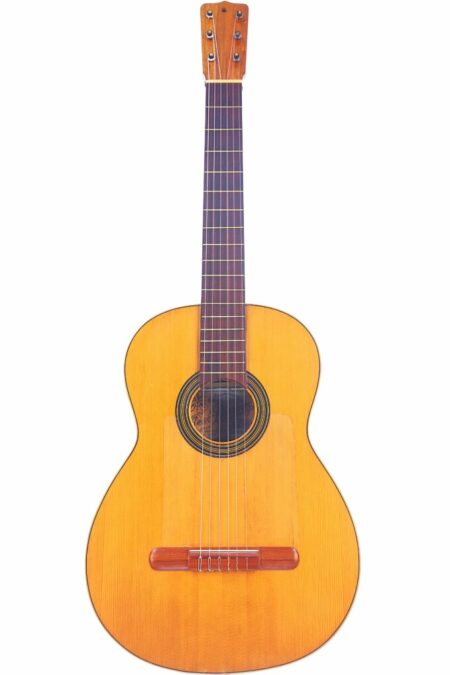
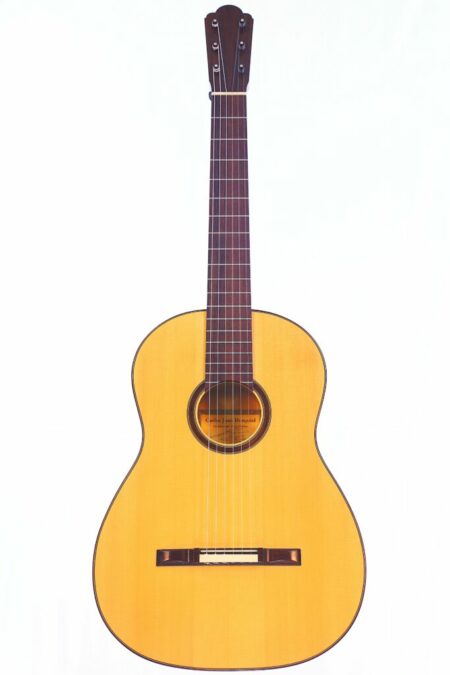
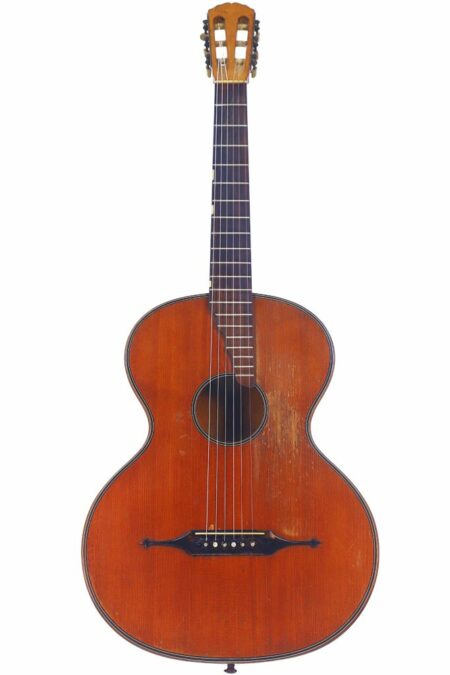
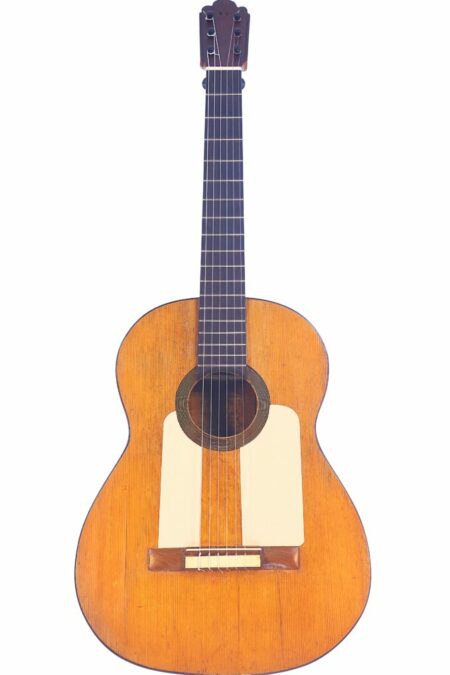
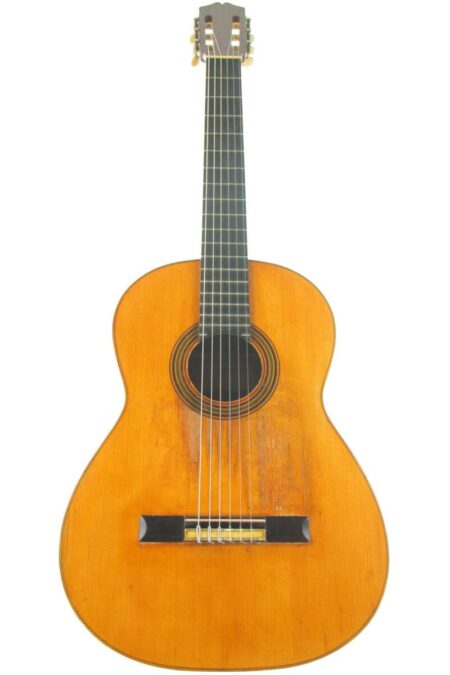
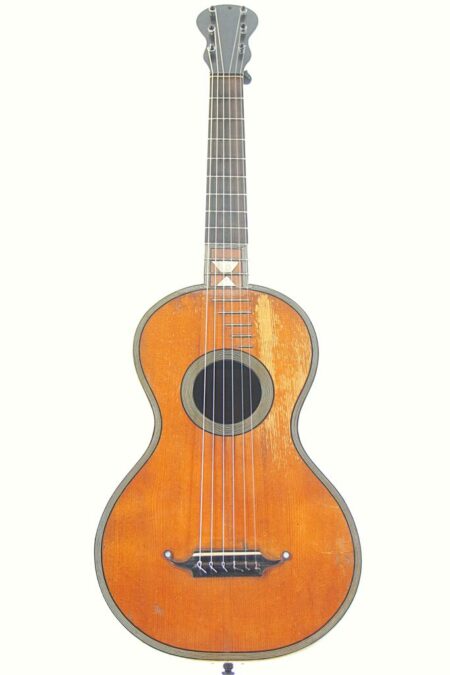
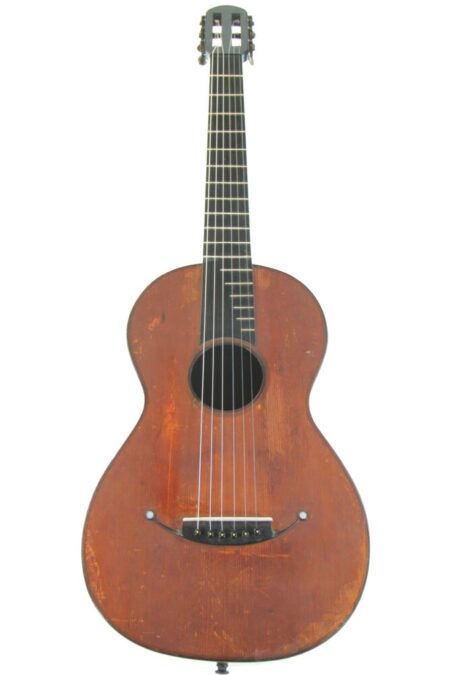
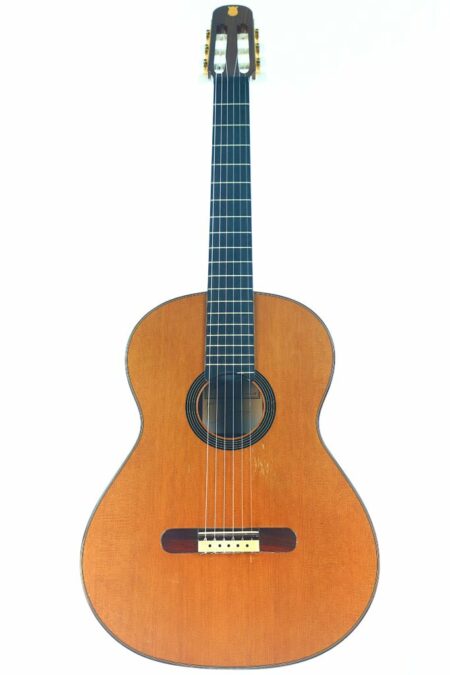
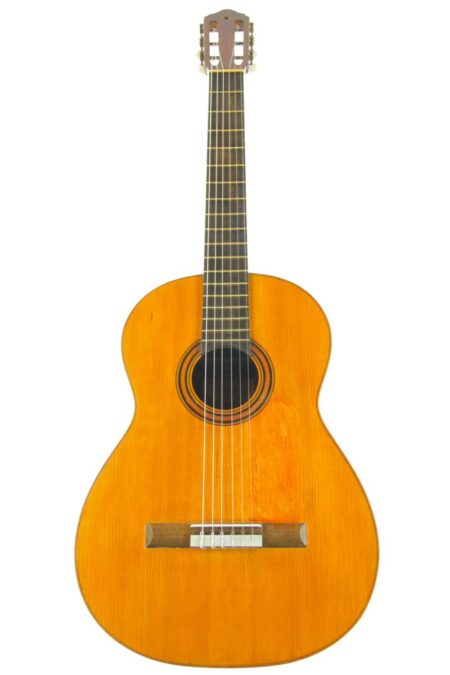
Salvador Ibanez 1900 Classical Guitar
plus Shipping
-
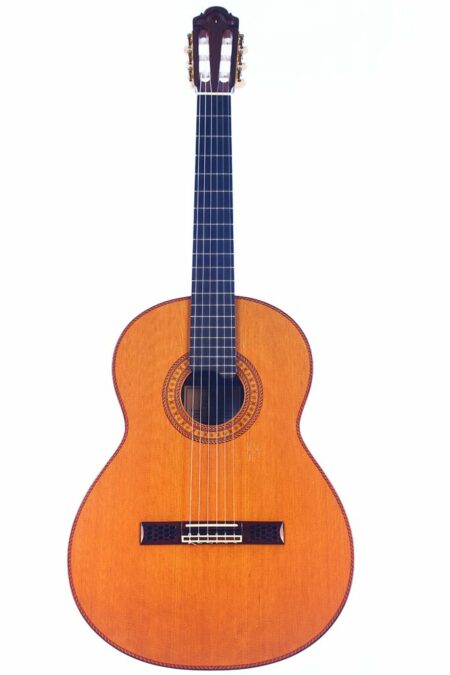
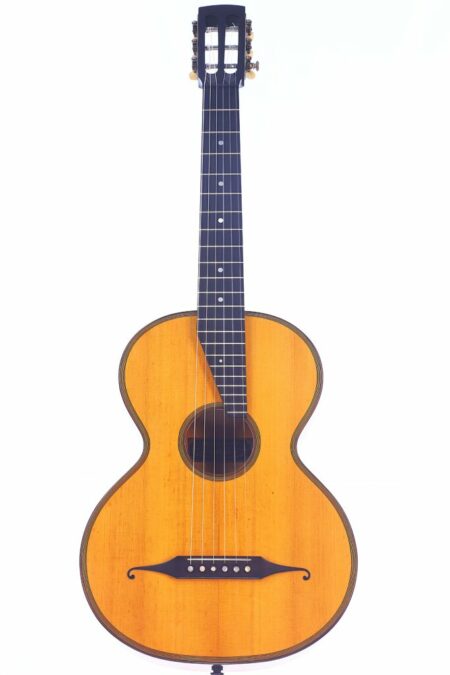
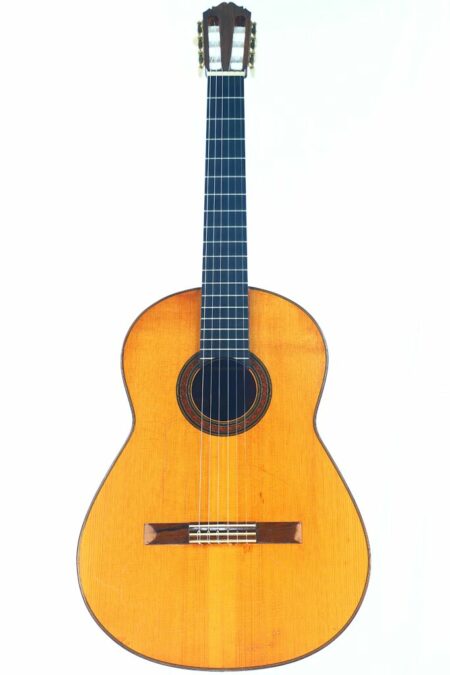
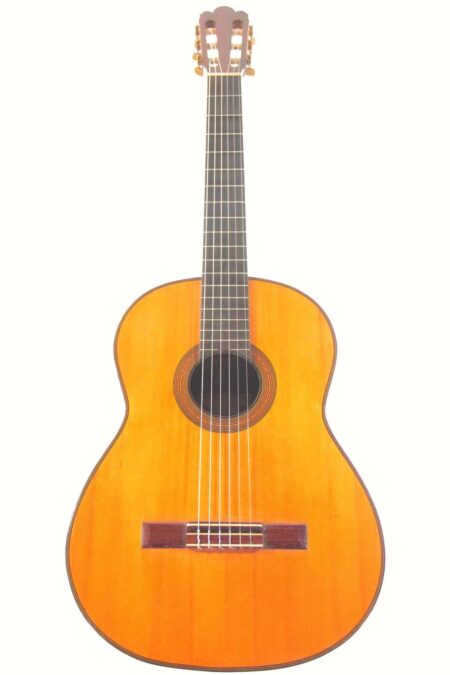
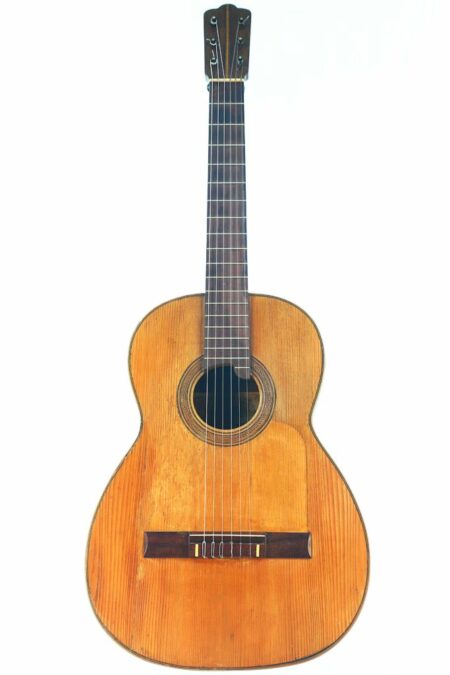
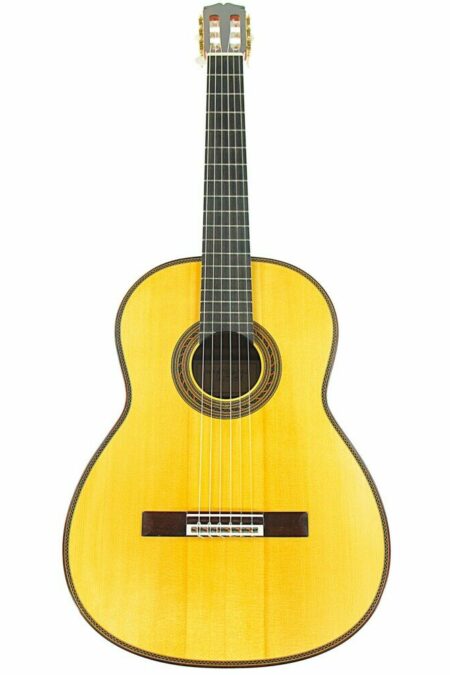
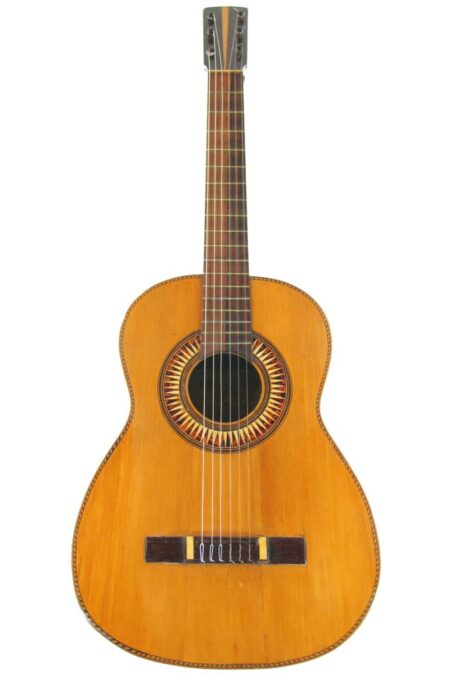
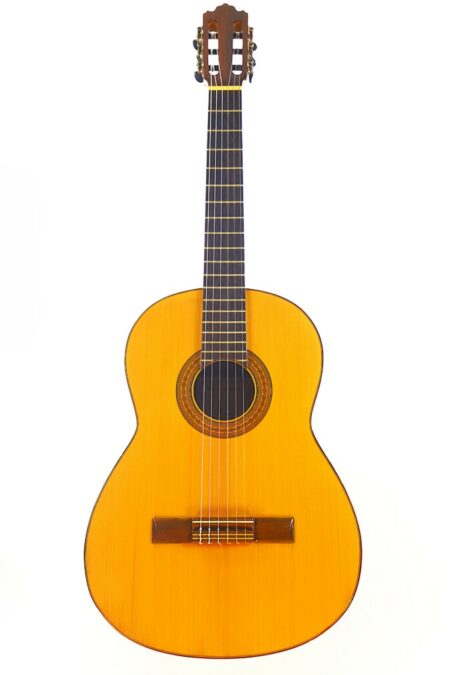
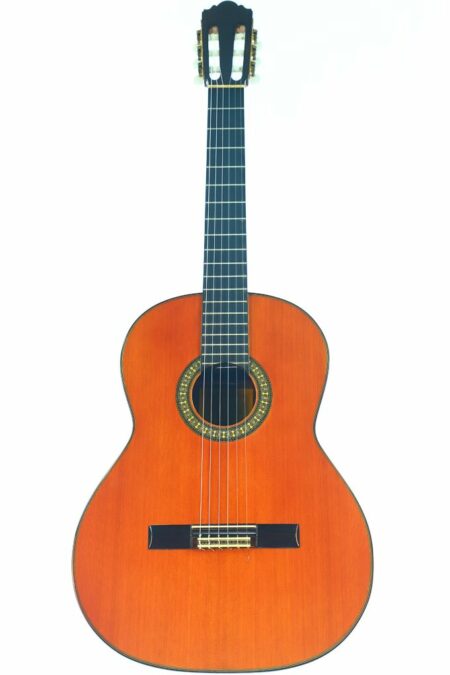
Paulino Bernabe M-20 2008 Classical Guitar
plus Shipping
-
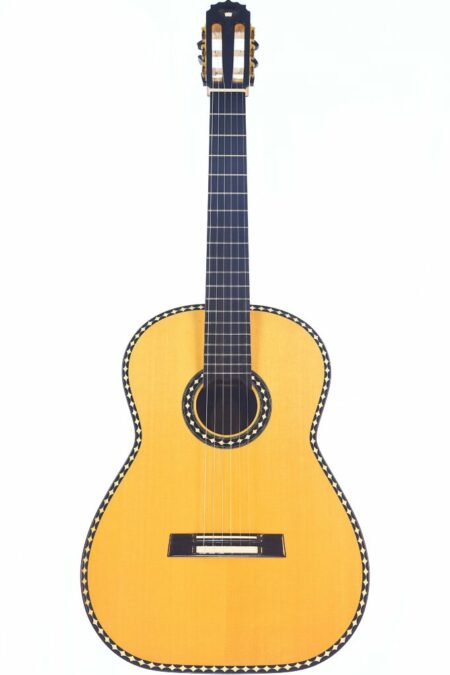
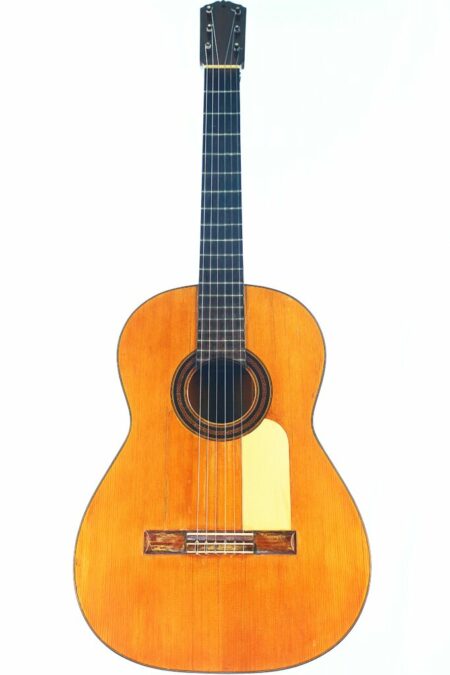
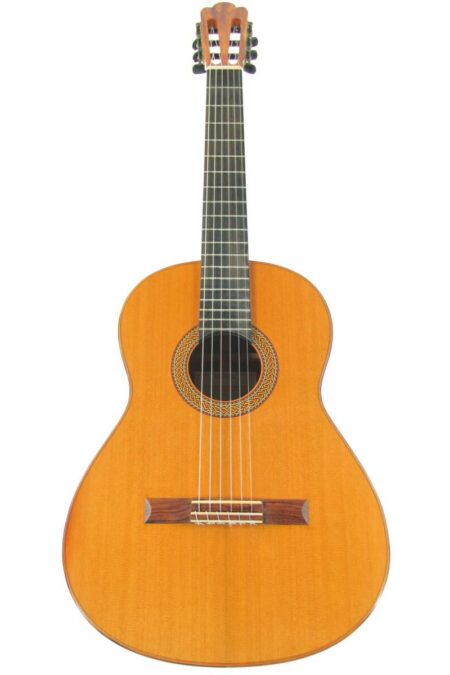
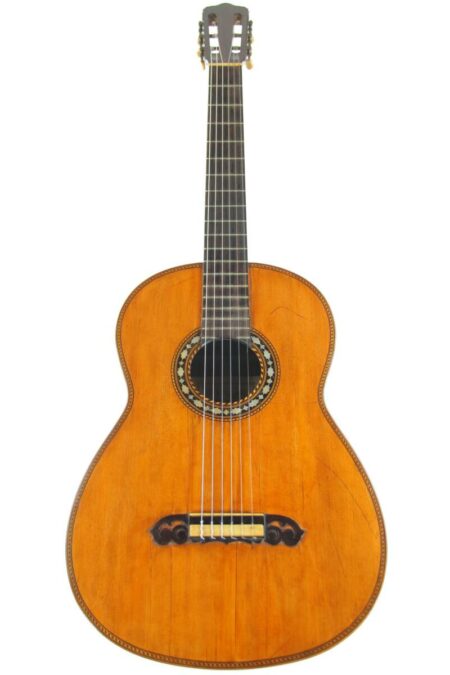
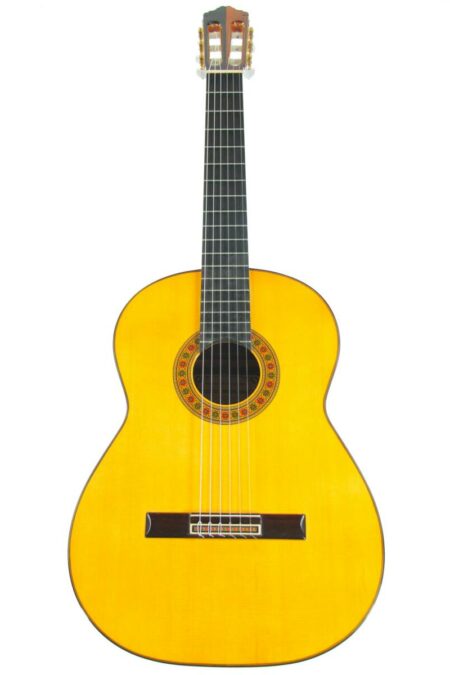
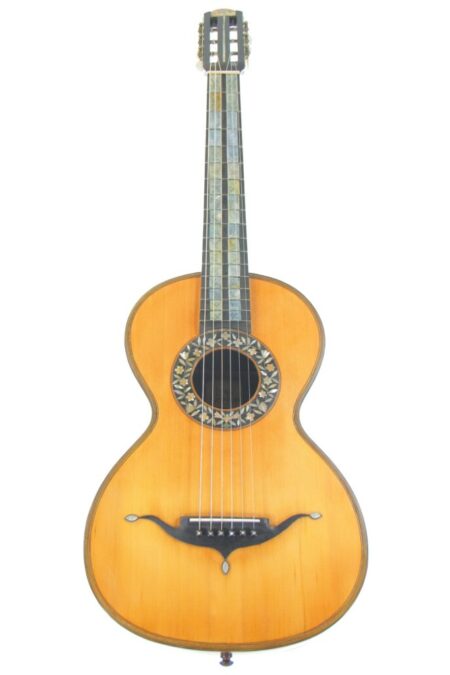
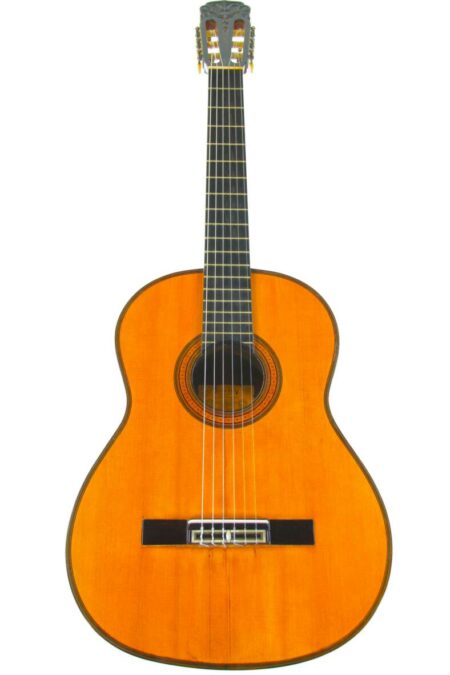
Jose Ramirez 1953 Flamenco Guitar
plus Shipping
-
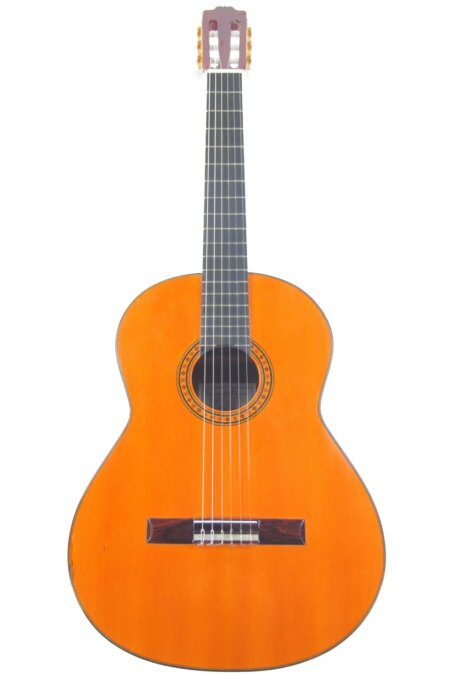
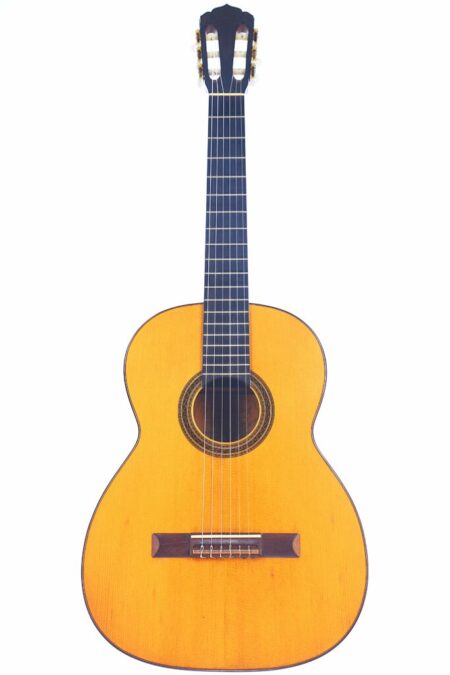
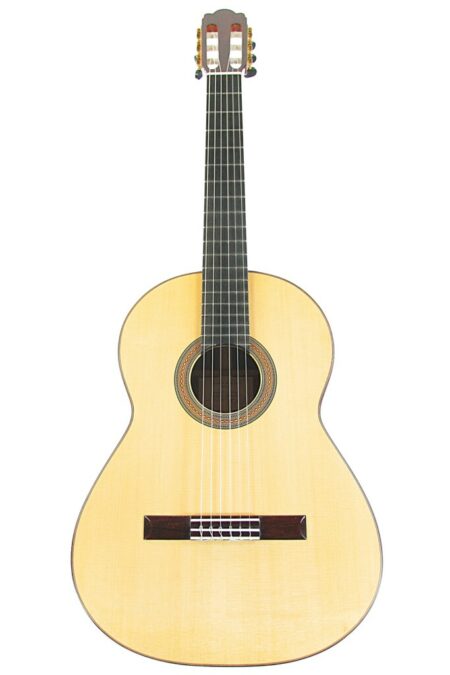
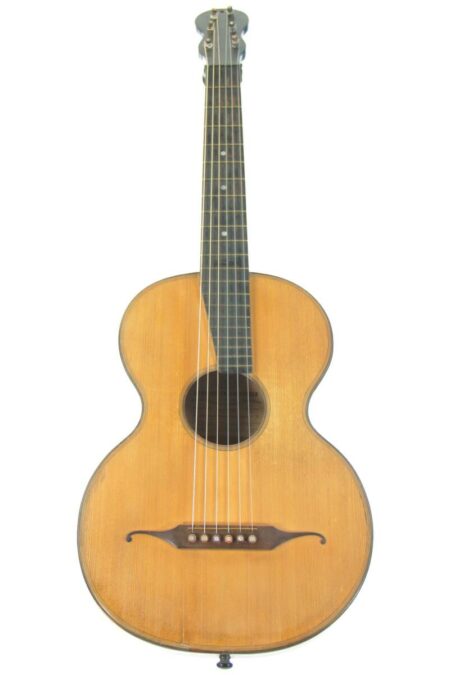
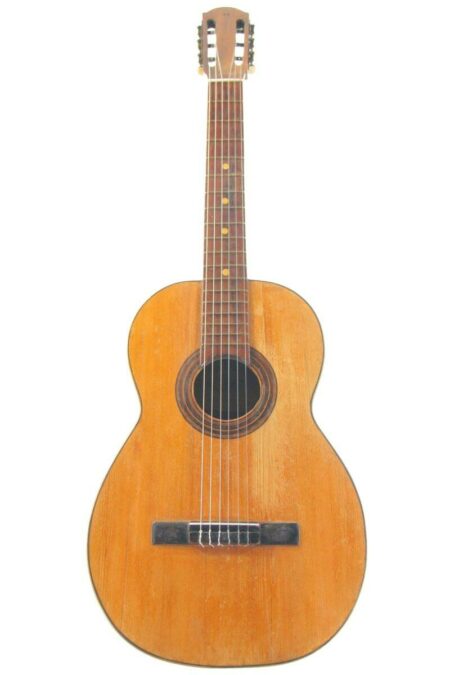
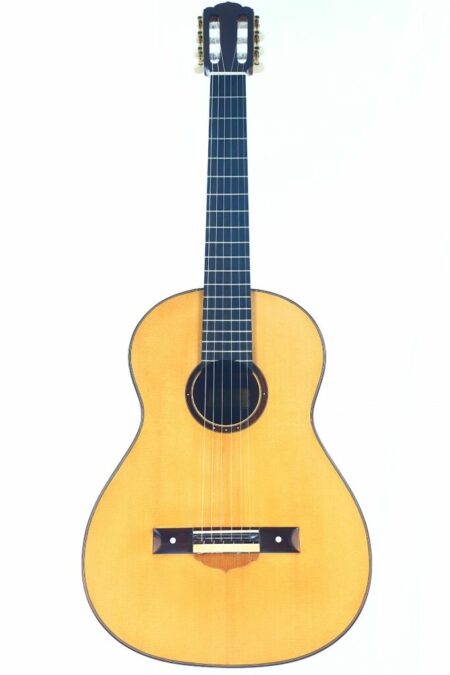
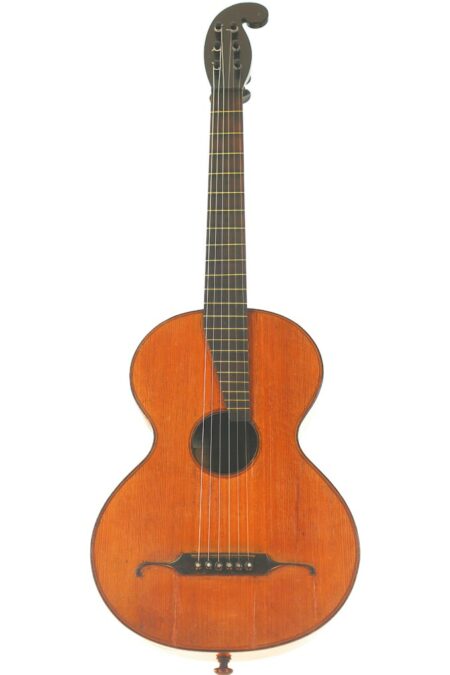
Bernhard Kresse 1999 Panormo Romantic Guitar
plus Shipping
-
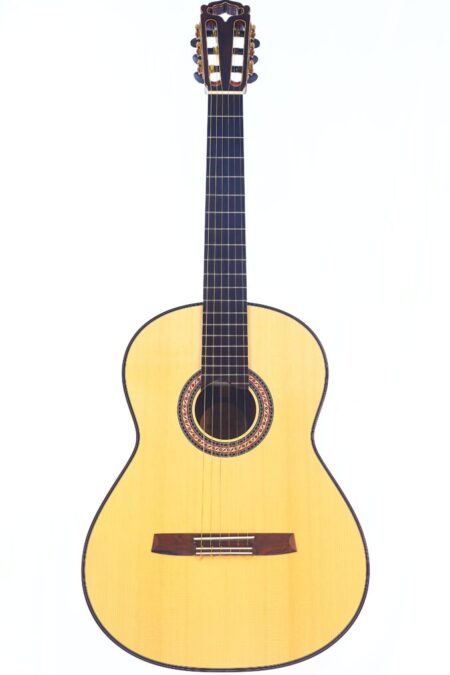
Hanika HE Lattice 2024 Classical Guitar
plus Shipping
-
Out of stock
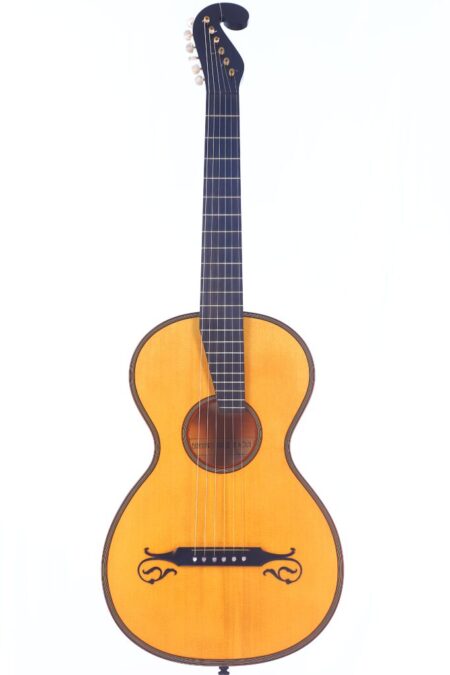
Bernhard Kresse 2011 Stauffer Romantic Guitar
-
Hopf La Portentosa 2004
plus Shipping
-
Out of stock
Stauffer Style ~1830 Romantic Guitar
-
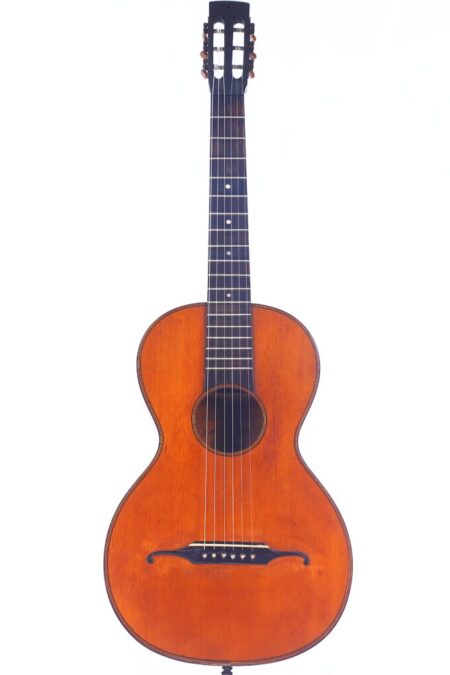 Out of stock
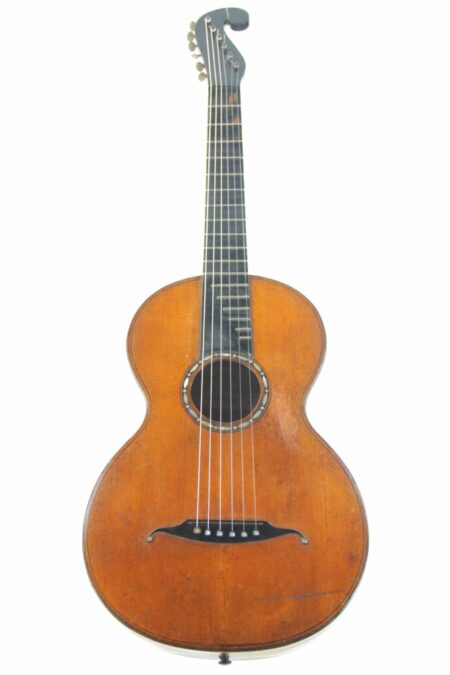
J. A. Baader & Co. 1890 Romanic Guitar
plus Shipping
-
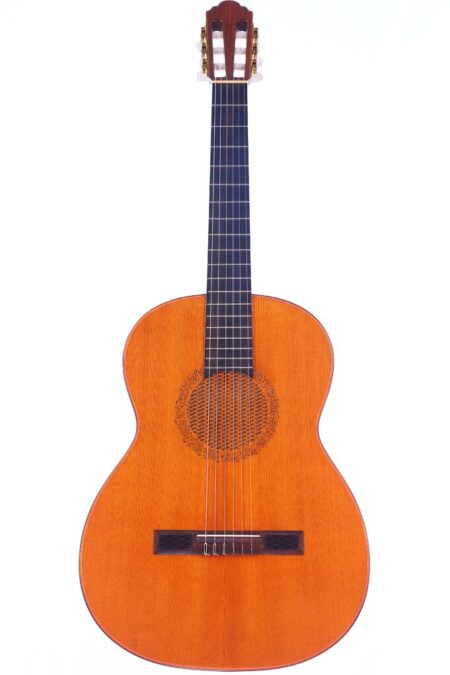
Hopf Filigrana 1980s Classical Guitar
plus Shipping
-
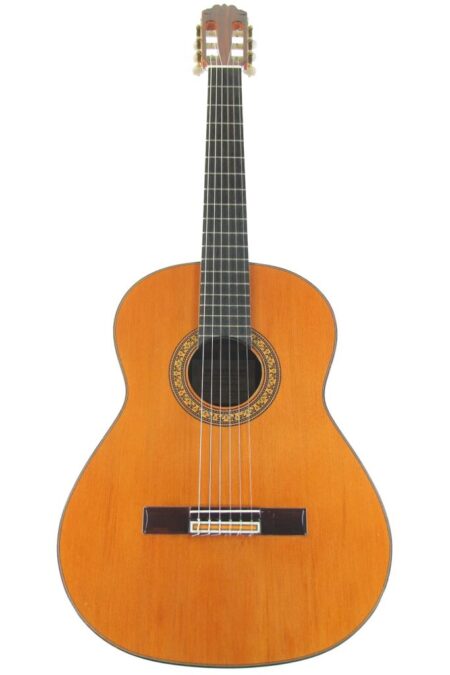
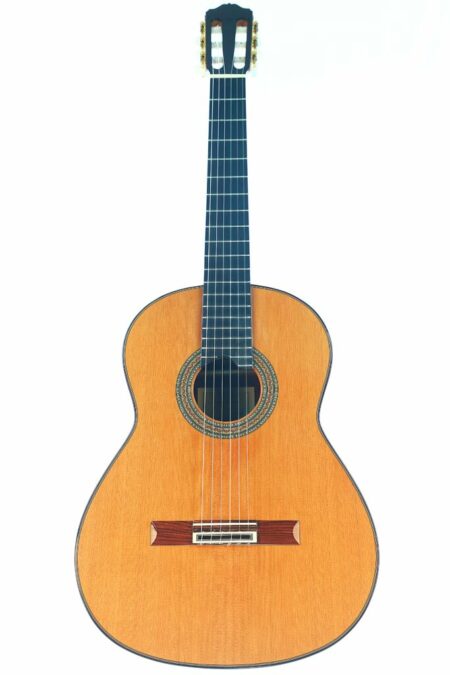
Hermanos Sanchis Lopez 2007 Extra Concierto Classical Guitar
plus Shipping
-
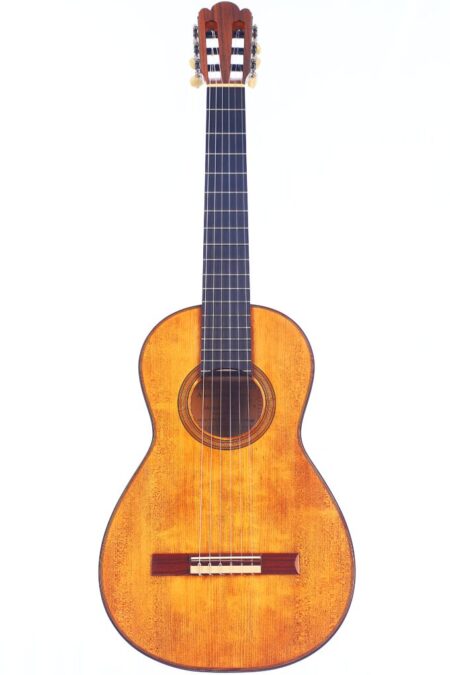 Out of stock
Antonio de Torres SE77 by Jellinghaus
plus Shipping
-
Domingo Esteso 1934 Classical Guitar
plus Shipping
-
Andres Martin 1980 Vihuela
plus Shipping
-
Jose Ramirez 1950 Flamenco Guitar
plus Shipping
-
Santos Hernandez 1930 Flamenco Guitar
plus Shipping
-
Sale!
Dieter Hense 1960 Classical Guitar
plus Shipping
-
Out of stock
Franz Novy 1920 Terz Classical Guitar
-
Rafal Turkowiak 2008 Queen of Guitars Classical Guitar
plus Shipping
-
Out of stock
Eduardo Ferrer 1971 Classical Guitar
-
Domingo Esteso 1922 Classical Guitar
plus Shipping
-
Manuel de la Chica 1957 Classical Guitar
plus Shipping
-
Classical Guitar 1900 Markneukirchen
plus Shipping
-
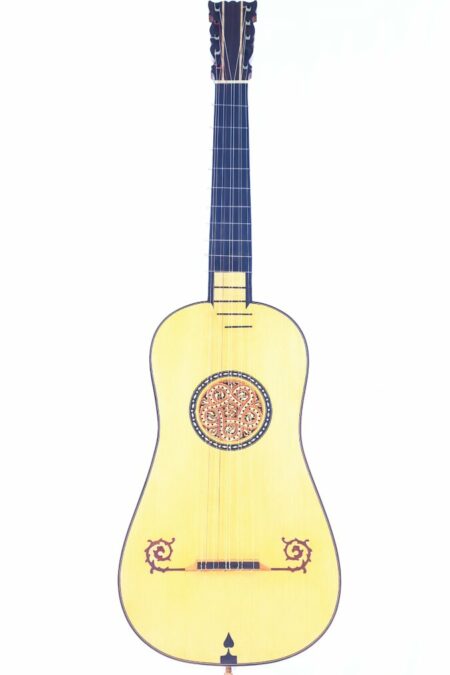
Antonio Stradivari 1679 Baroque Guitar
plus Shipping
-
Manuel Segura Rodriguez 1950 Classical Guitar
plus Shipping
-
Josip Krog 1979 Classical Guitar
plus Shipping
-
Estrada Gomez 1978 Classical Guitar
plus Shipping
-
José Ramirez 1927 Classical Guitar
plus Shipping
-
Carlos Juan Busquiel 2015 Torres Classical Guitar
plus Shipping
-
Casimiro Lozano 2013 Classical Guitar
plus Shipping
-
Johann Georg Stauffer 1810 Romantic Guitar
plus Shipping
-
Fratelli Rovetta 1880 Romantic Guitar
plus Shipping
-
José Ramirez 1a 2014 Flamenco Guitar
plus Shipping
-
Siscu Garcia 2024 Torres Romantic Guitar
plus Shipping
-
Amalio Burguet 1a 10-string Classical Guitar
plus Shipping
-
Stauffer Style 1931 Romantic Guitar
plus Shipping
-
YuLong Guo 2014 Chamber Concert Classical Guitar
plus Shipping
-
Dieter Hopf Artista Membrane 2011 Classical Guitar
plus Shipping
-
Fernando Vera 1976 Vihuela
plus Shipping
-
Manuel de Soto y Solares 1900 Classical Guitar
plus Shipping
-
Michel Donadey 1986 Classical Guitar
plus Shipping
-
Richard Jacob Weissgerber 1923 Classical Guitar
plus Shipping
-
David Rubio 1973 Classical Guitar
plus Shipping
-
Santos Hernandez 1916 Classical Guitar
plus Shipping
-
Adolf Meinel 1984 Classical Guitar
plus Shipping
-
Benito Ferrer 1919 Classical Guitar
plus Shipping
-
Francisco Simplicio 1931 Torres Classical Guitar
plus Shipping
-
Sale!
Gerardo Escobedo 2018 Torres Classical Guitar
plus Shipping
-
Thorsten Sven Lietz 2015 Torres Classical Guitar
plus Shipping
-
Domenico Pizzonia 2020 Classical Guitar
plus Shipping
-
Jose Ramirez 1a 1983 Classical Guitar
plus Shipping
-
Joseph Kriner 1865 Romantic Guitar
plus Shipping
-
Manuel de la Chica 1968 Classical Guitar
plus Shipping
-
Marcelo Barbero 1941 Flamenco Guitar
plus Shipping
-
Casa Gonzalez 1915 Classical Guitar
plus Shipping
-
Miguel Rodriguez 1925 Classical Guitar
plus Shipping
-
Bernard Enzensperger 1850 Romantic Guitar
plus Shipping
-
Manuel Contreras 2a 1996 Classical Guitar
plus Shipping
-
Joseph Garaboeuf – Lacombe 1850 Romantic Guitar
plus Shipping
-
Stefan Nitschke 2023 Santos Hernandez Classical Guitar
plus Shipping
-
Miguel Rodriguez 1992 Church Door Classical Guitar
plus Shipping
-
Out of stock
Jose Ramirez 10-string 1968 M.T. Classical Guitar
-
Juan Estruch 1976 – Chet Atkins yellow label Classical Guitar
plus Shipping
-
Jose Ramirez Guitarra de Tablao 1920s Flamenco Guitar
plus Shipping
-
Juan Galan Caro 1896 Romantic Guitar
plus Shipping
-
Antonio Reinosa – Rafael Moreno 1979 Classical Guitar
plus Shipping
-
Carl August Otto 1843 Romantic Guitar
plus Shipping
-
Jaime Ribot 1900 Classical Guitar
plus Shipping
-
Leon Victor Mougenot 1900 Romantic Guitar
plus Shipping
-
Joseph Lété 1833 Romantic Guitar
plus Shipping
-
Miguel Rodriguez ~1915 Classical Guitar
plus Shipping
-
Vicente Arias 1896 Classical Guitar
plus Shipping
-
Eugenio Riba 2015 Classical Guitar
plus Shipping
-
Arturo Sanzano 1998 Classical Guitar
plus Shipping
-
Miguel Rodriguez 1960’s Classical Guitar
plus Shipping
-
Francisco Simplicio 1925 Classical Guitar
plus Shipping
-
Johann Bucher ~1830 Romantic Guitar
plus Shipping
-
Domingo Esteso 1921 classical guitar
plus Shipping
-
Juan Estruch 1978 Classical Guitar
plus Shipping
-
Felipe Conde CE2 2022 Classical Guitar
plus Shipping
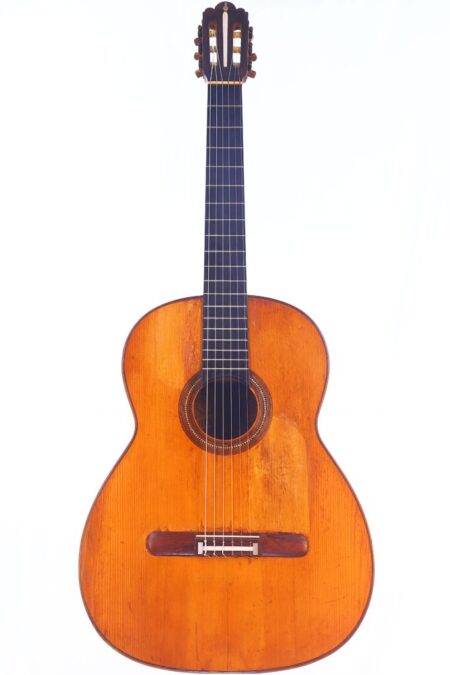
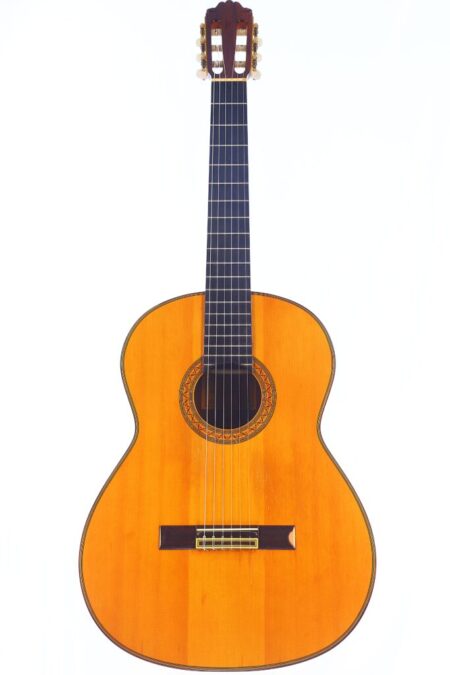
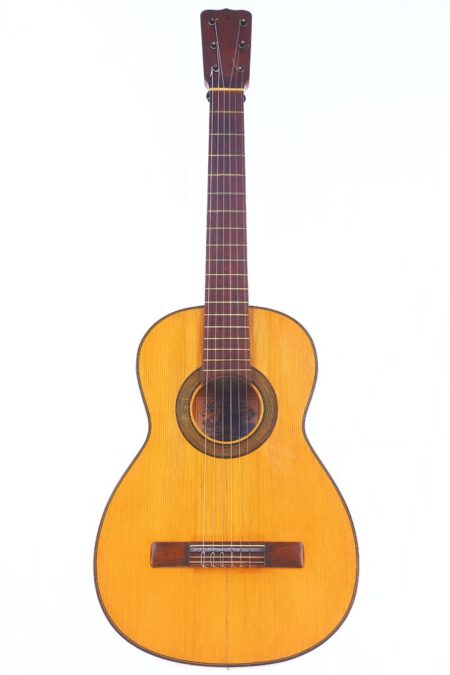
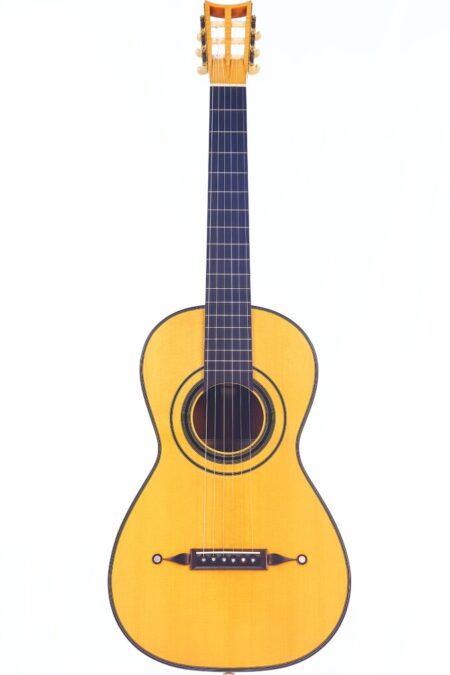
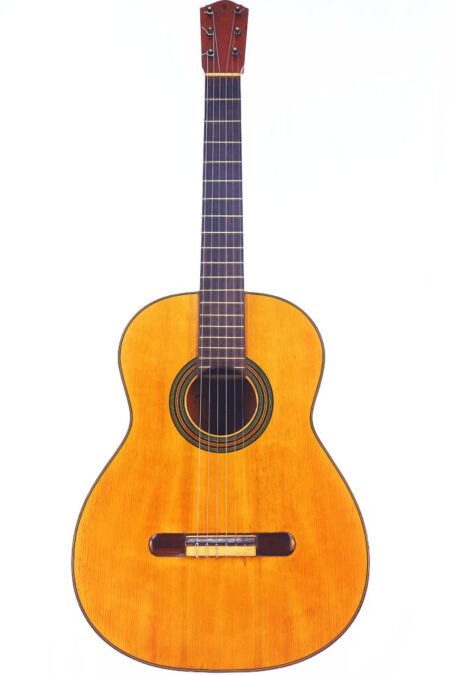
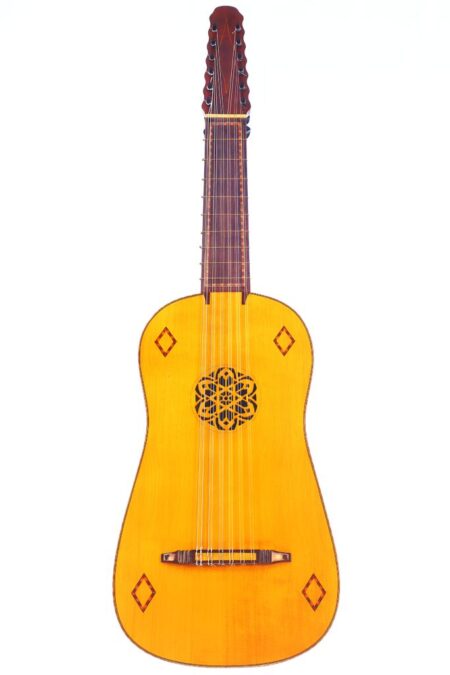
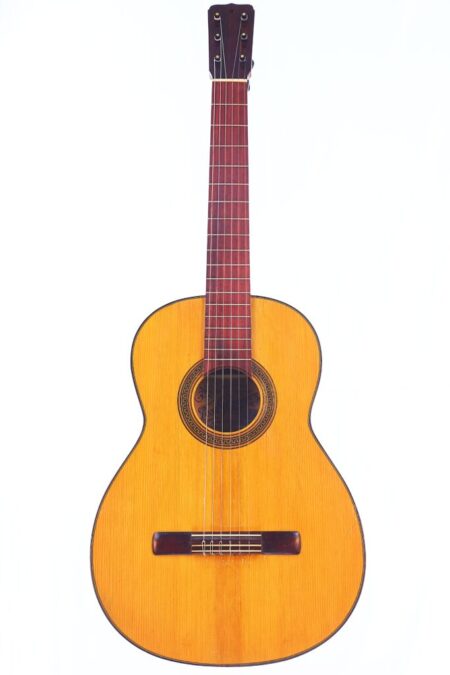
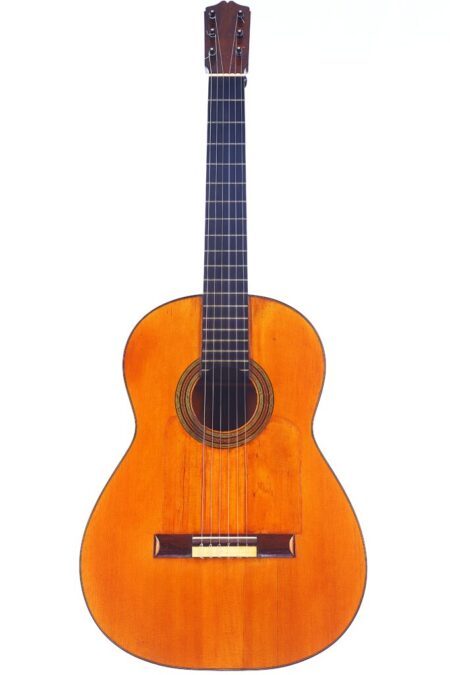

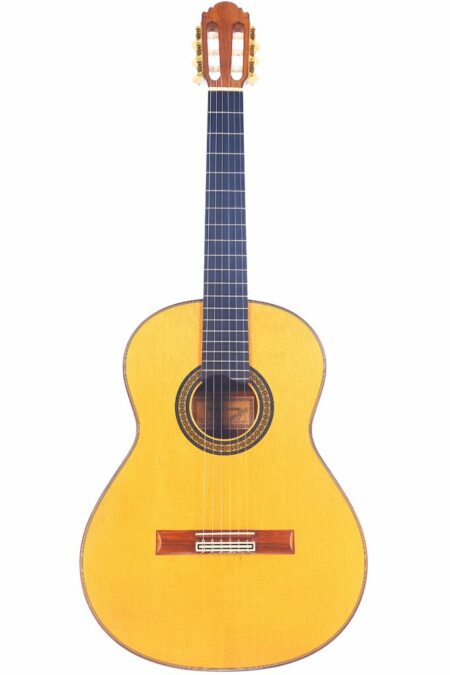
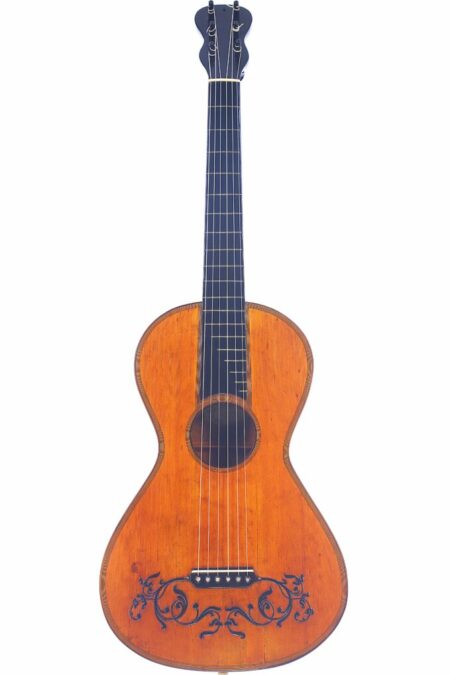
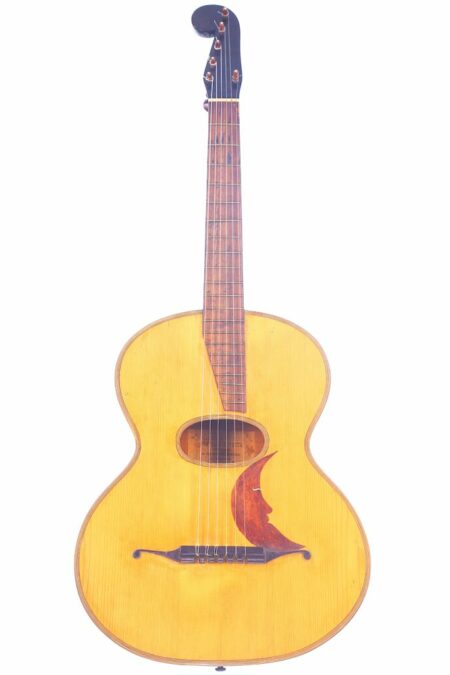
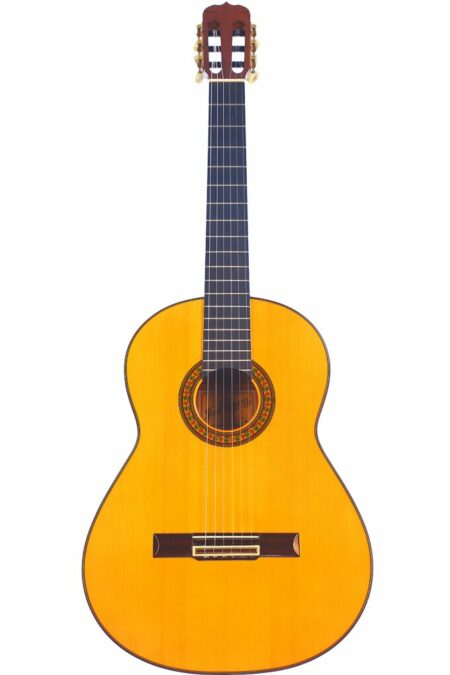
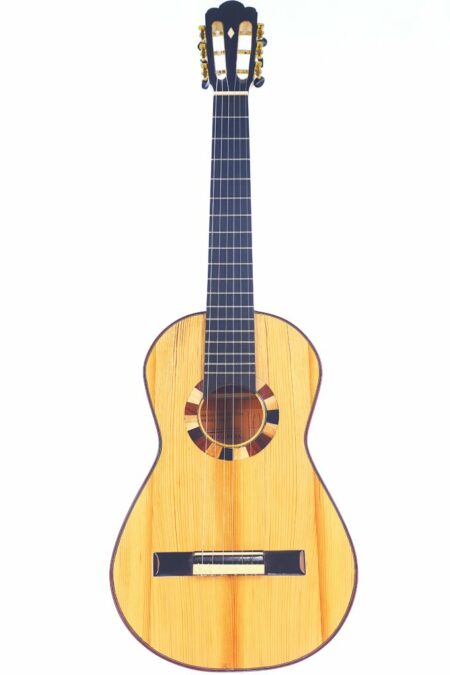
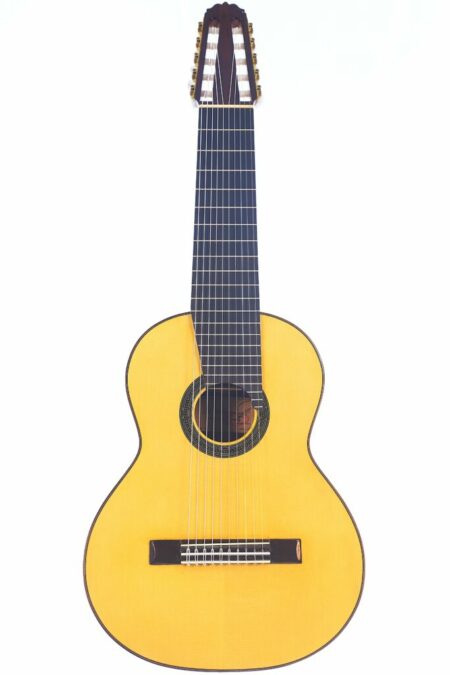
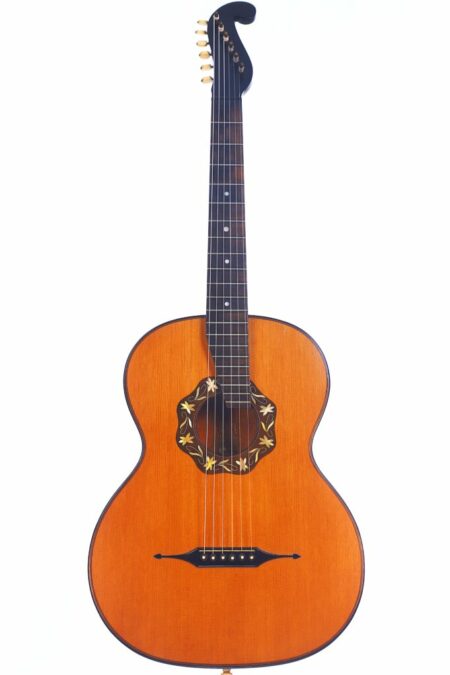
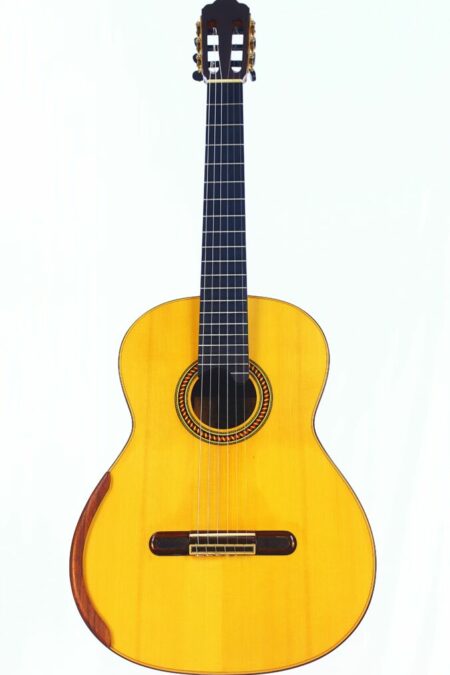
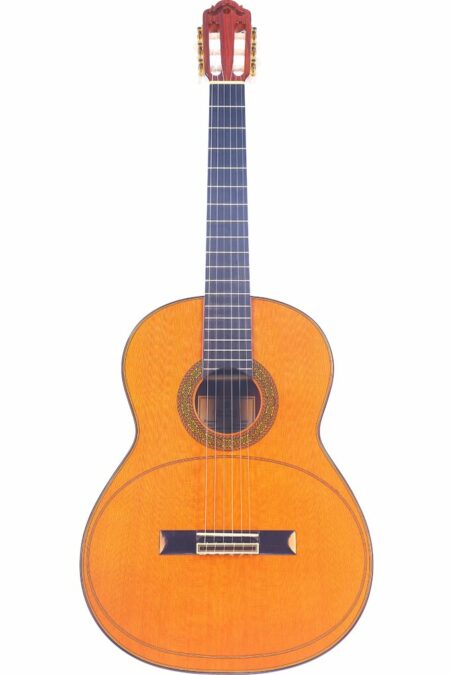
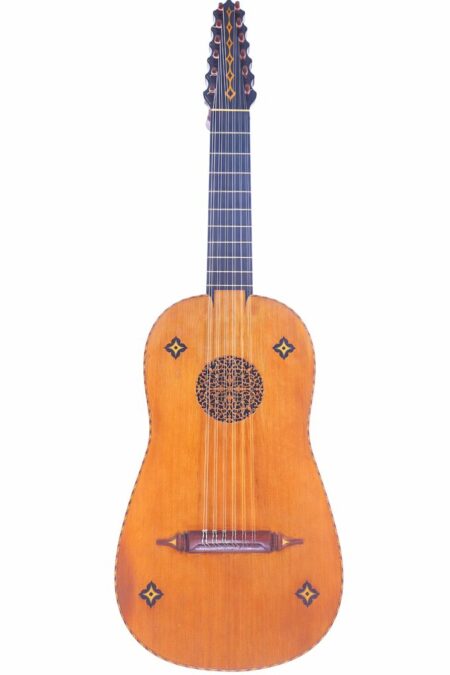
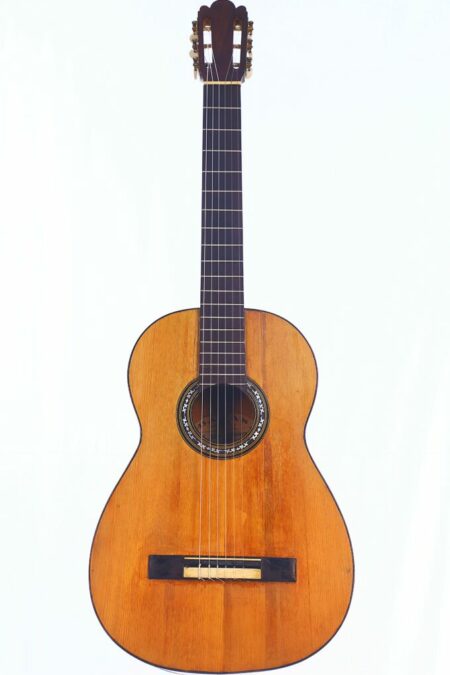
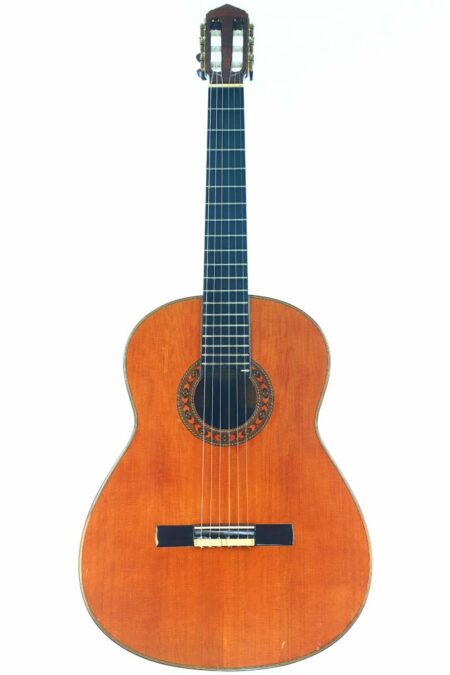
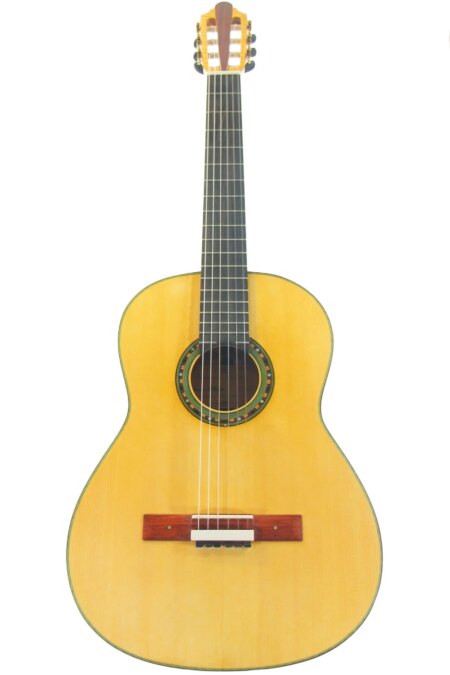
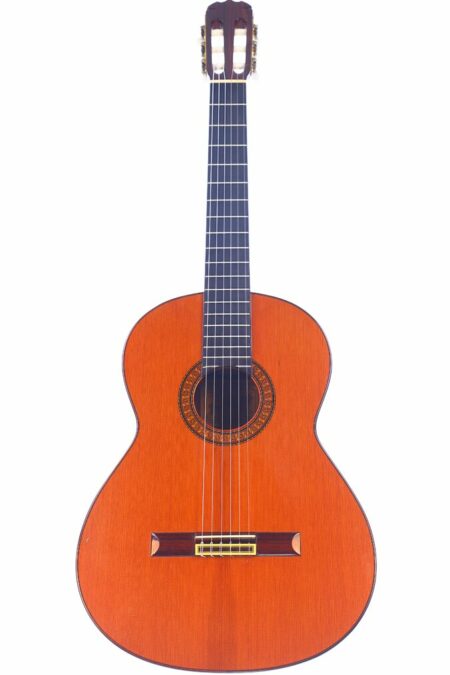
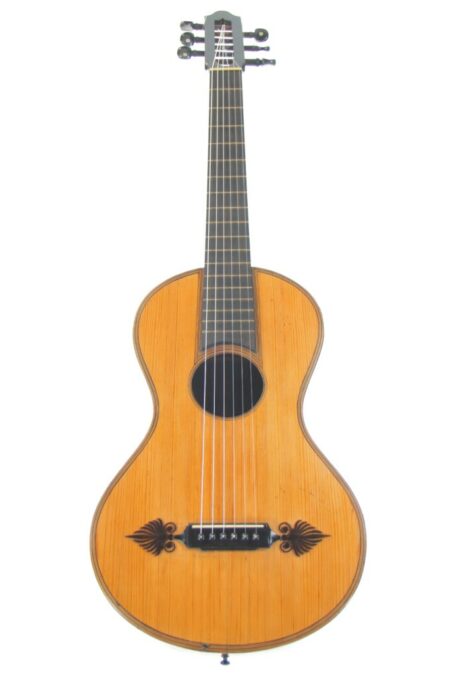
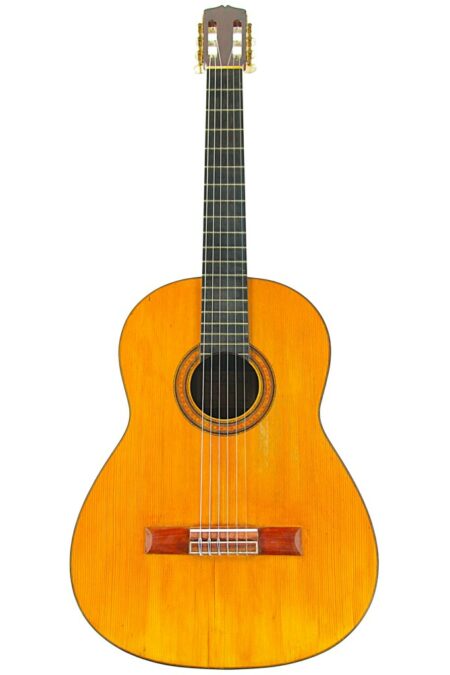






Classical Guitars – Concert Guitars with Character & History
What defines a classical guitar?
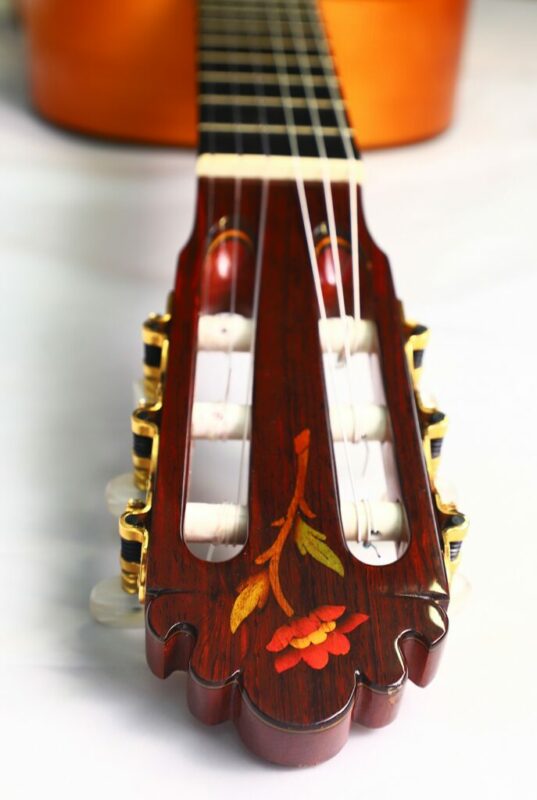 The classical guitar, also known as a concert guitar or nylon string guitar, is a traditional string instrument characterized by its specific construction and warm, mellow sound. The modern classical guitar originated in Spain, which is why it is often referred to as a Spanish guitar. It consists of a finely crafted top, a stable neck, a hollow body, a nut, a fretboard, and a headstock with open tuners.
Typical of the classical guitar are nylon strings, which produce a softer sound compared to the steel strings of an acoustic guitar and are easier on the fingers while playing. The scale length is usually 650 mm, and the nut width is about 52 mm – creating a generous string layout that allows for precise fingerstyle playing. Another feature is that classical guitars usually do not have pickups and are played acoustically. Compared to acoustic guitars, the classical guitar sounds milder and more balanced, making it the ideal choice for classical music, Flamenco, or Latin styles.
Concert Guitar or Acoustic Guitar – What’s the Difference?
The concert guitar is often referred to as an acoustic guitar – while this is true, not every acoustic guitar is a concert guitar. The term "acoustic" generally refers to all guitars that are played without electric amplification. This includes both concert and western guitars. However, in common usage, "acoustic guitar" typically refers to the western guitar with steel strings.
The concert guitar, with its nylon strings, wider nut width, and softer sound, is specifically suited for classical music and fingerstyle. It is also particularly popular among beginners, as it is easier to play and places less strain on the fingers. Additionally, it impresses with its balanced, warm tone.
For more about other acoustic models, please visit: Acoustic Guitar.
Choosing the Right Classical Guitar – What Matters
When purchasing a classical guitar, scale length and size play a central role. For children or individuals with smaller hands, a shorter scale or smaller body size (e.g., 3/4 guitar) is recommended. Adults usually opt for the standard size with a 650 mm scale length.
The sound profile is heavily influenced by the choice of wood: A cedar top sounds warm and direct, while spruce tends to be bright and brilliant. The body made of rosewood, maple, or cypress also affects the tone color and volume.
The feel of the fret hand is also crucial – a comfortable action, well-shaped neck, and appropriate nut width (usually 52–54 mm) make playing more enjoyable.
Whether beginner, intermediate, or professional: the right classical guitar must not only sound good but also fit the guitarist's playing technique and hand size. Good advice can help with the selection.
Craftsmanship & Luthiers – What Shapes the Sound?

The luthier has a decisive influence on the sound of a classical guitar. With years of experience, a keen ear, and craftsmanship, they significantly determine how the instrument sounds, resonates, and feels.
The workmanship must be precise: every glue joint, curve, and joint affects resonance. The choice of wood is particularly important – spruce, cedar, rosewood, or maple have different tonal properties and impact the response, volume, and tone color.
All of this directly influences the vibrational properties of the top and body – and thus the overall sound profile. Therefore, the more carefully the instrument is built, the more balanced, rich, and refined its tone will be.
Accessories & Tips for Beginners
| Accessory | Description |
|---|---|
| Guitar Bag or Case | Protects the guitar during transport. A padded bag is ideal for everyday use. |
| Strings | Replacement strings in the correct gauge, preferably nylon strings for beginners, which are gentler to play. Carbon strings produce a louder and brighter tone. |
| Tuner | Electronic tuner or tuning app to accurately tune the guitar. |
| Picks | Useful for certain playing styles; try different thicknesses to find the right one. |
| Music Stand | Facilitates playing with sheet music or tablature and ensures a comfortable posture. |
Tips for Getting Started
| Tip | Description |
|---|---|
| Regular Practice | Set fixed practice times; short, regular sessions are more effective than long ones once a week. |
| Correct Posture | Maintain a comfortable and ergonomic posture to prevent back problems. |
| Slow Progress | Start with simple chords and melodies; take your time to master fundamental techniques. |
| Learn the Theory | A basic understanding of music theory, such as note values and chord construction, is helpful. |
| Play with Others | Look for like-minded individuals or a music group; this fosters motivation and progress. |
Frequently Asked Questions about Classical Guitars
- How do I choose the right size for my guitar?
The right size depends on your body height and hand size. For children or smaller adults, 1/2 or 3/4 guitars are often suitable, while larger players and adult guitarists should prefer a full-size guitar.
- How often should I tune my guitar?
It is advisable to tune the guitar before each playing session, as temperature and humidity fluctuations can affect the tuning.
- How long does it take to learn the classical guitar?
The learning time varies depending on practice intensity and prior knowledge. With regular practice, you can play simple pieces in just a few months.
- Are nylon strings better for beginners?
Yes, nylon strings are softer and more comfortable for the fingers, making them ideal for beginners. They also provide a warm tone.
- How do I properly care for my guitar?
Keep the guitar clean by wiping the strings and fretboard after playing. Store it in a place with controlled humidity and avoid direct sunlight to prevent damage.
- Do I need a pickup for my guitar?
A pickup is only necessary if you want to electrically amplify the sound of your guitar or play through speakers. Most guitarists do not perform in front of large audiences and therefore do not need a pickup.