
Francisco Tárrega, often referred to as the “father of the classical guitar”, was an outstanding Spanish composer and guitarist whose influence on classical music and guitar literature can still be felt today. His life and work are of remarkable importance for the development of the guitar as a concert instrument and offer fascinating insights into music history.
The musical journey of Francisco Tárrega
Born on November 21, 1852 in Villarreal, Spain, Francisco Tárrega showed early musical talent. His family recognized his talent and supported him in his musical education. A tragic accident in his childhood, in which he almost drowned, led the family to move to Castellón to provide him with better medical care. There he began his formal music education.
Tárrega initially studied piano and guitar, but decided to focus on the guitar, an instrument that at the time was considered secondary to the piano. He continued his studies at the Real Conservatorio de Música y Declamación in Madrid, where he acquired a solid foundation in music theory and composition.
Fascinating facts about Francisco Tárrega
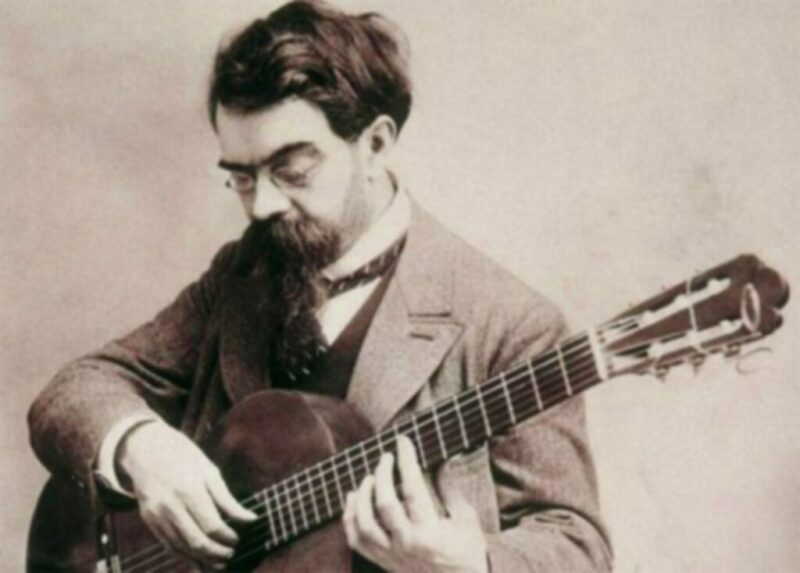
Francisco Tárrega is known for his ability to integrate the classical guitar into the world of concert music. He is the author of many works that are now considered standard repertoire for classical guitarists. One of his most famous works is “Recuerdos de la Alhambra”, a piece that impressively demonstrates the tremolo technique on the guitar and is often considered a touchstone for guitarists.
Another fascinating detail is Tárrega’s influence on the development of guitar technique. He was known for his innovative use of fingers and nail guide, resulting in a softer and more expressive sound. These techniques were adopted and further developed by his students, laying the foundation for modern guitar playing.
Tárrega was also a prolific composer and arranger. He adapted many works by famous composers such as Beethoven, Chopin and Mendelssohn for the guitar, expanding the repertoire of the instrument and giving it more recognition. His transcriptions helped integrate the guitar into the world of classical music.
The guitars of Francisco Tárrega
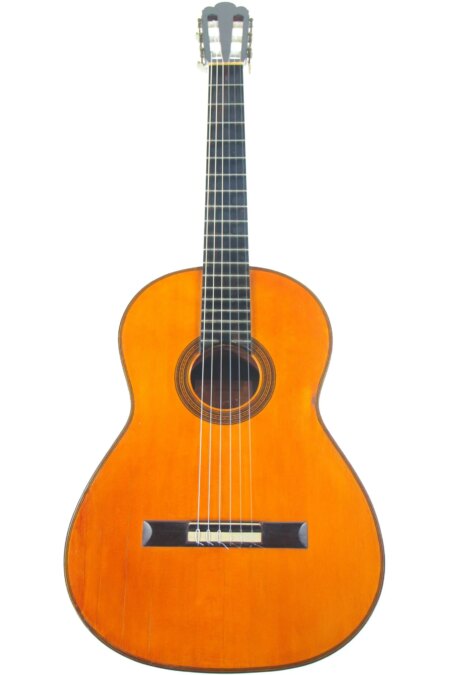
The instruments that Francisco Tárrega played were decisive for his characteristic sound and his way of playing. One of the most remarkable guitars he owned was one from Antonio de Torres.
The collaboration between Tárrega and Torres was of particular importance, as it contributed to the development of the modern classical guitar. Torres guitars, with their larger body and improved resonance characteristics, set new standards in guitar making and were taken as a model by many subsequent luthiers.
He also played a guitar by Enrique Garcia.
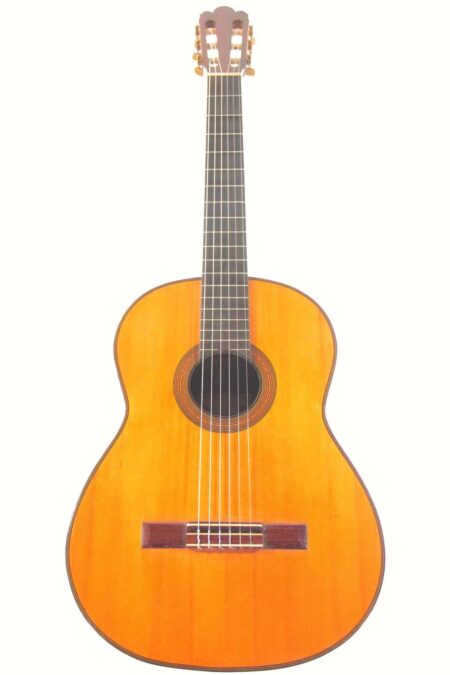
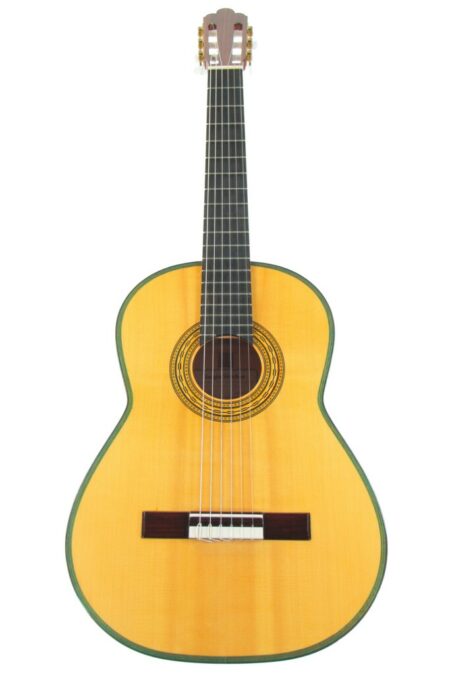
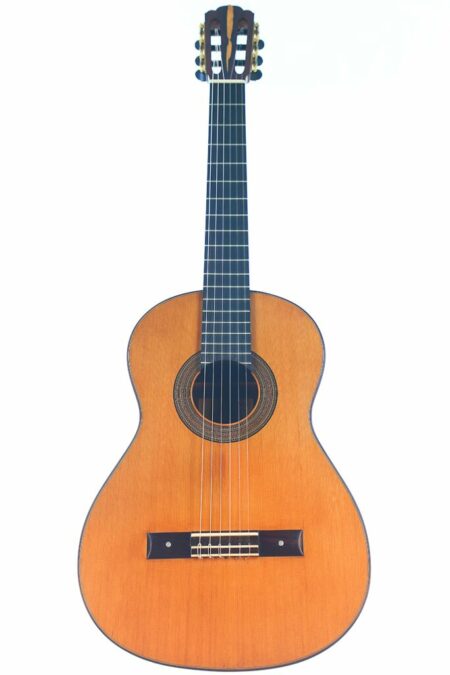
Find similar guitars in our shop and inspire your musical journey:

Mit dem Laden des Videos akzeptieren Sie die Datenschutzerklärung von YouTube.
Mehr erfahren