
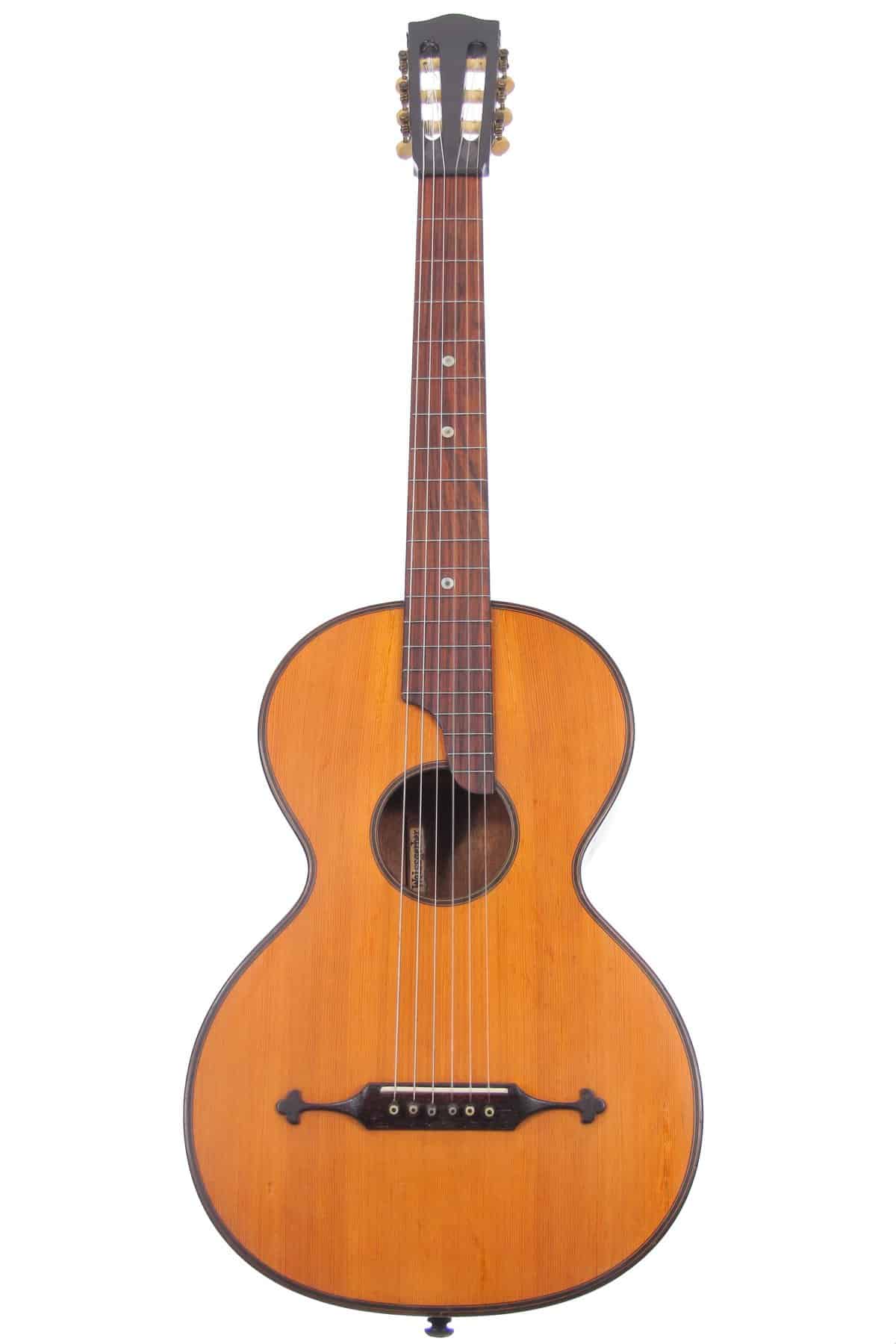
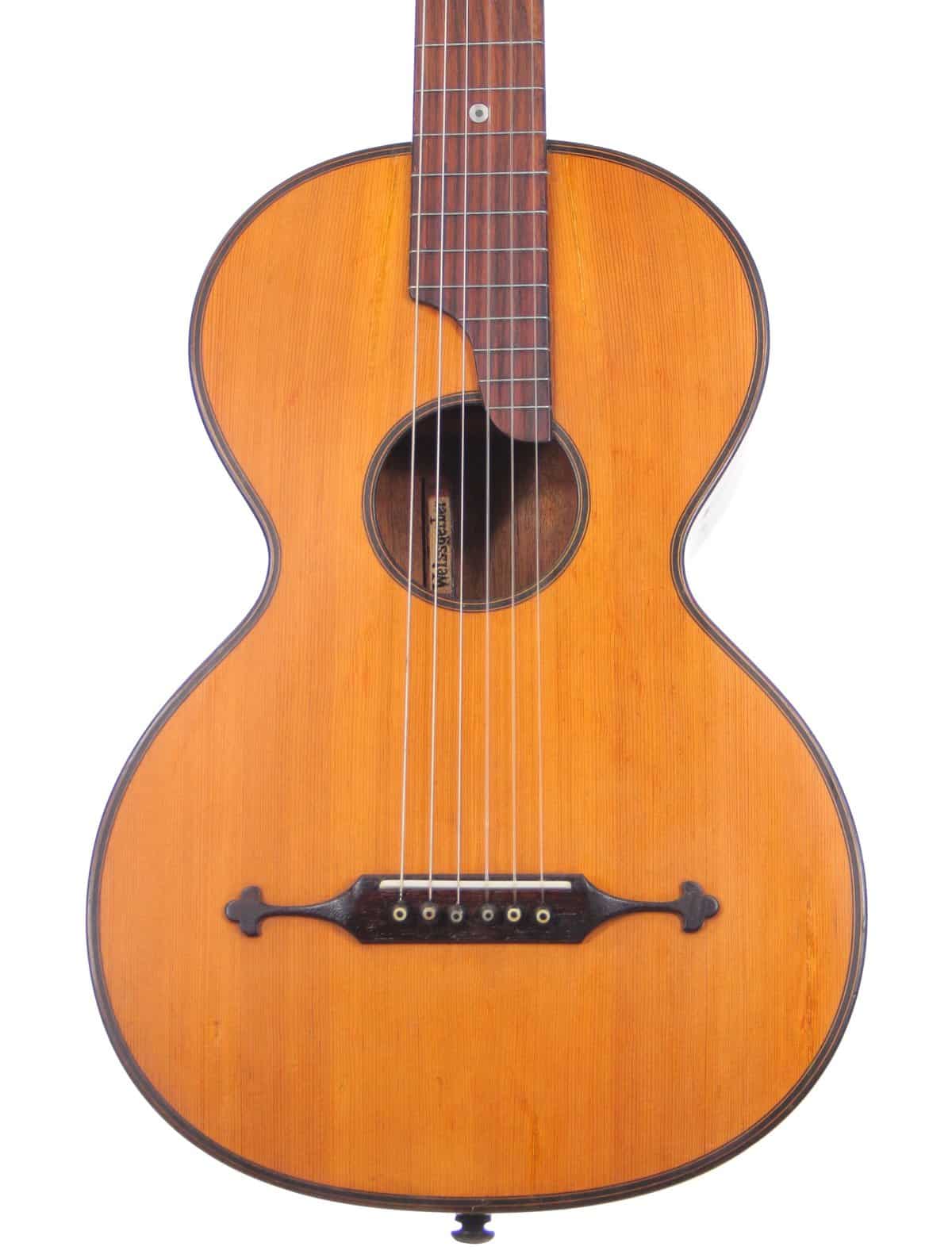
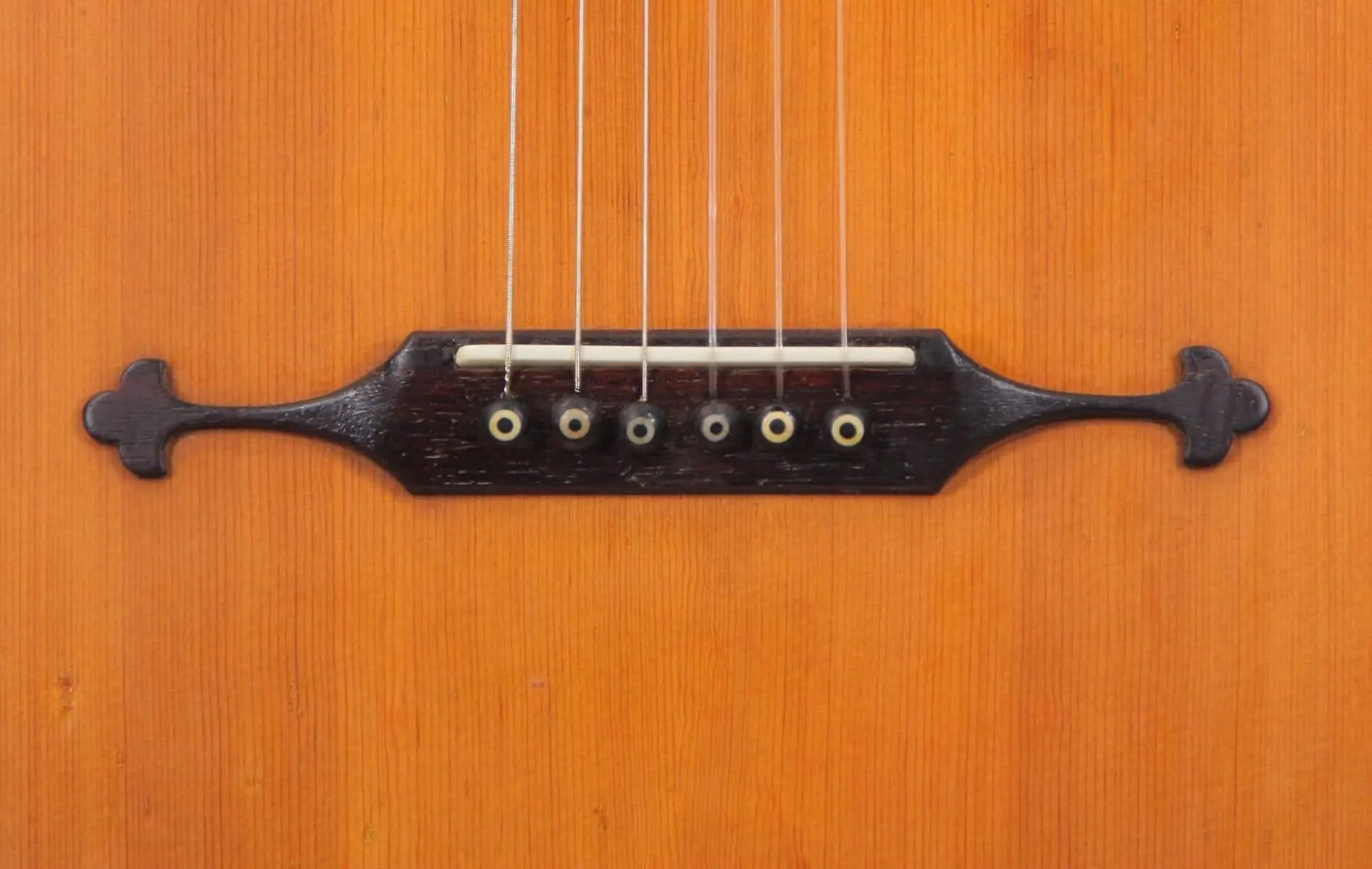
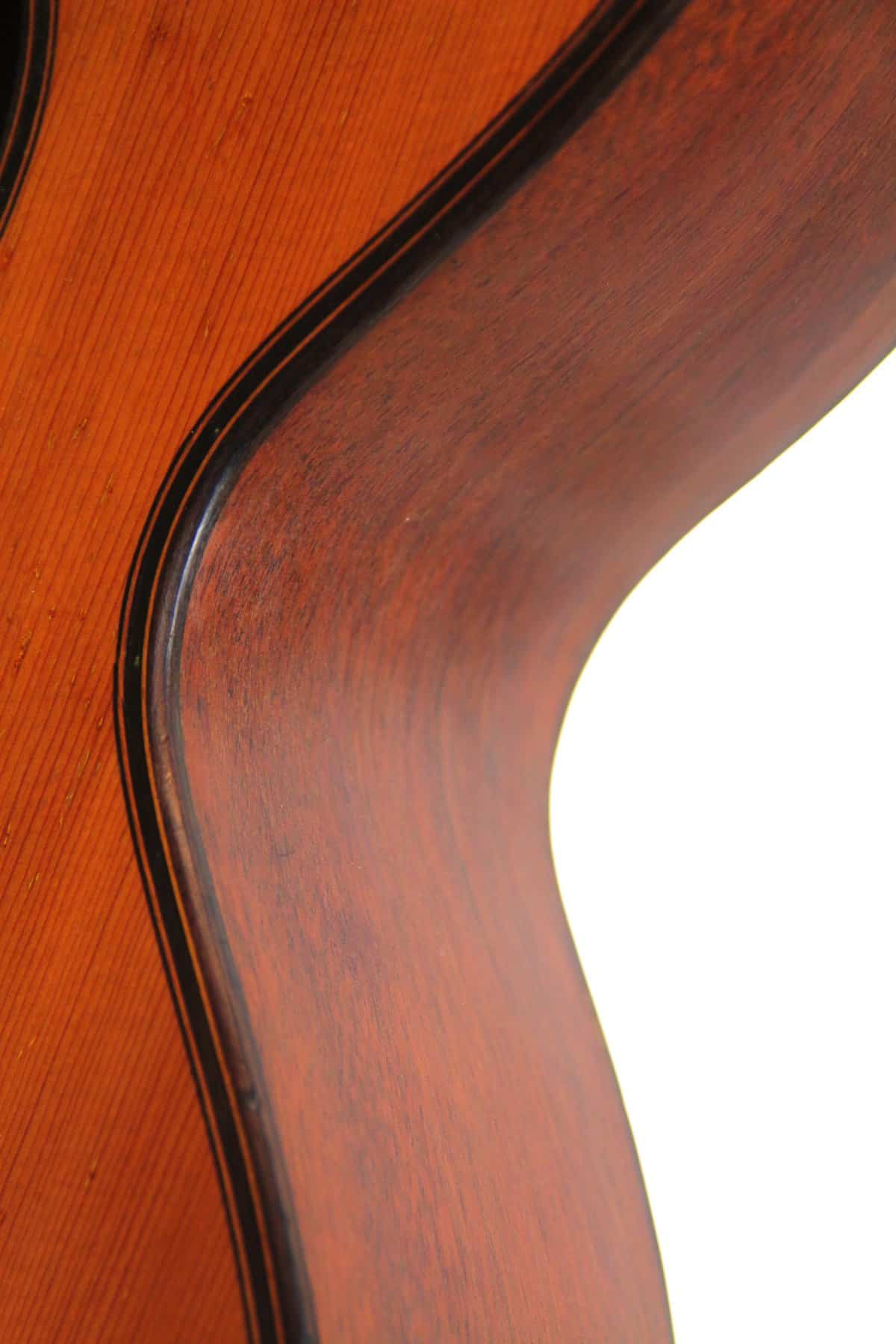
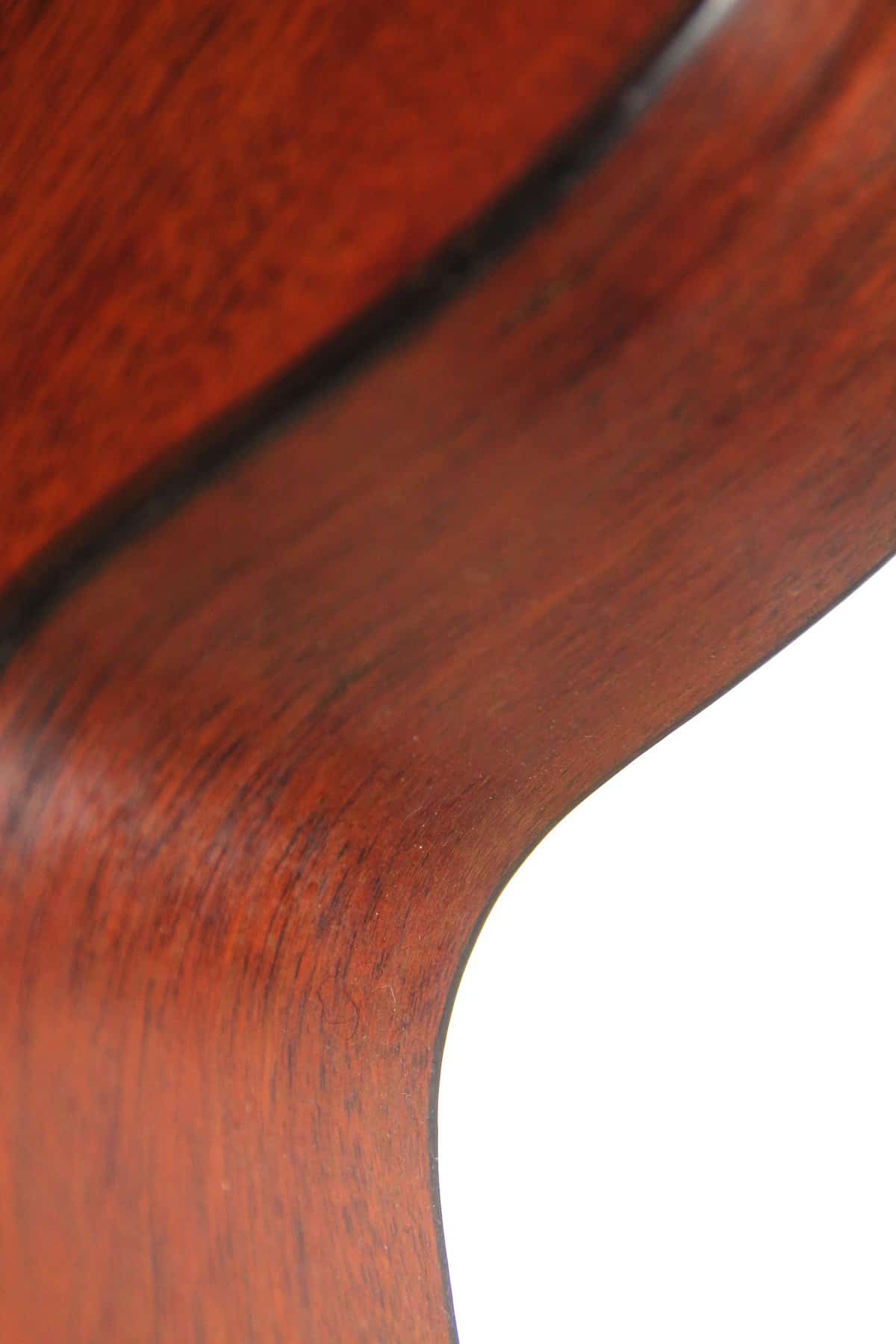
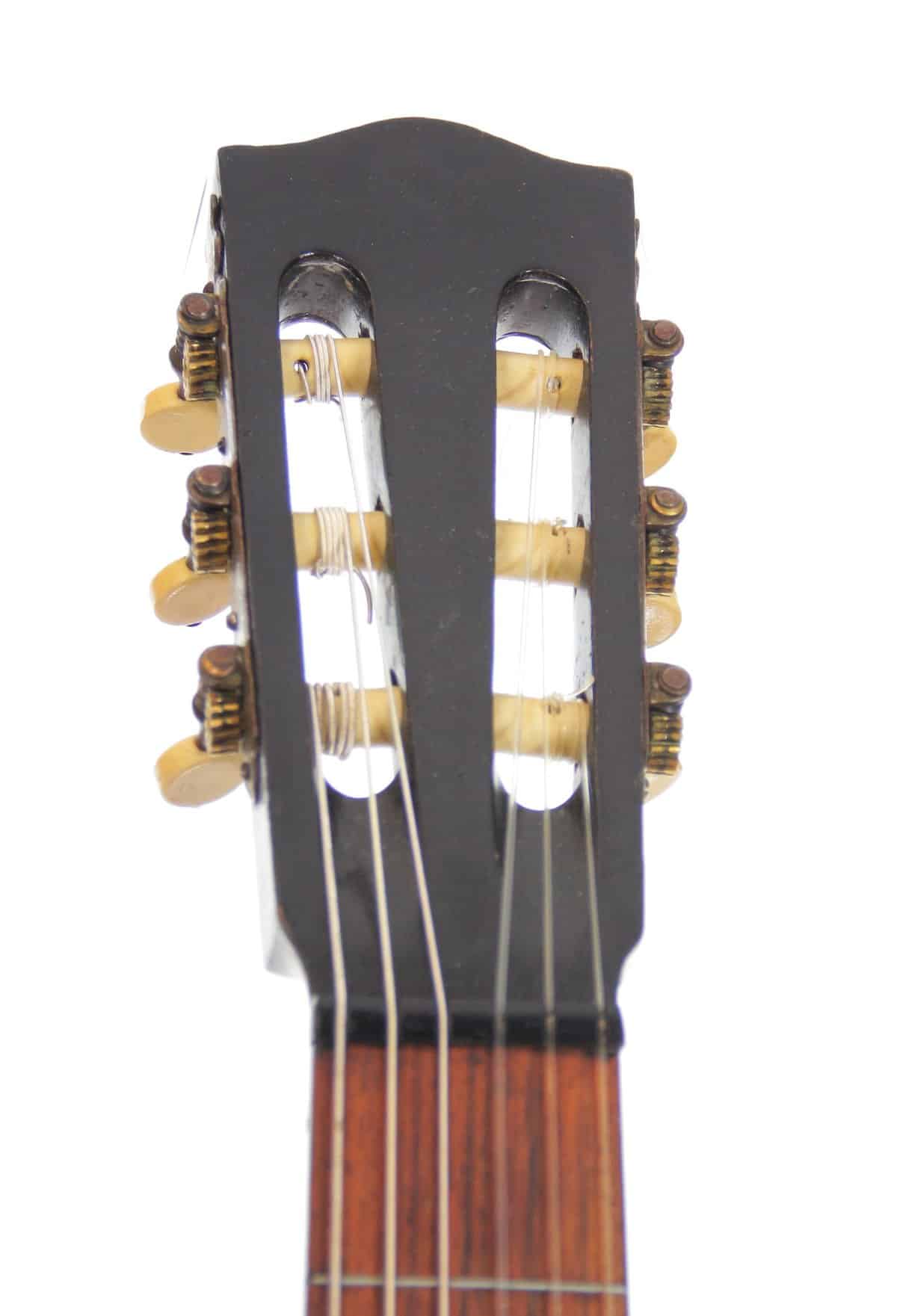
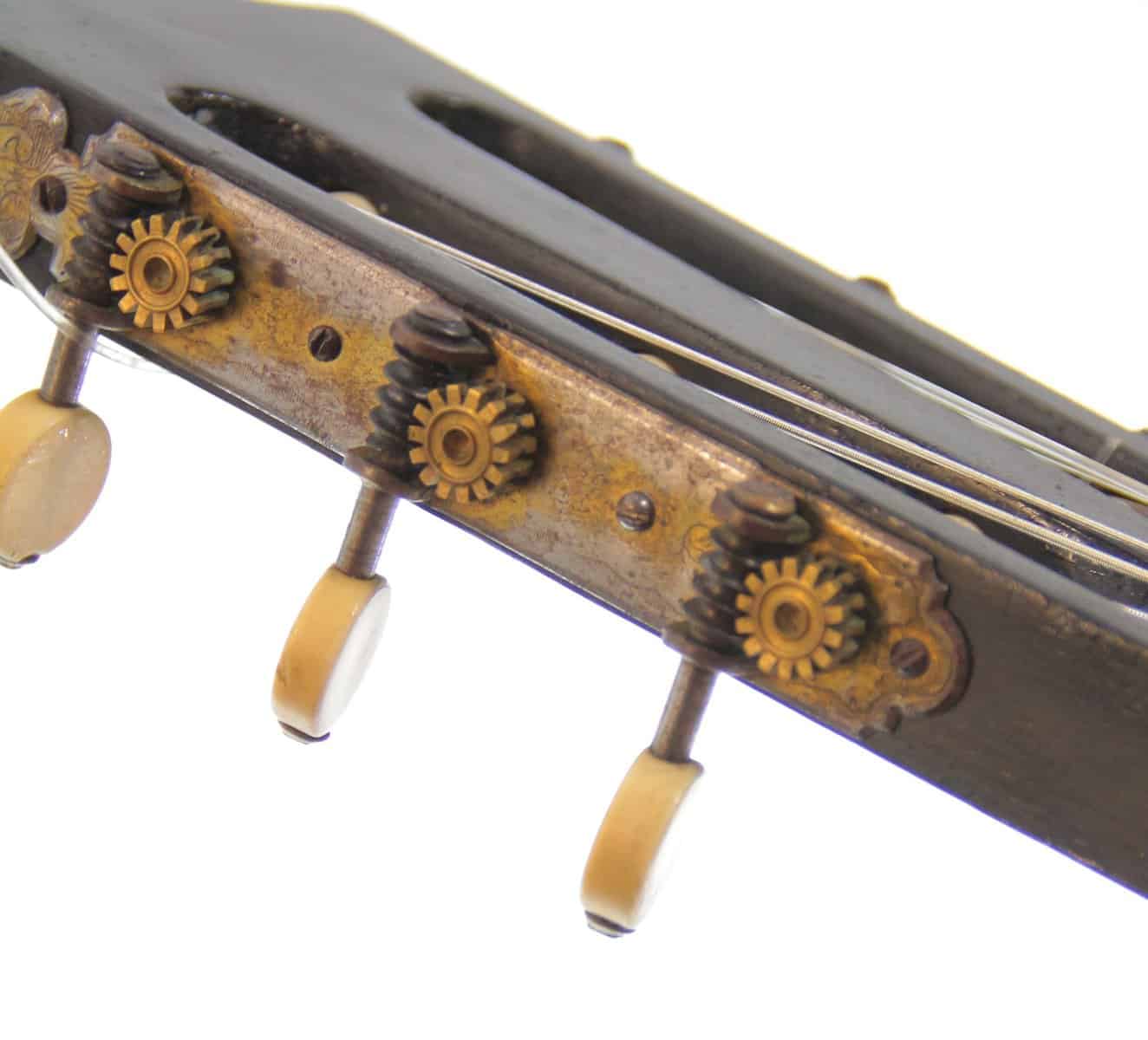
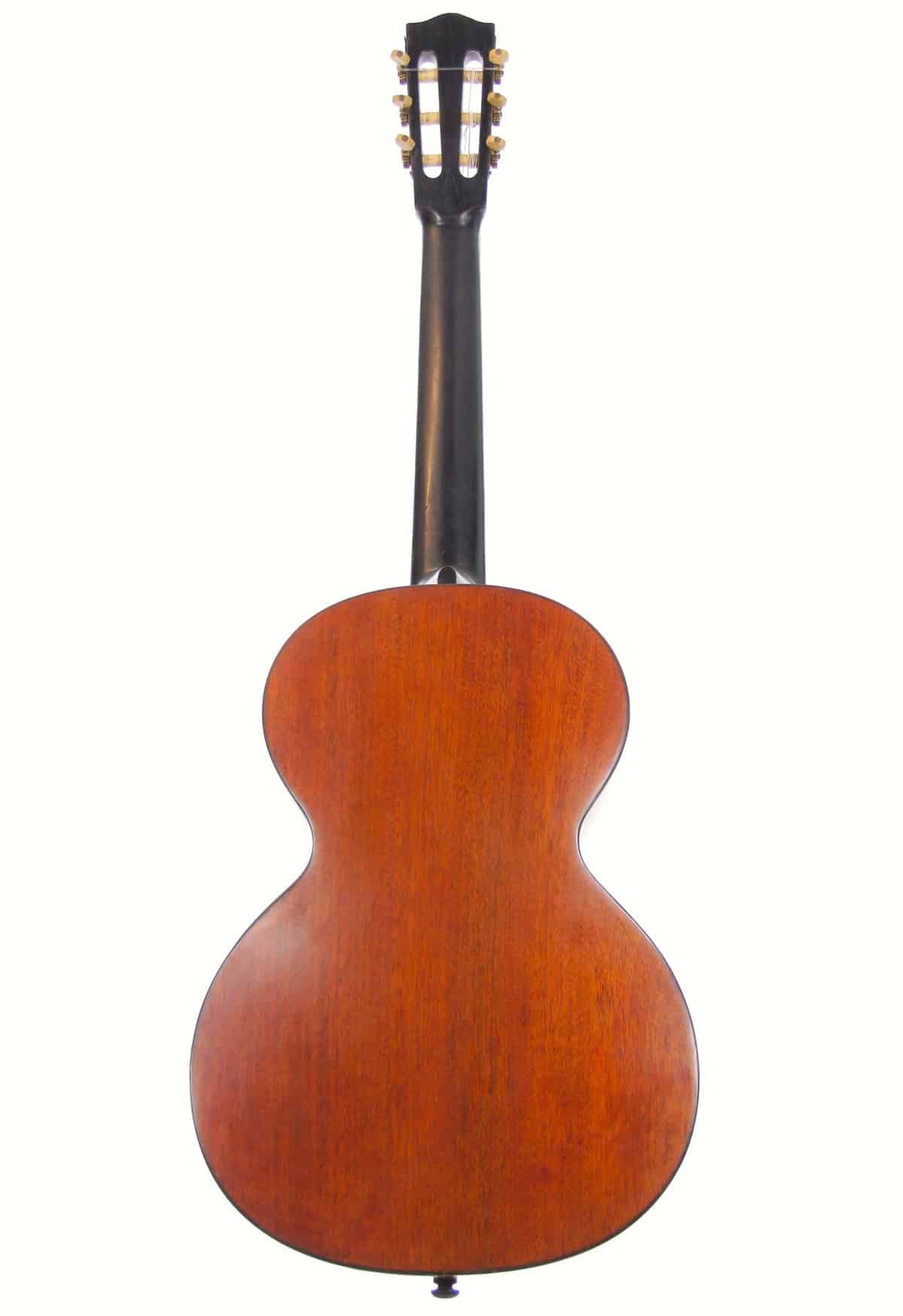
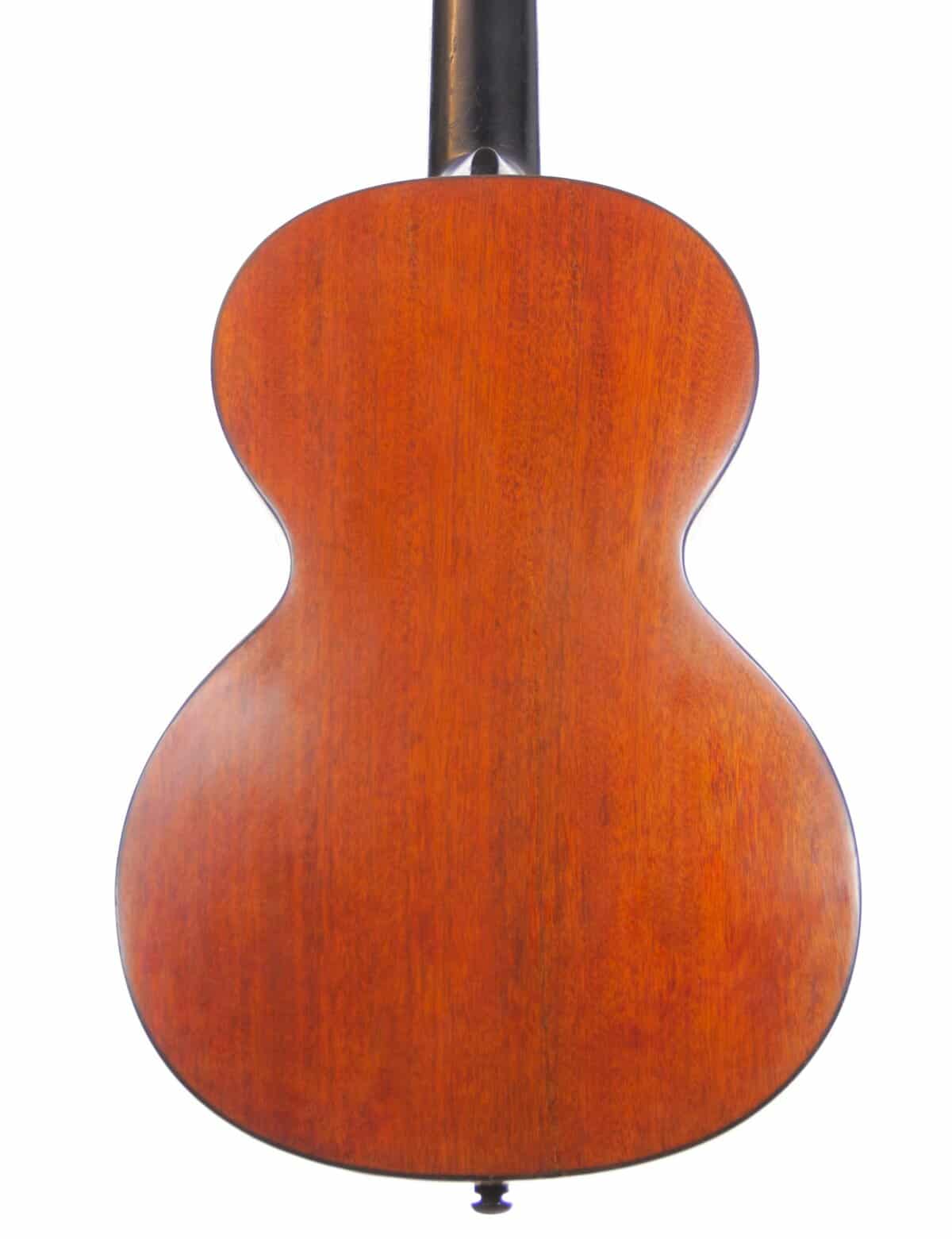







Richard Jacob Weissgerber 1916 romantic guitar built by a master craftsman - a finely crafted guitar!
Richard Jacob Weissgerber was born in Markneukirchen, Germany, in 1877 to a family of guitar makers and spent his childhood surrounded by his father's richly decorated instruments and also under the supervision of master violin maker Christian Wilhelm Seidel. In his youth, he trained as a zither maker and then assisted the master guitar maker Wilhelm Voigt for six years. With this profound background, Richard Jacob founded his own independent guitar workshop in 1905.
Early in his career, Richard Jacob patented „Weissgerber“ as a trade name, which allowed him to innovate freely and introduce new designs into his guitar making. It seems that initially he built mainly in the popular Viennese style, but eventually he began to design and develop new models with unusual shapes and ornamentation, which were always exquisitely crafted - this gave his instruments a competitive edge that made them stand out in the busy guitar-making town of Markneukirchen. He traveled extensively throughout Germany and Austria to acquire knowledge of the various guitar making styles and was actively involved in the „Guitarist Movement“ in Germany, maintaining close contact with the International Guitar Association and many important guitarists. In 1921 he received a visit from Miguel Llobet, in 1924 Llobet returned with Andres Segovia and he was able to see their instruments - Torres and Manuel Ramirez - which strongly influenced his work. Many other players, including Emilio Pujol and Luise Walker, also came to Markneukirchen with their instruments, which were to steer Richard Jacob's building approaches more and more in the direction of Spanish guitars - and gained stylistic insights from Torres to Simplicio. Although he absorbed and assimilated these Spanish traditions, he never abandoned his experimental approach and always sought to integrate these elements into his unique construction methods to create truly unique instruments spread across a variety of models. Richard Jacob devoted himself to guitar making until the end of his life and even completed three instruments in the last year of his life, at the age of 83. He died in 1960 and left his eldest son Martin (1911-1991) the „Weissgerber Guitar Workshop“, which he ran until its closure in 1990.
From the beginning of Richard Jacob's career, Weissgerber guitars quickly gained a strong following among professionals. Many of the most respected guitarists of the time played Weissgerber instruments. These included Heinz Teuchert (founder of the Frankfurt School of guitar and lute playing), Karl Scheit and Siegfried Behrend, to name but a few.
This particular instrument is a Viennese model from around 1916. It is elegant and simple, with a compact body and a smaller scale length, making it very easy to play. The scale length is 625 mm and the nut width 45 mm.
It has a very old, almost „antique“ sound style, which makes it a perfect instrument for the player who is looking for an authentic 19th century sound that goes wonderfully with the music of Sor, Giuliani, Coste, Mertz, etc. It is in excellent condition and in perfect working order for its age.
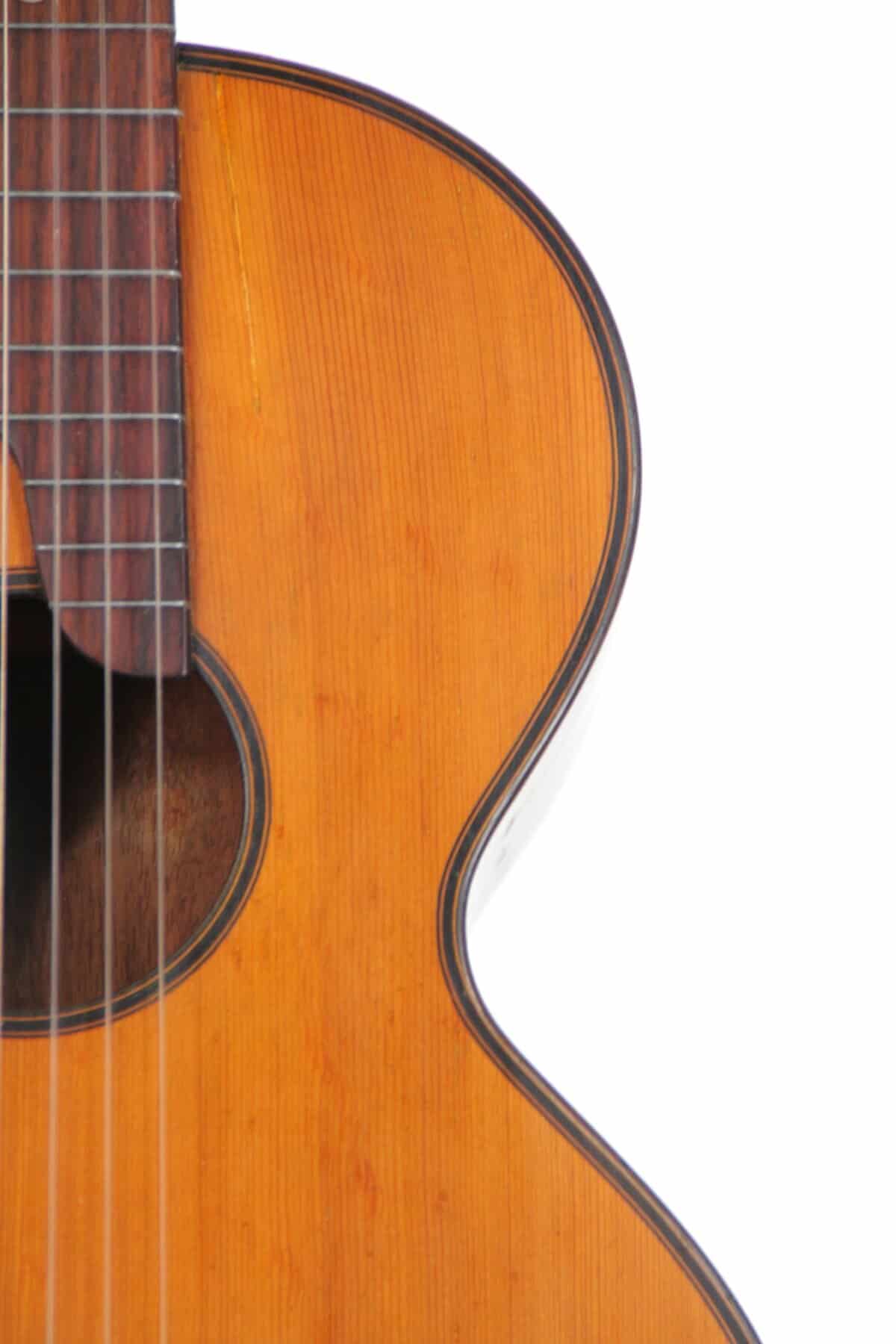
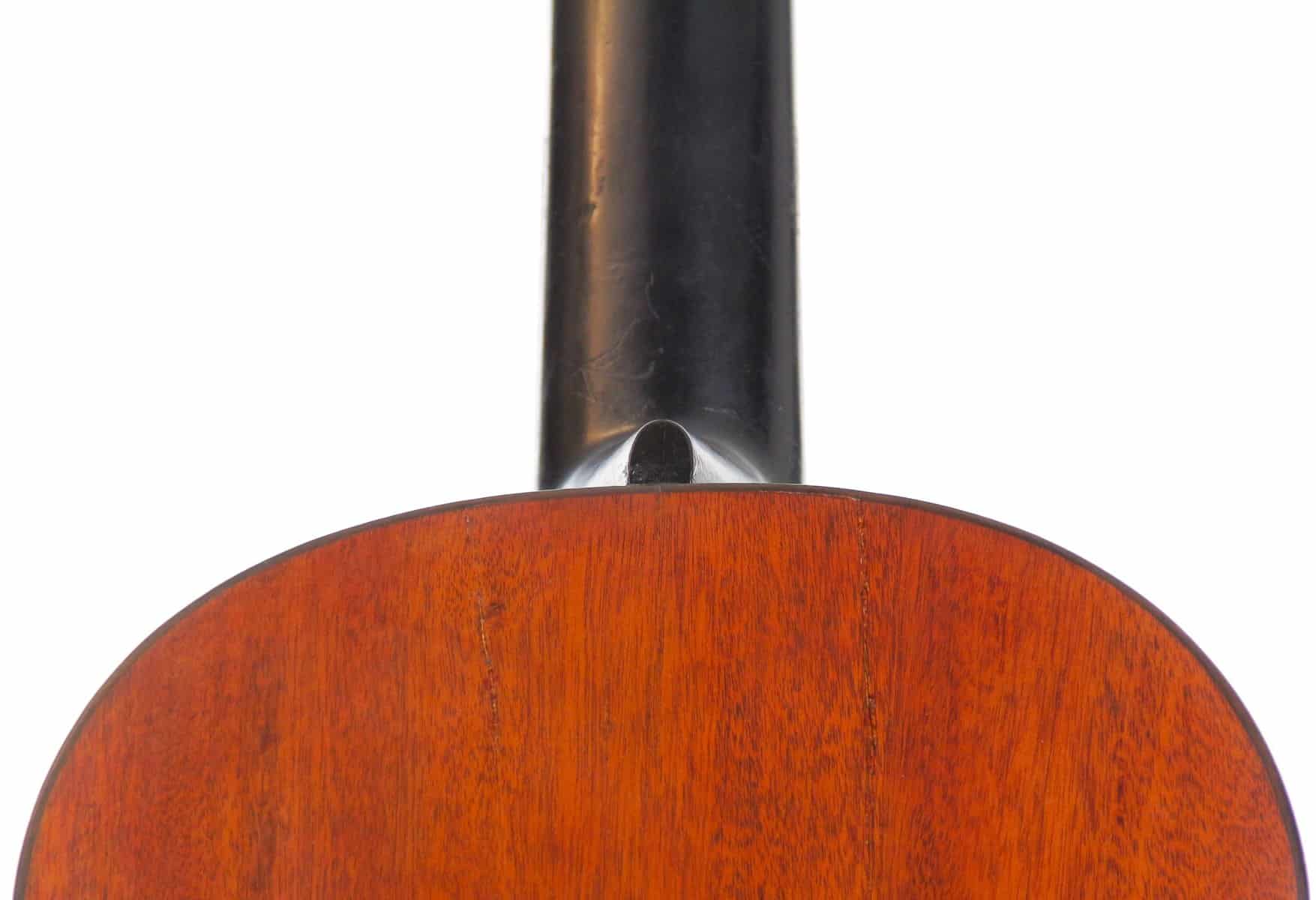
Apart from some minor work that was professionally carried out by a luthier, the guitar is in top condition and ready for the recording studio or concert stage.

By loading the video, you accept YouTube's privacy policy.
Learn more
 German German
  English
 Spanish
 French
 Portuguese
 Italian
 Chinese
 Japanese
 Korean
 Russian
 Dutch
Dutch
 Arabic