


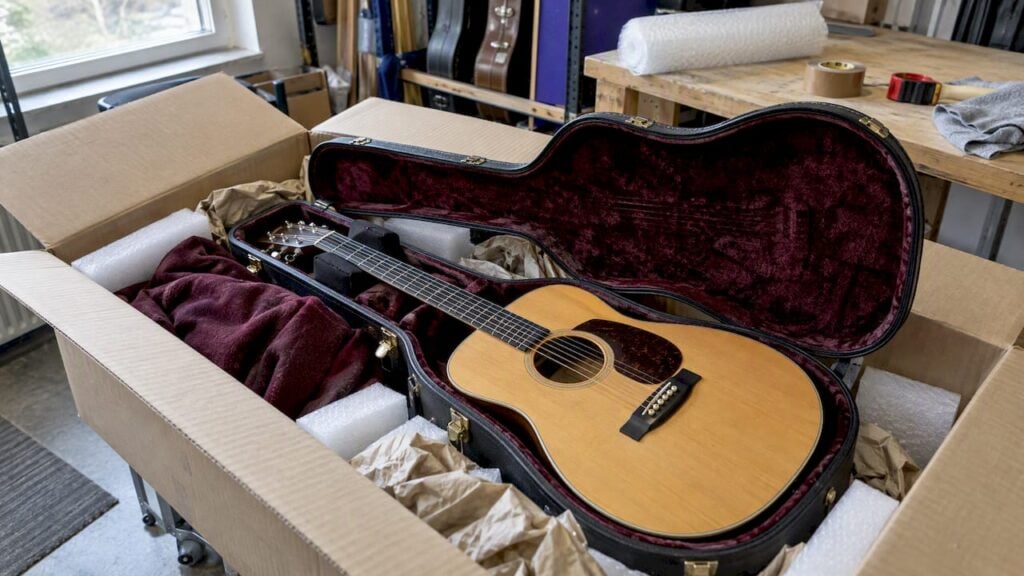

If you buy a used instrument online from a professional dealer in Germany, you have a statutory right to withdraw within 14 days without giving a reason. It makes no difference that the instrument is used or vintage. It does not apply to a purchase from a private person, and it does not give you a free-for-all: if you handle the instrument beyond what a proper check requires, the seller can claim compensation for the lost value. This guide explains how that works for guitars and other instruments, step by step.
TL;DR
- Distance contracts with a trader carry a 14-day withdrawal right under § 312g BGB, new or used goods alike.
- The period starts the day after you receive the instrument, and you only need to state your decision clearly, for example by email.
- You may test the instrument as you would in a shop. Wear beyond that can cost you compensation, but only if the seller informed you of this in the withdrawal notice.
- Private sales are generally excluded, and so are goods made to your personal specifications.
- Withdrawal is not the same as the warranty (Gewährleistung), which covers defects. Know which one you are using.
Table of Contents
- Does the withdrawal right apply to used instruments?
- Private sellers, in-store purchases and auctions
- The 14 days: when they start and how to withdraw
- Trying a used instrument without losing your money
- Returning the instrument: shipping, risk and refund
- When you cannot withdraw
- Withdrawal versus warranty: two different tools
- How to buy a used instrument with fewer surprises
- Perspective: why we prefer that you try it before you buy
- Our offer: test first, then decide
- FAQ
- Sources
Does the withdrawal right apply to used instruments?
Yes, when the contract is a distance contract with a professional seller. German law gives consumers a right of withdrawal for contracts concluded online, and the Händlerbund confirms that this holds regardless of whether the goods are new or used. The legal basis is § 312g of the German Civil Code (BGB), which grants withdrawal rights for contracts concluded away from business premises and for distance contracts.
A 1962 Hofner violin bass, a pre-war flamenco guitar or a restored archtop is treated like any other item. Age and rarity do not remove the right. What matters is who sells and how the contract is made.
Three conditions have to be met:
- You are a consumer. You buy for private purposes, not for your business.
- The seller is a trader. A dealer, workshop or shop selling as part of its business.
- The contract is made at a distance. Online shop, email, phone or a similar channel, with no simultaneous physical presence of both sides.
If you buy as a professional musician for your own business, the consumer protections may not cover you. That is a legal grey area for gigging players who buy privately but use the instrument professionally. If your case is not clear, ask a consumer advice center or a lawyer.
Private sellers, in-store purchases and auctions
Buying from a private individual
The European Commission’s consumer portal states that the withdrawal right generally does not apply when you buy from a private person instead of a professional trader. Classified ads, forum sales and a friend of a friend selling a Telecaster usually fall here. You have no 14-day return, and the seller can often exclude warranty. We compare both routes in our guide on dealer versus private purchase in Germany.
One trap: some people sell as a business without admitting it. Frequent sales, several similar items listed at once and professional-looking listings can point to trader status. That is a legal question for each case.
Buying in a shop
The statutory right is tied to distance and off-premises contracts. If you walk into a store, play the instrument and buy it, the law does not give you a 14-day return. Any exchange or return is the shop’s goodwill. The Swedish consumer authority describes the same logic: withdrawal is set by law, while returns for in-store purchases are voluntary and decided by the company. Check the shop’s terms before paying. Some dealers grant more than the law requires.
Auctions
Publicly accessible auctions where you can be present in person are among the exceptions listed in § 312g BGB. Online auction platforms where a trader sells at a fixed price do not fall under that exception. The details matter, so read the listing terms.
The 14 days: when they start and how to withdraw
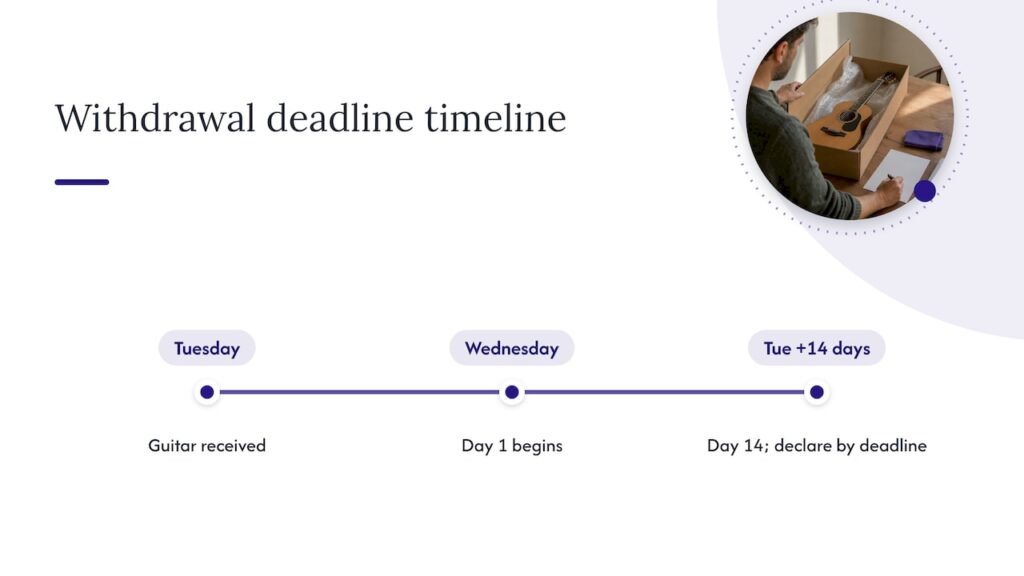
The period is 14 days. According to the Verbraucherzentrale, for goods it starts the day after you receive them, and the day of receipt does not count. It also depends on the seller having informed you properly about your right of withdrawal.
A simple example: your guitar is delivered on a Tuesday. Day one is Wednesday, and the 14th day is Tuesday two weeks later. Send your declaration on or before that day. If the last day falls on a weekend or public holiday, ask the seller or an advice center how the deadline is treated rather than relying on it.
To withdraw, you must tell the seller clearly that you are withdrawing, for example by email or letter. You do not need to give a reason. Keep proof: save the email, or send the letter in a way that you can document. Do not simply send the instrument back with no message, because the declaration is what counts.
The new withdrawal button
From June 19, 2026, businesses that let customers conclude contracts on their website must offer a digital withdrawal function, so you can withdraw directly on the site. If you find it, use it. If you bought from a shop that has no such button, you can still withdraw by email or letter.
Trying a used instrument without losing your money
This is the question that matters most for instruments. Playing is the whole point, and a vintage guitar cannot be judged from photos.
The rule, as the Verbraucherzentrale Niedersachsen explains: you may test the goods as you could in a shop. A trader can charge compensation (Wertersatz) for lost value only if you used the item beyond what is needed to check its functions and features, and only if the seller informed you of this in the withdrawal notice. The statutory wording is in § 357a BGB.
In practice for a guitar:
| Usually within a normal check | Risk of compensation |
|---|---|
| Unpacking, inspecting the finish, neck and frets | Playing gigs or rehearsals with it |
| Tuning, playing through the strings, checking intonation | Recording sessions or longer use |
| Plugging into an amp to check pickups, switches and noise | Changing strings, pickups or setup, or modifying electronics |
| Checking the action and playing in different positions | New scratches, dings or buckle rash, any damage |
This table is a practical guide, not a court ruling. There is no fixed number of hours. Treat the instrument as if the shop owner is watching over your shoulder, and photograph its condition on arrival and before returning it.
For a collectible, the difference can be large. A mint instrument with a tiny scratch may lose real value on the vintage market. That is why a careful buyer unpacks gently, tests briefly and decides quickly.
Returning the instrument: shipping, risk and refund
Sending it back
After you notify the seller, you must send the goods back within 14 days. According to the Verbraucherzentrale, the seller bears the risk of loss or damage during return transport. Even so, pack the instrument as carefully as you would for a sale: a hard case, the neck supported, strings slackened a little and plenty of padding, with the case inside a sturdy box. Insured shipping and a photo record help if there is a dispute.
Who pays the return shipping should be stated in the seller’s withdrawal notice. Read it before you order, especially for heavy or bulky instruments that travel by freight. Some dealers cover the cost voluntarily.
Getting your money back
The seller must refund the purchase price and the original shipping costs within 14 days of receiving your notice. Extra costs for express delivery are not refunded. The seller may wait until the instrument has arrived back or until you show proof that you sent it. A refund goes back by the payment method you used, unless you agree otherwise.
If compensation is due for wear, the seller may deduct it from the refund. Ask for the calculation in writing.
When you cannot withdraw
There are exceptions. The two that the Verbraucherzentrale highlights are goods made to the buyer’s personal needs and sealed goods unsuitable for return for health or hygiene reasons. The statutory text in § 312g BGB lists the first as goods that are not prefabricated and whose making depends on an individual choice or decision by the consumer, or that are clearly tailored to the consumer’s personal needs.
For instruments, this matters in a few cases:
- Custom builds. A guitar made to your measurements, wood selection or neck profile is not a stock item. Expect no withdrawal right, and treat the order as binding.
- Special modifications. A used instrument with work ordered specifically for you, such as a bespoke refret or a custom pickup install, may fall under the exception for the modification.
- Sealed hygiene items. Mouthpieces, reeds and similar wind accessories can fall in this category if the seal is broken. A guitar does not.
A normal stock guitar, even a rare vintage one, is not custom-made. A seller cannot exclude the right just because the piece is unique or old. If a listing says “no returns” for a regular online sale by a trader, ask for the legal basis. That is a good moment to call a consumer advice center.
Withdrawal versus warranty: two different tools
People mix these up all the time, and it costs them money.
- Withdrawal (Widerruf) is your right to cancel a distance purchase within 14 days for any reason, or none.
- Warranty (Gewährleistung) applies when the instrument has a defect that existed at delivery. It runs for much longer and leads to repair, replacement, price reduction or rescission.
If you notice a cracked brace, a neck problem or non-working electronics after the 14 days, withdrawal is over, but warranty may still help. We explain the details in our guide on warranty rights for used instruments in Germany. For a vintage instrument, the question what counts as a defect versus normal age wear is where a neutral assessment pays off.
How to buy a used instrument with fewer surprises
- Check who the seller is. Imprint, terms and withdrawal notice tell you whether it is a trader.
- Read the withdrawal notice before you pay. Look for the deadline, who pays return shipping and what it says about compensation.
- Ask for details. Photos of the neck joint, the back and inside the body, the serial number, a list of repairs and non-original parts.
- Test at the door. Unpack on camera if the value is high, check the condition against the listing, and play briefly.
- Decide within the period. Do not wait until day 14 if you already see a problem.
- Document everything. Declaration, photos, tracking number, refund date.
For high-value pieces, a pre-purchase inspection beats a return. Playing the guitar yourself before you commit avoids the whole question.
Perspective: why we prefer that you try it before you buy
We sell vintage, restored and handcrafted guitars, and a legal return right is not our idea of good service. A good sale is one where you already know what you are getting. That is why we describe condition in detail, add historical context to our listings and offer testing appointments, so you can hold the instrument before deciding.
The withdrawal right is a safety net, and it works best if you treat it as one. A vintage guitar returned with new wear is a loss for everyone, because the next buyer finds a different instrument. Handle with care, test it fairly, and decide quickly. And if a piece does not fit, say so early.
For valuable or rare instruments, we also believe in independent assessment: certificates and valuations give both sides a documented basis for condition and authenticity.
— Vintage
Our offer: test first, then decide
If you want certainty before an expensive purchase, you can arrange an exclusive testing appointment with us and try the instrument in person. We also offer certificates and valuations, and take guitars on consignment. You can find the services and our current selection on the Vintage Guitar World homepage, or browse our vintage guitars directly. Prices for services are not published, so ask us for a quote.
If you sell, our guide to BGB § 433 checklist and appraisal steps shows what to prepare. Importing from outside the EU adds duties and taxes, covered in our piece on importing a guitar into Germany.
FAQ
Can I return a used guitar I bought online in Germany?
Yes, if you bought it from a professional trader and are a consumer. You have 14 days from the day after delivery to withdraw, with no reason needed. A private seller generally owes you no such right.
Can I play the guitar before I send it back?
Yes, as much as a check in a shop would involve. If you use it beyond that, the seller can claim compensation for lost value, but only if the withdrawal notice informed you about this. Document the condition when it arrives.
Who pays when I send it back?
The seller carries the risk of loss or damage during the return transport. Who pays for the postage depends on the seller’s withdrawal notice, so check it before you buy. The seller refunds the price and original shipping within 14 days of your notice, and may wait for the instrument to come back.
Does the right apply to a custom-made instrument?
Generally not. Goods made to your personal specifications or tailored to your needs are an exception under § 312g BGB. A standard guitar from stock is not covered by this exception.
Is the withdrawal right the same as the warranty?
No. Withdrawal lets you cancel within 14 days for any reason, while warranty covers defects present at delivery and lasts longer. Use withdrawal if you simply change your mind, and warranty if something is wrong with the instrument.
Sources
- Händlerbund: Widerrufsrecht beim Kauf gebrauchter Ware
- Verbraucherzentrale: Von Widerruf bis Umtausch
- Verbraucherzentrale Niedersachsen: Wertersatz beim Onlineshopping
- Verbraucherzentrale: Widerrufsbutton ab Juni 2026
- Your Europe: Your rights when shopping in the EU
- Swedish Consumer Agency: Right of withdrawal
- § 312g BGB, Gesetze im Internet
- § 357a BGB, dejure.org