


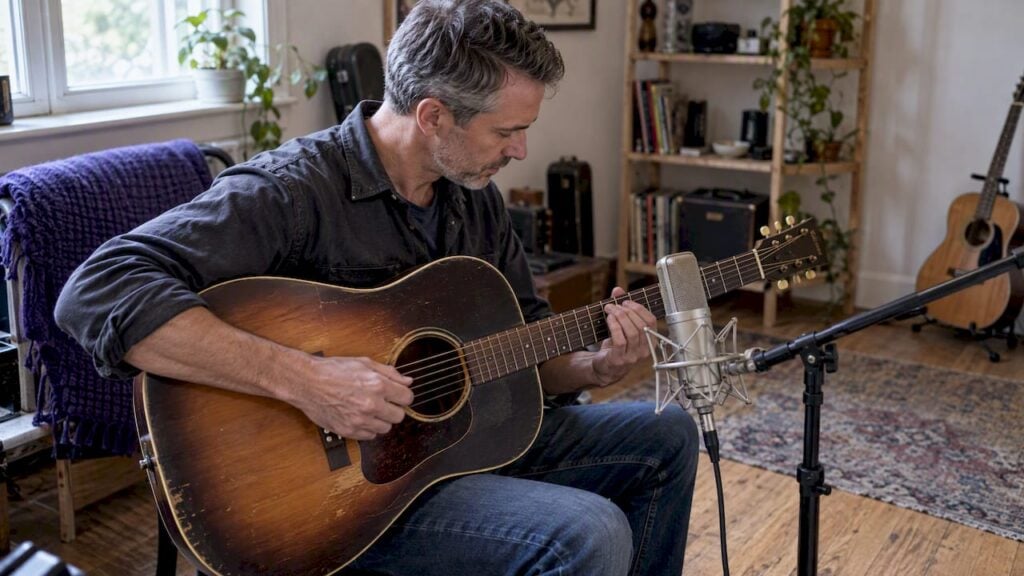

A virtual guitar demo is a guitar played for you through a video or audio recording, or a live video call, so you can judge the instrument without being in the room. It works well when the recording is honest: a quiet, treated room, one mic placed sensibly, and a player who lets the guitar do the talking. It works badly when the room, the mic or the mix adds more character than the instrument has. This guide covers both sides: how to make a demo that shows a guitar truthfully, and how to listen to one as a buyer.
(A note on the term: some people searching this phrase want a browser or phone app that simulates a guitar. That is not what we cover here. We mean demos of real instruments, which is what matters if you are buying or selling a vintage, classical, flamenco, acoustic or electric guitar.)
TL;DR
- Treat the room first: a small, hard, bare room colors the guitar more than any microphone choice does.
- Use one cardioid mic about 10 to 12 inches from the 12th fret, not pointed at the soundhole.
- Start playing within seconds and show the guitar’s range, not your own technique.
- As a listener, compare demos only when the signal chain and room are consistent, and treat any demo as a shortlist tool, not a verdict.
- For a vintage instrument worth real money, finish with a hands-on test before you decide.
Table of Contents
- What a virtual guitar demo can and cannot tell you
- Room acoustics: fix the space before you press record
- Microphone placement that keeps the guitar honest
- Presenting the guitar: the first 30 seconds matter
- How to listen as a buyer
- Etiquette: the demo that happens in a room
- Our perspective: why we treat demos as the start, not the end
- When to book a hands-on test with us
- A simple checklist before you record or press play
- FAQ
- Sources
What a virtual guitar demo can and cannot tell you
A recording flattens three things: the feel of the neck, the way the guitar projects in a room, and the physical response under your own fingers. It does show, with reasonable honesty, the basic voice of the instrument: how bright or dark it is, how long notes sustain, how the bass and treble balance, and whether there are obvious problems such as buzzing, dead notes or a weak top end.
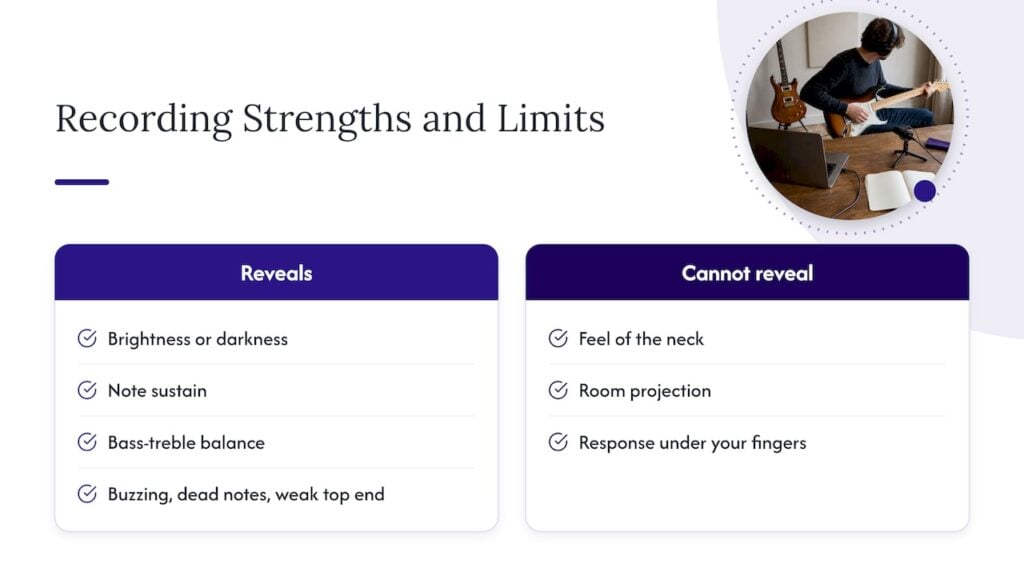
So think of a virtual demo as the first filter. It lets you rule guitars out quickly and build a short list of two or three. For a nylon-string classical or a flamenco guitar, where attack and decay carry so much of the personality, a clean recording can tell you a lot. For a vintage instrument with decades of play in the wood, it tells you less than you want, which is why we still recommend a hands-on session before a final decision.
Room acoustics: fix the space before you press record
The most common reason a demo sounds wrong is the room. A guitar that sounds sweet in your hands can sound boomy, thin or washed out on a recording because the walls are talking back.
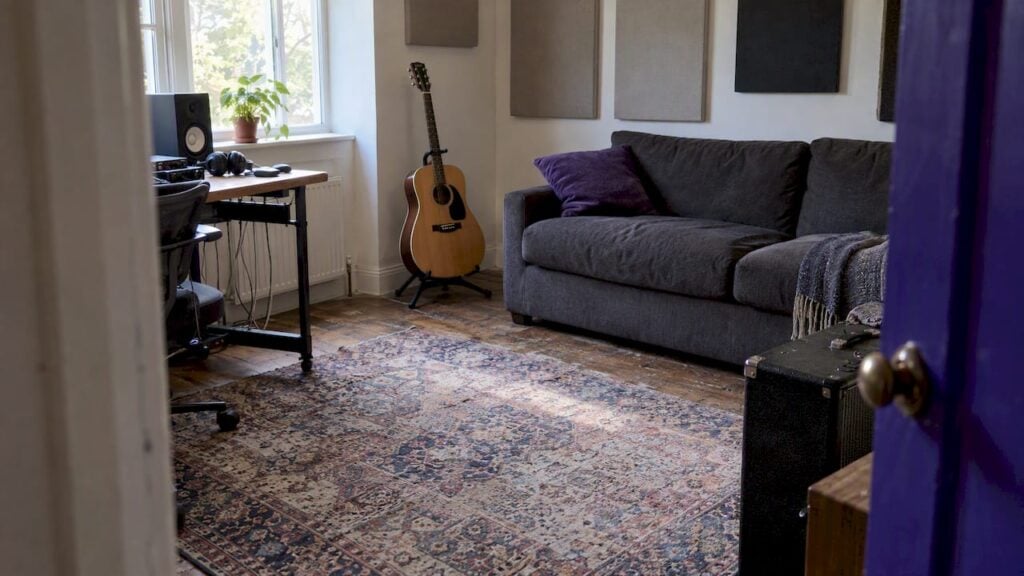
Guitar World’s guide to setting up a room for guitar recording advises avoiding small, cubic or highly reflective rooms, which cause low-mid resonance problems. It suggests rooms with soft furniture, rugs or acoustic panels to tame reverb and flutter echo.
The three-minute clap test
The same guide describes a simple clap test: stand in the spot where you plan to play and clap sharply. If you hear a ringing, metallic flutter between parallel hard walls, move. You can run this test in every room of the house in a few minutes.
Cheap fixes that actually help
- Move away from bare parallel walls and bare windows.
- Put a rug under you and behind the mic if the floor is hard.
- Use a sofa, a bookshelf full of books or heavy blankets on stands behind the microphone to absorb reflections.
- Switch off fans, heating and fridge noise, and close the window. Traffic and neighbors are harder to remove in the edit than in the room.
The goal is not a dead room. A little natural ambience is pleasant. The goal is that the viewer hears the guitar and not a muddy version of your living room.
Microphone placement that keeps the guitar honest
Most buyers would never guess how much a few inches change the sound. LEWITT’s article on recording acoustic guitar at home recommends a cardioid pattern and a single large-diaphragm condenser placed roughly 10 to 12 inches from the 12th fret. That gives an open, natural sound and keeps room reflections lower.
The same source warns against aiming the mic straight at the soundhole, which produces a boomy resonance that is hard to use. Aim it near the 12th fret instead, where you pick up a balanced picture of both neck and body.
Stereo, if you want it
A stereo pair, such as XY or a spaced pair, can make a demo feel more immersive, as long as the two mics are phase-coherent. The 3:1 rule from the same LEWITT piece says to keep the mics three times farther apart from each other than each is from the guitar.
Keep the image natural. For classical guitar, Classical Guitar Tones argues that a realistic recording makes a phantom image of the instrument in the center with some space around it. Very wide panning makes a guitar sound bigger than it is, which is exactly what you do not want when a buyer is judging it.
We go deeper into the setup in our own piece on miking an acoustic guitar.
A quick comparison of setups
| Setup | Strength | Risk for a demo |
|---|---|---|
| One cardioid condenser, 10 to 12 in. from the 12th fret | Balanced, natural, simple | Needs a reasonably quiet room |
| Mic pointed at the soundhole | Big low end | Boomy, unrepresentative |
| XY or spaced pair | Depth and realism | Phase problems if the spacing is wrong |
| Phone on a shelf | Convenient | Room dominates, compressed sound |
Presenting the guitar: the first 30 seconds matter
A demo is about the instrument, not the demonstrator. Long spoken introductions, spec lists and chatter make viewers leave before they hear a note. Our rule of thumb:
- Say the model, year and one honest fact about condition, then play.
- Open with something that shows the guitar’s natural voice: a simple chord progression, then a single-note passage.
- Show range: soft and hard dynamics, low and high positions, open strings and fretted notes.
- Use the same chain for every guitar you show. If one video uses a different mic or distance, nobody can compare.
- Keep it clean. No heavy EQ, no reverb on top, no compression that hides the attack.
- Add close-up shots of the top, back, headstock and any repairs, in good light.
If you want more ideas on holding a viewer’s attention, the guide on guitar clubs and how to get started shows how playing with others sharpens the habit of letting the music, not the talk, lead. Our own step-by-step on showing guitars online covers photography, descriptions and video in more detail.
How to listen as a buyer
You are the other half of the virtual demo, and your listening setup matters as much as the recording.
- Use decent headphones or monitors, not laptop speakers. Laptop speakers hide exactly the low-end and sustain you want to judge.
- Listen to the same passage on several guitars before deciding anything.
- Ask what mic, distance and room were used. A seller who answers readily is usually one who recorded carefully.
- Listen for buzz, rattles, intonation drift in higher positions, and uneven volume between strings.
- Pay attention to decay: does a note bloom and sing, or stop quickly?
- Be wary of a demo that sounds too perfect. Heavy processing is a warning sign.
We also keep a five-point rubric for rating guitar sound demos so you can score different recordings on the same criteria and avoid being swayed by a pretty room or a flashy player.
Etiquette: the demo that happens in a room
At some point a virtual demo becomes a real visit. Whether you are at a shop or a private appointment, a few manners go a long way. They are habits experienced players share, not rules from a standards body.
- Ask before you pick up a guitar, especially a vintage one.
- Take off watches, belt buckles and jackets with zippers or buttons that can scratch the back or the finish. Players discussing shop visits on forums often raise this first.
- Ask about picks before using one on a nylon or vintage acoustic.
- Tune only if the owner is fine with it, and never adjust truss rods, bridges or electronics.
- Play a few different things, but do not run through an entire set. Be considerate of anyone else in the room.
- Bring your own strap, capo or favorite pick if you need them, and say what you are looking for. It saves everyone time.
- If you do not want to buy, say so politely. A good dealer would rather have an honest no than a vague maybe.
Our workflow for auditioning guitars lists what to play, in what order, and what to look for when you finally have the instrument in your hands.
Our perspective: why we treat demos as the start, not the end
We sell vintage, rare, restored and handcrafted guitars, and we are careful with our claims: expert evaluation, honest condition descriptions and historical context are what we want a buyer to rely on. A well-made demo supports all of that. It shows the instrument without hype.
But we would not ask anyone to commit to a collectible instrument on a recording alone. The wood, the neck profile and the way the guitar answers to your touch are part of what you are buying. That is why we offer exclusive testing appointments, in addition to descriptions, certification and valuations. Our advice to buyers is to use the video to narrow the field, then listen to the finalists in person.
For sellers, the same logic applies in reverse. A demo that is quiet, consistent and honest builds trust faster than adjectives do. Show the flaws as clearly as the best features.
— Vintage
When to book a hands-on test with us
If you have narrowed your choice to one or two guitars, our exclusive testing appointments let you try them properly, with our team on hand to answer questions about condition, history and any restoration. Browse our vintage guitars, acoustic guitars, classical guitars and electric guitars, or start from our main page for appointments, commission sales, certificates and valuations.
If you are considering a guitar you already own, our guide to what guitar certification involves is a good place to start, and our restoration page explains how restored instruments are handled.
A simple checklist before you record or press play
If you are recording
- Run the clap test in your chosen room and move if it flutters.
- Add soft absorbers behind the mic.
- Place one cardioid mic 10 to 12 inches from the 12th fret, angled so it does not face the soundhole.
- Record a short test, then listen on headphones before the real take.
- Play the same passages for every guitar.
- Note the mic, distance and room in the description.
If you are watching
- Use good headphones.
- Compare the same passage across demos.
- Look for close-ups of condition and repairs.
- Shortlist, then ask for a hands-on session.
For more on why a structured review helps before you buy, see why guitar reviews are useful, and for old instruments in particular, our guide to testing vintage guitars.
FAQ
Can I judge a vintage guitar from a video demo alone?
You can judge its basic voice and obvious flaws, but not its feel or how it fills a room. Use video to build a short list, then play the finalists in person before you commit to a collectible instrument.
What is the best room for recording a guitar demo?
A medium-sized room with soft furnishings, rugs and curtains works better than a small, bare, cube-shaped one. Use a clap test to check for flutter echo, as Guitar World recommends, and move if you hear a metallic ring.
Where should I put the microphone?
Place a single cardioid condenser about 10 to 12 inches from the 12th fret, as LEWITT suggests. Avoid pointing it at the soundhole, which gives a boomy sound.
How long should a guitar demo be?
Long enough to show the guitar’s range, and short enough to keep attention. Start playing within seconds, keep the talking to a minimum, and let the instrument carry the demo.
What is good etiquette when trying a guitar in person?
Ask first, remove anything that could scratch the guitar, and ask before using a pick. Do not adjust hardware, and be honest if you decide not to buy.
Sources
- How to record acoustic guitar at home | LEWITT
- How to set up your room for guitar recording success | Guitar World
- 6 Common Mistakes When Recording the Classical Guitar at Home, Part II | Classical Guitar Tones