


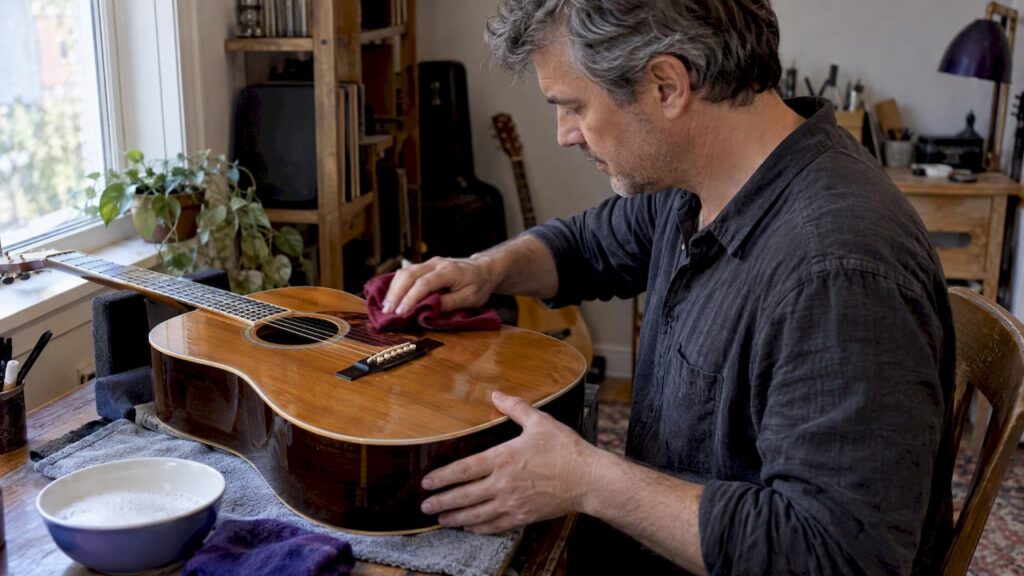

Wipe the guitar with a clean microfiber cloth after every session, and test any product on a hidden spot before it touches the finish. Never use household polishes or anything containing silicone on a lacquered body, and never soak the wood. This is the same conservative routine we follow at Vintage Guitar World when we prepare collectible instruments for sale.
TL;DR:
- Identify the finish first: nitrocellulose lacquer needs minimal polish and no silicone, while matte finishes should never be polished because shine patches cannot be reversed.
- Oil rosewood or ebony only when dry; never oil lacquered maple, and apply a few drops to a cloth before wiping away excess.
- For stubborn residue, try a barely damp, soapy cloth, then dry the spot; if it remains, consult a repair professional before using solvents.
- Photograph the instrument before and after significant cleaning, and log dates, products, test locations, observed issues, and every professional service for future valuation.
- Wipe strings and hand contact points after playing, inspect hardware weekly for looseness or corrosion, and consider a professional setup yearly.
Table of Contents
- What do you need to clean a guitar safely?
- How do you clean the body and finish step by step?
- How do you clean and oil the fretboard and frets?
- How do you maintain strings, bridge and hardware?
- Which rules apply to each type of finish?
- Which cleaning mistakes cost the most value?
- What is a simple maintenance schedule?
- Why does conservative care protect value best?
- How should you document condition and cleaning history?
- What do we believe about conserving a guitar?
- When should you book our restoration, valuation or testing services?
- FAQ
- Sources
What do you need to clean a guitar safely?
Good results start with the right tools, and none of them are expensive. Gather everything before you begin so you never have to improvise with a kitchen product halfway through.
- Microfiber cloths: use clean, lint-free ones, as microfiber is the base tool for almost every cleaning job on a guitar.
- A second dry cloth: it dries each area right after cleaning, so no moisture sits on the wood.
- A soft brush and cotton swabs: they reach edges, binding and the spaces around hardware.
- Mild neutral soap solution: a few drops in water, wrung out until the cloth is barely damp, for light grime only.
- Guitar-specific polish: only when your finish allows it (more on that below).
- Fretboard oil: for open-porous woods such as rosewood and ebony. Grade 0000 steel wool belongs only on oiled boards.
Set up a padded surface, such as a folded towel or a guitar cradle. Where it is practical, remove or protect hardware so you can reach the dirt along the edges. Before using any product, try it on a hidden area, like the inside of the control cavity cover or the back of the headstock.
How do you clean the body and finish step by step?
Work in a clean, well-lit room and take your time. Speed is how fingerprints turn into scratches.
- Dust the whole body with a dry microfiber cloth, using light, straight strokes.
- Use the soft brush to lift dust from around the bridge, pickups, knobs and binding.
- For fingerprints and surface grime, dampen a cloth slightly with the mild soap solution and wipe a small section.
- Dry that section at once with the second cloth.
- Test any polish on a hidden spot and wait a few minutes to check for dulling, softening or color transfer.
- Apply polish, if the finish allows it, in a thin layer and buff gently with a fresh cloth.
Practical guides agree on one point: household products can harm a finish if chosen incorrectly, so skip window cleaner, furniture spray and all-purpose sprays.
Stubborn residue such as sticker glue or nicotine film needs the lowest-risk approach. Start with a cloth barely dampened with soap solution and let it rest on the spot briefly. Then wipe and dry. If that fails, stop and ask a repair professional before reaching for a solvent. Solvents can damage old lacquer, so ask a repair professional before using one.
Pro Tip: Photograph the guitar before you start, in even light, from the front, back and sides. If something changes unexpectedly, you have a record of the original condition.
How do you clean and oil the fretboard and frets?
For quick cleaning, many players loosen the strings instead of removing them, which keeps the setup stable. On a collectible guitar, that conservative approach makes sense. If you do take the strings off, change them one at a time or note the bridge and neck settings first.
- Wipe the board with a barely damp cloth, then dry it right away.
- Oil only open-porous wood such as rosewood or ebony. Do not oil a lacquered maple fretboard, because the oil has nowhere to go and just sits on the finish.
- Put a few drops on a cloth, not the wood, rub it in thinly, wait a few minutes and wipe off every trace of excess.
- Oil only when the wood looks dry or feels rough, not on a fixed calendar.
- Polish frets carefully with a soft cloth and masking tape on the wood beside them. Use grade 0000 steel wool only on oil-finished boards, never near lacquer.
For ebony boards, our guide on caring for an ebony fretboard without damaging it goes deeper.
Pro Tip: Less oil is always safer. You can add more next month, but you cannot remove oil that has soaked into the wood.
How do you maintain strings, bridge and hardware?
Strings and hardware wear out first, and they affect both playability and the impression a buyer gets.
- Wipe strings with a dry cloth after playing, or use a dedicated string cleaner on the cloth, not sprayed onto the guitar.
- Replace strings as soon as you see corrosion, discoloration or a rough feel.
- Clean hardware with a small brush or cotton swab, keeping the product off the surrounding finish. A strip of masking tape around the part works as a shield.
- Check screws, tuner nuts and strap buttons for looseness, and tighten gently by hand.
- Note a worn saddle or a tuner that slips. These affect playability and can matter to a future buyer, so address them early.
Which rules apply to each type of finish?
Finish type decides what is safe, so identify yours first. If you are unsure, our primer on how guitar finishes work will help.
- Nitrocellulose lacquer: it stays chemically sensitive even after curing. Avoid silicone-containing polishes and strong solvents, keep cleaning very gentle and use minimal polish.
- Polyurethane or gloss: many commercial guitar polishes are fine here, but test first every time.
- Matte or thin finishes: do not polish. Polish can create shiny patches that cannot be reversed. Use a light dry wipe or a mildly damp cloth, dried immediately.
- Oiled or waxed finishes: controlled use of grade 0000 steel wool with a suitable oil can refresh the surface. Do not over-oil.
Which cleaning mistakes cost the most value?
Careless cleaning can damage a guitar’s finish, so use a cautious approach.
- Household polishes and silicone products: they can contaminate a finish and complicate any later refinish or repair. Stick to products made for instruments.
- Over-wetting: water that is not dried promptly can harm thin or open-grain finishes. Wring cloths out and dry every section immediately.
- Heavy abrasion: rubbing hard, or using the wrong steel wool grade on lacquer, leaves scratches and dulls the shine.
- Food-care products: creams, butter and cooking oils spoil on wood and leave residue. Use only oils meant for instrument fretboards.
What is a simple maintenance schedule?
A light routine beats occasional deep cleaning, and it keeps you from over-caring for the guitar.
- After playing: wipe the strings and every spot your hands touched.
- Weekly: dust the body and check hardware for looseness or corrosion.
- Monthly: clean the fretboard if needed, and oil only when it looks dry or heavily grimy.
- Yearly: consider a professional setup and inspection. For a collectible instrument, this is also a good moment to think about certification or a valuation.
Why does conservative care protect value best?
Preserving the original finish and patina can help retain a guitar’s character. Test every product on a hidden area, because finish sensitivity varies widely. And call a professional when you see finish cracking, large stains or setup problems that cleaning cannot solve.
That is the practical rule behind everything above: do less, and do it carefully. If a guitar needs more than a wipe and a light polish, our restoration guide for authentic preservation explains what professional work involves and when it is worth it.
How should you document condition and cleaning history?
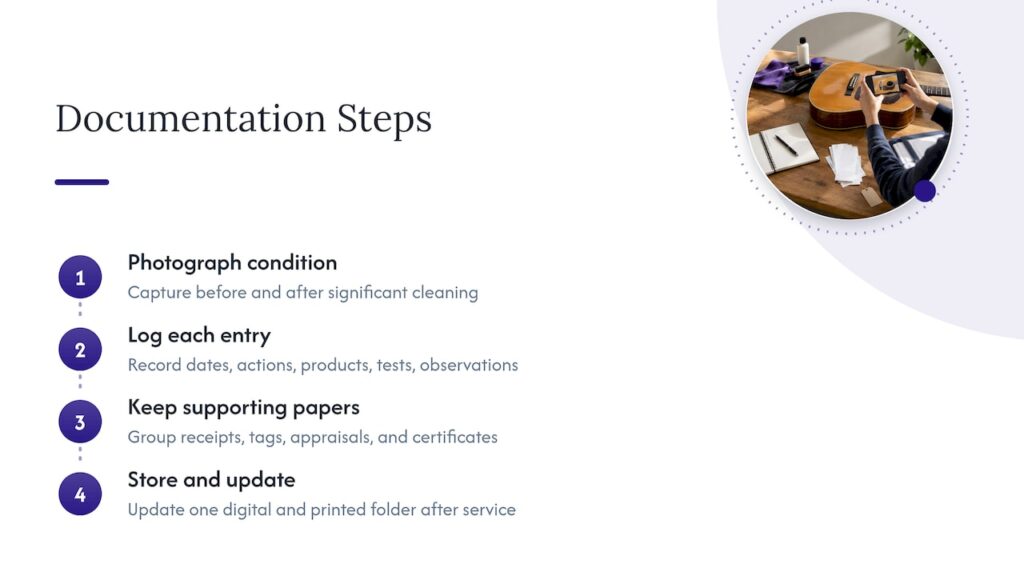
A clear paper trail can matter as much as the cleaning itself when you sell or certify a guitar. Buyers and appraisers trust what they can verify, and notes made at the time carry more weight than memories.
Start with photographs. Shoot the front, back, sides, headstock front and back, neck joint, bridge and the inside of the control cavity, in even daylight and without filters. Add close-ups of any dings, cracks, repairs or wear, and include a ruler or coin for scale. Take new photos before and after any significant cleaning.
Next, keep a simple log. For each entry, write the date, what you did, which products you used, and where you tested them first. Record anything you noticed, such as a loose tuner or a dry fretboard. Note every professional visit too, with the name of the technician or shop and what they changed.
Finally, keep the supporting papers together: purchase receipts, case and accessories, original hang tags, any previous appraisals and certificates. Be honest about repairs and refinishes. Disclosed work builds trust, while hidden work destroys it when it comes to light.
Store the photos and log in one folder, digital and printed, and update it after every service. If you later request a valuation or certification, that folder saves time and supports the number on the paper.
What do we believe about conserving a guitar?
We put original finish and documentation ahead of cosmetic polish every time. Conservative care and clear records help document a collectible guitar’s condition.
— Vintage
When should you book our restoration, valuation or testing services?

Some jobs are beyond a cloth and a gentle polish: deep stains, cracked or lifting finish, or a guitar you plan to sell and want properly documented. In those cases we offer restoration, plus valuation and certificates that put your instrument’s condition and authenticity on paper. If you want an in-person assessment, our guitar testing appointments let us look at the instrument with you. Current prices are on our website. Visit Vintage Guitar World to learn more or to book an appointment.
FAQ
How do I clean my guitar best?
Wipe it with a dry microfiber cloth after playing, and use a barely damp cloth for light grime, dried right away. Test any polish on a hidden spot first, and use only products suited to your finish.
How often should you oil a guitar fretboard?
Oil only open-porous woods like rosewood or ebony, and only when the wood looks or feels dry. For most players that is occasionally rather than on a strict calendar, and always in very small amounts.
Should you store guitars standing or lying down?
Either can work if the guitar is supported well, in a case or on a padded stand, away from heat, direct sun and damp. Avoid leaning it unsupported against a wall, where it can slip or take pressure on the neck.
Can I clean my guitar with household products?
Avoid them. Household polishes and sprays can contain silicone or solvents that harm sensitive finishes, so stick to mild soap solution and guitar-specific products.
Sources
- G&B-Basics: Gitarrenpflege – Reinigen & Polieren | GITARRE & BASS
- Gitarrenpflege ᐅ Tipps um deine Gitarre zu reinigen
- Gitarrenpflege Tipps