


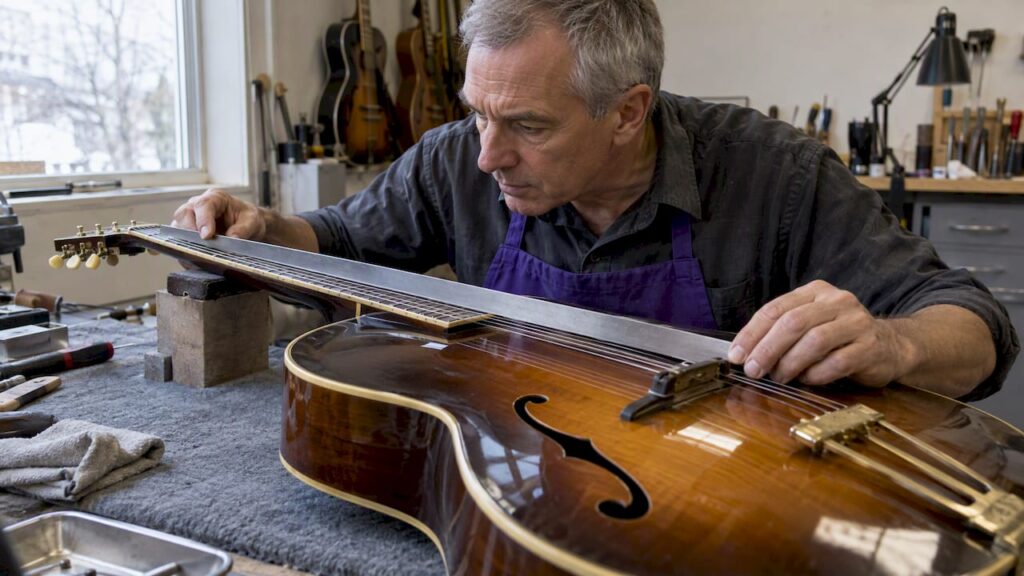

A vintage archtop is worth buying when its structure checks out: a straight neck angle, stable braces, and no active cracks. Before anything else, inspect the guitar for structural soundness or book a professional testing appointment, since playability and tone depend on that foundation far more than on perfect originality. Expect trade-offs between untouched parts and a comfortable setup, and lean on expert evaluation when the stakes are high.
TL;DR:
- A straightedge across the frets should align with the bridge top; a clear mismatch can signal a neck reset, which a luthier should confirm.
- Professional neck resets and refrets can restore playability, but undisclosed modifications or careless refinishing can hurt value; request invoices and verify repair quality before buying.
- Store the guitar near 20.5°C (70°F) and 40 to 50% relative humidity, and use a case humidifier during dry seasons.
- Players should prioritize tone and comfort, while collectors should pay more for untouched originality, documented provenance, and matching original parts.
- Add several hundred dollars or euros for structural work when pricing a bargain archtop, since a refret or neck reset may be needed.
Table of Contents
- What a vintage archtop is and the features that matter
- How to check condition in photos and in person
- Common repairs and restoration: what helps and what harms value
- Care and humidity best practices for vintage archtops
- Pricing and value signals: how to form a realistic budget
- How to test and buy: in-person workflow, remote checklist, and negotiation tips
- How we evaluate and support vintage archtop buyers
- A brief history and evolution of vintage archtop guitars
- An overview of notable manufacturers and models
- Key woods and materials used and their impact on sound
- Identifying original vs. replaced parts and their significance
- Choosing between a playable vintage archtop and a collector-grade original
- Book a testing appointment, get a valuation, or browse curated vintage listings
- FAQ
- Sources
What a vintage archtop is and the features that matter
In the vintage guitar market, “vintage” usually means an instrument built before the widespread shift to modern mass production, generally carrying real age, a documented maker, and often a history of ownership. What separates a serious archtop from a decorative one is construction: a carved solid top (spruce or similar tonewood shaped by hand or machine-assisted carving) resonates and ages differently than a laminated top, which is more stable but typically less dynamic.
Body size has a direct effect on tone. Archtops commonly range from about 16 inches to 19 inches, and that range changes how the instrument behaves:
- Smaller bodies tend to sound tighter and cut through a mix more easily.
- Larger bodies emphasize bass response and overall projection, which matters in an ensemble setting.
Factory appointments such as F-holes, binding materials, and tailpiece styles are not just cosmetic. They help identify the maker, approximate build era, and original specification, all of which affect value. Modern reissues exist as an alternative for players who want archtop tone without vintage-specific risk, but they trade history and resale character for consistency.
How to check condition in photos and in person
A disciplined inspection order saves you from falling for cosmetics while missing structural problems. Work through these steps in sequence:
- Check playability first: neck relief, string action at the twelfth fret, fret wear, and any buzzing when you fret notes up the neck.
- Look at the top and back for cracks, separations along seams, or glue lines that look fresh, which often signal a prior repair.
- Press gently around the top edges and listen for rattles that suggest a loose brace inside the body.
- Run the neck-angle test: lay a straightedge across the frets and compare its plane to the top of the bridge. A clear mismatch points to a neck reset as the likely fix.
- Examine binding and finish closely for celluloid shrinkage or crazing, which can signal corrosive off-gassing that damages nearby wood and hardware over time.
- Ask for the serial number, interior label, case candy, and any repair receipts the seller has on file.
Pro Tip: Photograph the neck joint and heel area in raking light before you buy; this often reveals hairline separations invisible in standard photos.
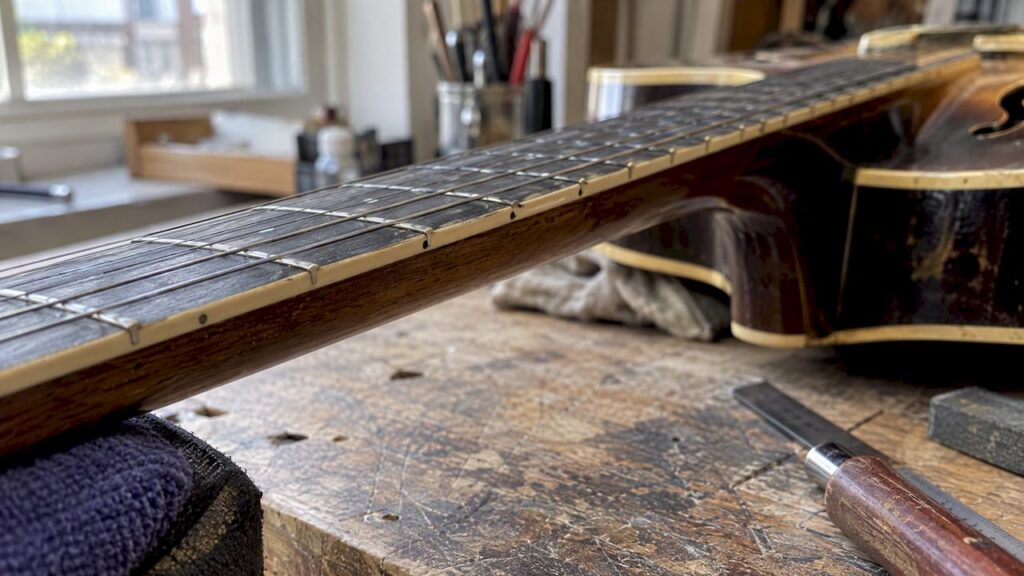
Protruding fret ends are a reliable early sign of a top that has dried out and is now at higher risk of cracking, according to restoration guidance from a dedicated guitar workshop. Documentation matters almost as much as the physical check: a guitar with a clear repair history and matching serials is easier to value and resell than one with unexplained modifications. Our 7-point checklist for buying vintage guitars walks through these same categories in more detail if you want a printable reference before a viewing.
Common repairs and restoration: what helps and what harms value
Not every repair is a red flag, and some are exactly what a playable vintage instrument needs. A player’s guide to vintage guitars notes that well-executed repairs such as neck resets and refrets often improve playability and suit buyers who prioritize tone and use over collector-perfect originality. Repair professionals generally favor a stable, properly repaired instrument over one left untouched but unplayable.
Work that tends to preserve or even support value:
- A neck reset performed by an experienced luthier, which restores correct action without reshaping the neck itself.
- A professional refret using period-appropriate wire and technique.
- A stable crack glue-up that closes the seam without filling or overworking the surrounding finish.
Work to approach with more caution:
- Aftermarket truss systems or bracing changes meant to flatten a bulging top, which can permanently alter the instrument’s tone.
- Heavy modifications with no historical basis, such as non-original electronics routed through the top.
- A careless refinish that strips original lacquer and erases evidence of the guitar’s age.
Celluloid binding adds another layer of complexity. As the material ages, plasticizers evaporate and the binding becomes brittle, which can shrink and damage adjacent finish and hardware. Replacing it properly is delicate work that calls for a specialist rather than a quick cosmetic fix. In every case, repair quality and paperwork shape your negotiating position and the price a future buyer will pay. Our page on restoration and typical costs outlines what this kind of work generally involves.
Care and humidity best practices for vintage archtops
Climate control does more to protect a vintage archtop than any case candy or cleaning product. The ideal environment for a solid-wood archtop sits around 20.5°C (70°F) and 40 to 50% relative humidity, since rapid swings or extremes cause cracks, finish damage, and loosened joints.
A short, consistent routine keeps most problems from starting:
- Keep a hygrometer in the case and check it regularly rather than guessing at conditions.
- Use an in-case humidifier during dry seasons and let the guitar acclimate slowly after any temperature change, especially after travel.
- Change strings on a regular cycle and bring the guitar in for a setup check at least once a year, or sooner if action or intonation shifts.
- Pack the guitar in a hard case with padding at the neck joint when traveling, and avoid leaving it in a car or near heating vents.
Our guide to preservation workflow and our notes on humidity targets for in-case storage both expand on these numbers with product-level detail if you want to set up a long-term routine.
Pricing and value signals: how to form a realistic budget
Vintage archtop prices fall into a few recognizable bands rather than a single market rate. Entry-level examples are often priced as bargains precisely because they need work, mid-range playable instruments cost more but are largely ready to perform, and high-end collectible pieces command a premium tied to rarity, originality, and documented history.
Several factors push value up or down within those bands:
- Maker reputation and model scarcity.
- Carved solid tops generally carry more value than laminated construction.
- Originality of parts, finish, and hardware, along with any supporting provenance.
- Quality and documentation of past repairs.
Many lower-priced archtops need a refret, neck reset, or other structural work before they are fully playable, and budgeting several hundred dollars or euros for that work is realistic rather than exceptional. Add that estimate to the purchase price before deciding what you can actually afford, and prioritize structural repairs over cosmetic ones every time. If your goal is playing out regularly, choosing tone and comfort over untouched originality is often the smarter call; if you are building a collection, an unmolested original may be worth the extra cost and the extra care it demands.
How to test and buy: in-person workflow, remote checklist, and negotiation tips
Buying a vintage archtop in person gives you the clearest picture, but only if you follow a deliberate routine instead of a quick strum.
- Bring a cable, a small amp if the guitar has a pickup, and a tuner, then play scales up the neck to listen for buzzing or dead notes.
- Check the neck-angle plane against the bridge top and feel for neck relief with a capo at the first fret.
- Listen for how the guitar responds at different volumes, since archtops often reveal weak bracing or looseness only under louder playing.
- For remote purchases, request close, well-lit photos of the neck joint, the inside of the body through the F-holes, the headstock, and any repaired areas, plus a short unedited sound clip.
- Ask for copies of any repair invoices, the serial number, and confirmation of case originality before sending payment.
- For higher-value instruments, use a testing appointment or a valuation and certification service to confirm condition before you commit.
Visible wear, documented repairs, and an honest repair-cost estimate are your strongest negotiation levers. A seller who discloses a neck reset or refret with receipts is usually easier to negotiate with than one who glosses over a known issue, and you can use the cost of any outstanding work to justify a lower offer. Our page on testing vintage guitars for quality and value walks through the sound checks and inspection points in more depth.
How we evaluate and support vintage archtop buyers
We offer testing appointments where you play an instrument in person under guidance before committing to it, valuation reports that document condition and market position, and certification that confirms authenticity. We also connect buyers with restoration work when a guitar needs a neck reset, refret, or structural repair.
These services map directly onto the checklist above: the same structural checks, originality questions, and repair-quality assessments we have walked through are the ones our evaluation process covers in person. For a higher-value purchase, having an expert confirm condition before you pay reduces the risk of a costly surprise after the sale.
A brief history and evolution of vintage archtop guitars
Archtop guitars grew out of violin-family construction, with carved tops and backs replacing the flat-top bracing common to earlier acoustic guitars. Builders in the early twentieth century adapted arching and F-hole designs to give guitars more volume and projection, which made them useful in dance bands and early jazz ensembles before amplification was reliable.
As ensemble music grew louder through the 1920s and 1930s, archtop size increased to compete with horns and drums, pushing body width toward the larger end of the range still common today. The later addition of pickups let archtops bridge acoustic jazz rhythm playing and the louder, more melodic electric lead style that defined jazz guitar through the mid-twentieth century.
That dual identity, part acoustic rhythm instrument and part early electric voice, is why vintage archtops from this era remain sought after. They represent a transitional period in guitar design, and the construction choices made then, carved tops, specific bracing patterns, F-hole placement, still shape how collectors and players evaluate archtops today. Our page on the history of the acoustic guitar traces this broader arc in more detail.
An overview of notable manufacturers and models
The vintage archtop market includes instruments from a range of workshops and factories active across the twentieth century, each with recognizable construction habits, carving styles, and appointment choices that collectors learn to identify by sight. Differences in F-hole shape, binding material, tailpiece design, and headstock inlay often point to a specific era or shop even before a serial number confirms it.
Rather than treat any single maker as the only reference point, it helps to think in terms of build tier: factory-produced models aimed at working musicians, mid-tier instruments with upgraded appointments, and top-tier carved archtops built for professional players and later prized by collectors. Each tier carries different expectations for materials, hardware quality, and finish work, which in turn shapes resale value.
When researching a specific instrument, cross-reference its features, serial number, and label against documented examples rather than relying on a seller’s description alone. Our comparison of popular guitar brands and our guide to types of vintage guitars give more context on how these build tiers differ in practice.
Key woods and materials used and their impact on sound
Wood choice shapes an archtop’s voice as much as its body size does. Spruce, typically carved rather than laminated on higher-end instruments, is the most common top wood because it is light and stiff, which lets it respond quickly and project clearly. Maple is the standard choice for backs and sides, prized for a bright, focused tone that complements spruce’s responsiveness.
Laminated tops, often built from layered maple or spruce veneers, trade some of that dynamic response for stability. They resist humidity swings and cracking better than solid carved tops, which is part of why many factory-tier archtops from the mid-twentieth century used laminated construction for durability in working conditions.
Other materials affect sound in smaller but real ways. Ebony or rosewood fingerboards influence sustain and attack, while the choice of bridge material and tailpiece design changes how string vibration transfers into the top. None of these elements work in isolation: a carved spruce top paired with a well-fitted ebony bridge behaves differently than the same top with a poorly fitted substitute, which is one reason originality of smaller parts matters for tone, not just for collector value.
Identifying original vs. replaced parts and their significance
Spotting replaced parts starts with consistency: original hardware, tuners, tailpieces, and pickguards usually share a patina and wear pattern that matches the rest of the instrument, while a replacement often looks newer, fits slightly differently, or uses screws and finishes inconsistent with the era. Mismatched tuner buttons, a tailpiece with different plating wear than the bridge, or a pickguard with a slightly off color are all common tells.
Originality matters for two separate reasons: tone and value. A replaced bridge or tailpiece can change how the top vibrates, which affects projection and sustain, sometimes for the better and sometimes not. On the value side, collectors generally pay a premium for instruments with all-original hardware and finish, since every replaced part is one more variable that separates the guitar from its factory specification.
That said, a replaced part is not automatically a problem. A period-correct replacement installed by a skilled luthier can preserve both tone and much of the collector appeal, especially when it is disclosed and documented. What hurts value most is an undisclosed replacement discovered after purchase, which is why requesting photos of hardware up close and asking directly about any swapped parts belongs in every inspection, whether in person or remote.
Choosing between a playable vintage archtop and a collector-grade original
Playability should win when you intend to perform regularly: a well-executed neck reset or refret that makes a guitar comfortable to play beats an untouched original sitting unused in a case. Collector-grade originality earns its premium when the goal is preservation or long-term value, not daily use.
If you are buying to play for years, prioritize tone and comfort and budget for sympathetic repairs. If you are building a collection, patience and an unmodified example usually pay off more than a bargain with hidden work. Either way, start with the structural checklist above or book a testing appointment before you commit.
— Vintage
Book a testing appointment, get a valuation, or browse curated vintage listings
Reading a checklist only gets you so far with an instrument this specific, which is why we built our services around hands-on evaluation. If you are weighing a higher-value purchase, these are the paths that reduce the guesswork before money changes hands:

- Exklusive Anspieltermine (testing appointments): play the instrument in person with guidance before you commit, which is the single best way to confirm playability and tone match what you expect.
- Zertifikate und Wertgutachten (certification and valuation): get documented confirmation of authenticity and market position, useful for insurance, resale, or simple peace of mind.
- Restaurierung (restoration): have structural or cosmetic work done by people who handle vintage construction regularly, with cost information available on our restoration page.
- Verkauf in Kommission (consignment sale): if you already own an instrument and want expert handling of the sale process.
A professional evaluation turns the checklist in this guide into a documented report, which matters most when the price is high enough that a mistake is expensive. Browse our current vintage guitar listings or visit our main shop page to book an appointment or ask about valuation and certification for an instrument you already have in mind.
FAQ
Are vintage archtop guitars a good investment?
Value depends heavily on maker, originality, and condition rather than age alone, so an archtop can appreciate while another from the same era stays flat. Buyers focused on long-term value should prioritize documented provenance and original parts, while those who mainly want to play should weight tone and playability instead.
How do I know if a vintage archtop needs a neck reset?
A straightedge laid across the frets should align closely with the top of the bridge; a clear mismatch between that plane and the bridge usually signals that a neck reset is needed. High action that a standard setup cannot correct is another common indicator worth having a luthier confirm.
What humidity level is safest for storing a vintage archtop?
A practical target is about 20.5°C (70°F) and 40 to 50% relative humidity, since extremes or rapid swings in either direction cause cracks and loosened joints. Keeping a hygrometer in the case and using an in-case humidifier during dry seasons helps maintain that range consistently.
Does replacing original parts always lower a vintage archtop’s value?
Not always. A disclosed, period-correct replacement installed by a skilled luthier can preserve much of an instrument’s value and even improve playability, while an undisclosed or poorly matched replacement typically hurts both value and buyer confidence. Full originality still commands the highest premium among collectors, so the context and documentation of any replacement matter as much as the part itself.
Should I buy a vintage archtop with visible repairs?
Well-executed, disclosed repairs such as a professional refret or neck reset often make an instrument more enjoyable to play without ruining its value, according to guidance aimed at vintage guitar buyers. Use any repair history as a negotiating point and have the quality of that work confirmed before you finalize a purchase.
Sources
- Information on ordering, care, warranty – Gitarrenatelier Stark Oldenburg
- A Guide to Archtops Part I: Vintage Low-End – Reverb News