


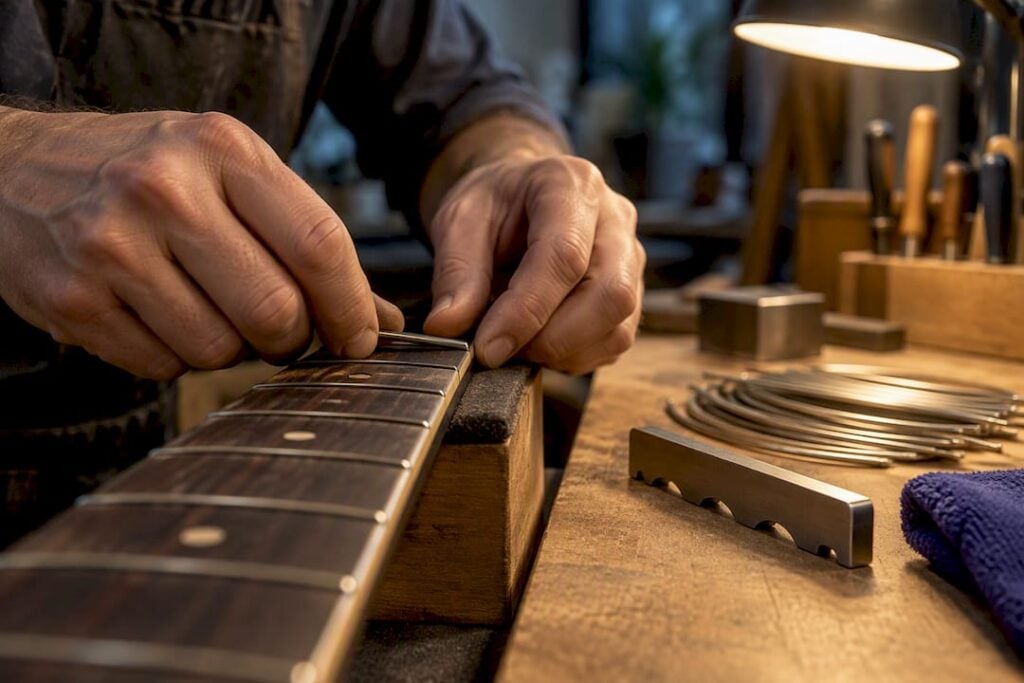

A correctly executed refret does not permanently lower a guitar’s value, and in most cases it protects the price a playable instrument can command. The risk sits entirely in the workmanship: a rushed job, the wrong fret wire, or careless removal can chip a fingerboard and turn a simple repair into a value problem. Before you authorize anything, get an inspection and a written, itemized quote from a specialist who can explain exactly how they plan to protect the original parts.
TL;DR:
- A professionally done refret rarely harms a vintage guitar’s value unless it involves poor workmanship or unnecessary full replacement on a mint, provenance-heavy instrument.
- Cost varies from €150 to €400 for common guitars, with additional charges for binding, exotic woods, or complex neck shapes, and turnaround typically takes one to two weeks.
- Lower-risk options like fret dressing or partial refrets can extend fret life and resolve issues without significantly impacting value, especially if wear is localized.
- Asking the technician about their removal process, viewing prior examples, and ensuring original parts are returned helps prevent damage and maintains the instrument’s worth.
- For players, a refret improves playability, while for collectors, maintaining originality—unless necessary—best preserves the instrument’s market value.
Table of Contents
- How refretting affects collector value versus player value
- When to refret and lower-risk alternatives
- Typical cost range, timeline, and how costs affect net value
- What a correct, value-preserving refret looks like
- How to choose and vet a luthier or workshop
- Vintage Guitar World: how we approach refretting, restoration, and valuation
- A luthier’s short guidance for anxious owners
- How Vintage Guitar World can help with restoration and valuation
- Sources
- FAQ
How refretting affects collector value versus player value
Collectors and players price a guitar differently, and refretting sits right in the gap between them. A collector chasing an untouched 1959 example pays a premium for original frets, original finish, and unmolested wood, because originality is the whole point of that purchase. A player buying the same model to gig with cares mostly about intonation, fret height, and whether the neck plays cleanly up to the twelfth fret.
Original frets matter most on mint, low-mileage instruments with strong provenance, the kind that museums and serious collectors chase specifically because nothing has been touched. On a well-worn player’s instrument, worn-out frets are expected wear, not a defect, and a clean refret usually makes the guitar easier to sell rather than harder. Dealers routinely refret vintage guitars before offering them for sale precisely because a playable instrument moves faster than one with grooved, buzzing frets, according to trade reporting from Premier Guitar. Trade commentary on the vintage market echoes the same pattern: originality carries weight, but a well-done refret rarely does the damage that a refinish or a replaced neck does.
A few things consistently separate the two valuation mindsets:
- Collectors pay a premium for guitars with all original components intact, especially frets, finish, and hardware.
- Players prioritize a straight neck, even fret height, and low action over whether the frets are original.
- Mint or provenance-heavy instruments lose the most value if their originality is disturbed.
- Working instruments with honest wear generally gain marketability from a clean, professional refret.
Where you land depends on what the guitar is for. A 1930s parlor guitar destined for a glass case is a different animal than a 1970s workhorse someone plans to gig every weekend.
When to refret and lower-risk alternatives
Frets do not fail all at once. Watch for deep grooves where the strings sit, persistent buzzing that a setup cannot fix, or intonation that drifts no matter how you adjust the saddle. Any of those three signals usually means the frets themselves are the problem, not the setup.
Before committing to a full refret, consider the lower-risk options in order:
- Fret dressing levels minor high spots and can add years of life to frets that still have height left.
- Partial refret replaces only the worn section, usually the first five to seven frets, and works when wear is localized.
- Full refret replaces every fret and is the right call once the wire is too worn for leveling or dressing.
Pro Tip: Ask your technician to measure remaining fret height before you agree to anything. A quick check often turns a “definitely needs a refret” guitar into a same-day dress and setup.
Run through a short mental checklist before authorizing work: is the wear localized or across the whole neck, is the instrument primarily a collector’s piece or a working guitar, and has a qualified technician actually measured the frets rather than eyeballing them. Skipping that last step is how owners end up paying for a full refret they never needed.
Typical cost range, timeline, and how costs affect net value
A professional refret on a common guitar typically runs in the range of “€150 to €400”, with complexity, binding work, and any restoration needs pushing costs higher. Compound radius necks, bound fingerboards, and exotic fingerboard woods all add labor, since each requires extra care during slot prep and fret seating.
Refretting a low-value instrument can cost more than the guitar is worth, which is the main reason to check market value before booking the work, per gitarre100.de.
Budget for a few extra line items beyond the fretwork itself:
- A setup and intonation check after the new frets are installed and settled.
- Possible nut replacement if the old one does not match the new fret height.
- String costs, since a full refret always ships with a fresh set.
Turnaround for a full refret commonly runs one to two weeks at a busy shop, longer if binding or fingerboard repairs are needed. Weigh the invoice against realistic resale value: refretting a guitar worth a few hundred euros rarely pays for itself, while a well-documented refret on a genuinely collectible instrument tends to protect the price it can fetch.
What a correct, value-preserving refret looks like
The job that protects value looks nothing like a rushed weekend repair. A technician working carefully will walk through a defined sequence rather than improvising.
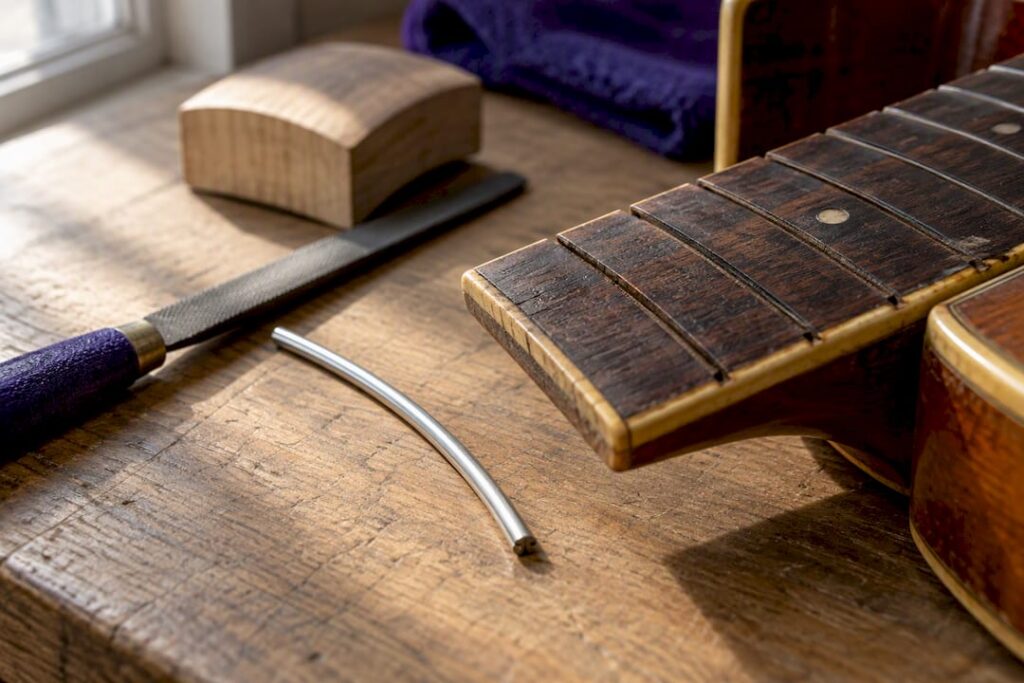
- Remove the saddle and strings, then heat and lever out the old frets with tools built for the job, since improper removal is the step most likely to tear the fingerboard, according to a detailed refretting workflow.
- Clean and re-level the fret slots before seating new wire, checking for any chip-out along the way.
- Choose fret wire that matches the instrument’s period and tone, since many vintage guitars sound and feel wrong with modern stainless steel installed by default, per Premier Guitar.
- Protect binding and fingerboard nibs during removal and leveling rather than sanding through them.
- Crown, polish, and dress the new frets, then cut a new nut if the old one no longer matches the fret height.
Pro Tip: Ask the shop to bag and return your original frets, and to photograph the neck before, during, and after. That small habit protects provenance if you ever sell.
Stainless steel frets last longer and feel different under the fingers, but installing them on a guitar valued for its vintage character can work against you with buyers who want the instrument as it was built.
How to choose and vet a luthier or workshop
The riskiest single step in any refret is fret removal, so the questions you ask should focus there. A detailed look at removal risk points to specialized pullers and controlled heat as the difference between a clean job and a chipped fingerboard.
Before booking anyone, ask these directly:
- What tools and heating method do you use to remove old frets, and how do you avoid tear-out?
- Can I see before-and-after photos from a similar vintage instrument?
- Will you return my original frets and any replaced hardware?
- Do you default to stainless steel, or do you match fret wire to the instrument’s period?
- What warranty or written guarantee comes with the work?
Treat a same-day quote with no inspection, automatic stainless steel recommendations, refusal to hand back old parts, or no warranty at all as reasons to keep looking.
Vintage Guitar World: how we approach refretting, restoration, and valuation
Our priority with any restoration is preserving what makes an instrument original before we ever reach for a fret file. That means documenting condition first, discussing whether a full refret is actually necessary, and restoring playability only where a guitar genuinely needs it rather than where it is convenient to do the work.
For owners weighing this decision, the services that typically apply are Restaurierung for the physical work itself, Zertifikate und Wertgutachten for a documented valuation before or after any repair, and Verkauf in Kommission for owners who decide to sell rather than restore. A documented restoration record, paired with a formal valuation, gives a future buyer confidence that nothing was done carelessly, which is often what protects resale value more than the repair itself.
A luthier’s short guidance for anxious owners
Playable guitars sell. A careful refret, done with the right tools and a little patience, protects value far more often than it damages it. My rule of thumb is simple: restore to playability if you intend to play the instrument, and preserve originality if it exists purely as an investment. Either way, keep the old frets and photograph everything before work begins.
— Vintage
How Vintage Guitar World can help with restoration and valuation
If you are staring at worn frets on a guitar you actually care about, the fastest way to protect its value is a professional inspection before any work begins. We offer Restaurierung for owners who need the fretwork done with binding, fingerboard, and originality protected at every step, and Zertifikate und Wertgutachten for a documented valuation you can show a future buyer. Owners who decide selling makes more sense than restoring can use Verkauf in Kommission instead of listing the instrument themselves.

A first inspection typically covers fret wear, neck condition, binding integrity, and an honest read on whether a full refret, a partial refret, or a simple dress solves the problem.
- Fret wear and neck geometry checked before any work is quoted.
- Written, itemized estimate covering parts, labor, and expected timeline.
- Documentation of original components for your records or a future sale.
| Service | What it covers |
|---|---|
| Restaurierung | Fretwork and physical restoration with documentation |
| Zertifikate und Wertgutachten | Formal valuation and certification |
| Verkauf in Kommission | Consignment sale for owners who decide not to restore |
If your instrument needs professional attention, request a restoration quote or browse our current inventory to see comparable instruments and their condition notes.
Sources
- Vintage Vault: Why You Shouldn’t Be Afraid to Refret Your Classic Guitar
- Wann Gitarre neu bundieren: Tausch-Anzeichen & Tipps
- Neubundierung des Griffbretts
FAQ
Does refretting reduce a vintage guitar’s collectible value?
A properly executed refret generally does not reduce value, and dealers often refret guitars before selling them so they are playable, according to Premier Guitar. Value drops mainly when the work is done poorly or when the instrument is a mint, provenance-dependent piece where any alteration matters.
How much does a guitar refret typically cost?
A professional refret on a common guitar typically falls between “€150 and €400”, with binding, compound radii, or fingerboard repairs raising the price. Get a written quote after inspection rather than a phone estimate.
When should I refret my guitar instead of just dressing the frets?
Refret when frets show deep grooves, persistent buzzing a setup cannot resolve, or intonation drift across the neck. If wear is minor, a fret dress or partial refret often solves the problem at lower cost and lower risk to originality.
Should I choose stainless steel frets for a vintage guitar?
Not by default. Many vintage instruments sound and feel different with stainless steel, so matching fret wire to the guitar’s original period is usually the safer choice for both tone and resale, per Premier Guitar.
What should I ask a luthier before authorizing a refret?
Ask about their fret removal method and tools, request before-and-after photos of similar work, and confirm they will return your original frets and hardware. A refusal to answer any of these, or a rushed quote with no inspection, is a reason to look elsewhere.