












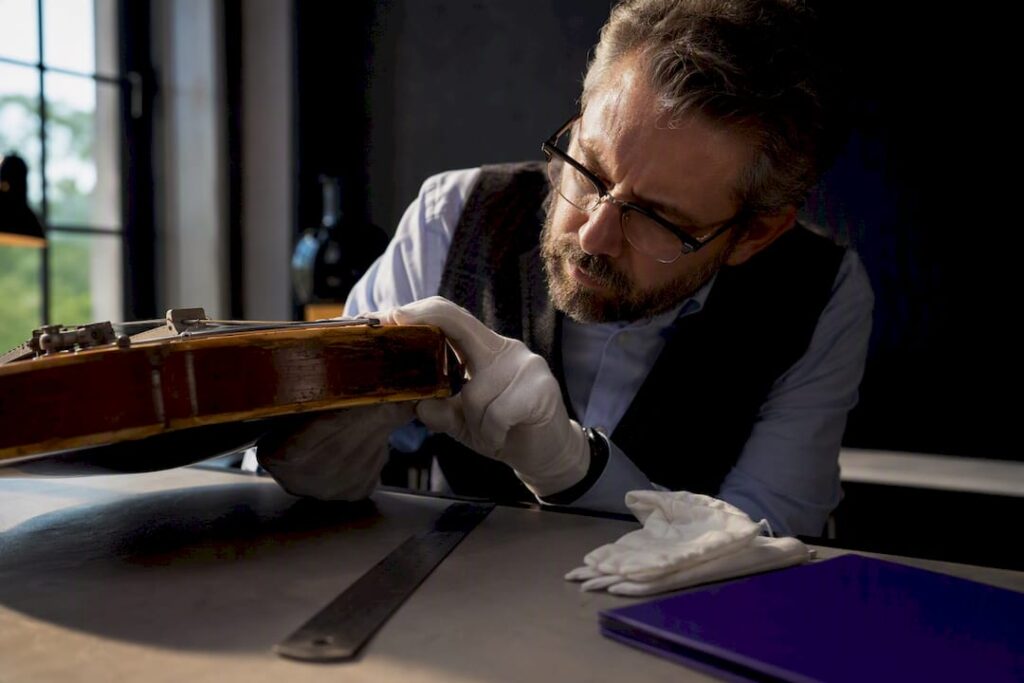

Yes, most German insurers require a formal Gutachten for high-value, vintage, or agreed-value guitar coverage, while a photo-based Taxierung often works for everyday instruments. Start by pulling together your receipt, serial number, and clear photos, then call your insurer before paying for anything. A written report almost always speeds up claims later.
TL;DR:
- Most German insurers require a formal Gutachten for vintage, high-value, or agreed-value guitar coverage, rather than a quick photo valuation.
- A full Gutachten can take several days to weeks, with costs influenced by rarity, research complexity, and inspection type, often exceeding photo-based estimates.
- Proper documentation including receipt, serial number photos, and repair history greatly speeds up claim processing and reduces the risk of rejection.
- Insurers demand that appraisal reports match their valuation language and current market conditions, requiring updates for vintage instruments every few years.
- Confirming insurer requirements before commissioning an appraisal and understanding whether Neuwert, Zeitwert, or an agreed value applies is essential to avoid delays or disputes.
Table of Contents
- What Is a Gitarren Gutachten Versicherung and How Do Insurers Use It?
- What Do Appraisals Cost and How Long Do They Take in Germany?
- What Documentation Do Insurers Expect for Guitar Claims?
- When Do You Need a Formal Gutachten vs a Quick Taxierung?
- How Do You Order a Guitar Appraisal in Germany?
- What Legal and Regulatory Factors Apply to Guitar Appraisals in Germany?
- Why Vintage-guitar-world Treats Appraisals as Protection, Not Paperwork
- Book a Guitar Appraisal or Testing Appointment
- Sources
- FAQ
What Is a Gitarren Gutachten Versicherung and How Do Insurers Use It?
A gitarren gutachten versicherung is a formal, written valuation report insurers use to set or confirm the insured value of a guitar. It’s the German answer to what English speakers call a “guitar insurance appraisal,” and the terminology matters because insurers treat different report types differently.
Two terms get used loosely, but they mean different things. A Taxierung is a shorter valuation, often based on photos and basic details, that estimates current worth without the full documentation trail. A Gutachten is the formal version: a signed report that lays out condition, authenticity indicators, comparable sales, and a reasoned value conclusion, usually running several pages with photographic evidence.
German insurers work from three value concepts, and knowing which one applies to your policy changes everything about your claim payout:
- Neuwert (new-replacement value): what it costs to replace the instrument new today. nextsure recommends Neuwert coverage for most working musicians, since it avoids depreciation arguments after a loss.
- Zeitwert (current/depreciated value): the instrument’s worth accounting for age and wear, common on standard household contents policies.
- Marktwert / vereinbarter Wert (market value / agreed value): a value both sides accept in advance, typically the only option for rare or collectible instruments where market comparables are thin.
Insurers usually demand a proper expert report when the guitar is vintage, has collectible status, or the owner wants an agreed-value policy rather than standard depreciated cover. A 1960s archtop or a pre-war flamenco guitar rarely fits neatly into a standard Zeitwert schedule, so the Gutachten becomes the document that anchors the entire policy.
What Do Appraisals Cost and How Long Do They Take in Germany?
Timelines split cleanly by report type. A photo-based valuation can turn around in a matter of hours to a few days once an appraiser has clear images and details. A full written Gutachten, by contrast, can take from several days up to a few weeks, since it involves research into comparable sales, condition documentation, and sometimes physical inspection.
Pro Tip: Call your insurer before you commission anything. Ask exactly what wording and format they need on the report. Skipping this step is the single most common reason a finished Gutachten gets rejected or has to be redone.
Several factors push costs and turnaround up or down:
- Base research fee, which scales with how well-documented the model and era already are in the market.
- Vintage or rare-instrument research, since scarce archival data means more appraiser hours.
- Travel or in-person inspection, if the guitar needs hands-on assessment rather than remote photo review.
- Additional authentication work, such as verifying a disputed serial number or provenance claim.
Pre-clearing the appraisal’s scope with your insurer before paying for a report can save weeks of rework. Insurers occasionally reject reports that don’t use their required valuation language, and redoing a Gutachten from scratch costs both time and money nobody wants to spend twice.
What Documentation Do Insurers Expect for Guitar Claims?
Insurers don’t just want a nice-looking report. They want a paper trail that proves the guitar exists, that you own it, and that its condition and history match what the appraiser wrote. Specialist guidance from German instrument-insurance advisors is consistent on this point: organized documentation is the single biggest factor in how fast a claim moves.
Build this file before you ever contact an appraiser:
- Purchase receipt or invoice showing what you paid and when.
- Serial number, photographed clearly and cross-checked against the manufacturer’s records where possible.
- High-resolution photos of the front, back, headstock, and any label or interior serial stamp.
- Repair invoices from any luthier work, especially structural repairs or refinishing.
- Provenance history, including prior ownership, sale records, or authenticity verification where the instrument has a documented past.
Claims add their own layer of requirements. Theft claims need a police report filed promptly. Damage claims need a repair estimate from a qualified luthier, since insurers regularly use that estimate to decide between repair and total-loss settlement. Some policies also ask for proof of secure storage, particularly for high-value instruments kept at home rather than in a controlled environment.
The pitfalls that trip people up are almost always avoidable. Missing serial numbers top the list, followed by undocumented modifications, like a swapped pickup or refinished top, that don’t match the original appraisal description. Incomplete repair records come next: if a crack was fixed five years ago and there’s no invoice, an insurer may question the instrument’s condition history at the worst possible moment, during a claim.
Pro Tip: Photograph your guitar’s serial number the day you buy it, even if you never plan to file for insurance. It’s the one piece of documentation people forget until they need it urgently.
When Do You Need a Formal Gutachten vs a Quick Taxierung?
The right appraisal level depends on value and purpose, not just personal preference. A formal Gutachten is normally the expectation for high-value vintage instruments, agreed-value policies, estate division after an inheritance, and active claim support where the insurer is disputing value.
A lower-cost Taxierung or photo-based estimate works fine in other cases:
- Everyday instruments with clear, recent purchase records and no collectible status.
- Preliminary estimates before deciding whether a full Gutachten is worth commissioning.
- Sale preparation for a mid-range instrument where a buyer just wants a sanity check on price.
- Quick updates to an existing valuation that don’t involve a change in condition or ownership.
Market practice across German appraisal services treats remote Taxierung as acceptable for quick decisions, reserving the formal written Gutachten for situations where the insurer, a court, or a buyer needs a defensible, evidence-backed number. If you’re unsure which category your guitar falls into, understanding how collectible guitars are valued is a useful gut check before you spend money on the wrong report type.
How Do You Order a Guitar Appraisal in Germany?
The process is straightforward once you know the order of operations, and skipping a step is usually what causes delays.
- Gather your documents first. Receipt, serial number, photos, and any repair invoices, before you contact anyone.
- Decide remote or in-person. Remote works for well-documented instruments; in-person inspection suits anything with disputed condition or authenticity questions.
- Request a written scope that matches what your insurer actually needs, not a generic template.
- Receive the Gutachten in the format your insurer accepts, usually a signed PDF with photographic appendices.
- File it with your insurer and confirm they’ve logged the agreed value against your policy.
Before you pay a deposit, ask the appraiser a few direct questions: what credentials or experience back their valuations, whether they can word the report for an “agreed value” clause specifically, what delivery format you’ll get, and what the total timeline and fee will be in writing.
Pro Tip: If you own more than one instrument worth insuring, ask about bundling appraisals into a single engagement. Appraisers often quote lower per-instrument fees when researching several guitars at once, since travel and setup costs get shared.
Confirming insurer acceptance of the proposed scope before you pay anything remains the single best cost-saving move in this entire process.
What Legal and Regulatory Factors Apply to Guitar Appraisals in Germany?
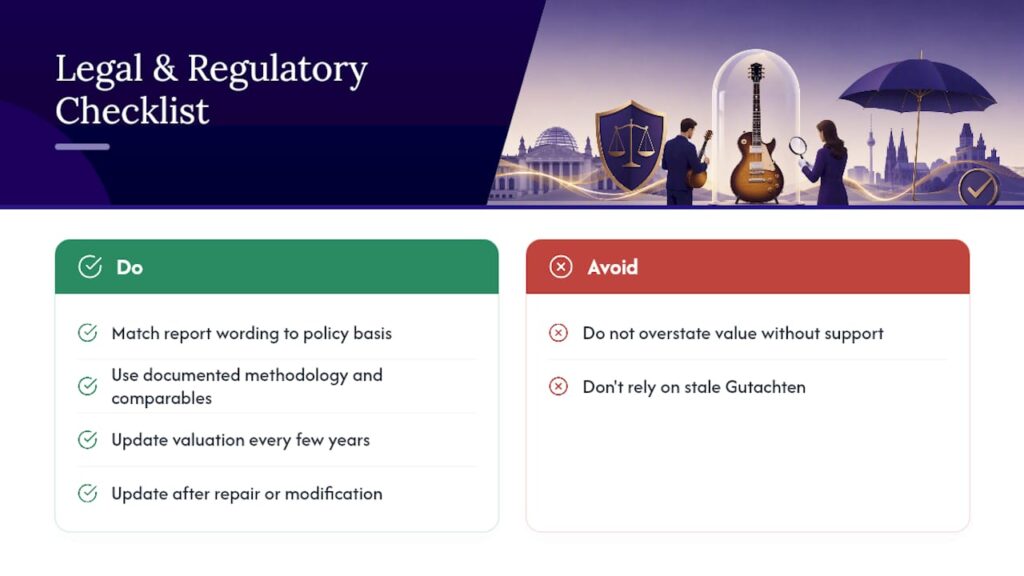
German insurance contract law (Versicherungsvertragsgesetz) requires policyholders to disclose material facts about insured property honestly, and an inflated or unsupported valuation can be treated as a breach of that duty if a claim is contested. This is why a properly worded Gutachten matters beyond just “getting a number”: the report’s language needs to match the actual coverage basis in your policy, whether that’s Neuwert, Zeitwert, or an agreed value.
Appraisers themselves aren’t subject to a single national licensing body the way, say, real estate assessors are in some regulated professions. That means credibility rests on the appraiser’s documented methodology, market knowledge, and track record rather than a government-issued credential. Insurers know this, which is part of why they scrutinize the wording and comparables in a Gutachten so closely before accepting it as the basis for an agreed-value policy.
One overlooked detail: valuations age. A Gutachten written five years ago on a rapidly appreciating vintage model may no longer reflect current market value, and filing a stale report during a claim can trigger disputes rather than resolve them. Updating a valuation every few years, or after any significant repair or modification, keeps the paperwork aligned with what the guitar is actually worth today, not what it was worth when the ink dried.
Why Vintage-guitar-world Treats Appraisals as Protection, Not Paperwork
An appraisal only protects you if it’s built the way insurers actually read it: documented condition, verified provenance, and language that matches your policy’s valuation basis. Vintage-guitar-world’s evaluation and certification work exists because a guitar’s playing value and its insured value are the same conversation, not two separate ones.
— Vintage
Book a Guitar Appraisal or Testing Appointment
If you’ve read this far, you already know the gap between a rushed photo estimate and a proper insurer-ready Gutachten. The gap is closed with in-person testing appointments, written valuation reports, provenance research, and certification tailored to meet insurer requirements rather than using generic templates.

Requesting a quote starts with a short conversation about your instrument and your policy’s requirements, so the scope gets aligned with your insurer from the first draft rather than after a rejection. That includes checking whether your coverage calls for Neuwert, Zeitwert, or an agreed value, and wording the report accordingly. Before you commission anything, run through the guitar appraisal checklist to see exactly what documentation to bring. When you’re ready, book a testing appointment or browse Vintage-guitar-world’s current collection to see the kind of instruments this level of documentation was built for.
Sources
- Freie Maklerei – Musikinstrumente (instrument insurance guidance)
- nextsure – Musikinstrumentenversicherung (solutions)
- MAWA Finanz – Musikinstrumentenversicherung
FAQ
What Does a Guitar Appraisal From an Insurer Cost?
Costs vary with report type and instrument rarity; a quick photo-based valuation costs far less than a full written Gutachten, which involves market research and sometimes physical inspection.
How Do I Determine the Value of My Guitar?
Value depends on the applicable basis, Neuwert, Zeitwert, or agreed value, plus comparable sales data; a professional valuation accounts for all three rather than guessing from online listings alone.
Do I Have to Accept the Insurer’s Own Valuation?
You’re not obligated to accept a value you believe is inaccurate, and you can commission an independent Gutachten to support a higher figure, especially for vintage or agreed-value coverage.
How Much Does It Cost to Refret a Guitar?
Refretting costs depend on the luthier and fret material chosen, and while this isn’t an appraisal cost itself, a documented repair invoice for fretwork should go into your insurance file since it affects the instrument’s condition record.