












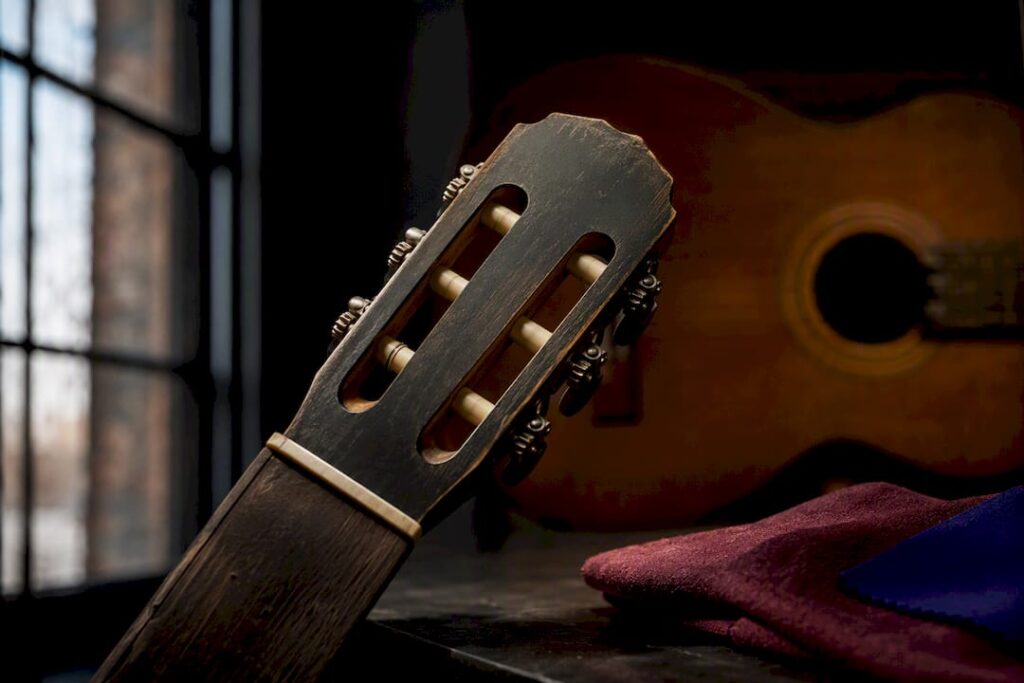

A quick look at a headstock or a label photo cannot confirm a genuine Conde Hermanos guitar. Authentication requires checking the physical construction against known workshop patterns, and often a professional appraisal. The name Hermanos Conde was used across several related workshops (Felipe V, Gravina, Atocha), so provenance, not just the label, decides what you actually own.
TL;DR:
- Authentic Conde Hermanos guitars often have specific headstock shapes and media luna motifs that vary by workshop era, requiring careful comparison with known patterns.
- The workshop address on the label (Felipe V, Gravina, or Atocha) indicates different production periods and quality tiers, influencing value and rarity.
- Interior cavity quality, consistent hardware patina, and period-correct routing are reliable signs of originality and help distinguish genuine instruments from forgeries.
- Counterfeit or altered Conde guitars often show mismatched parts, an overly uniform finish, and suspiciously recent repairs or hardware, raising red flags for buyers.
- Proper valuation demands professional appraisal, detailed photos, and documentation, especially for high-value guitars, to ensure authenticity and protect resale or insurance claims.
Table of Contents
- How Do You Identify a Conde Hermanos Guitar?
- Why Does Workshop Provenance (Felipe V, Gravina, Atocha) Matter?
- What Are the Red Flags for a Fake or Altered Conde?
- How Does Provenance Affect a Conde’s Value?
- How Vintage-Guitar-World Verifies a Conde Hermanos Guitar
- Buying an Uncertain Conde: A Collector’s View
- Get Your Conde Hermanos Guitar Professionally Verified
- Sources
- FAQ
How Do You Identify a Conde Hermanos Guitar?
Start with the headstock. Many genuine Condes carry a distinctive media luna (half moon) motif or a particular slotted headstock shape, though the exact silhouette shifted across decades and workshops. A mismatch between headstock style and the era claimed by the seller is worth flagging immediately.
The label comes next, and it deserves more scrutiny than most buyers give it. Check the exact wording, the address line, and whether the text looks handwritten, stamped, or printed. Workshop splits over the decades mean the same family name shows up on labels tied to different addresses and different production standards, a point well documented in the history of the Hermanos Conde workshops. A label that looks too crisp, too new, or oddly positioned relative to the soundhole is a signal to slow down.
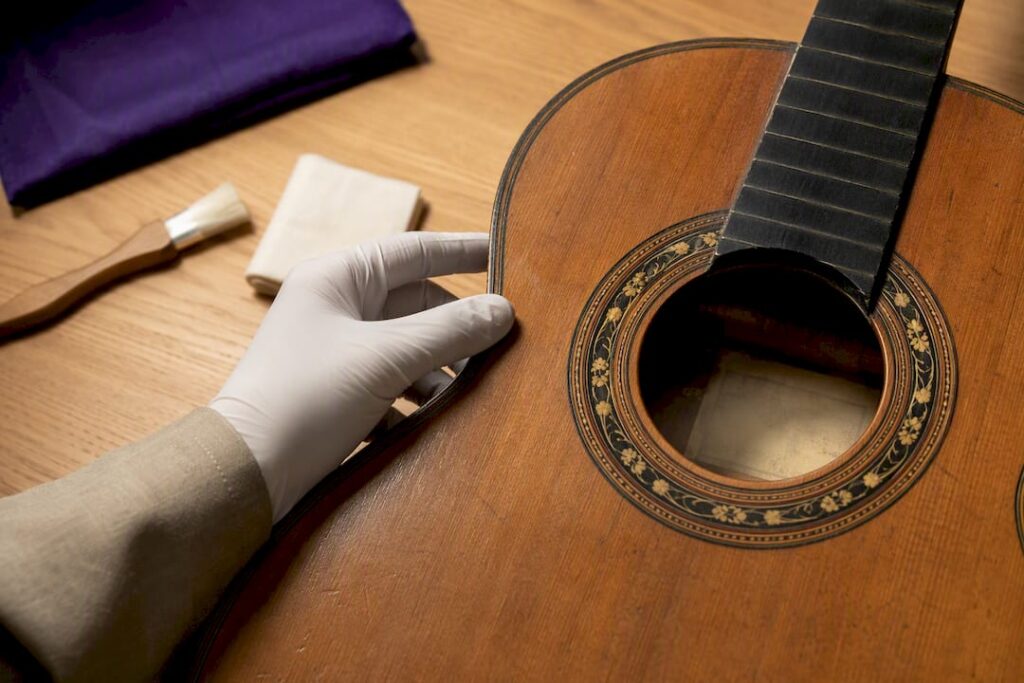
The rosette tells its own story. Conde workshops used a handful of recurring rosette patterns, and a rosette that has been recoated or recolored often hides a repair, a swap, or damage the seller would rather you not notice.
Here is the order to work through when inspecting a guitar in person or requesting photos from a remote seller:
- Photograph the headstock, front and back, in full light.
- Get a close, in focus shot of the label through the soundhole.
- Photograph the rosette straight on.
- Request an interior cavity shot, including any visible blocks or bracing.
- Get a full body shot and a close shot of the neck heel.
- Compare hardware patina against the wood aging around it.
Inside the cavity is where forgeries usually fall apart. Look for neat, consistent routing rather than rough or uneven cuts, and check for evidence of period-correct construction, since the internal fit and finish rarely lie the way a label can. Hardware matters too: tuners should show consistent wear with the rest of the instrument, and shiny new screws on an otherwise aged guitar are a mismatch worth asking about.
- Headstock shape and media luna motif
- Label wording, ink type, and placement
- Rosette pattern and any signs of recoating
- Interior routing quality and cavity condition
- Tuner style and patina consistency across all hardware
Pro Tip: Ask the seller for a photo of the label taken at an angle, not straight on. Angled light reveals printing texture and paper aging that a flat, front-on shot can hide.
Why Does Workshop Provenance (Felipe V, Gravina, Atocha) Matter?
The Conde name traces back to the Esteso workshop lineage in Madrid, and over time the family split into related shops operating under similar branding. That history is why the same surname appears on instruments of noticeably different quality and price. A guitar built lighter, with thinner walls and a different bracing approach than a classical instrument, reflects the flamenco-specific construction techniques the workshops refined over generations, as detailed in flamenco guitar construction references.
Labels referencing Felipe V, Gravina (sometimes noted as Gravina 7), or Atocha correspond to different periods and, in many cases, different production teams within the broader Conde tradition. Buyers on flamenco forums routinely debate which shop address maps to which quality tier, and that confusion is exactly why relying on the name alone leads to costly mistakes.
- Felipe V labeled instruments are frequently associated with the workshop’s higher end output.
- Gravina and Atocha addresses reflect different periods of the family’s production history.
- Model designations like the A series or AF variants add another layer buyers often misread.
Certain models also carry outsized reputations because of the players who used them. Paco de Lucía’s association with Conde “negra” rosewood concert models, for example, helped define what collectors now expect from a top tier flamenco guitar guide instrument, and pushed demand for that specific line well above others carrying the same family name, according to accounts from Paco de Lucía’s guitar.
What Are the Red Flags for a Fake or Altered Conde?
Mismatched parts are the most common tell. Hardware from a different era than the guitar’s claimed build date, screws that look freshly cut against otherwise aged wood, or a bridge that doesn’t match the finish’s wear pattern all point toward alteration rather than originality.
Finish problems come next. A guitar coated in a suspiciously uniform, glossy finish may be hiding a repaired rosette, a filled crack, or a replaced top. Overcoating is cheap insurance against a buyer noticing what’s underneath.
Inside the body, sloppy routing, generic electronic components, and fresh solder on an instrument sold as decades old are strong warning signs. Genuine period construction tends to show consistent tool marks and material choices throughout, while a rebuild mixes old and new in ways a careful eye can spot.
- Hardware or parts that don’t match the instrument’s claimed era
- Overly fresh, uniform finish covering the rosette or top
- Rough interior routing or non-period electronic components
- Pricing well below comparable completed sales
- A seller unwilling to send cavity or interior photos
Counterfeiting in the vintage guitar market is more common than most casual buyers assume, and lab-level analysis sometimes turns up forgeries that passed a visual check without issue, a pattern documented in reporting on vintage guitar authenticity. If a seller balks at a request for interior photos or hedges on provenance, consider requesting an in person inspection before paying anything.
How Does Provenance Affect a Conde’s Value?
Originality drives price more than almost anything else. An “all original” instrument, meaning unmodified hardware, untouched finish, and no undocumented repairs, commands a real premium over a guitar that’s been refinished or had parts swapped, even when the swap was done well.
Workshop attribution sets the price tier from there. Felipe V labeled guitars often sit higher than instruments from later, more commercially oriented production runs, and that gap widens further for models tied to well known players. Condition, the presence of an original case, and clearly documented repair history all move the needle too.
- Confirm originality before comparing prices across listings.
- Weight the workshop label (Felipe V versus Gravina or Atocha) into your price expectations.
- Ask for documented repair history rather than a vague “excellent condition” claim.
- Compare against completed sales, not asking prices, since listing prices routinely overstate real market value.
A guitar appraisal checklist helps organize these factors before you make an offer, and a formal valuation is worth the fee whenever the asking price crosses into four figures or more.
How Vintage-Guitar-World Verifies a Conde Hermanos Guitar
Appraisal appointments typically involve a non-destructive inspection of the headstock, label, rosette, and interior cavity, paired with photographic documentation of everything found. That documentation may become part of a condition and provenance report you can keep with the instrument.
Preparing ahead speeds things up. Bring or send clear photos of the label, headstock front and back, rosette, and interior cavity, along with any paperwork the previous owner provided.
- Bring existing provenance documents, receipts, or prior appraisals if you have them.
- Photograph the neck heel and any visible pot or code markings before your visit.
- Ask what the certification report will include before booking, so you know what you’re paying for.
Certification matters most at resale or for insurance, where a documented provenance history can help protect the price you can ask or the coverage you can claim.
Pro Tip: If you’re buying remotely, request the same interior cavity photos an in-person appraisal would capture before you commit to a purchase, not after.
Buying an Uncertain Conde: A Collector’s View
Whether an uncertain Conde is worth the risk depends entirely on why you’re buying it. A player buying an instrument to gig with can tolerate some ambiguity in exchange for a lower price, especially if the guitar sounds and plays the way they need. A collector chasing investment value cannot afford that same ambiguity, since resale price depends almost entirely on documented provenance.
Budget for the unknown either way. Setup work, a possible refret, and an authentication fee can add several hundred dollars on top of the purchase price. Negotiate accordingly, and ask the seller for a written statement of what they know about the guitar’s history before you send payment. A seller confident in their instrument will put that in writing without hesitation.
— Vintage
Get Your Conde Hermanos Guitar Professionally Verified
A label tells you what a seller claims. A professional inspection tells you what the guitar actually is, and that gap is where an appraisal and testing service earns its keep. Rather than guessing from photos or trusting a workshop name that’s been used across multiple production tiers, you get a documented, condition-based read on the instrument itself.

Booking an appraisal typically starts with gathering existing provenance documents, taking clear photos of the label, headstock, and rosette, and noting anything known about the guitar’s history. From there, a guitar testing appointment walks through the same physical checklist covered above, backed by hands on inspection instead of a screen.
Certification matters most when selling or insuring an instrument, since a documented report can help protect the value claimed rather than leaving it to a buyer’s guesswork. If you’re ready to move forward, explore guitar appraisal services and book an inspection with your photos and documents in hand.
Sources
For readers who want to go deeper before making a purchase decision, a few sources stand out. The Wikipedia entry on Hermanos Conde lays out the family’s workshop lineage in more detail than most retail sites bother with. Premier Guitar’s piece on non-destructive authentication testing explains how specialists verify high-value instruments when a visual check alone isn’t conclusive. GuitarNiche’s guide to vintage guitar red flags covers the photo checklist approach in practical, buyer-focused terms. For background on the Madrid tradition these workshops grew from, see the history of Madrid school guitar making.
- Hermanos_Conde — Wikipedia
- Die Flamenco-Gitarre — Graf-Martinez
- Buying A Vintage Guitar Online: 9 Red Flags — GuitarNiche
FAQ
How Can I Determine the Value of My Guitar?
Compare it against completed sales rather than asking prices, and weigh originality, workshop provenance, and documented repair history, since these factors move price more than the label alone. A professional valuation gives you a defensible figure for insurance or resale.
What Makes a Flamenco Guitar Different From a Classical Guitar?
Flamenco guitars are typically built lighter, with thinner walls and different bracing choices that favor percussive attack and volume over sustain. That construction difference is a key identification clue when examining a Conde alongside classical instruments from the same era.
Which Guitars Are Known for the Best Sound?
Sound quality depends heavily on tonewood, construction era, and individual build rather than brand name alone, though certain Conde flamenco negra models built from rosewood earned a reputation through their association with players like Paco de Lucía.
Who Is the Largest Guitar Maker in the World?
No single maker dominates the vintage and handcrafted guitar market the way large factory brands dominate mass production, and workshop families like Hermanos Conde built their reputation on small batch, hand built instruments rather than volume output.