












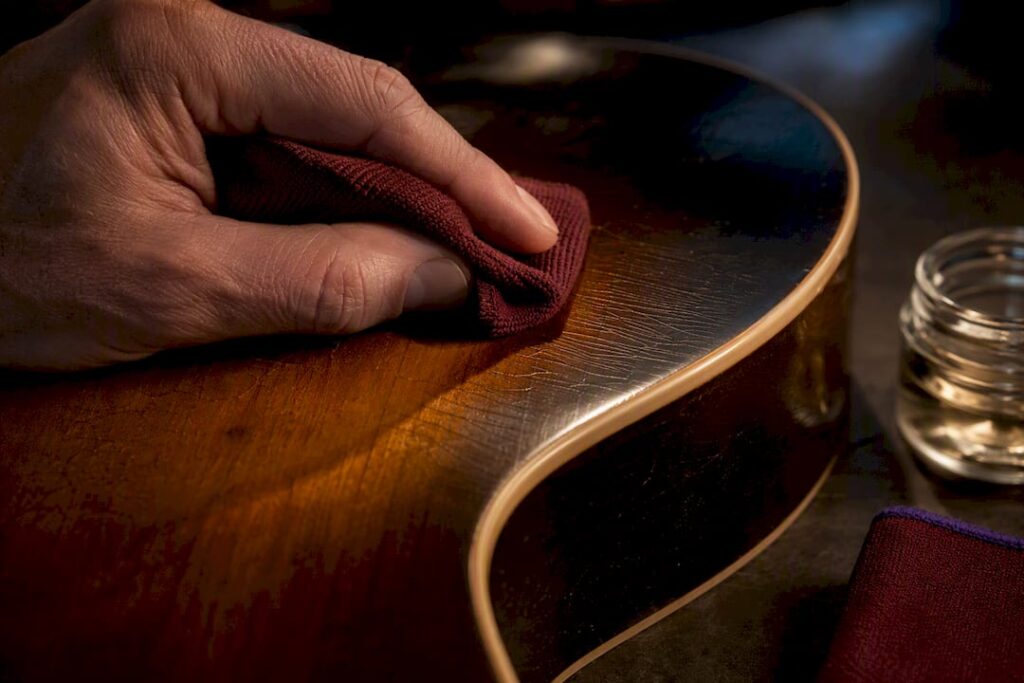

Wipe your guitar down with a soft, dry or barely damp cloth after every session, and never let furniture polish, silicone spray, alcohol, or acetone touch the surface. Shellac is thin, tone friendly, and unforgiving of heat, sweat, and harsh cleaners. Keep it out of direct sun, protect it from belt buckles and zippers, and if the finish looks dull or worn through, take it to a luthier for re-french-polishing rather than reaching for a bottle under the sink.
TL;DR:
- Regularly wipe your shellac-finished guitar with a soft, dry cloth after playing, avoiding any products containing alcohol, acetone, or silicone.
- Do not use abrasive materials like kitchen paper or strong cleaners, as they can damage the delicate, thin shellac layer, which is easily softened by heat and sweat.
- Address stubborn marks with patience, starting with a dry cloth, then a barely moist cloth, and consult a professional for deeper damage or stains beyond light surface dirt.
- Avoid exposing the guitar to direct sunlight, heat sources, or sudden humidity changes to prevent softening, cracking, or discoloration of the finish.
- For significant wear or damage, professional re-french-polishing involves careful cleaning, pore filling, and multiple thin shellac layers, requiring weeks of curing before use.
Table of Contents
- Daily and Weekly Shellack Gitarre Pflege: A Safe Cleaning Routine
- What Damages a Shellac Finish (and Why)
- How Do You Safely Remove Stubborn Marks From Shellac?
- When Does a Guitar Need Professional Re-French-Polishing?
- Storage and Humidity Rules for Shellac-Finished Guitars
- Quick Maintenance Checklist and Overlooked Pro Tips
- Our Take: Small Habits Beat Big Fixes
- Sources
Daily and Weekly Shellack Gitarre Pflege: A Safe Cleaning Routine
Good shellac care isn’t complicated, but it does need to happen consistently. The finish is only microns thick, so every wipe-down is either protecting it or slowly wearing it away.
- Right after you play, run a soft microfiber or cotton cloth over the strings first, then the body, picking up fingerprints and sweat before they sit on the lacquer.
- For dust or light grime, breathe lightly onto the surface to add just enough moisture to loosen it, then wipe with a dry section of cloth. No spray bottles, no cleaning solutions.
- Once a week, check the top and back under good light for sticky or tacky patches, especially near the sound hole and around the forearm rest area.
- If a spot feels stubborn, escalate gently: dry cloth first, then a barely damp cloth, and stop there. Anything that doesn’t lift with those two steps is a job for a luthier, not a stronger cleaner.
A chamois works well too, and it’s gentler than most cotton on a finish this delicate, according to French polish maintenance guidance. Skip kitchen paper entirely. It’s more abrasive than it looks and will dull shellac faster than you’d expect.
What Damages a Shellac Finish (and Why)
Shellac is essentially dried resin dissolved in alcohol, which is exactly why alcohol-based cleaners, acetone, and most solvents will soften or strip it on contact. Silicone polishes are just as risky in a different way: they don’t dissolve the finish outright, but they leave a residue that can trap moisture and interfere with any future touch-up or re-polishing work. Once silicone gets into the pores, a luthier has a much harder time getting a fresh coat of shellac to bond.
Heat and sweat cause a slower kind of damage. Shellac softens at relatively low temperatures, and the salts and acids in skin contact can etch or discolor the surface over months of repeated exposure, per Hanika’s own care sheet.
Watch for these everyday hazards:
- Furniture polish, silicone spray, or “guitar polish” products not specifically labeled safe for shellac
- Alcohol wipes, acetone, or citrus-based cleaners
- Belt buckles, jacket zippers, and rings pressing against the top while playing
- Long sessions in direct sunlight or near a heat vent
A simple leather or cloth barrier under your forearm solves most of the abrasion risk without changing how the guitar feels to play.
How Do You Safely Remove Stubborn Marks From Shellac?
Spot-cleaning shellac calls for patience, not elbow grease. The finish is thin enough that scrubbing harder almost always makes things worse, not better.
- Start completely dry. Most fingerprints, dust films, and light grime come off with a soft cloth and no moisture at all.
- If that doesn’t work, dampen a cloth with distilled water only, wring it out until it’s barely moist, and go over the mark once.
- Stop there. Do not reach for alcohol, acetone, citrus concentrate, or any household furniture cleaner, no matter how tempting.
- If the mark is still visible, photograph the area, note when it appeared, and set the guitar aside rather than trying a third round of cleaning.
Pro Tip: Persistent stains are often not on the surface at all. They can be sweat or oil that has migrated slightly into the shellac itself, which means a stronger cleaner won’t lift it. Only a skilled hand with pumice and fresh shellac can blend that kind of damage back in, as restoration specialists note.
When Does a Guitar Need Professional Re-French-Polishing?
A worn or damaged shellac finish isn’t a DIY repair, and trying to fix it at home almost always creates more surface to repair later. Professional re-french-polishing follows a specific sequence that took the trade centuries to refine.
- The luthier cleans the existing surface and assesses how much of the original finish remains.
- Where the wood grain shows through, pumice gets worked into the pores as a filler, hardening the surface and improving clarity, a technique detailed in French polish restoration work.
- Fresh shellac goes on in many thin coats, applied with a cloth pad rather than a brush or spray gun.
- The final coats get polished out gradually, and the finish needs real curing time before it can handle normal contact again.
Look for these signs that a refresh is overdue: dull or matte patches where the original shine has worn away, a visibly thinned area under the strumming arm, or stains that survived the dry and barely-damp cleaning steps. According to luthier-sourced care guidance, owners should expect to keep the instrument away from direct skin contact and heat for several weeks after a refresh while the new coats fully harden. If you’re weighing a bigger restoration project alongside a re-polish, a classical guitar restoration guide covers what that broader process typically involves.
Storage and Humidity Rules for Shellac-Finished Guitars
Shellac and the wood underneath it both move with temperature and moisture, and sudden swings are what actually cause cracking, not steady conditions at either end of a reasonable range.
- Aim for roughly 45 to 55 percent relative humidity, a target range echoed in general guitar-care guidance, and avoid letting the instrument swing far outside it for long stretches.
- Use a case humidifier in dry winter months or a desiccant pack in humid climates, matched to what your local conditions actually demand.
- Never leave a shellac-finished guitar in a hot car, near a radiator, or in direct sun through a window. The surface can soften well before the wood itself is at risk.
- Keep a soft cloth or thin chamois under your forearm while playing, and consider a removable pickguard or arm protector if you play often and sweat heavily.
Broader handling habits, including transport and long-term storage setup, are covered in this guide to guitar care and storage.
Quick Maintenance Checklist and Overlooked Pro Tips
A 30-second habit after every session prevents most of the damage that eventually sends a guitar to a luthier for a full refresh.
| Step | What to do |
|---|---|
| 1 | Wipe the body with a dry, soft cloth |
| 2 | Wipe down the strings |
| 3 | Check the forearm rest area for residue |
| 4 | Return the guitar to its case |
A few things experienced players learn the hard way: a temporary removable pickguard saves the top from pick scratches without altering the finish permanently, and a soft cloth sleeve inside the case cuts down on incidental rubbing during storage. If you ever do need repair work, photograph any damage before it goes to the shop. It gives the luthier a clear before-and-after reference. When traveling, never check a guitar as luggage, and if you’re moving between very different climates, give the instrument a day or two to acclimate before opening the case fully.
Our Take: Small Habits Beat Big Fixes
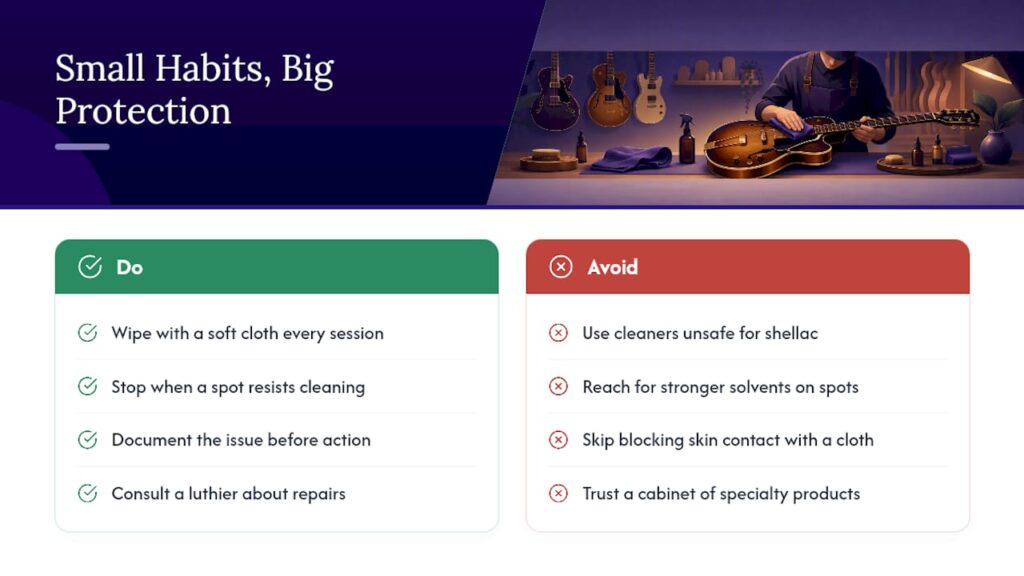
Most of what goes wrong with a shellac finish traces back to one of two things: a cleaner that never should have touched it, or years of skin contact nobody thought to block with a simple cloth. The conventional advice out there tends to overcomplicate this. Owners don’t need a cabinet of specialty products. They need a soft cloth, a habit of using it every time they play, and the discipline to stop before a stubborn mark turns into a bigger problem.
Where we’d push back on common practice is the instinct to “just try something stronger” when a spot won’t lift. That instinct is exactly backward with a finish this thin. The right move is almost always to stop, document it, and let a luthier decide whether pumice and fresh shellac can blend it back in. If you’re shopping for an instrument that has already been cared for this way, or want a sense of what well-maintained French-polished guitars are worth over time, browsing Vintage Guitar World’s curated selection is a good place to see the difference proper upkeep makes.
— Vintage
Sources
- Information für Hanika-Gitarren mit Schellack auf der Decke
- Maintenance and repair (French polish) — RestorationMusic
- Care and maintenance guide for a French polished guitar – David Duyos