













For a high-value guitar, pay by credit card or PayPal rather than direct bank transfer, since both give you a formal dispute path if the instrument never arrives or turns out misrepresented. Reserve bank transfers or escrow only for private sellers you have vetted through provenance documents and a trusted intermediary. A specialist dealer with authentication and insured shipping removes most of that risk before payment even happens.
TL;DR:
- Using credit cards or PayPal provides better protection and dispute options compared to bank transfers or escrow, especially for private sellers.
- Confirm shipping is insured for the full replacement value and photograph the guitar immediately upon arrival, documenting any damage or anomalies.
- Verify the seller’s provenance through serial numbers and condition reports before payment to reduce the risk of misrepresentation or fraud.
- Avoid direct bank transfers to unknown sellers, as they offer little recourse if the transaction goes wrong, and consider escrow services for high-value private deals.
- Review financing terms carefully, including APR, loan duration, and return policies, before committing to installment plans or credit offers.
Table of Contents
- Teure Gitarre Online Bezahlen: Which Payment Method Actually Protects You?
- Financing and Installments: What to Check Before You Sign
- Escrow and Conditional Release for Private or Risky Deals
- What Happens If You Need to Dispute the Payment?
- A Practical Checklist to Reduce Fraud and Disputes
- How Shipping and Insurance Timing Affect Your Payment Protection
- Vintage-guitar-world’s Approach to Reducing Payment Risk
- Why Provenance Matters as Much as the Payment Method
- Buy With Confidence: Services That Make Payment Safer
- Where to Verify Buyer Protection and Financing Terms
- Sources
Teure Gitarre Online Bezahlen: Which Payment Method Actually Protects You?
Every payment method carries a different risk profile once real money is on the table for a vintage Martin or a rare Gibson Les Paul. The method you choose determines whether you have any leverage if the guitar shows up damaged, doesn’t match the listing, or never ships at all.
Card payments give you the strongest built-in remedy. If a seller misrepresents the instrument or fails to deliver, your bank can initiate a chargeback, though you’ll need documentation such as the original listing, photos, and any messages with the seller. Expect a processing fee baked into the price on many sites, usually absorbed by the merchant rather than charged separately to you.
PayPal offers buyer protection for items not received or significantly not as described, but only within its stated dispute windows and only with proof. Document everything the moment something looks wrong. Delegated checkout options such as Payments with Amazon work similarly, letting you pay without handing card details to an unfamiliar merchant while adding another layer of protection on top.
Bank transfers move fast and cheap, but once the money lands, it’s effectively final with limited recourse if the deal goes wrong. Reserve transfers for sellers you have already verified.
Buy now, pay later services like Klarna run identity and credit checks and disclose an APR up front. Installments make sense for a five-figure instrument you can’t pay outright, but not as a substitute for verifying the seller first.
- Trusted specialist dealer: card or PayPal
- Private seller with good provenance: PayPal or escrow
- Unknown private seller: escrow only, never a direct transfer
Financing and Installments: What to Check Before You Sign
Financing can stretch your budget for a serious instrument, but the terms vary sharply between a dealer’s in-house plan, a third-party point-of-sale lender, and a standard personal loan from your bank. Taylor Guitars, for example, lists promotional 0% APR offers through third-party lenders on select purchases, though approval depends on your credit and the promotional window has strict conditions.
Before signing anything, verify:
- The actual APR after any promotional period ends, not just the headline rate.
- The full loan duration and monthly payment, including what happens if you pay it off early.
- The down payment required and whether it’s refundable if the deal falls through.
- Late-payment penalties and whether missing one payment cancels a 0% offer retroactively.
- How the guitar’s warranty and your return rights are handled while financing is still active, since some lenders restrict returns during the term.
Read the lender’s contract before you read the guitar’s spec sheet. A stunning quilted-maple top means nothing if the financing terms trap you.
Escrow and Conditional Release for Private or Risky Deals
Escrow makes sense whenever you’re buying from a private seller, a marketplace with no built-in guarantee, or anyone whose reputation you can’t independently confirm. A third-party escrow service holds your payment until you (or an agreed inspector) confirm the guitar matches the listing, then releases funds to the seller.
To set one up:
- Agree on a licensed escrow provider or platform-backed intermediary before any money moves, never one the seller alone suggests.
- Confirm the release terms in writing: what condition triggers payment release, and what happens if the guitar fails inspection.
- Set a clear inspection window, ideally with a testing appointment or independent authentication built in.
Treat a direct SEPA transfer to an unfamiliar account with real suspicion, especially if the seller pressures you to skip verification or rushes the timeline. That pressure is the biggest red flag in high-value private sales.
What Happens If You Need to Dispute the Payment?
Card networks typically give you a defined window to file a chargeback with evidence: photos, listing text, shipping records, and any seller correspondence. PayPal’s process runs on a similar logic, covering items not received or significantly misrepresented, but only if you open the case within its stated deadline and can back the claim with proof.
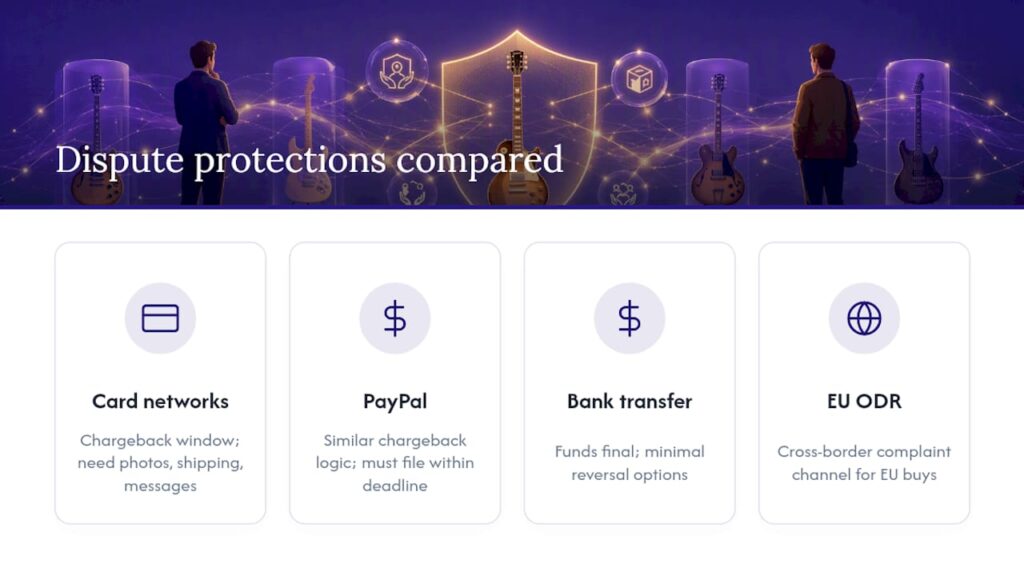
Bank transfers offer the thinnest protection of any method here. Once funds clear, your bank has almost no leverage to reverse the payment, so your realistic options narrow to negotiating directly with the seller, filing a police report for suspected fraud, or escalating through consumer channels.
For cross-border EU purchases, the Online Dispute Resolution platform run by the European Commission gives consumers a formal channel to file complaints against sellers based in another EU country, which is worth bookmarking before you buy, not after.
A Practical Checklist to Reduce Fraud and Disputes
A little friction before you pay saves a lot of stress after.
- Ask for the serial number, provenance history, and detailed condition photos before sending any money.
- Choose a payment method that leaves a paper trail, card or PayPal, over an anonymous bank transfer whenever you have the option.
- Insure the shipment for full replacement value and confirm tracking before the guitar leaves the seller’s hands.
- Keep every invoice, message, and authentication report in one folder from day one, not scattered across email threads.
Pro Tip: Photograph the guitar’s serial number and any repair stamps yourself the day it arrives, timestamped, before you even open the case fully. That single habit has settled more authenticity disputes than any invoice ever will.
How Shipping and Insurance Timing Affect Your Payment Protection
Pay in full only when the shipment carries proper insurance and a tracked carrier, or arrange escrow with an inspection window if you’re not fully confident in the seller. Cash on delivery sounds safer for high-value items, but many carriers cap COD liability well below what a rare instrument is worth, so it rarely covers your actual exposure.
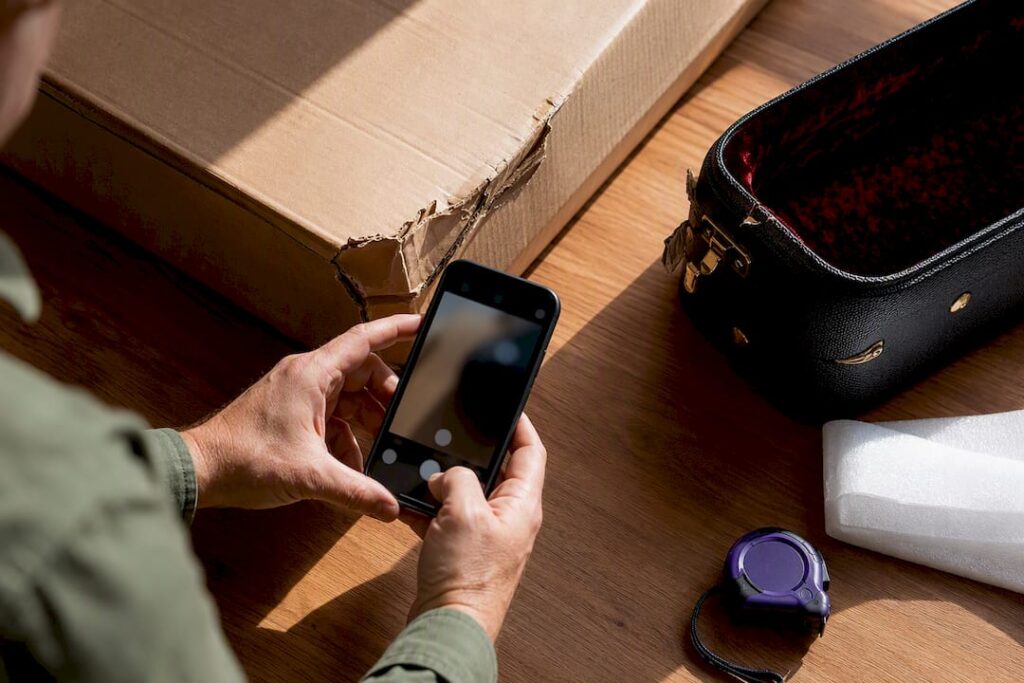
Request insurance for full replacement value, not just the declared shipping value, and confirm who is buying the policy, buyer or seller, before the guitar ships. If it arrives damaged, photograph the packaging and instrument immediately, before you even finish unboxing, then file claims with the carrier and your payment provider the same day. Waiting even a week can weaken your case.
Vintage-guitar-world’s Approach to Reducing Payment Risk
A specialist dealer removes most of the guesswork described above. Some specialist dealers follow a clear sequence: request authentication and condition documentation first, complete payment through a secure checkout, receive the instrument through insured shipping with full tracking, then book a testing appointment to confirm everything matches before you consider the sale final.
That sequence exists because provenance and payment protection solve two different problems. Valuation and certification services confirm what you’re buying is genuine and correctly priced. Insured shipping and documented condition reports protect you if something goes wrong in transit. Together, they close most of the gaps a private sale or unverified listing leaves open.
Why Provenance Matters as Much as the Payment Method
Provenance and protected payment channels solve the same underlying problem from different angles: reducing the chance you end up with a guitar that isn’t what it was sold as. Some sellers treat serial-number verification, condition documentation, and secure checkout as one continuous process rather than separate steps, because a buyer with airtight paperwork rarely needs a dispute in the first place. Sellers benefit too. A well-documented instrument sells faster and at a fairer price than one with gaps in its history. If you’re weighing a purchase or want a second opinion on an instrument’s authenticity, consider reaching out to a specialist team before you send any money, not after.
— Vintage
Buy With Confidence: Services That Make Payment Safer
Some specialist platforms exist to remove the guesswork from buying a high-value instrument, not just to sell guitars. Offerings can include options to request authentication before committing, insured shipping, and a testing appointment to confirm the instrument in person or on arrival.

That combination matters more than which payment button you click. A card payment or PayPal transaction only protects you if you can prove the item wasn’t as described, and provenance documentation is what makes that proof possible in the first place. Valuation and certification services, along with financing options on select instruments, can be built around the principle of buyer protection rather than around closing a sale quickly.
If you’re ready to look seriously, browse the current collection of vintage guitars or start with a guitar appraisal checklist to know exactly what to verify before you pay.
Where to Verify Buyer Protection and Financing Terms
For the policy details that matter once money is moving, go straight to the source rather than a summary.
- The EU ODR platform handles cross-border consumer disputes within the EU.
- Payments with Amazon outlines how delegated checkout and its buyer guarantees work.
- Taylor Guitars publishes financing terms as an example of manufacturer point-of-sale credit, including promotional APR conditions.