













Yes, you can schedule an in-person guitar trial appointment in Germany, and you don’t have to settle for a rushed five-minute strum in a crowded showroom. Vintage Guitar World offers testing appointments by arrangement for buyers who want real time with a vintage or handcrafted instrument before committing. The steps below cover exactly how to book one, what to bring, and what a proper session should include.
TL;DR:
- Booking an in-person guitar trial in Germany requires specific details, including instrument model, preferred times, and condition reports, to ensure proper preparation.
- It is essential to bring identification, personal playing accessories, and a setlist of songs to maintain focus during the session.
- Typical trials last 30 to 60 minutes and may involve small fees or deposits, especially for high-value or collectible instruments.
- Asking about the guitar’s service history, original parts, provenance, and matching certification is crucial for verifying authenticity before purchase.
- Testing at Vintage Guitar World involves scheduled appointments with documentation, detailed condition reports, and technician support, emphasizing the importance of proper in-person verification.
Table of Contents
- How Do You Book a Guitar Test Appointment?
- What Should You Bring and Decide Before You Go?
- What Happens During the Appointment, and What Does It Cost?
- What Should You Ask During Your Trial?
- Why Book Your Test Appointment Through Vintage Guitar World
- The Trial Appointment Nobody Talks About Enough
- Book Your Vintage Guitar World Trial Appointment
- Sources
How Do You Book a Guitar Test Appointment?
Booking a real Anspieltermin, an in-person trial appointment, is less about luck and more about providing the seller with enough information to prepare the right instrument and the right room. Most reputable sellers in Germany, including small luthiers and specialist retailers, run appointment-only testing for anything beyond a casual walk-in strum.
Here’s the process that actually works:
- Find the contact channel. Look for a booking form, dedicated email address, or phone number on the seller’s site. Vintage Guitar World lists its appointment process and what buyers can expect directly on its site, similar to how independent luthiers such as Zander Gitarren invite buyers to arrange a viewing by phone or email.
- Name the exact instrument. State the model, year, or listing number you want to try. Vague requests slow everything down.
- Propose two or three time windows. Sellers juggle multiple requests, so flexibility gets you a faster confirmation.
- Ask about loaner instruments and room access. If you want to compare your own guitar against the one you’re testing, mention it upfront.
- Request condition reports or certificates in advance. For a collectible piece, reading the documentation before you arrive saves time during the actual session.
Your booking request should include:
- Instrument name, model number, or listing reference
- Two or three preferred dates and times
- A working phone number and email
- Whether you need a private room or extended time for a high-value piece
- Any request for prior condition reports, provenance notes, or certification paperwork
Confirmation usually comes within one or two business days. Smaller studios that coordinate through an office contact form, like Gitarrenstudios Bonn, often reply faster than larger retailers simply because fewer people are handling the inbox.
What Should You Bring and Decide Before You Go?
A trial appointment goes better when you’ve already made a few decisions instead of figuring them out in the room. Walking in without a plan means you’ll remember the guitar’s finish and forget whether the neck actually suited your hand.
Pack these before you leave the house:
- Photo ID (many sellers ask for it before handling a high-value instrument)
- Your preferred payment method, in case you decide on the spot
- Your own strap and picks, so the feel matches what you’d use at home
- A short setlist, three or four songs that stretch across chords, single-note runs, and dynamics
Decide your priorities ahead of time. Are you testing for playability, neck profile, tone, pickup output, or overall condition? Ranking these before you arrive keeps the session focused instead of scattered.
If you’re plugging into an amp, play the same songs and the same settings on every guitar you compare. Switching amps or changing your picking style between instruments makes tone comparisons meaningless.
Pro Tip: Ask the technician if they can make a minor setup adjustment, like tweaking the action or intonation, while you wait. Seeing how a guitar responds to a small adjustment tells you a lot about its potential final condition after a proper setup.
What Happens During the Appointment, and What Does It Cost?
A standard trial runs 30 to 60 minutes. Vintage or collector-grade instruments often get more, since verifying condition and provenance takes longer than plugging in and playing a few riffs.
Cost patterns vary by type of seller:
- Many guitar schools in Germany offer free 45-minute trial lessons for beginner signups, but these are lesson trials, not instrument evaluations.
- Specialist appointments for vintage, rare, or handcrafted guitars sometimes carry a small deposit, particularly when the seller reserves a private room or brings in a technician.
- Loaner instruments are common at studios and larger retailers for comparison purposes, though high-value collectible guitars usually stay under supervised handling rather than leaving the premises.
On cancellations, the pattern across German guitar schools and studios is consistent: give notice well in advance if you need to reschedule or cancel. Some smaller makers explicitly ask for early notice so they can offer the slot to someone else. Late cancellations can forfeit a deposit where one was required, so confirm the seller’s specific policy when you book.
What Should You Ask During Your Trial?
A good Anspieltermin isn’t just about strumming a few chords. It’s your chance to interrogate the instrument’s history and condition before money changes hands.
Ask these questions in order:
- What’s the service history? Has the guitar been re-fretted, refinished, or had structural repairs?
- Are the parts original? Tuners, pickups, bridge, and nut all matter for both tone and collectible value.
- Is there provenance documentation? Previous ownership records add real value for a vintage piece.
- Does the certification match the instrument? Cross-check serial numbers and any certification paperwork against the physical guitar.
While you play, check the action height, fret wear, neck straightness, and, on electrics, whether every pickup position and control works cleanly. If everything checks out, ask about next steps: purchase logistics, insured shipping, or a formal valuation if you want documentation before you buy.
Why Book Your Test Appointment Through Vintage Guitar World
Vintage Guitar World runs its business around curated vintage, restored, and handcrafted instruments, and appointment-based testing is built into how it sells them. That’s a different model from a general music retailer trying to move volume inventory.
Here’s what that looks like in practice:
- Curated inventory of classical, flamenco, acoustic, and electric instruments, each with a documented history
- Testing appointments arranged directly with the seller, not through a call center
- Condition reports and certification available before or during the trial
- Insured shipping and technician-supervised handling for fragile or high-value pieces during in-person sessions
A collectible instrument’s value depends as much on documented history and condition as it does on tone. Testing it in person, with the right paperwork in hand, is the only way to confirm both before you buy.
Vintage Guitar World’s own page on testing appointments walks through what buyers can expect once a session is booked, and its valuation and certification services give collectors a paper trail that follows the instrument after the sale.
The Trial Appointment Nobody Talks About Enough
Most advice about testing a guitar before buying focuses on the guitar itself, chords, tone, action, neck feel. What gets skipped is the appointment structure around it, and that’s the part that actually protects you. A rushed ten-minute strum in a busy showroom tells you almost nothing about a vintage instrument’s real condition or provenance.
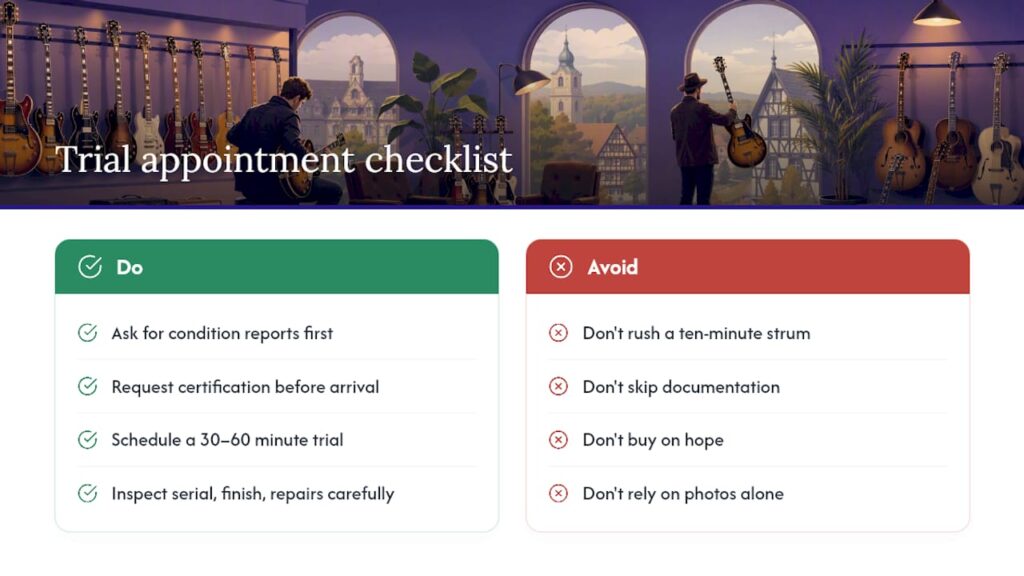
The conventional wisdom treats trial appointments as a formality before the “real” decision, the purchase. That’s backwards. The trial is where you catch a mismatched serial number, an undisclosed refinish, or a neck that doesn’t suit your hand at all. Skip it or rush it, and you’re buying on hope.
Prioritize documentation first, not last. Ask for condition reports and certification before you show up, not after you’ve already fallen for the instrument’s finish. A guitar that photographs well can still hide a poorly executed repair, and no amount of enthusiasm in the room changes that.
— Vintage
Book Your Vintage Guitar World Trial Appointment
Booking a trial with Vintage Guitar World starts the same way any serious instrument purchase should: with a clear conversation about what you want to try and when. Reach out through the Vintage Guitar World site, name the instrument or category you’re interested in, whether it’s a handcrafted classical guitar or a rare vintage electric, and propose a few dates that work for you.

A typical appointment includes dedicated time with the instrument, access to condition reports, and a technician available to answer questions about repairs, originality, or setup. If a deposit applies for a high-value piece, you’ll know before you arrive, not after. Bring photo ID, get there a few minutes early, and confirm parking or entry details when you book so nothing slows down your session.
Every instrument sold through Vintage Guitar World comes with the option of proper valuation and certification, so what you play in the room matches what you own on paper. That’s the whole point of testing in person instead of buying on faith from a listing photo.
Sources
- Probestunde — The Guitar School
- Gitarrenstudios Bonn — Information on trial lessons and loan instruments
- ZANDER Gitarren | Die Modelle