












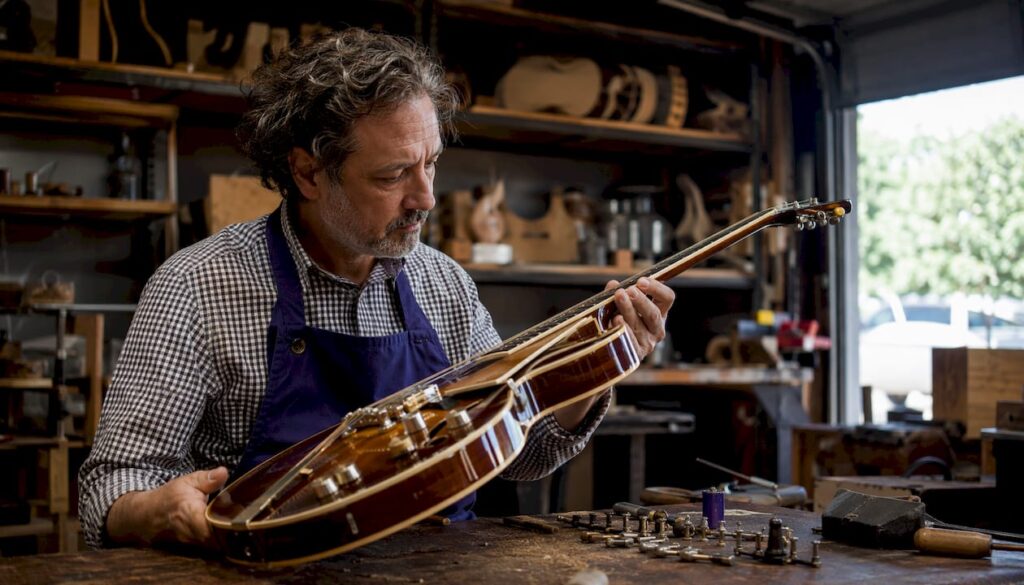

Guitar experts diagnose build quality, authenticate provenance, and translate those findings into condition grades and market value — which saves buyers real money and eliminates the risk of purchasing a misrepresented instrument. Vintage-guitar-world pairs that specialist evaluation with testing appointments, certified appraisals, and a curated inventory of vintage and handcrafted guitars, a model that master builder Paul Reed Smith’s philosophy supports: trust expertise for the structural facts, then trust your own ears for the final call.
- What expert evaluation delivers: reduced purchase risk, accurate pricing, written condition reports, and certification that protects resale value
- Services to expect: in-person or remote appraisal, playability testing, provenance research, condition grading, and restoration consultation
Table of Contents
- What do experts actually check when evaluating a guitar?
- How experts authenticate provenance and detect modifications
- How experts convert condition and provenance into market value
- What happens during an expert testing or appraisal appointment?
- When should you follow expert advice, and when should you trust your ears?
- Red flags to watch for and 10 questions to ask before you buy
- How expert services change value and saleability
- Key Takeaways
- Why specialist expertise matters more than general guitar knowledge
- Vintage-guitar-world: expert selection and certification, start to finish
- Useful sources and further reading
What do experts actually check when evaluating a guitar?
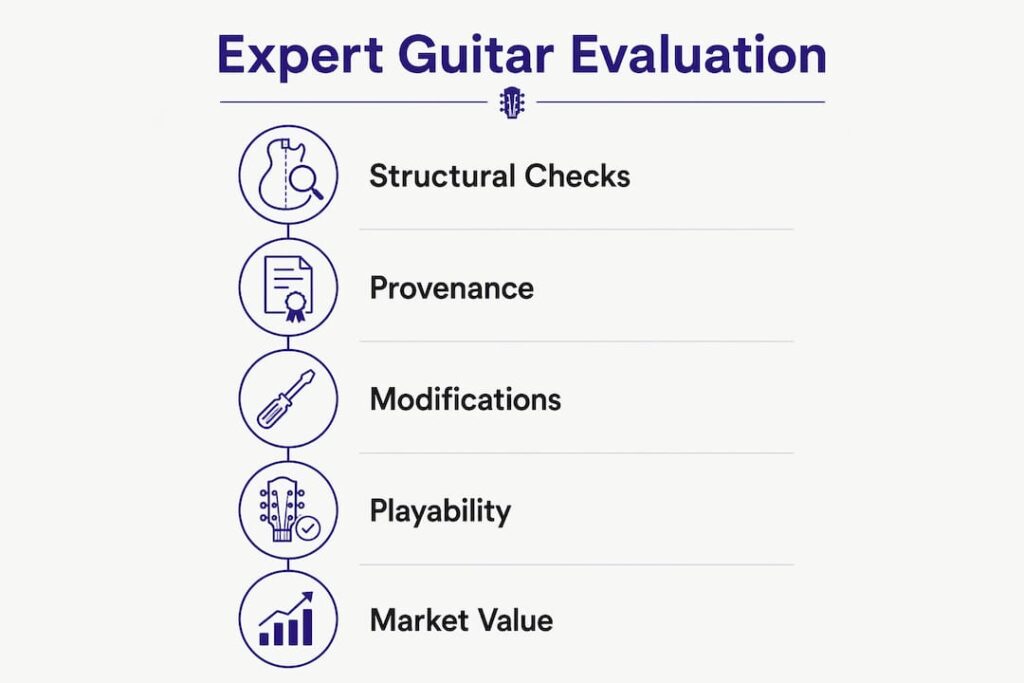
The physical inspection is where expert value is most concrete. A trained evaluator works through a systematic checklist that most buyers would never think to run, and each item on that list has a direct effect on playability or price.
- Neck relief: A bow or back-bow can make a guitar genuinely difficult or impossible to play for some players; a professional can correct it when the underlying construction is sound.
- Fret condition and level: Worn, uneven, or lifted frets cause buzzing and intonation problems; severe wear means a refret, which costs money and, on a vintage instrument, can affect originality.
- Tuning machines: Poor-quality or worn tuners cause tuning instability; experts check gear ratio, shaft play, and whether machines are original to the period.
- Action height: String height at the 12th fret should generally stay under 4–5 mm; above that, playability suffers and a setup is needed.
- Bridge and saddle wear: Cracked bridges or worn saddles affect intonation and structural integrity.
- Top, back, and side cracks: Even hairline cracks signal stress history; open separations require immediate repair.
- Internal braces and glue lines: Loose braces reduce resonance and structural integrity. A guitar with a loose brace may sound dead in one register and may require costly internal work.
A skilled luthier can fix intonation and most setup issues when the core construction is sound. The distinction matters: a high-action guitar that needs a setup is a minor cost; a cracked brace or separated top joint is a restoration project that changes the instrument’s collectible status.
Pro Tip: Before calling an expert, run three quick checks yourself: sight down the neck from the headstock for obvious bow, press a string at the first and last fret simultaneously and check the gap at the 7th fret for relief, and tap the top lightly near the bridge to listen for any dead or rattling response that suggests a loose brace.
How experts authenticate provenance and detect modifications
Authentication is where the gap between a generalist and a specialist becomes most expensive for buyers. Experts identify vintage guitars by cross-referencing multiple evidence streams simultaneously, not just reading a label.
Provenance signals experts examine:
- Original interior labels with period-correct fonts, adhesive aging, and placement
- Serial numbers matched against maker records and production databases
- Hardware stamps, pot codes (on electrics), and tuner patent dates
- Finish aging patterns — checking whether checking, yellowing, and wear are consistent with the claimed era
- Sales records, case candy, and previous appraisal documentation
- Documented repair or restoration history
Red flags that indicate modification or misrepresentation include non-original pickups installed without disclosure, refretting that removed a maker’s signature on the fretboard, replaced necks with mismatched serial stamps, and refinishes that obscure original finish aging. Experts detect these by comparing finish thickness under UV light, checking neck pocket fit tolerances, and examining hardware screw holes for evidence of replacement.
Provenance directly affects insurance appraisals and resale liquidity. A guitar with complete, verified documentation commands stronger buyer confidence and a tighter price spread at auction.
How experts convert condition and provenance into market value
Valuation is not guesswork. Experts apply a structured condition grading scale — mint, excellent, good, fair, poor — and document the specific deductions that move an instrument down the scale. That written grade then anchors a market-range estimate built from comparable sales.
The guitar appraisal process draws on recent auction results, private sale records, and dealer transaction data to establish what comparable instruments actually sold for, not what sellers are asking. Rarity, player or artist association, material scarcity (Brazilian rosewood, for example), and era desirability all shift that range up or down.
Condition and originality are the two variables that move value most. A vintage acoustic with all original parts and a documented ownership chain can command a meaningfully higher price than an otherwise identical example with a replaced bridge or undisclosed refret — even when both play equally well.
Market forces experts track include era-specific demand cycles, the effect of high-profile artist associations, and the growing premium on instruments with conservation-grade restoration versus full cosmetic refinishing. A guitar’s valuation supported by certification also improves insurance coverage accuracy, which matters for serious collectors.
What happens during an expert testing or appraisal appointment?
Knowing what to expect removes the anxiety from the process. A standard appraisal follows a clear sequence:
- Intake and documentation review — you provide the instrument, any original case candy, prior appraisals, and purchase records.
- Visual examination — the expert photographs and documents every cosmetic and structural detail under multiple light sources.
- Playability testing — the guitar is played through its full range; the expert checks intonation at multiple fret positions, string-to-string balance, and resonance characteristics.
- Measurements — neck relief, action height, nut slot depth, and fret height are recorded with precision tools.
- Provenance research — serial numbers, hardware, and finish are cross-referenced against maker records and comparable examples.
- Report drafting — findings are compiled into a written condition report with photos, a condition grade, a valuation range, and certification if applicable.
A basic playability assessment typically takes one to two hours. A comprehensive provenance appraisal for a rare or high-value instrument can take several days when maker records require research. Fees vary by scope; always confirm what the deliverable includes before booking. The acoustic guitar testing guide at Vintage-guitar-world walks through the specific tests performed at each stage.
Pro Tip: Arrive with the guitar in its original case, all original hardware and documentation, and any photos from previous owners. Every piece of supporting material shortens research time and can reduce your appraisal fee.
When should you follow expert advice, and when should you trust your ears?
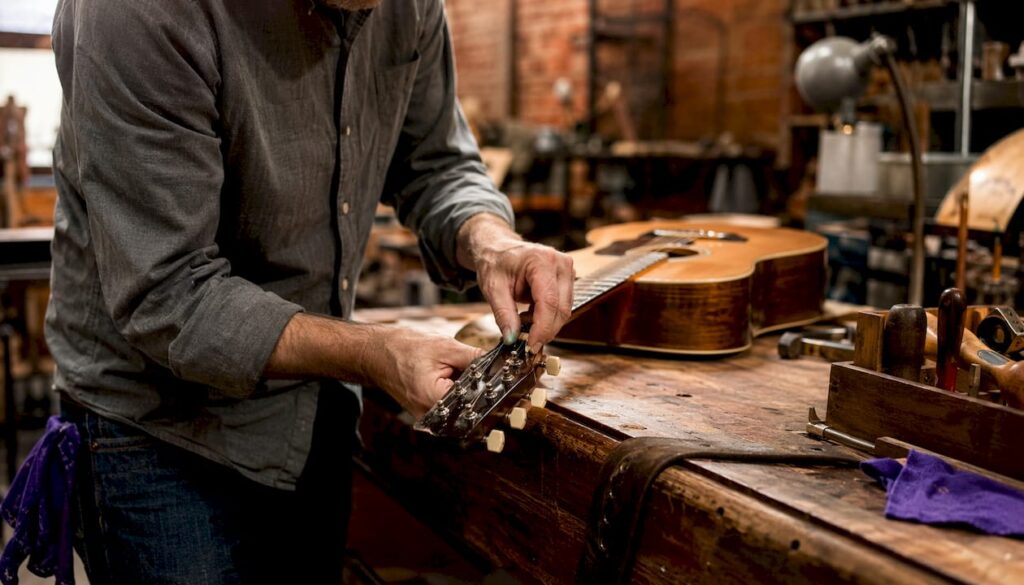
The clearest rule: rely on experts for anything structural, legal, or financial. Rely on your own hands and ears for everything personal.
An expert tells you whether a guitar is safe to play, accurately priced, and honestly represented. No expert can tell you whether a particular neck profile fits your hand or whether a guitar’s voice moves you. Those are yours to decide, and they matter just as much.
“Trust your ears and instincts — in-person testing reveals characteristics that reviews and photos simply cannot.”
— Paul Reed Smith, Premier Guitar
A practical decision rule: if the question involves structural integrity, authenticity, or resale value, the expert’s written findings govern. If the question is about tone, resonance, neck feel, or personal connection, play the guitar and decide for yourself. When expert findings and personal preference conflict — say, an expert flags a repaired crack that doesn’t affect playability — document the finding, factor it into your price negotiation, and make the call with full information.
Red flags to watch for and 10 questions to ask before you buy
Red flags that lower value or signal misrepresentation:
- Hidden repairs covered by touch-up paint or new finish
- Non-original or period-incorrect necks
- Replaced tops or back panels without disclosure
- Mismatched serial numbers between body, neck, and headstock
- Loose or rattling internal braces
- Active wood rot or evidence of insect damage
- Significant fretboard loss or deeply worn frets on an instrument claimed as “excellent”
10 questions to ask your expert before completing a purchase:
- Can you confirm the age and serial number against maker records?
- Are there any documented or visible repairs I should know about?
- Is there a provenance record — prior ownership, sales receipts, or prior appraisals?
- What condition grade do you assign, and what specific deductions apply?
- What is the current market value range for this instrument in this condition?
- Are any restoration or setup services recommended before playing or resale?
- What would those services cost, and which are urgent versus optional?
- Can you provide written certification, and what does it cover?
- What is the process if I disagree with the appraisal findings?
- How should I store and transport this instrument to protect its condition?
How expert services change value and saleability
Not every service adds value equally. The table below maps typical expert services against their cost level and likely effect on a vintage or handcrafted instrument’s price and saleability.
| Service | Cost level | Effect on playability | Effect on collectible value |
|---|---|---|---|
| Basic setup (action, intonation, tuning) | Low | High improvement | Neutral to positive |
| Condition certification / written appraisal | Low–medium | None | Positive — improves buyer confidence and liquidity |
| Conservative conservation (stabilize cracks, re-glue braces) | Medium | Moderate improvement | Positive when documented |
| Full cosmetic restoration (refinish, replace hardware) | High | Variable | Often negative — reduces originality |
| Provenance research and documentation | Medium | None | Strongly positive for rare instruments |
The process flow is straightforward: assessment, written estimate, buyer approval, work performed, final report with before-and-after documentation. Skipping the approval step is where buyers get surprised by costs. Always get the estimate in writing before authorizing any work.
Certification consistently improves buyer confidence and shortens time-to-sale. Full cosmetic restoration is the one service that frequently reduces long-term investment value by erasing original finish and hardware — the very features collectors pay a premium for.
Key Takeaways
Expert evaluation is the single most reliable way to reduce risk, establish accurate value, and protect long-term investment in vintage, rare, and handcrafted guitars.
| Point | Details |
|---|---|
| Structural checks come first | Neck relief, fret condition, braces, and action determine playability and set the baseline for any valuation. |
| Provenance drives price | Original parts, matching serials, and documented ownership history directly increase market value and insurance accuracy. |
| Certification improves liquidity | A written appraisal and condition grade shorten time-to-sale and support stronger resale prices. |
| Restoration can cut collectible value | Full cosmetic refinishing often reduces originality premiums — conservative conservation is usually the safer investment choice. |
| Vintage-guitar-world offers the full service chain | Testing appointments, written appraisals, condition certification, and a curated inventory make it a single destination for serious collectors. |
Why specialist expertise matters more than general guitar knowledge
At Vintage-guitar-world, the evaluation approach is built specifically for vintage, rare, and handcrafted instruments — not adapted from general retail practice. Specialists in this category typically combine luthier training with deep knowledge of maker histories, period-correct hardware, and auction market data. Staying current means tracking recent comparable sales, following maker-specific research published in the collector community, and maintaining hands-on familiarity with instruments across multiple eras and traditions.
The services Vintage-guitar-world provides — testing appointments, valuation, certification, and restoration consultation — exist because general guitar knowledge is not enough when the instrument in question is a 1960s flamenco guitar or a pre-war acoustic with a disputed attribution. Specialist credentials and ongoing market engagement are what separate a useful appraisal from an educated guess.
Vintage-guitar-world: expert selection and certification, start to finish
Collectors who want expert guidance without assembling a team of separate specialists get everything in one place at Vintage-guitar-world: a curated inventory of vintage and handcrafted guitars, in-person testing appointments, written appraisals with condition grades and valuation ranges, and certification that travels with the instrument through every future sale.

The process takes three steps: contact Vintage-guitar-world with details or photos of the instrument, arrange an in-person inspection or submit documentation for remote review, then receive a written report with condition grade, valuation range, and certification. Turnaround for a standard appraisal is typically a few business days; comprehensive provenance research on a rare instrument takes longer, and fees reflect the scope of work. Ready to get a certified appraisal or browse the current inventory? Visit the Vintage-guitar-world shop to start.
Useful sources and further reading
- Guide to Buying Your First Guitar — School of Rock: covers neck relief and basic playability checks
- How to Choose Your First Guitar — Yamaha: luthier setup advice and intonation basics
- What to Look for When Buying a Guitar — JustinGuitar: action measurement and hands-on buyer checklist
- Paul Reed Smith on Buying Guitars, Amps, and Pedals — Premier Guitar: master builder perspective on trusting your ears
- Buying Your First Guitar — London Guitar Academy: expert and teacher recommendation framework
- How to Test Acoustic Guitars: Expert Guide — Vintage-guitar-world: step-by-step testing methodology for collectors
- Guitar Appraisal Explained — Vintage-guitar-world: appraisal deliverables and certification process
- How to Identify Vintage Guitars — Vintage-guitar-world: provenance and authenticity identification guide
Use these resources to verify the procedures described in this article, compare buyer checklists, and locate qualified appraisers or luthiers in your area.