













TL;DR:
- A structured workflow for auditioning guitars helps evaluate instruments based on physical condition, sound, and provenance before purchase. It involves tools like feeler gauges, recording equipment, and environmental checks to ensure accurate assessment and avoid costly mistakes. Verifying details through recordings and documentation ensures a well-informed and confident buying decision.
A workflow for auditioning guitars is a systematic process that lets you evaluate instruments against your playing style, tonal preferences, and structural requirements before committing to a purchase. Most guitarists skip this structure and rely on gut feeling alone. That approach leads to buyer’s remorse, missed defects, and instruments that sound great in the shop but disappoint at home. A structured guitar audition process, grounded in both sonic evaluation and physical inspection, changes that outcome entirely.
What tools and preparations do you need before starting the workflow for auditioning guitars?
Preparation determines the quality of every evaluation that follows. Walking into a guitar audition without the right tools is like a mechanic showing up without a wrench.
Physical inspection tools
Bring an inspection light and a set of feeler gauges to every audition session. Feeler gauges detect neck bowing, fret wear, and hardware originality that your eyes alone will miss. A small flashlight reveals finish cracks, hidden repairs, and binding separation inside the body cavity. These tools cost very little and prevent very expensive mistakes.
Recording and signal chain setup
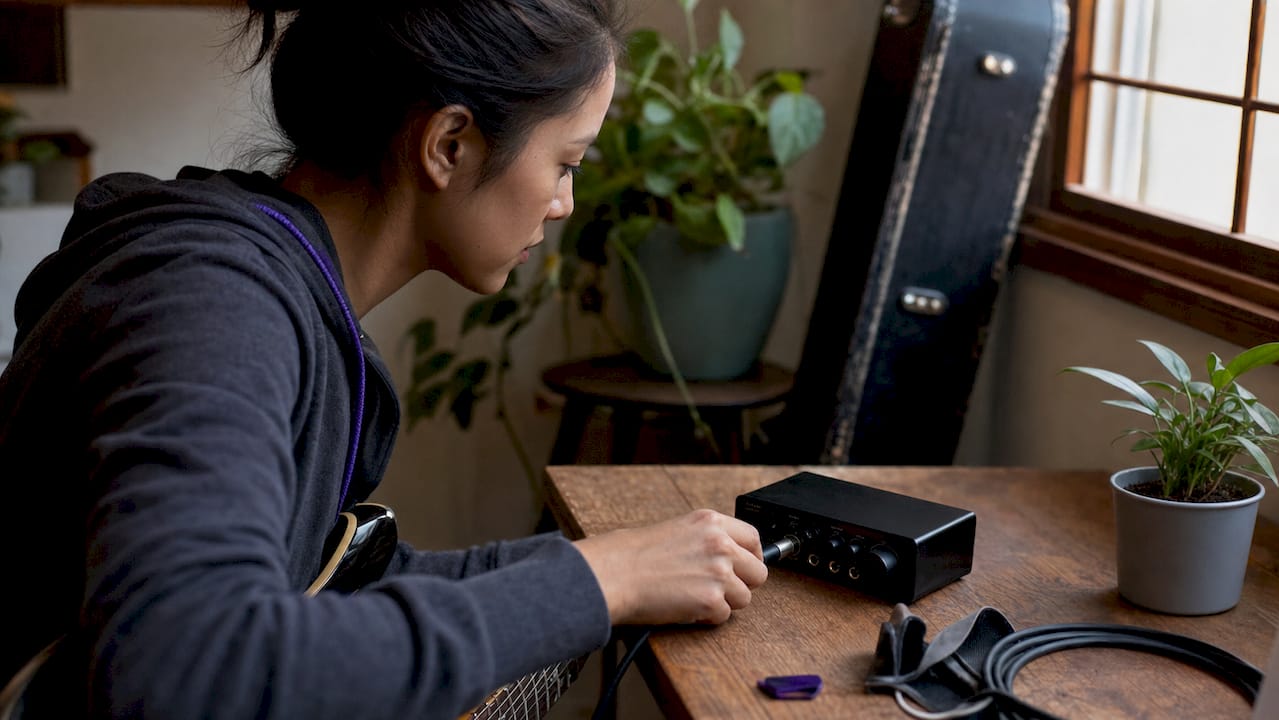
Bring a portable audio interface and a laptop loaded with amp simulation software. DI recording with amp sims lets you capture a clean, uncolored signal from the guitar and shape the tone later. This approach removes the variable of the shop’s amplifier from your evaluation. You hear the guitar, not the room.
Pro Tip: Set your DAW buffer to 128 samples or less during DI testing. Higher buffer settings introduce latency that distorts your sense of the guitar’s playability and feel.
Environmental and documentation checklist
| Preparation Item | Why It Matters |
|---|---|
| Inspection light and feeler gauges | Detects structural defects invisible to the naked eye |
| Portable audio interface | Captures clean DI signal for post-session tone analysis |
| Amp simulation software | Removes room and amp variables from tone evaluation |
| Humidity and temperature check | Confirms the environment won’t skew playability readings |
| Provenance documents | Verifies authenticity and supports accurate valuation |
| Prepared test pieces | Ensures consistent, repeatable playing across all guitars |
Professional audition contexts often require players to prepare 2–3 musical selections in advance. The same logic applies here. Preparing two or three short pieces covering different techniques, such as fingerpicking, chord strumming, and single-note runs, gives you a consistent benchmark across every instrument you test.
How do you execute the step-by-step guitar audition process?
The guitar selection workflow runs in two parallel tracks: visual and structural assessment, then sonic evaluation. Running them separately keeps your focus sharp.
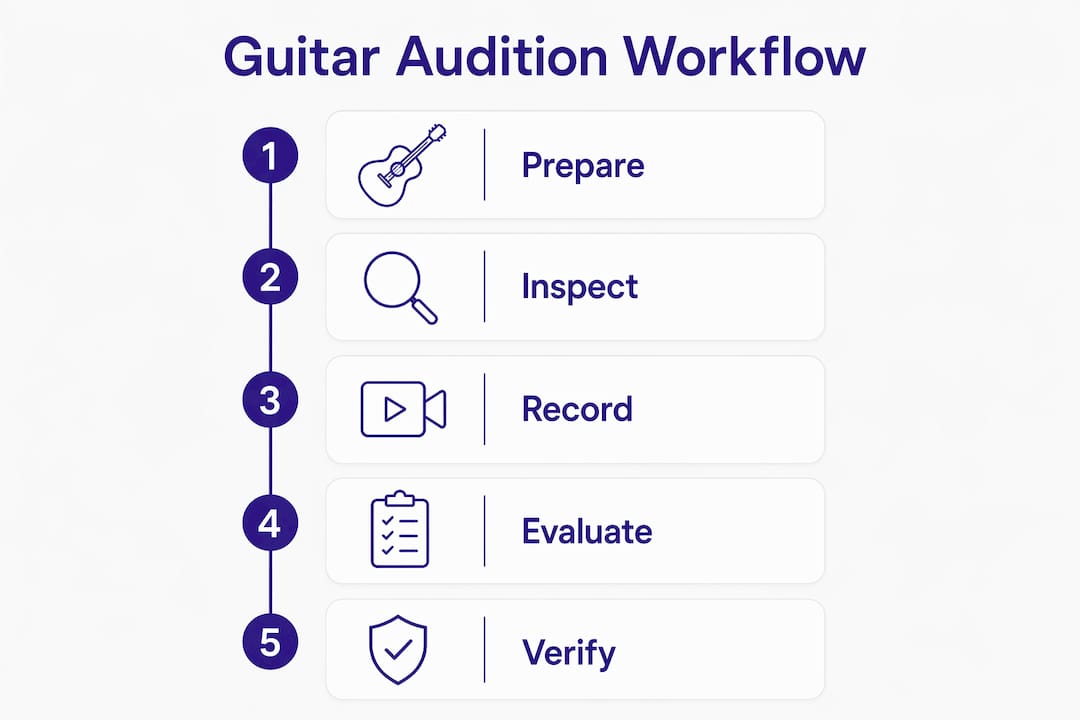
Step-by-step audition sequence
- Visual inspection. Examine the finish, binding, and headstock for cracks or repairs. Look for color inconsistencies that suggest refinishing, which affects both tone and value.
- Structural check. Use feeler gauges to measure neck relief. Check fret height and wear. Confirm hardware originality by looking for replaced tuners, bridges, or nut material.
- Acoustic resonance test. Before plugging in, play the guitar unplugged. A guitar that resonates freely and evenly across the fretboard transfers that quality to its amplified tone.
- DI signal capture. Connect to your interface and record a clean DI pass of each test piece. Target peaks between -12 and -6 dBFS to preserve headroom and avoid clipping.
- Pickup position testing. Play through each pickup position and blend setting. Note how the guitar responds to picking dynamics in each position.
- Amp sim evaluation. Run your DI recordings through two or three amp sim presets. This reveals the guitar’s true tonal character without the bias of a single amp color.
- Playability assessment. Check action at the 1st and 12th frets. Confirm intonation with a tuner. Note any dead spots or buzzing frets.
Pro Tip: Record a short video of the headstock, body, and hardware during every audition. This creates a visual record you can review alongside your audio captures when making the final decision.
Auditory vs. visual assessment focus
| Assessment Type | Primary Focus | Tools Used |
|---|---|---|
| Visual and structural | Condition, originality, repairs | Inspection light, feeler gauges |
| Acoustic resonance | Sustain, evenness, body response | Ears, unplugged playing |
| DI sonic evaluation | Tonal character, output, dynamics | Audio interface, amp sims |
| Playability | Action, intonation, fret condition | Tuner, feeler gauges |
Structural issues like neck resets and hardware replacements affect both playability and market value. Catching them during the audition saves you from costly repairs or a bad investment after the sale.
What are common pitfalls during the guitar audition workflow?
Most guitarists make the same five mistakes. Knowing them in advance protects your evaluation from bias and error.
- Auditioning in uncontrolled environments. Humidity and temperature warp wood, changing action and tone dramatically. A guitar that plays stiffly in a cold, dry shop may open up beautifully in a stable environment. Always note the room conditions.
- Confusing your playing with the guitar’s quality. A great player makes a mediocre guitar sound good. Play the same piece on every instrument and compare recordings, not live impressions.
- Relying only on live amp tone. The shop’s amplifier adds its own character. DI recording removes that variable and gives you a true read on the instrument.
- Ignoring the difference between book value and market-comparable value. Market-comparable value reflects what a buyer would actually pay today. Book value is often outdated and misleading for insurance or purchase decisions.
- Skipping provenance questions. Ask the seller directly about prior repairs, refinishing, and ownership history. Sellers who cannot answer these questions clearly are a red flag.
“Failing to differentiate book value from market-comparable value is one of the most expensive mistakes a guitarist can make when buying or insuring a valuable instrument. The realistic replacement cost is what matters, not what a price guide printed years ago.”
Pro Tip: When evaluating acoustic guitars, humidity effects on playability can shift action by measurable amounts. Always ask when the guitar was last set up and under what conditions it has been stored.
How do you verify and finalize your guitar selection after auditioning?
The audition session generates data. The verification phase is where you analyze it and make a confident decision.
Start by reviewing your DI recordings through at least two different amp sim profiles. Listen for consistency across pickup positions and playing dynamics. A guitar that sounds good only in one narrow setting is a specialist tool, not a versatile instrument.
Cross-check your structural notes against the seller’s provenance documentation. Provenance verification can add up to 50% in value for vintage instruments. Missing or inconsistent documentation is a negotiating point, not a dealbreaker, but it must be factored into your offer.
Pre-purchase confirmation checklist
- Condition confirmed: no hidden cracks, repairs, or hardware replacements beyond what was disclosed
- Sound confirmed: DI recordings reviewed through multiple amp profiles
- Playability confirmed: action, intonation, and fret condition meet your standards
- Provenance confirmed: ownership history and repair records verified
- Value confirmed: market-comparable pricing checked against current sales data, not book value
- Insurance readiness: appraisal documentation prepared or scheduled
Professional appraisals should be updated every 3–5 years to reflect current market conditions. For investment-grade instruments, this is not optional. The vintage guitar market appreciates unevenly, and an outdated appraisal leaves you underinsured.
Pro Tip: After purchase, schedule a professional appraisal within 30 days. This locks in a current valuation for insurance purposes and gives you a baseline for tracking the instrument’s value over time.
Key Takeaways
A structured guitar audition process, combining physical inspection, DI recording, and provenance verification, is the most reliable method for selecting an instrument that matches your playing style and investment goals.
| Point | Details |
|---|---|
| Prepare before you play | Bring inspection tools, a portable interface, and prepared test pieces to every audition. |
| Use DI recording | Capture clean signals at -12 to -6 dBFS to evaluate tone objectively after the session. |
| Inspect structure thoroughly | Check neck relief, fret wear, and hardware originality with feeler gauges and an inspection light. |
| Verify provenance and value | Confirm ownership history and use market-comparable value, not book value, for purchase decisions. |
| Update appraisals regularly | Schedule professional appraisals every 3–5 years to keep insurance and market value aligned. |
What I’ve learned from years of evaluating guitars
The single biggest shift in how I evaluate guitars came when I stopped trusting my ears in the moment and started trusting my recordings. Live auditions are noisy. The room, the amp, the adrenaline of holding a beautiful instrument all color your perception. A DI recording played back through headphones the next morning tells a different story. That story is almost always more accurate.
The re-amping mindset, locking in the performance first and shaping the tone later, is the most underused technique in guitar selection. Most guitarists still judge instruments through a single amp in a single room. That is like judging a photograph by the frame.
Structural checks save money in ways that are hard to quantify until you skip them. I have seen players fall in love with a guitar’s tone and overlook a neck that needed a reset within six months. The repair cost erased any deal they thought they got. Feeler gauges and an inspection light are cheap insurance against that outcome.
For investment-grade instruments, provenance is not a bonus. It is a core part of the asset. A guitar with documented history and authenticated originality commands a premium that compounds over time. Skipping that verification step is leaving value on the table.
— Vintage
Vintage-guitar-world supports your guitar selection process
Vintage-guitar-world brings together expert appraisal knowledge, curated instrument listings, and detailed provenance guides to support every stage of your evaluation process.

Whether you are auditioning a classical, flamenco, acoustic, or electric instrument, the resources at Vintage-guitar-world are built around the same structured approach this article describes. The guitar appraisal guide walks you through valuation methodology in depth. The curated listings on vintage guitar types give you the historical and investment context you need to evaluate instruments with confidence. Every instrument listed on the platform has been evaluated with the same workflow outlined here.
FAQ
What is a workflow for auditioning guitars?
A guitar audition workflow is a structured sequence of physical inspection, sonic evaluation, and provenance verification steps used to assess whether an instrument meets your playing and investment requirements.
How do I record a clean DI signal when auditioning electric guitars?
Connect the guitar directly to an audio interface and target recording peaks between -12 and -6 dBFS. Set your DAW buffer to 128 samples or less to avoid latency that distorts your playability assessment.
Why does provenance matter when auditioning vintage guitars?
Documented provenance confirms authenticity and ownership history, which can add significant value to a vintage instrument. Missing provenance is a negotiating point and a risk factor for insurance purposes.
How often should I update a guitar appraisal?
Professional appraisals should be updated every 3–5 years to reflect current market conditions and ensure your insurance coverage matches the instrument’s actual replacement cost.
What is the difference between book value and market-comparable value for guitars?
Book value is a published reference price, often outdated. Market-comparable value reflects what buyers are actually paying for similar instruments today, making it the correct figure for purchase and insurance decisions.